今天在 EZone 看到這麼一個電腦教學:「Web 2.0 網頁製作基本功,簡易建立 Blog 網頁」。文章的開首如是說:
近期以 Web 2.0 概念製作的網頁愈來愈流行,當中以 Blog (網誌) 最受歡迎,因它可幫用戶來記錄自己的鎖事,分享給好友觀
今天在 EZone 看到這麼一個電腦教學:「Web 2.0 網頁製作基本功,簡易建立 Blog 網頁」。文章的開首如是說:
近期以 Web 2.0 概念製作的網頁愈來愈流行,當中以 Blog (網誌) 最受歡迎,因它可幫用戶來記錄自己的鎖事,分享給好友觀
Recently I read Doc Searls' The Chronological Web , where he argues (as the CentreSource blog entry that led me to his entry puts it) that most organizations need a blog.But what really made me sit up was this bit towards the end:
This helps, for example, when we talk to civilians who are new tothe Web and want to "put up a website". Very often what they reallyneed is a blog. [...] Updating a "site" is achore.
I have a modest suggestion for everyone with a syndication feed(bloggers and otherwise, but especially bloggers): read your ownsyndication feeds. It saves embarrassment.
In theory this is unnecessary, because your blogging or publishingpackage makes syndication feeds just work. In practice I have seen allsorts of things happen, ranging from repeated entries to stray markupand text here and there. Reading your own feeds means that you findout about these sorts of things and can fix them.
(Counting on reader feedback to tell you
IT News
Javascript
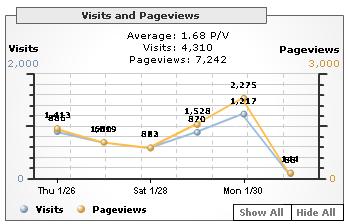
這幾天的人流激增,由平時約 1000 的 pageviews ,昨天升到約 2200,是因為新年假留在家裏的人比較多了吧?事實上這幾天的人主要是來自搜尋「霍元甲」的人。在 Google Analytics 抓個圖特此紀念。=p

麥兜故事一向都是「故事含道理,得意又笑死」,這一次《春田花花同學會》也是一樣,在一連串搞笑之中,講講我們長大後出來社會工作的事。電影以大量串星撐場,東拉西址炒雜碎,沒有明確的故事線可言。
故事以春田花花
As a system administrator, I like to see console messages even whenI'm in X (which is almost all of the time). On my systems, consolemessages come from high priority kernel messages, high priority notesfrom syslog, and sometimes messages from init, and I like to knowabout all of these.
In theory, xterm's -C command line switch should do thisnicely, and indeed it did for years. These days, there aretwo unfortunate problems with it: