數獨遊戲有很多變種,今天玩了一隻叫「總和數獨」,題目看上去是這樣子的:
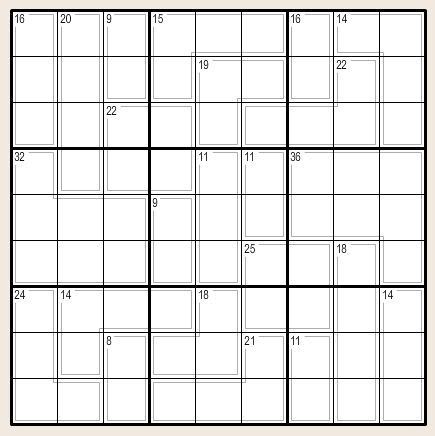
小數字是虛線包圍範內的總和,玩的時候不能像普通數獨遊戲直接推斷,而是要將數字的可能性寫下,計算一下可能的加數組合,跟據條件去除可能
In a reddit comment thread I was accurately dinged for being a bit casual in how I talked aboutobject allocation at the end of my previous entry . As the comment notes, calling ' .setdefault(k,[]) ' creates and throws away a new object each time the key alreadyexists, just as ' .setdefaults(k, SomeClass()) ' would.
Well, sort of. One of the things I assume about Python is thatallocating and freeing new empty instances of built-in types
數獨遊戲有很多變種,今天玩了一隻叫「總和數獨」,題目看上去是這樣子的:
小數字是虛線包圍範內的總和,玩的時候不能像普通數獨遊戲直接推斷,而是要將數字的可能性寫下,計算一下可能的加數組合,跟據條件去除可能
What I'm going to call the accumulator (mini-)pattern is a commonoperation when summarizing a stream of data: you have some keys, whichcan repeat, and you want to accumulate some data each time each keycomes up, to count it or sum it all up or keep a list of all of the datafor each key.
In pretty much every language that has them, this pattern is done withdictionaries (or hashes or the language's equivalent). In Python, thiscreates

