電擊 Hobby 的六月號,刊有接下來新的 EVA 2.0《破》的人物和機體介紹,五號機隆重登場了:
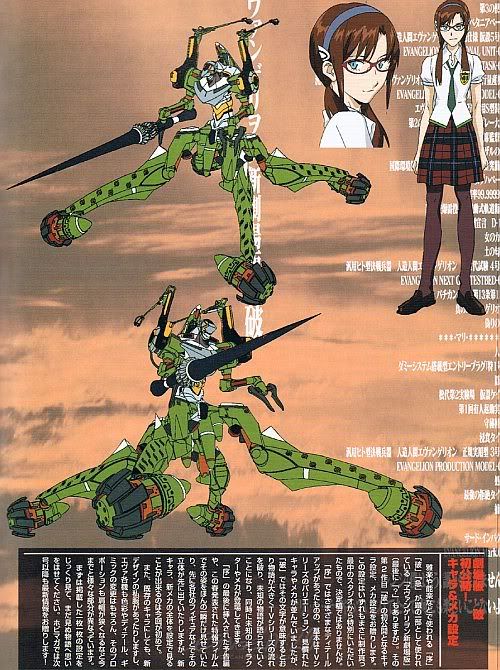
其實在上一波的 裏,在不夠一秒的瞬間是有出現的,但總不夠這個清清楚楚。這個設計,令我想起 Tachikoma 的「輪子」腳…
There is a certain school of thought in system documentation thatbelieves, to stereotype things, that there is no such thing as being tooexplicit or having too many examples. Much of Sun's Solaris documentationmakes a great example for this school.
Unfortunately, these people are wrong. There is such a thing as toomuch documentation, because having too much has a number of problems:
電擊 Hobby 的六月號,刊有接下來新的 EVA 2.0《破》的人物和機體介紹,五號機隆重登場了:
其實在上一波的 裏,在不夠一秒的瞬間是有出現的,但總不夠這個清清楚楚。這個設計,令我想起 Tachikoma 的「輪子」腳…

Here's an issue that I ran into recently: from version 1.4.20 onwards,lighttpd has stopped passing stderr to CGI processes, should onebe peculiar enough to run CGIs on lighttpd ( which can be done ). If you need error logging from your CGIs, you will haveto roll something on your own.
(Fedora 10 has lighttpd 1.4.22 and so is affected by this.)
There is a bug report for this, but I don't know
I generally like the Bourne shell, but I will easily admit that it hasa number of things that are less than ideal. One of those less thanideal things is a peculiar omission: you cannot easily redirect just standard error into a pipeline.
This sounds like a peculiar thing to want, but there are situations where you do need to process stderrseparately; for example, you might need to timestamp all stderr outputand log it. In a hypothetical shell with this feature you could have a'timestamper' program