Open-Source "GreenBoost" Driver Aims To Augment NVIDIA GPUs vRAM With System RAM & NVMe To Handle Larger LLMs

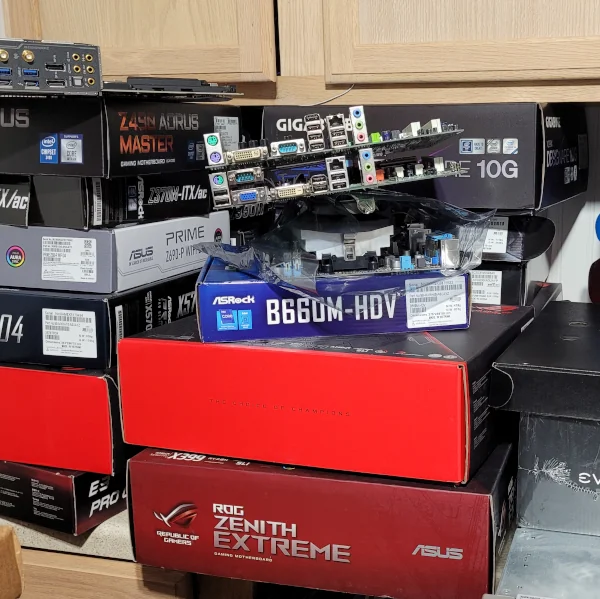
An open-source, independently developed Linux kernel module called GreenBoost aims to augment the dedicated video memory on NVIDIA discrete GPUs with system memory and NVMe storage. The intent here with GreenBoost is a CUDA caching layer to more easily run larger AI models for LLMs that otherwise won't fit solely in your graphics card's dedicated vRAM.

GreenBoost was announced today by independent open-source developer Ferran Duarri that is developing it as a multi-tier GPU memory extension for Linux. The GPLv2 driver doesn't replace
Continue reading...

GIMP 3.2 Released With Many Improvements

Just under one year since the long-awaited GIMP 3.0 release, GIMP 3.2 is out today as the first feature release building off the GIMP 3.0 foundation.

GIMP 3.2 brings new non-destructive layers support, an improved MyPaint Brush tool, a new "Overwrite" paint mode, SVG export support, various UI/UX improvements, and a lot of other polishing and enhancements to this leading open-source alternative to Adobe Photoshop.

Continue reading...

Debian 13.4 Released With Dozens Of Fixes

Debian 13.4 rolled out today with dozens of security fixes and other general bug fixes with the updated install media for Debian 13 Trixie.

Debian 13.4 fixes an HTTP/2 regression in the Apache HTTPD web server, fixing ZFS root identification for GRUB packages, many package rebuilds due to a Glibc update, and various other bug fixes.

There are dozens of security fixes affecting Firefox, Chromium, Thunderbird, GIMP, OpenSSL, OpenJDK, PostgreSQL, the Linux kernel, and other packages.

Continue reading...

OpenRazer 3.12 Released With Support For Newer Razer Products On Linux

OpenRazer 3.12 was just released today as the newest update to these independently-maintained, open-source drivers for Razer devices on Linux. Paired with the likes of the Polychromatic GUI, OpenRazer allows for a pleasant experience for the Razer gaming peripherals under Linux.

With OpenRazer 3.12 there is now support for a number of newer Razer devices on Linux with these out-of-tree kernel drivers. The newly-enabled products include:

- Razer BlackWidow V4 Tenkeyless HyperSpeed
- Razer Mouse Dock Pro
Continue reading...

Trying Out Snapdragon X Elite With The Acer Swift 14 AI Laptop On Ubuntu 26.04

This week I tried out the current Ubuntu 26.04 development state on the Qualcomm Snapdragon X Elite with the Acer Swift 14 AI laptop I have been using for my X Elite benchmarks over the past year. Unfortunately, it wasn't a smooth experience with new issues encountered for this Windows On ARM laptop.

Back in December was my last round of Snapdragon X Elite Linux testing with it ending 2025 disappointing for the Snapdragon X Elite Linux experience and performance . The performance had regressed to be
Continue reading...

Linux 7.1 Will Bring Power Estimate Reporting For AMD Ryzen AI NPUs

This week's round of drm-misc-next patches bring a few improvements to the AMDXDNA accelerator driver used for supporting the Ryzen AI NPUs. Plus some new panel additions and various other minor Direct Rendering Manager driver changes.

In recent months there have been Linux patches to expose Ryzen AI NPU power metrics . That work is coming together with this pull request destined for Linux 7.1. A new ioctl is introduced for reading real-time NPU power estimates from the hardware.

This goes along with work to the
Continue reading...

Google Now Using AutoFDO To Enhance Android's Linux Kernel Performance

Google's Android LLVM toolchain team shared publicly this week that they have begun making use of AutoFDO for automatic feedback directed optimizations of their Linux kernel build used by Android.

Android developers found engaging AutoFDO when compiling their Linux kernel image resulted in "significant performance wins for users" thanks to the advanced compiler optimizations. AutoFDO is one of the compiler optimization techniques that rely on profiling and leveraging real-world execution patterns to help in its optimization technique. AutoFDO was among the compiler optimization strategies Intel employed when building many of their
Continue reading...

KDE Plasma 6.6.3 Fixing Direct Scan-Out When Using Fractional Scaling

KDE developers continue being very busy working on Plasma 6.7 feature development as well as continuing to drive new fixes and refinements to the current Plasma 6.6 stable series.

This Week in Plasma is out with its newest issue to highlight the interesting Plasma 6.6/6.7 changes for the past seven days. Some of this week's KDE Plasma highlights include:

- Plasma 6.7 with the plasma-keyboard module will now allow you to type characters not on your physical keyboard by pressing and
Continue reading...

Mesa's LLVMpipe Now Exposes Mesh Shader Support

Mike Blumenkrantz of Valve's Linux graphics driver team has landed support for mesh shaders within Mesa's LLVMpipe software driver.

A five month old merge request that began as non-working code has matured and made it for landing in Mesa 26.1. EXT_mesh_shader is now enabled for this CPU-based OpenGL software implementation for offering mesh shaders and task shader support. This mesh shader extension came together last year for OpenGL as a cross-vendor solution. The extension was added to the OpenGL
Continue reading...

GNOME OS Switches To KMSCON Enabled By Default

GNOME OS as the Linux-based OSTree-using distribution that serves as the leading-edge, reference platform of GNOME desktop development is now using KMSCON by default.

Similar to Fedora's plans for using KMSCON in place of the in-kernel VT console code, which ended up being delayed to Fedora 45 , GNOME OS is now using KMSCON by default.

KMSCON is now being used by GNOME OS in place of the Linux kernel VTs. The new solution is a lot more configurable and running from user-
Continue reading...