OSPRay Studio 0.6 Released For Intel's Open-Source Interactive Ray-Tracing Visualizer

Among Intel's many open-source software accomplishments for 2020 was introducing OSPray Studio as part of oneAPI. OSPray Studio builds atop the existing OSPray ray-tracing engine and inter-connected oneAPI Rendering Toolkit components to offer an open-source scene graph application for interactive visualizations and ray-tracing based rendering. The newest OSPray Studio is now available.

OSPray Studio makes it easy to enjoy ray-traced, interactive, real-time rendering whether it be for visualizations or pursuing photo realistic rendering. OSPray Studio

Zink Now Supports OpenGL 4.5 Over Vulkan With Mesa 21.1

It was just yesterday we were talking about Zink achieving OpenGL 4.3 support and wondering if OpenGL 4.4 or potentially even 4.5 could be buttoned up in time for Mesa 21.1... Well, as of a few minutes ago Zink now is advertising OpenGL 4.5 support for this graphics API layer built atop Vulkan.

As noted previously there have been experimental patches going back months bringing Zink to OpenGL 4.5/4.6 albeit various hacks and improvements were needed before upstreaming

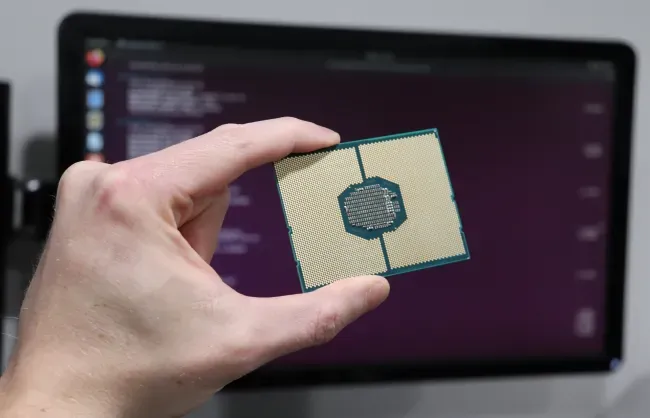
Two Year Ubuntu Linux Performance Comparison For Intel Xeon "Cascade Lake"

With this spring marking two years already since Intel introduced the 2nd Gen Xeon Scalable " Cascade Lake " processors plus with Ice Lake Xeon processors being on the horizon, here is a look at how the flagship Xeon Platinum 8280 2P performance has evolved atop open-source Linux during that duration. The benchmarks today are looking at the performance of Ubuntu 19.04 for that of roughly the shape the Linux performance/optimizations were at launch and then the performance today if moving to the in-
Continue reading...

AMD Is Currently Hiring More Linux Engineers

It looks like thanks to AMD's increasing sales and continuing successes in the enterprise space with more HPC wins and the like, AMD is hiring more Linux engineers. AMD currently has several interesting job openings on the Linux front.

While AMD has been delivering reliable Linux support with their recent launches, there is room for improvement in areas like more timely compiler support for new processors, better alignment of their new hardware enablement for getting the code not only upstreamed but into distributions for launch-day, and similar areas. Based
Continue reading...

Mir 2.3.2 Released With Better XWayland HiDPI, Copy/Paste Between Wayland/XWayland

Mir, Canonical's Wayland compositor designed for various Ubuntu-focused use-cases for easily constructing new shells, is out with a new point release that packs a fair amount of improvements as well as fixes.

With Ubuntu 21.04 aiming to use Wayland by default there seems to be an uptick in Mir activity as well even though the Ubuntu desktop is set to run GNOME 3.38 Shell with its Mutter Wayland compositor. Mir remains an important part of Ubuntu Core and related efforts around self-

Intel

Intel Dynamic Load Balancer 2.0 Support For Linux Inches Closer To Mainline

Back in September I wrote about Intel developers posting Linux enablement patches for their Dynamic Load Balancer 2.0 PCIe accelerator for hardware-based load balancing functionality. That work hasn't yet been upstreamed but recently marked its tenth revision to the "DLB 2.0" patches.

The Intel Dynamic Load Balancer is a PCIe accelerator designed for use with their Data Plane Development Kit (DPDK) Event Device Library and provides load-balanced, prioritized scheduling of core-to-core communication. Intel DLB aims to provide greater

Mesa's LLVMpipe Flips On ARB_gl_spirv, Help Sought For Lavapipe Windows Port

Mesa's LLVMpipe OpenGL software driver has now enabled ARB_gl_spirv and ARB_spirv_extensions, which now rounds it out of the major extensions needed to advertise OpenGL 4.6.

This OpenGL software driver building atop LLVM and Gallium3D now handles the OpenGL SPIR-V extensions for being able to ingest SPIR-V shaders. The SPIR-V support was one of the big additions for OpenGL 4.6.

With this commit today the SPIR-V support is flipped on for LLVMpipe and

Mercurial Revision Control System Continues Rust'ing For Better Performance

The Mercurial distributed revision control system continues to see use particularly around some large code-base projects and the developers continue working to optimize its performance in part by transitioning more of it to the Rust programming language.

With Mercurial traditionally being a Python program and supporting C extensions in some areas, in recent years they have been turning to making use of Rust code for achieving better performance and maintainability. Mercurial's " Oxidation Plan " ultimately calls for the main command (hg) to become a Rust binary that embeds and uses

Linux 5.12 To Support USB4 "Security Level 5" To Disable PCIe Tunneling

The USB4 / Thunderbolt changes slated for the upcoming Linux 5.12 merge window have been queued into the USB-next tree.

Queued into USB-next yesterday were the Thunderbolt changes from Intel for the next kernel window, which also include the latest USB4 work as part of it. One of the new security options with Linux 5.12 is supporting USB4's Security Level 5 (SL5). With this new security level, PCIe tunneling is disabled. This higher security level to

System76 Begins Detailing Their Open-Source "Launch Configurable Keyboard"

For months System76 has been teasing that they were getting into prototyping and manufacturing their own keyboards. This moves follows them manufacturing their own cases with the beautifully engineered Thelio line-up while now it looks like they are ready to go public with details on the System76 keyboard.

Like the Thelio computers, System76 is going to be manufacturing their own keyboards at their facility in Denver, Colorado.

This slab of aluminum becomes a keyboard. We're getting closer. pic.twitter.com/

Continue reading...