systemd 247-RC2 Released With Experimental OOMD, Various Fixes

Following last month's systemd 247-RC1 release that was headlined by the systemd-oomd service being merged for better low memory / out-of-memory handling and many other changes, a second release candidate is now available.

Systemd 247-RC2 is primarily driven by various fixes that landed the past few weeks but there is also now a FixedRandomDelay= boolean setting for timer units to keep the same randomized delay for that given service, socket units now support Timestamping= with us/

Fedora Developers Discuss The Idea Of "Lightly Maintained" Packages

Fedora stakeholders and the folks at Red Hat have been discussing the idea of having a "lightly maintained" package repository (or some RPM metadata otherwise to indicate such light maintenance) for packages that are either very new, not receiving much packaging attention, or simply used as a build dependency for other packages.

For the past two months there has been this FESCo ticket around the idea of having a new repository for serving "lightly maintained" packages. In this context it's about packages that are used just as dependencies


PAPPL 1.0 Beta Released For Ultimately Replacing CUPS Printer Driver

PAPPL as the printer application framework created by the CUPS founder is approaching the v1.0 release.

The open-source CUPS printing system is stagnate since Michael Sweet left Apple but the CUPS founder hasn't left the printing scene. He's been spending most of the year working on the PAPPL framework. This is a C-based framework for developing CUPS Printer Applications and aims to be a replacement for printer drivers. PAPPL is designed for uses such as with the LPrint and Gutenprint projects. LPrint is a

Intel Begins Sending Out Linux Support Patches For CXL 2.0

Just a day after the CXL 2.0 specification was published, the initial Linux kernel support for this updated Compute Express Link revision was sent out for review.

Longtime open-source Intel Linux developer Ben Widawsky sent out the initial kernel patches for CXL 2.0. The initial focus is on the type-3 memory devices defined by the CXL 2.0 specification that serves as a memory expander for RAM or persistent memory. These initial CXL 2.0 patches are still a work-in-progress but seem

Intel

Airlie: "Why Sharing Code With Windows Isn't Always A Win"

Following the news today of Intel sharing ~60% of their GPU driver code-base between Windows and Linux and working to bring the Intel Graphics Compiler (IGC) to Mesa in 2021, not everyone is enthusiastic about those prospects.

David Airlie at Red Hat serves as the DRM co-maintainer for the Linux kernel, contributes significantly to Mesa particularly for Lavapipe/LLVMpipe/Clover, and also is the co-founder of the open-source Radeon Vulkan "RADV" driver as well as being
Continue reading...

FFmpeg Lands Support For NVIDIA AV1 Video Decoding With RTX 30 + NVDEC

Adding to the growing list of changes for the next FFmpeg release is now AV1 video decoding with NVIDIA's GeForce RTX 30 series graphics cards.

With NVIDIA's recently released RTX 30 series there is initial support for hardware-accelerated AV1 decoding . Merged today is now support in FFmpeg for making use of this hardware AV1 decode with RTX 30 via NVIDIA's "NVDEC" decode interface that is part of their Video Codec SDK.

The commit adds just under 400 lines of

Intel's Graphics Driver Now Sharing ~60% Codebase Between Windows/Linux, 90~100% The Performance

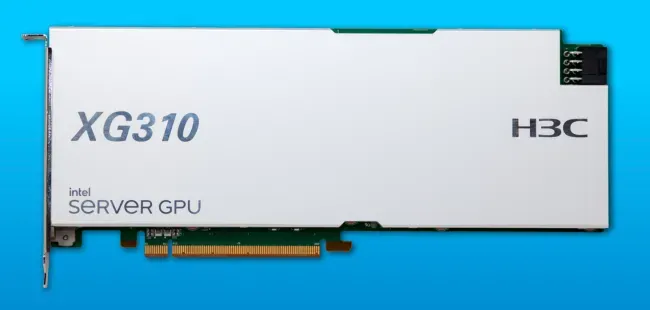
Intel today is announcing their Server GPU for the data center based on their Xe-LP microarchitecture with an initial focus on high-density, low-latency Android cloud gaming and media streaming. For as exciting as the Intel Server GPU is, some exciting Intel Linux graphics driver details were also disclosed.

The H3C Server GPU is their first discrete GPU for the data center. This first dGPU product based on Gen12 Xe-LP has a 128-bit pipeline and 8GB of LPDDR4

Continue reading...

AMD + IBM Team Up To Tackle Confidential Computing

AMD and IBM are this morning announcing a multi-year, joint development agreement focused on " building upon open-source software, open standards, and open system architectures to drive Confidential Computing in the cloud and support a broad range of accelerators across high-performance computing (HPC), and enterprise critical capabilities such as virtualization and encryption. "

Researchers from both AMD and IBM will collaborate on hardware-based Confidential Computing to strengthen their presence in the cloud and enhancing artificial intelligence workloads. This makes more inroads for AMD EPYC

GCC 11 Lands Support For Intel AVX-VNNI

GCC 11 feature development is ending very shortly but landing in time are the patches last month for adding AVX-VNNI support .

AVX-VNNI is the equivalent to AVX512-VNNI with VEX encoding for Vector Neural Network Instructions outside the AVX-512 context. LLVM Clang 12 added AVX-VNNI support at the end of October while now the GNU Compiler Collection support has been merged in time for GCC 11.

AVX-VNNI is expected to first appear on Intel Alder Lake processors next

Mesa 20.3-RC1 Released With Lavapipe CPU-Based Vulkan, Raspberry Pi V3DV Added

Following the Mesa 20.3 branching on Monday and subsequent opening of Mesa 21.0 for development , the first release candidate of Mesa 20.3 is now available for testing.

Dylan Baker of Intel announced Mesa 20.3-RC1 overnight with its many new changes for this quarterly feature release. Mesa 20.3 comes the new V3DV Vulkan driver for Raspberry Pi 4/400 devices, LLVMpipe is in much better shape, Lavapipe has been added as a CPU