OpenZFS 2.0-RC4 Released With More Fixes, Linux 5.9 Support

The fourth release candidate of OpenZFS 2.0 is now available for testing of this open-source ZFS file-system implementation currently for Linux and FreeBSD platforms.

OpenZFS 2.0 is a big update for this project in that it mainlines FreeBSD support , Zstd file-system compression is a new option, various performance improvements , sequential resilvering, fast clone deletion, persistent L2ARC, and a number of other changes compared to the state of the current ZFSOnLinux 0.8 stable series.

With OpenZFS 2.0
Trisquel 9.0 Released - Powered By The Linux 4.15 Kernel

Trisquel 9.0 has been released as one of the few Linux distributions approved by the Free Software Foundation.

Trisquel 9.0 is now the latest version of this 13 year old operating system tracking Ubuntu/Debian while being modified to ensure non-free code is removed among other steps to receive praise from the FSF and Richard Stallman for being one of the few "pure" GNU/Linux platforms.

Trisquel 9.0 is based on the Ubuntu 18.04 LTS packages but with various de-

Linux 5.10 FUSE To Allow Faster Performance With VirtIO-FS

The FUSE implementation for supporting file-systems in user-space is seeing important kernel work merged for Linux 5.10 .

The most prominent change with FUSE in Linux 5.10 is a "DAX" mode for allowing direct access to the host page cache. Making use of this direct access support for the host page cache is the VirtIO-FS file-system for sharing files/folders with virtualized guests.

By allowing direct access to the host page cache, there is no longer any double caching and

Git 2.29 Released With Experimental Support For Using More Secure SHA-256

Git 2.29 is now available with experimental support for using SHA-256 to increase security of code repositories over the possibility of intentional SHA-1 collisions with the current indices.

For the past number of releases there has been work underway to eventually migrate from SHA1 to SHA256 hashes . The intent is to increase the security of Git repositories and finally with Git 2.29 it's now in good enough shape to serve in an experimental capacity.

The git init command can

Open-Source RADV Vulkan Driver Is Seeing Work To Allow Building It On Windows

An independent party has slowly begun merging patches into mainline Mesa for allowing the open-source Radeon Vulkan driver "RADV" to build on Microsoft Windows.

AMD is not behind this effort nor Valve but has been worked on in recent months for making Mesa's Radeon Vulkan driver code compatible with Windows. James Park of a little known "Lag Free Games" has been behind this initiative to bringing it to Windows and seemingly only explaining in private to upstream Mesa developers his motivations for doing so.

RADV as a reminder is

Intel

Further Exploring The Intel Tiger Lake Core i7-1165G7 Performance On Ubuntu Linux

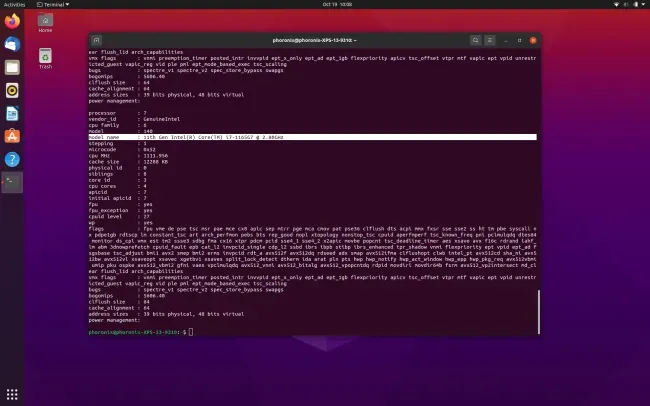
Last week I published initial benchmarks of the Intel Core i7 1165G7 "Tiger Lake" performance on Linux with the Dell XPS 13 9310 Developer Edition laptop. Of most surprise from those preliminary Linux figures were finding that for some single-threaded workloads the performance was actually worse than the previous generation Ice Lake. Since then I've been running more tests around the clock with some interesting discoveries to note today. It is possible to enhance the single-threaded performance so it

Continue reading...

Vulkan 1.2.158 Released With Fragment Shading Rate Extension

Vulkan 1.2.158 was released this morning with two notable extensions introduced.

First up is VK_KHR_fragment_shading_rate that allows changing the rate at which fragments are shaded. Multiple pixels can be shaded now by a single fragment shader invocation. The new extension allows controlling the fragment shading rate on a per-draw, per-primitive, or per-region basis. Most notably this can be used by Vulkan-powered games for shading higher levels of detail in a scene compared

Linux 5.9-ck1 Released With Updated MuQSS

Independent Linux kernel developer Con Kolivas (and retired anaesthetist) is back on track with a new update to his "CK" patch-set and the MuQSS scheduler.

The retired doctor had taken some time off from his kernel development hobby earlier this year to help design equipment for the COVID-19 battle . He did manage to release his updated patches for Linux 5.7 but has been becoming increasingly concerned over the size of the Linux kernel and his ability in the future to continue maintaining these independent patches as a

GCC's Ada Frontend Seeing More Work On NVIDIA CUDA Support

Should you want to use the Ada programming language for GPU programming, the GCC compiler has been working on CUDA support within its front-end for this safety and security minded language.

In the past born out of academia there's been CUDA Ada bindings . There has also been Ada/SPARK GPU programming initiatives in the past with various APIs. This latest still ongoing effort is wiring up the GCC Ada front-end with CUDA support.

Going back to this summer there have been stubs for CUDA pragmas in the Ada

Char/Misc With Linux 5.10 Brings Nitro Enclaves, Alder Lake, More Code For Gaudi

The "char/misc" area within the Linux kernel continues to have a bit of everything as the "catch all" pull request of the kernel not fitting into other existing subsystems.

Linux 5.10 continues to have an interesting assortment of work. On Thursday the char/misc material was sent in by Greg Kroah-Hartman and subsequently merged, some of the highlights include:

- Support for Amazon Nitro Enclaves with EC2 for supporting security-critical applications. This is about the kernel infrastructure in the Amazon