Linux Kernel Improvement Can Make Hibernation Several Times Faster With Slow SSDs

A patch series sent out for review this weekend can significantly improve the system hibernation performance under Linux. Particularly for those with slower SSDs, the patches can make Linux hibernate up to several times faster.

Linux kernel developer Kairui Song is working on improving hibernation performance with the new swap allocator that originally didn't provide a high performance allocation path for hibernate. This new fast allocation path is especially beneficial for SSD devices with poor 4K performance.

Continue reading...

Mesa's KosmicKrisp Vulkan-On-Metal Achieves MoltenVK Feature Parity

Announced last year by consulting firm LunarG was KosmicKrisp as a Vulkan-on-Metal driver for efficiently leveraging the Vulkan API on Apple macOS systems as an alternative to the MoltenVK project. KosmicKrisp was upstreamed for Mesa 26.0 and continues making great progress for opening up more Vulkan possibilities in Apple's world.

KosmicKrisp delivers Vulkan 1.3 compliance on Apple devices and has continued to see more feature work by LunarG in ensuring its an effective implementation and comparable or superior to the MoltenVK project.

Continue reading...

NFS Server Adds Dynamic Thread Pool Sizing In Linux 7.0

The NFS server changes for Linux 7.0 happen to include some nice improvements for this big kernel version number release.

NFSD is now capable of handling dynamic thread pool sizing to adjust the thread pool as needed. There is also a new control to set the minimum number of threads and from there it can scale up as needed or ramp down when the server is idle. The knob for server administrators to be aware of is "min-threads" for setting the desired minimum number of threads for an NFS server via

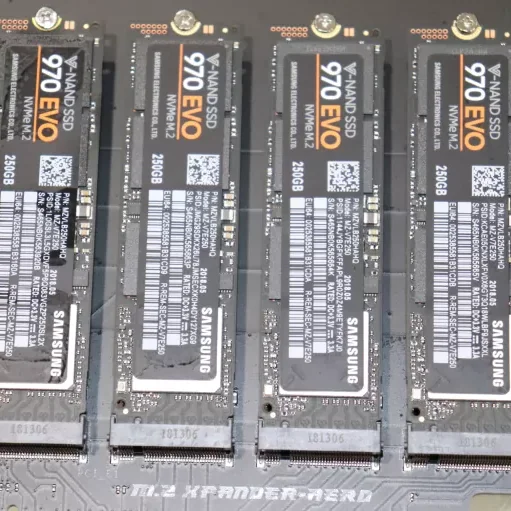
Power Sequencing Driver For PCIe M.2 Connectors Makes It Into Linux 7.0

The power sequencing subsystem updates have been merged for the Linux 7.0 cycle. Typically not an area of the kernel too exciting but one new driver addition is the "pwrseq-pcie-m2" to provide power sequencing for PCIe M.2 connectors.

This power sequencing driver for PCIe M.2 connectors is part of the effort for being able to handle PCIe M.2 connectors in Device Tree files . While those on the likes of AMD/Intel x86_64 systems and other ACPI
Continue reading...

F2FS Delivers "Several Key Performance Optimizations" With Linux 7.0

The Flash Friendly File-System ( F2FS ) has multiple performance improvements to provide its users with on the in-development Linux 7.0 kernel.

As a lovely Valentine's Day for users of this flash-optimized file-system are some nice performance improvements merged. The merge notes:
"In this development cycle, we focused on several key performance optimizations:

- introducing large folio support to enhance read speeds for immutable files

- reducing checkpoint=enable latency by flushing only committed dirty pages

- implementing tracepoints

X.Org Server's "Master" Branch Now Closed With Cleaned Up State On "Main"

This Valentine's Day there is a lot of red on the screen for the X.Org Server with the code delta as a result of renaming of their main Git development branch and in the process selectively dropping questionable patches to the prior "master" codebase.

The effort noted in January of X.Org Server May Create A New Selective Git Branch With Hopes Of A New Release This Year has now been realized. As of a short time ago today, the "master" Git branch is ended with new X
Continue reading...

Vim 9.2 Released With Experimental Wayland Support, Better HiDPI Display Support

Vim 9.2 is out today as the newest feature release for this robust and comprehensive text editor. This Valentine's Day release for Vim lovers brings experimental Wayland support, XDG Base Directory specification support, modernized defaults for HiDPI displays, new completion features, and an improved diff mode.

Vim 9.2 features "full support" for Wayland with its UI and clipboard handling. The Wayland support is considered experimental in this release but it should be in good shape overall. The XDG Base Directory support is now tossing
Continue reading...

Linux 7.0 Merges Support For Rock Band 4 PS4 / PS5 Guitars Plus More Laptop Quirks

The HID subsystem changes were merged this week for the ongoing Linux 7.0 kernel merge window. Among the Human Interface Devices (HID) work this cycle were supporting more guitars while also adding more device IDs and different laptop quirks.

Linux 7.0 now has mainline kernel support for the Rock Band 4 guitars designed for the PlayStation 4 and PlayStation 5. At the start of the year Linux patches came for enabling the Rock Band 4 PS4/PS5 guitars via additions to the SOny HID driver. These guitars
Continue reading...

Intel

Intel Ends Work On Quantum Compiler Open-Source Bits

Following Intel recently discontinuing a number of open-source projects , this week they formally discontinued their Quantum Passes open-source project that was intended to provide additional passes for their LLVM-based compiler in the Intel Quantum SDK.

The Intel Quantum SDK is their "complete quantum computing stack" for use in simulation to help in developing code to run on "quantum hardware tomorrow". The Quantum SDK includes a compiler derived from LLVM/Clang, qubit simulation back-ends, and more.

Continue reading...

GNOME OS To Use systemd-context, RustConn Provides Modern GTK4 Connection Manager

In addition to this week's GNOME 50 beta release , there were also other exciting developments in the GNOME ecosystem.

This Week in GNOME is out with its latest issue to highlight the interesting GNOME developments for the week.

GNOME OS is moving system configuration handling in /etc to using systemd-context. The hope in using systemd-context is to make configurations less fragile and easier to update. GNOME OS also now has an extension for those interested in using patented codecs on the platform.

RustConn was also announced
Continue reading...