The Current NVIDIA vs. AMD Radeon Linux Gaming Performance Ahead Of Ampere

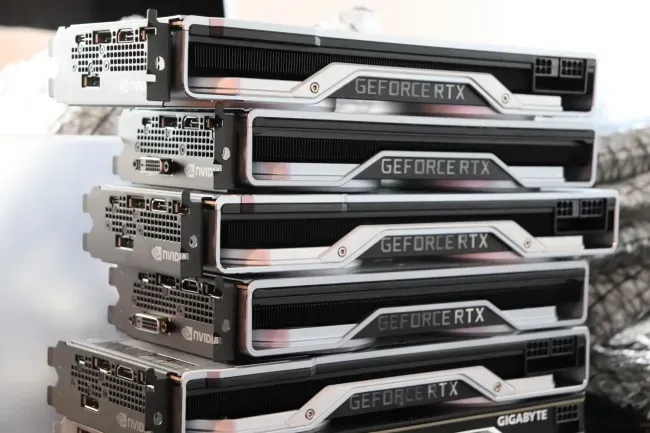
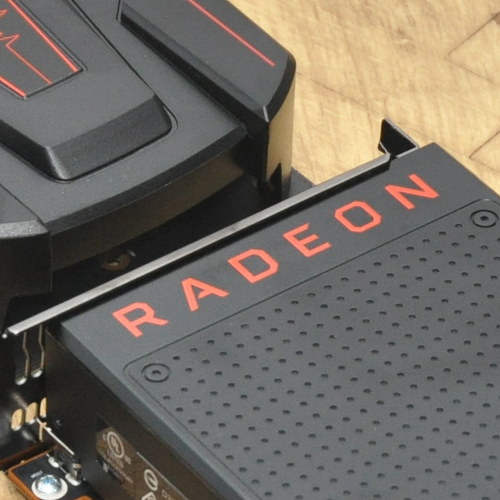
With NVIDIA next week expected to launch their next-generation GeForce RTX 3000 "Ampere" graphics cards, here is a fresh look at the current GeForce RTX 2000 series performance up against the latest AMD Radeon competition when using the very latest Linux graphics drivers for both vendors. This is the very latest performance showdown right now for the AMD/NVIDIA GPU performance under various Linux and Steam Play games on Ubuntu.
While we should be delivering NVIDIA GeForce RTX 3000 series Linux benchmarks upon

Continue reading...

AMD Radeon GPU Offloading For GCC Still Maturing In 2020

When it comes to Radeon GPU offloading for compute, most of the emphasis placed by AMD has been on Radeon Open Compute ( ROCm ) and now as part of that as well is the AOMP compiler for OpenMP targeting the AMD GPUs. Both ROCm and AOMP along with their other graphics driver components like RadeonSI and AMDVLK target an LLVM-based compiler stack as their principal focus, but they do continue engaging with Mentor Graphics who leads the development work on a Radeon GPU back-end for GCC.

Mentor has been working on

Microsoft Is Exploring LTO+PGO For A Faster Linux Kernel

While more and more software vendors are employing link-time optimizations ( LTO ) and profile-guided optimizations ( PGO ) for leveraging the compiler to squeeze out performance, it may surprise many that Microsoft engineers are exploring LTO+PGO for the Linux kernel in their own quest of achieving greater Linux performance.

Using link-time optimizations on the Linux kernel isn't a new concept with several different vendors over the years having proposed LTO patches for the Linux kernel albeit they don't usually end up with too much movement
Continue reading...

Linux Per Thread Queues Aim For Traffic Isolation, Higher Performance Networking

The newest Linux networking feature to get excited about that's in development is PTQ, or Per Thread Queues.

Per Thread Queues is about allowing application threads to be assigned dedicated network queues for transmit/receive. By having dedicated network queues and also employing busy polling, PTQ aims to offer higher performance networking and better traffic isolation. PTQ should be able to provide some nice uplift on high-end networking hardware in the data center as well as offering finer-grained network packet steering.

Back in late June the request

Intel's Early Linux 5.10 Graphics Driver Changes Include Tiger Lake HOBL

While the Linux 5.9 kernel cycle is still young and not seeing its formal release until early October or so, Intel's open-source team has already submitted to DRM-Next their first batch of feature changes desired for Linux 5.10.

This is just the first of several pull requests expected of graphics/display updates for Intel hardware expected for Linux 5.10. Among the material in this initial pull request are:

- HOBL is added for Tiger Lake / Gen12+ hardware

LLVM Clang Will Finally Honor "-mtune=" On x86/x86_64 CPUs

Starting with LLVM Clang 12.0 next year, the Clang compiler on x86/x86_64 CPUs will finally honor -mtune= in a similar manner to GCC.

GCC has long allowed the -mtune= option on Intel/AMD processors for supporting microarchitectural tuning optimizations (scheduler model) to be applied independent of the CPU being targeted for instructions to enable that is set via the -march= . LLVM Clang is now supporting -mtune= as well in its x86 code

Ubuntu To Try Again In Switching IPTables To Use Nftables Backend

Back during the Ubuntu 20.04 cycle there was an attempt to switch the iptables back-end to Nftables by default. That plan was ultimately foiled by LXD at the time running into issues and other fallout. But now t hat those issues should be addressed and Debian Buster has switched to Nftables, the move is being re-attempted next week for Ubuntu 20.10.

Distributions like Fedora already switched to Nftables in the past, Debian is now on it, and Ubuntu 20.1

Mesa Softpipe Set To See Better Performance, Introducing New NIR-To-TGSI Path

Mesa Gallium3D is close to seeing a major change in their intermediate representation path for drivers consuming Gallium's TGSI rather than NIR directly. Eric Anholt has been working on a NIR-to-TGSI path so that drivers still relying on TGSI can benefit from the NIR optimization paths and improvements while ultimately hoping to eliminate the existing GLSL-to-TGSI code-path currently relied upon by these drivers.

While Gallium3D's Softpipe is much slower than LLVMpipe as an OpenGL software rasterizer, in employing the

NVIDIA's Director of Software Development Talks Up Open-Source

While NVIDIA's desktop graphics drivers may not be open-source, there are other open-source projects maintained by NVIDIA that we have covered over the years particularly in the high performance computing and visual design space, among other interesting bits. Dirk Van Gelder who is NVIDIA's Direct of Software Development gave a talk this week about some of the open-source efforts engaged in by the company.

Not related to any open-source driver work/announcement but rather open-source at large within the graphics giant

Kernel ASI Still Being Worked On For Protecting Against Hyper Threading Data Leaks

At this week's Linux Plumbers Conference there were DigitalOcean engineers providing an update on their CoreScheduling work in the era of vulnerabilities affecting Hyper Threading . Oracle meanwhile presented today at LPC2020 on their Kernel Address Space Isolation (ASI) functionality for dealing with Hyper Threading data leakage in a different manner, but the performance costs are still being evaluated.

Oracle engineers for more than one year have been working on Kernel ASI to prevent data leakage when Hyper Threading is vulnerable from the likes of L1 Terminal Fault (
Continue reading...