Cachy Is The Latest Effort To Provide A Better Linux CPU Scheduler

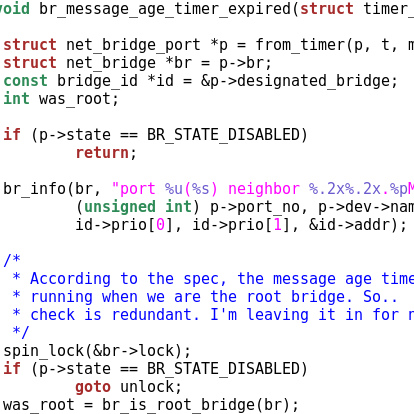
Cachy is a Linux CPU scheduler that has been generating some attention over the past month that aims for optimal CPU cache usage and based on a Highest Response Ration Next (HRRN) policy.

Cachy drops all balancing code except for idle CPU balancing, it guts out grouping for tasks and NUMA, each CPU has its own run queue, and a variety of other interesting design decisions.

The developer has posted some results on OpenBenchmarking.org comparing CFS to Cachy. There is also a video embedded below on Cachy.


Cachy is
ATGC Could Come In Linux 5.10 For F2FS, Much Faster Decompression Speeds Too

We previously reported on F2FS "ATGC" functionality for increasing the garbage collection efficiency for the Flash-Friendly File-System. Those patches are now queued up in F2FS' "dev" branch meaning we could see the functionality in place for Linux 5.10.

F2FS Age Threshold based Garbage Collection is for enhancing the effectiveness and efficiency of the background GC process for the file-system by evaluating older candidates first based on a configurable age threshold.

Huawei engineers who devised the F2

The Virtual DebConf20 Kicks Off With A Number Of Interesting Debian Talks This Week

The virtual DebConf 20 is happening now through 29 August. Due to COVID-19, the annual Debian Conference is happening exclusively as a virtual event for those wanting to watch a number of interesting Debian/Linux/FLOSS-related talks.

DebConf20 talks include the likes of covering APT-Repos, assembling Linux distributions, what's new in the Linux kernel and missing from Debian, Debian on mobile devices, FreedomBox, Lenovo and Debian relationship, an update on the GSoC projects, and a
Continue reading...

Micron's HSE Open-Source Storage Engine 1.8 Released

Back in April the folks at Micron announced the "HSE" open-source storage engine optimized for SSDs and persistent memory. Version 1.8 of HSE was released on Friday as the first major update since going public earlier this year.

HSE amounts to a well optimized key-value store database geared for high performance solid-state drives and persistent memory. Micron's original announcement talked of HSE providing as much as doubling the throughput and improving read latencies by around four times. With HSE is also a modified MongoDB

Mozilla's Incredible Speech-To-Text Engine Is At Risk Following Layoffs

For a while now a Mozilla software project that's been an "unsung hero" has been DeepSpeech as their speech-to-text engine. Sadly, following the recent major layoffs at Mozilla and restructuring along with a shift to focusing more on their profitable activities, DeepSpeech for now has an uncertain future.

Reuben Morais of Mozilla provided some guidance today on the state of DeepSpeech following the recent Mozilla changes... But the state right now is basically more uncertainty. There is no clear guidance right now if DeepSpeech

Linux 5.10 To Bring Rework To Raspberry Pi 4 USB Firmware Initialization

One of the early changes queued in the USB area for the Linux 5.10 cycle later this summer is a "reset-raspberrypi" driver set for introduction as another upstream improvement for the current-generation Raspberry Pi 4 single board computer.

This "reset-raspberrypi" driver is for a rework of the Raspberry Pi 4 USB firmware initialization. With this budget ARM SBC, after a PCI reset the VL805 USB host controller on the board needs to be loaded directly from an EEPROM or the SoC

Unity Is The Latest Company To Join Blender's Development Fund

Unity Tech is the latest high profile company joining the Blender Development Fund for assisting this leading open-source 3D modeling software.

Blender has already jived well with the Unity game engine in dealing with the creation of game assets while the company providing financial support to Blender should help ensure the two communities continue working well together moving forward.

Unity and Blender jointly announced the move on Friday.

The Blender Development Fund is now at over 100K EUR per month allowing twenty developers to be working full-time on this

OpenZFS File-System Merges Support For Using Zstd Compression

Adding to the list of software projects embracing Zstd for its very efficient compression abilities, OpenZFS is now supporting the Facebook-developed Zstandard as its latest file-system compression support.

Zstd compression for OpenZFS has been under review for several months as an alternative to the existing ZFS LZ4 and Gzip compression support. OpenZFS with Zstd has a compression ratio comparable to Gzip but with much greater performance, as we've seen with the likes of now the Linux kernel image supporting Zstd compression for speeding up boot times thanks to the

Linux 5.10 To Bring SLDT/STR Emulation To Help Some Windows Games On Wine

Last year Wine itself added emulation for some CPU instructions now blocked by UMIP , the User-Mode Instruction Prevention functionality found in the latest Intel and AMD processors. Now slated for Linux 5.10 is the emulation/spoofing of two of those instructions by the kernel as another attempt to help a small number of Windows programs relying on those instructions.

Brendan Shanks of CodeWeavers who was responsible for the Wine UMIP patches last year has now added support to the UMIP kernel code for emulation/spoofing of SLDT and STR instructions

KDE Apps Now Remember Their Window Positions When Closed & Re-Launched

KDE applications finally have the ability to keeping their window positions preserved when closed and then re-launched.

KDE developer Nate Graham continues doing great work on various usability improvements and polishing to the open-source desktop, in addition to his weekly development recaps. Among the work outlined this week includes:

- The support for remembering window positions between closing the main windows and re-launching them. This currently works for QWidgets-based KDE applications and currently only on X11. Fortunately, a Wayland-based implementation is