Prominent Intel Linux engineer H. Peter Anvin has posted a new patch series working to clean-up the Linux x86/x86_64 kernel boot code. Besides cleaning up the code, the kernel configuration would drop options around EFI stub mode and relocatable kernels in making those features now always enabled.
CONFIG_EFI_STUB is for allowing the compressed kernel executable to be loaded directly by the EFI firmware without the use of a bootloader. While many Linux users still rely on a bootloader like GRUB
For those using the powerful PHPStan tool for static analysis on PHP code, this week's PHPStan 2.1.34 is promoting optimized performance with projects seeing around 25% to 40% faster analysis times.
PHPStan 2.1.34 delivers on much greater performance via caching of reflection objects and many raw performance optimizations to the analyzer code. There are dozens of different performance optimizations in this new release for making this static analyzer much faster in trying to catch any issues with PHP code. It
Mesa 26.0 was due to be branched last week and in turn start its feature freeze but ended up being pushed back to tomorrow (21 January) to allow some lingering features to land. It's been beneficial for the Radeon Vulkan driver "RADV" with several interesting merge requests having landed in time for Mesa 26.0.
First up, the merge request made it for using function calls to separate out any-hit/intersection shader compilation. This is the merge that delivers up to
Intel Linux engineers have been working on enhancing the NVMe storage performance with today's high core count processors. Due to situations where multiple CPUs could end up sharing the same NVMe IRQ(s), performance penalties can arise if the IRQ affinity and the CPU's cluster do not align. There is a pending patch to address this situation. A 15% performance improvement was reported with the pending patch.
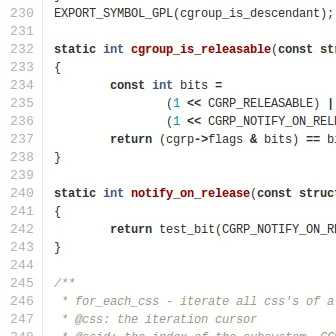
The code working its way to the Linux kernel is making the lib/group_cpus.c code
It's typically rare these days for the ATA subsystem updates in the Linux kernel to contain anything really noteworthy. But today some important fixes were merged for the ATA code to deal with a reported power management regression affecting the past number of Linux kernel releases over the last year. ATAPI devices with dummy ports weren't hitting their low-power state and in turn preventing the CPU from reaching low-power C-states but thankfully that is now resolved with this code.
In the weeks since the COSMIC Epoch 1 release, there have been two point releases so far with continuing to roll out minor new features and fixes. Some of the latest COSMIC enhancements include:
- With the COSMIC compositor there are now rounded window corners. All window corners can now be rounded and not limited to
Deploying vLLM for LLM inference and serving on NVIDIA hardware can be as easy as pip3 install vllm . Beautifully simple just as many of the AI/LLM Python libraries can deploy straight-away and typically "just work" on NVIDIA. Running vLLM atop AMD Radeon/Instinct hardware though has traditionally meant either compiling vLLM from source yourself or AMD's recommended approach of using Docker containers that contain pre-built versions of vLLM. Finally there is now a blessed Python wheel for making it easier to install vLLM without Docker
Following recent discussions over AI contributions to the LLVM open-source compiler project, they have come to an agreement on allowing AI/tool-assisted contributions but that there must be a human involved that is first looking over the code before opening any pull request and similar. Strictly AI-driven contributions without any human vetting will not be permitted.
LLVM has committed its "human in the loop" policy for tool-assisted contributions given an increase in AI-driven garbage:
A lot of HID subsystem updates have been queuing up ahead of the Linux 6.20~7.0 merge window in February. There is a lot of new hardware support on the way along with quirks for some existing hardware support ranging from laptop keyboard issues to enabling support for more PS4/PS5 guitars under Linux.
Some of the HID code queued so far into the HID subsystem's "for-next" Git branch include:
- Support for the Bluetooth-connected Rock Band 4 PS4
Patches are now positioned to go into the upcoming Linux 6.20~7.0 kernel cycle for supporting Intel discrete GPU firmware updating on non-x86 systems.
The Intel Xe kernel graphics driver was designed from the start to carry less x86'isms compared to the aging i915 driver designed for the era of just integrated Intel graphics paired with x86/x86_64 CPUs. With the Intel Xe driver it's possible to run Intel Arc Graphics