Wine 11.0-rc1 Released With TWAINDSM 64-bit Module For Scanners

As anticipated the first release candidate of Wine 11.0 is now available in working toward the annual stable release in January.

Alexandre Julliard just released Wine 11.0-rc1 that caps off the Wine 10.xx bi-weekly development releases and also marks the start of the code freeze until Wine 11.0 stable releases sometime in January. Until then it's the weekly release candidates to iron out any lingering bugs.

There was some last minute changes to land this week for Wine

Continue reading...

Linux Still Dealing With Quirky Firewire Devices As We Enter 2026

For Linux 6.19 as what will be the first stable kernel release of 2026, the IEEE-1394 Firewire stack continues dealing with device quirks and improving support for different Firewire-connected devices. In 2026 is also when the Linux Firewire maintainer plans to begin recommending users migrate away from the IEEE-1394 bus followed by closing the Linux Firewire efforts in 2029 .

For the Linux 6.19 kernel the Firewire code has added support
Continue reading...

NVIDIA Improves Block Layer Peer-To-Peer DMA In Linux 6.19

The IO_uring and block subsystem changes have been merged for the Linux 6.19 merge window with a few improvements worth highlighting this cycle.

The IO_uring merge brings several code clean-ups, support for mixed size SQEs, zero copy receive "zcrx" updates, and improved ring initialization. IO_uring also now supports getsockname() and getpeername().

Continue reading...

Jolla Trying Again To Develop A New Sailfish OS Linux Smartphone

Finnish company Jolla started out 14 years ago where Nokia left off with MeeGo and developed Sailfish OS as a new Linux smartphone platform. Jolla released their first smartphone in 2013 after crowdfunding but ultimately the Sailfish OS focus the past number of years now has been offering their software stack for use on other smartphone devices. But now it seems they are trying again with a new crowd-funded smartphone.

Sailfish OS has supported a number of Sony Xperia smartphones and a variety of OnePlus / Samsung / Google / Xiaomi
Continue reading...

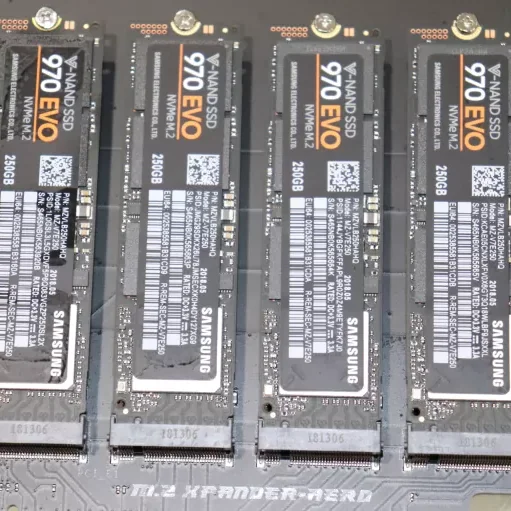
AMD EPYC 7773X "Milan-X" Performance & Power Nearly Four Years Later

Nearly four years have passed since AMD launched their EPYC Milan-X processors with 3D V-Cache. When recently rearranging some servers in the lab and realizing the four year anniversary was coming up in March, curiosity got the best of me in wondering where the Linux performance and energy efficiency on Milan-X is now with the latest Linux software stack compared to the numbers when Milan-X launched back in March 2022.

Continue reading...

Intel Updates Cache Aware Scheduling For Linux With Better NUMA Balancing

Intel engineer Tim Chen has sent out a second version of the proposed Cache Aware Scheduling patches for the Linux kernel to enhance the CPU performance of modern processors sporting multiple cache domains.

Cache Aware Scheduling aims to better Linux performance on modern CPUs by co-locating tasks sharing data to the same cache domain to enhance the cache locality and reducing cache misses and cache bouncing.

From their v2 patch message of the Cache Aware Scheduling benefits:
"[TL;DR]

Sappire Rapids:
hackbench shows significant improvement when the number of
Continue reading...

Venus Vulkan Driver Lands Mesh Shader Support In Mesa 26.0

Venus is the VirtIO-GPU driver that allows for Vulkan support within guest virtual machines permitting sufficient host driver support and other requirements in place with hypervisors like CrosVM and QEMU. The Venus driver now supports Vulkan's mesh shader capabilities and in turn advances the DXVK-Proton support for Linux gaming within VMs.

Merged this week is the Venus driver now able to advertiseVK_EXT_mesh_shader support, permitting sufficient host Vulkan driver support. Venus follows the Intel ANV and Radeon RADV drivers as well as the software-
Continue reading...

Intel Graphics Score A Big Win With Linux 6.19: Color Management & Xe VFIO Driver Merged

On top of enabling Xe3P graphics for Nova Lake and Crescent Island plus other changes like CASF adaptive sharpening for Lunar Lake and newer, another set of Intel kernel graphics driver updates were merged overnight as a big win for the open-source Intel graphics stack on Linux.

Following the main Direct Rendering Manager (DRM) pull request, a secondary set of changes were submitted and merged specific to the Intel driver code. There was some late Intel driver code for enabling plane color management support that was just submitted recently but
Continue reading...

Linux NTFS3 Driver Will Now Support Timestamps Prior To 1970

While NTFSPLUS continues to be developed as a new and modern NTFS open-source driver for Linux systems, at the moment NTFS3 from Paragon Software remains the most capable NTFS file-system driver within the mainline kernel. For the Linux 6.19 merge window a variety of fixes have landed for this driver.

While likely to not see too much use in practice, the NTFS3 driver with Linux 6.19 can now support timestamps prior to the year 1970. The first change noted for
Continue reading...

Intel Nova Lake Audio Support Merged For Linux 6.19

The sound subsystem updates were merged on Thursday for enabling a variety of new audio hardware with the Linux 6.19. Among the hardware standing out is getting Intel Nova Lake audio support in order.

With Linux 6.19 there is a lot of enablement work landing for Intel's next-generation Nova Lake processors. In addition to the Xe3P integrated graphics and other "NVL" bits, the Nova Lake audio support has landed too. The Intel HDA driver and Sound Open Firmware (SOF)
Continue reading...