
Important Performance Work: Overhaul Of RSEQ & CID Management Merged For Linux 6.19

An important set of patches were just merged a few minutes ago to Linux Git for the ongoing Linux 6.19 kernel with some important performance implications.

Intel Fellow Thomas Gleixner yesterday sent in the "core/rseq" pull request for Linux 6.19 Git that was then merged today by Linus Torvalds. This pull includes the patches rewriting the memory-mapped concurrency ID "MM CID" code within the kernel that was found to provide up to a ~14%+ performance improvement for PostgreSQL database throughput
Linux 6.19 Merges "klp-build" As New Livepatch Module Generation Solution

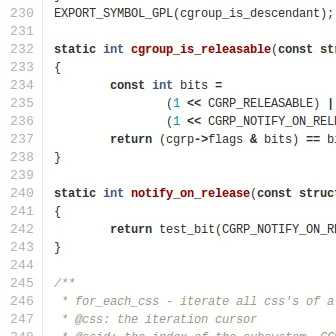
Merged as part of the objtool changes for the Linux 6.19 kernel is introducing the "klp-build" script as a new solution to generate livepatch modules using a source .patch file as the input. This klp-build effort was spearheaded by Josh Poimboeuf with ideas learned from the out-of-tree Kpatch project over the past decade.

Josh Poimboeuf has been working on this klp-build for a while and explained in the patch series cover letter:
"This series introduces new objtool features and a
Continue reading...

TornadoVM 2.0 Released For Java On NVIDIA PTX, OpenCL & SPIR-V Devices

TornadoVM 2.0 is out today as the newest feature release for this OpenJDK and GraalVM plug-in that allows Java programs to run on heterogeneous hardware. TornadoVM targets continue to be OpenCL, NVIDIA PTX, and SPIR-V compatible devices for a range of accelerator support for use from conventional Java code.

The TornadoVM API allows for task-level, data-level, and pipeline-level parallelism for taking advantage of modern GPUs/accelerator hardware from Java code. At Phoronix we have covered the TornadoVM progress the past
Continue reading...

Linux 6.19 To Allow File-Systems To Increase The Writeback Chunk Size

Linux has maintained a default 4MB minimum writeback chunk size but with the in-development Linux 6.19 kernel it will allow file-systems to override that minimum value. This in turn can help avoid fragmentation and yield a better experience for zoned rotation media and other uses.

Merged yesterday alongside other pull requests submitted by Microsoft engineer Christian Brauner was the feature of allowing file-systems to increase the minimum writeback chunk size. Brauner explained in the merged pull request:
"Allow file systems to increase the minimum writeback

NVIDIA 590.44.01 Beta Linux Driver Released With Wayland Improvements

NVIDIA today released the 590.44.01 Linux driver build as the first beta of their R590 series driver branch for Linux customers.

The NVIDIA 590.44.01 Beta Linux driver is now available for testing this next feature release of their official graphics driver stack. The NVIDIA 590 Linux driver series bumps the minimum supported Wayland version to 1.20. It also modernized its GNU C Library requirements as well to glibc 2.27 and

Canonical Now Offering Ubuntu Pro For WSL

Evidently Canonical has been pretty pleased with the uptake of Ubuntu on Microsoft's Windows Subsystem for Linux (WSL2) within enterprise/corporate environments as they are now offering Ubuntu Pro for WSL.

The newest paid solution from Canonical is Ubuntu Pro for WSL to provide security maintenance and enterprise support for Ubuntu LTS WSL instances on Microsoft Windows.

Subscribing to Ubuntu Pro for WSL also provides management solutions for system administrators managing Ubuntu Linux in a corporate environment, now for within the confines of WSL instances too.

Continue reading...

openSUSE Begins Rolling Out Intel NPU Support

Via the openSUSE Innovator Initiative, packaging of the Intel Neural Processing Unit (NPU) driver for the openSUSE ecosystem has begun. This is helping to jump-start the Intel NPU support within the openSUSE space although user-space applications ready to leverage the Intel NPU still remains very limited.

The Intel NPU driver support is now available via -- current "experimental" -- packages across openSUSE Tumbleweed, openSUSE Slowroll, openSUSE Leap 15.6, and openSUSE Leap 16.0. This Intel NPU driver is
Continue reading...

Optimized NUMA Distances For Intel GNR & CWF, Other Scheduler Improvements In Linux 6.19

The big set of kernel scheduler changes were merged on Monday for the in-development Linux 6.19 kernel.

New to the kernel scheduler code for Linux 6.19 is a new "NEXT_BUDDY" feature, which actually existed in the kernel before but ultimately decommissioned under less than clear conditions. This NEXT_BUDDY feature by Mel Gorman is explained in the patches as:
"The NEXT_BUDDY feature reinforces wakeup preemption to encourage the last wakee to be scheduled sooner on the assumption that the waker
Continue reading...

Kernel Credential Guards Merged For Linux 6.19

Merged yesterday for the Linux 6.19 kernel were "substantial" improvements to the kernel's credential infrastructure to provide guard-based management that allows for kernel code simplification and avoiding manual reference counting across many subsystems.

The new Kernel Credential Guards functionality is described by Microsoft engineer Christian Brauner as:
"Add with_kernel_creds() and scoped_with_kernel_creds() guards that allow using the kernel credentials without allocating and copying them. This was requested by Linus after seeing repeated prepare_

Steam On Linux Use Easily Hits An All-Time High In November

The Steam Survey results are out for November 2025 and continue to be very positive for the growing adoption of Linux gaming thanks to the success of the Steam Deck, the underlying Steam Play (Proton) software, and now further excitement thanks to the upcoming Steam Machine and Steam Frame .

A decade ago in the early Steam days the initial use was around 3% and back then the Steam user-base in absolute terms was much smaller than it is today. Back in October Steam on Linux finally re-
Continue reading...