Mesa 25.3 Merges Vulkan WSI Support For Using Atomic Mode-Setting

A nearly five year old merge request was merged today to Mesa Git for Q4's Mesa 25.3 release. This merge transitions the Vulkan windowing system integration (WSI) from using the DRM "legacy" kernel mode-setting APIs over to the modern atomic mode-setting interfaces.

Jonathan Marek opened the merge request back in August 2020 for moving the Vulkan WSI display code over to using the Linux Direct Rendering Manager atomic mode-setting APIs rather than the "legacy" mode-setting

Continue reading...

Intel

Intel Wildcat Lake OpenGL & Vulkan Support Upstreamed In Mesa

Intel Linux software engineers have recently been busy working on Wildcat Lake support primarily for the kernel drivers while now that work has been extended to Mesa for the Intel Iris Gallium3D (OpenGL) and ANV Vulkan drivers.

Wildcat Lake is believed to be the successor to Alder Lake N for next-gen low-power devices. Wildcat Lake won't be as powerful as upcoming Panther Lake SoCs but in any event the Linux support is being squared away ahead of launch.

On the Intel Xe kernel graphics driver side that
Continue reading...

AMD ROCm 6.4.2 Released With Official Support For The Radeon RX 7700 XT

While we await AMD to officially release ROCm 7.0 as the next major release of their open-source GPU compute stack, out this afternoon is ROCm 6.4.2 as the newest stable point release. ROCm 6.4.2 expands the officially supported Radeon consumer GPUs as well as bringing various fixes and enhancements to the various libraries and components making up this AMD GPU compute ecosystem stack.

Exciting with ROCm 6.4.2 on the consumer side is adding official support for the Radeon RX 77
Continue reading...

NVIDIA Makes More Hopper & Blackwell Header Files Open-Source

Last week NVIDIA open-sourced 12k lines of C header files for Blackwell GPUs to help in the open-source driver efforts, namely for Nouveau / NVK and the in-development NOVA Rust driver. On Friday they made public some additional header files for helping in the Blackwell and Hopper open-source driver enablement.

Following the previously-covered open-source header activity, on Friday this commit was pushed to their open-source documentation repository that provides Hopper and Blackwell DMA-copy class header files.

Continue reading...

AMD Strix Halo Radeon 8060S Enjoys Improved Ray-Tracing With Mesa 25.2

With the Mesa 25.2 open-source OpenGL and Vulkan graphics driver code having been branched last week ahead of its stable release in August, I carried out some fresh benchmarks on AMD's exciting Strix Halo platform using the Ryzen AI Max+ PRO 395 with Radeon 8060S Graphics to see where the Linux performance is now at for the RDNA 3.5 integrated graphics.
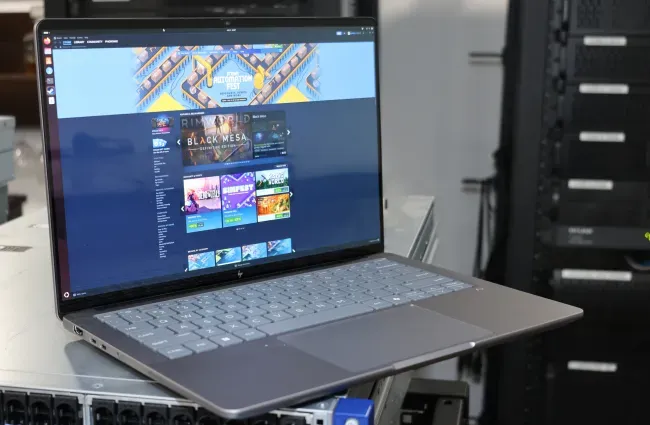
This round of Mesa 25.2 open-source graphics driver benchmarking was done with the HP ZBook Ultra
Continue reading...

EROFS Implementing Metadata Compression For Even Smaller Image Sizes

The EROFS read-only file-system ahead of the upcoming Linux 6.17 merge window has been working on metadata compression support to allow for even smaller container image sizes but at the cost of higher I/O latency.

Metadata compression has been in the works for EROFS to allow for even smaller image sizes compared to just compressing the file data. With EROFS users pushing for even greater compression, metadata compression is going to be a new option but with the cost of higher I/O latency with all of
Continue reading...

The Most Popular Clear Linux Benchmarks & Intel's Software Innovations Over Its History

Breaking on Friday afternoon was word that Intel is shutting down its Clear Linux project effective immediately after ten years of maintaining this high performance Linux distribution that relentlessly optimized for the best Linux x86_64 performance -- even when it benefited AMD x86_64 processors too. Here is a look back at the most popular of our Clear Linux testing over its decade in existence as a high performance Intel Linux OS.

Over the weekend I began working on some final Clear Linux distributions for showing how its
Continue reading...

Open Source LLM

LLVM Begins Landing Distributed ThinLTO "DTLTO" Support

The LLVM compiler toolchain has begun upstreaming support for Distributed ThinLTO "DTLTO" as a new means of handling ThinLTO compilations for leveraging link-time optimizations.

ThinLTO is the more scalable and incremental approach for handling link-time optimizations by LLVM. With Distributed ThinLTO, the distribution of backend ThinLTO compilations can be done via external distribution systems.

The DTLTO Design Overview explains of Distributed ThinLTO:
"DTLTO enables the distribution of backend ThinLTO compilations via external distribution systems, such as Incredibuild. Existing support for distributing ThinLTO compilations typically involves separate
Around 8% Of Debian Source Packages Are Building Against Rust Libraries

At last week's DebConf25 Debian developer conference in France, Rust packaging within Debian Linux was talked about by Fabian Grünbichler. There an interesting statistic was shared around the growing expanse of Rust usage within Debian and the open-source ecosystem at large.

Fabian noted in his DebConf25 presentation that around 8% of the source packages in Debian Sid are building against at least one librust-* package. That 8% figure for Debian source packages building against at least one Rust library package is around
Continue reading...

HarfBuzz 11.3 Delivers Significant Performance Improvements

HarfBuzz 11.3 released on Sunday as the newest release of this open-source text shaping engine. HarfBuzz 11.3 brings some nice performance improvements for this text shaping engine that is used by many prominent software programs and toolkits like Google Chrome, Firefox, GNOME / GTK, KDE / Qt, LibreOffice, OpenJDK, Godot, and many closed-source programs too like Adoboe Photoshop and others.

Making HarfBuzz 11.3 quite exciting are a number of performance improvements. The new HarfBuzz 11.
Continue reading...