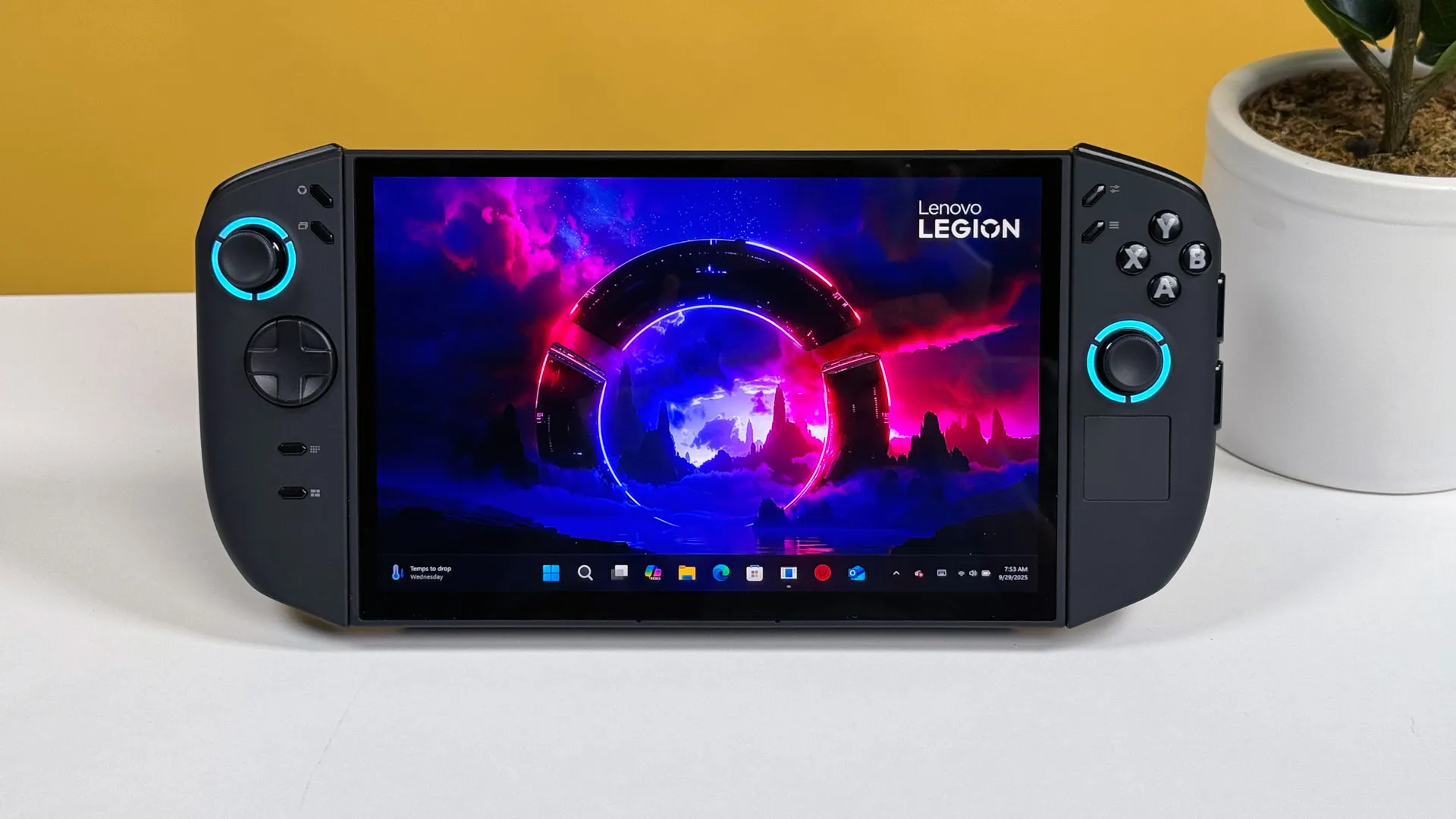
Lenovo Legion Go 2 review: AMD’s Ryzen Z2 Extreme makes gains at 800p

Tom's Hardware Verdict

The Lenovo Legion Go 2 boosts performance at low resolutions with the AMD Ryzen Z2 Extreme. Lenovo improves ergonomics and adds a gorgeous OLED screen, but the system is still bulky, heavy, and quite pricey.

Pros

  • +

    Beautiful OLED display

  • +

    Hall-effect joysticks

  • +

    Improved performance, particularly at 1280 x 800

  • +

    Improved ergonomics over original Legion Go

Cons

  • -

    Bulky and heavy

  • -

    Expensive (though that may be the norm now)

  • -

    Windows 1

Continue reading...

U.S. Commerce Sec. Lutnick says American AI dominates DeepSeek, thanks Trump for AI Action Plan — OpenAI and Anthropic beat Chinese models across 19 different benchmarks

(Image credit: Getty / Herstockart)

The National Institute of Science and Technology (NIST) has just completed a comprehensive test of Chinese and American AI models, with the results showing that models from OpenAI and Anthropic outperformed DeepSeek across 19 different benchmarks . U.S. Commerce Secretary Howard Lutnick shared the results on X , thanking President Donald Trump for his AI Action Plan to accelerate American AI innovation and infrastructure while encouraging its allies and friendly nations to adopt it.

“The report is clear: DeepSeek lags far behind

Continue reading...

Wi-Fi signals can now create accurate images of a room with the help of pre-trained AI — 'LatentCSI' leverages Stable Diffusion 3 to turn Wi-Fi data into a digital paintbrush

(Image credit: Tom's Hardware)

The Wi-Fi devices around us constantly share signals between each other, creating a perpetually reverberant environment where these radio waves become borderline spatially aware. Because the signals bounce not only between transmitter and receiver, but also off your walls, furniture, and everything else in your space, they end up carrying information about where things are. This echo-y data is referred to as Wi-Fi CSI (Channel State Information), and while it could previously be used to

Continue reading...

Undersea cable attacks drive sea drone development — Stark's Vanta unmanned vessels could be an affordable solution to protecting vital infrastructure

(Image credit: Stark )

Anglo-German autonomous systems specialist Stark has demonstrated its first unmanned surface vessels (USVs). You might more commonly call them sea drones, or drone boats. The new Vanta-4 and Vanta-6, pictured in stealthy black livery, were put through their paces during NATO exercises in Portuguese waters in September. Designed for affordability and mass production, these sensor-packed sea drones are touted as a great solution for monitoring vital undersea cables, which have been easy prey to the Russian

Continue reading...

AI-generated security camera feed shows Sam Altman getting busted stealing GPUs from Target — ironic video shows OpenAI CEO saying he needs it for Sora inferencing

(Image credit: Getty Images)

A hilariously ironic AI-generated video is making the rounds online, showing OpenAI CEO Sam Altman getting busted for stealing a GPU from a supermarket. In the clip shared on X , we see an Altman taking a GPU from a shelf at a store that looks like Target. He’s then accosted by a security guy, before protesting “Please, I really need this for Sora inference. This video is too good.” Funnier still is that the video appears to have been

Continue reading...

Intel

AMD in early talks to make chips at Intel Foundry, report says

(Image credit: Getty Images)

Intel is in the early stages of talks with AMD about making the fabless chip designer an Intel Foundry customer, according to a report from Semafor .

The report, citing "people familiar with the matter," doesn't say just how much of AMD's chip manufacturing would move to Intel. The company currently fabs its chips at TSMC. (Intel fabs some products at TSMC, too.)

In the past several weeks, Intel has seen a flurry of activity and investments

Continue reading...

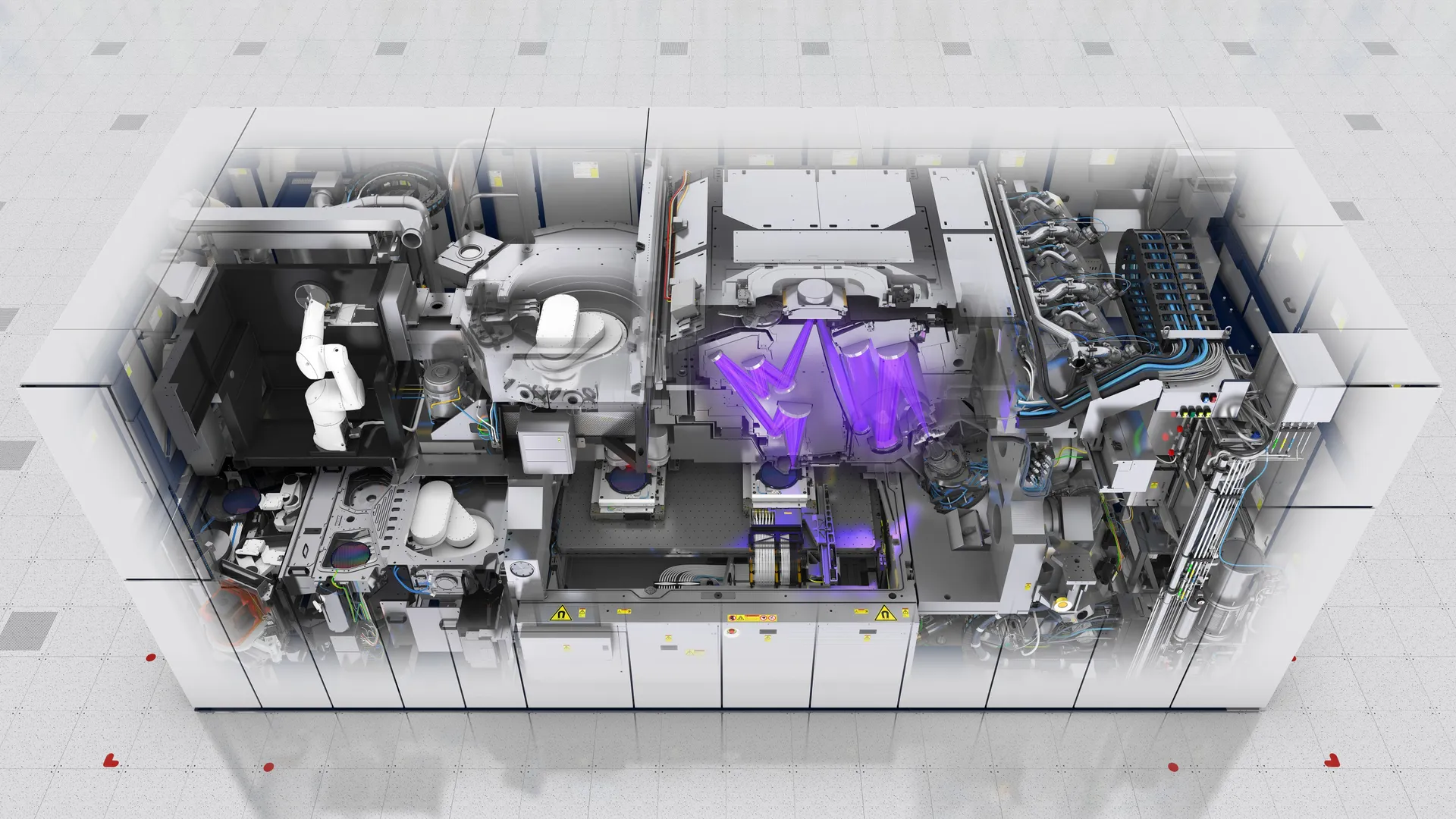
TSMC reduces peak power consumption of EUV tools by 44% — company to save 190 million kilowatt-hours of electricity by 2030

(Image credit: ASML)

As the world's largest foundry, TSMC runs dozens of fabs and consumes an enormous amount of electricity — around 9% of Taiwan's total power consumption. Last month, in an effort to reduce costs and meet sustainability goals, the company launched its EUV Dynamic Energy Saving Program, which is designed to cut the power consumption of its EUV lithography tools.

Starting in Sept. 2025, TSMC has been gradually rolling out its EUV Dynamic Energy Saving Program at its Fabs

Continue reading...

Apple Silicon

M5-powered iPad Pro breaks cover in GeekBench, scoring 4,133 in single-threaded tests — matches M4 Max and beats every single-core PC chip score

(Image credit: Apple)

It's well established by now that Apple's chip designs are really fast in single-threaded performance, as well as exceedingly power-efficient. Both the M4 Max in the Mac Studio and the A19 Pro ensconced in the iPhone Pro have been widely praised, but things have been quiet for a while on the iPad front, until today. A presumable M5 chip showed up in GeekBench, hitting a single-thread score of 4,133 points

Continue reading...

Microsoft slaps Game Pass Ultimate with a 50% price hike — PC Game Pass is now almost 38% more expensive, with hardly any new benefits

(Image credit: Microsoft)

Microsoft is significantly restructuring its Xbox Game Pass subscription service, and whether these changes are viewed as beneficial or detrimental depends on individual perspectives. The reality of the situation is that gamers will face a price increase of up to 50% for Game Pass Ultimate and roughly 38% for PC Game Pass plans.

Remember when the Game Pass Ultimate tier used to cost $16.99 before Microsoft increased it to $19.99 last year? It appears that the

Continue reading...

Intel

OpenAI's Stargate project to consume up to 40% of global DRAM output — inks deal with Samsung and SK hynix to the tune of up to 900,000 wafers per month

(Image credit: Samsung)

Samsung and SK hynix have inked preliminary agreements to supply memory to OpenAI’s massive Stargate data center initiative, reports Reuters . Instead of actual tested and packaged DRAM chips or HBM stacks, the companies will supply Stargate undiced wafers, according to Bloomberg , which highlights the vast volumes of memory and other components that Stargate needs. For now, it looks like Stargate could consume nearly half of global DRAM output.

Both Samsung and SK Hynix confirmed that OpenAI's anticipated demand could grow to 9

Continue reading...