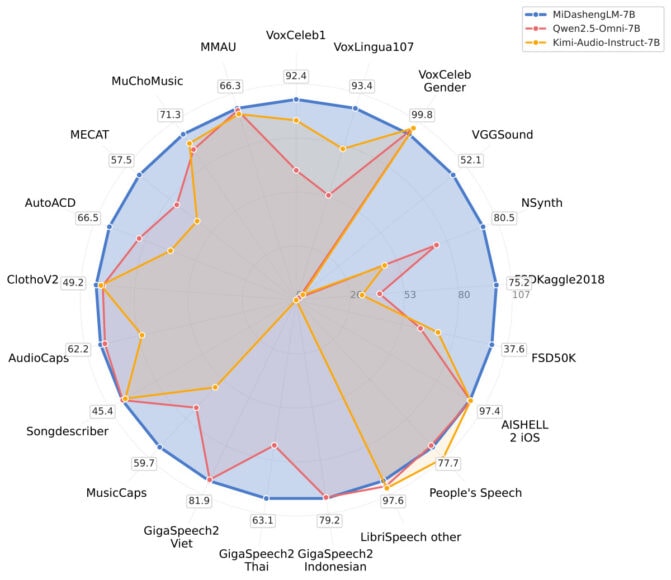
小米最近發表全新開源音聲理解大型語言模型 MiDashengLM-7B,基於自家 Dasheng 聲音編碼器及 Qwen2.5-Omni 技術開發。新模型在 22 個公開評測集中創下多項最佳成績,更有效「理解」週遭環境,推動智能汽車和智能家居等生態發展。
據小


小米最近發表全新開源音聲理解大型語言模型 MiDashengLM-7B,基於自家 Dasheng 聲音編碼器及 Qwen2.5-Omni 技術開發。新模型在 22 個公開評測集中創下多項最佳成績,更有效「理解」週遭環境,推動智能汽車和智能家居等生態發展。
據小

The AI revolution is upon us, but unlike past shifts in computing, most of us interact with the most advanced versions of AI models in the cloud. Leading services like ChatGPT, Claude, and Gemini all remain cloud-based. For reasons including privacy, research, and control, however, locally run AI models are still of interest, and it's important to be able to reliably and neutrally measure the AI performance of client systems with GPUs and NPUs on board.
Client AI
The paper, titled “Native Sparse Attention: Hardware-Aligned and Natively Trainable Sparse Attention,” was published on February 27, with Liang listed as one of 15 authors. The “native sparse attention” mechanism is a core improvement