India’s AI superpower dream lands US$200 billion – now comes the hard part

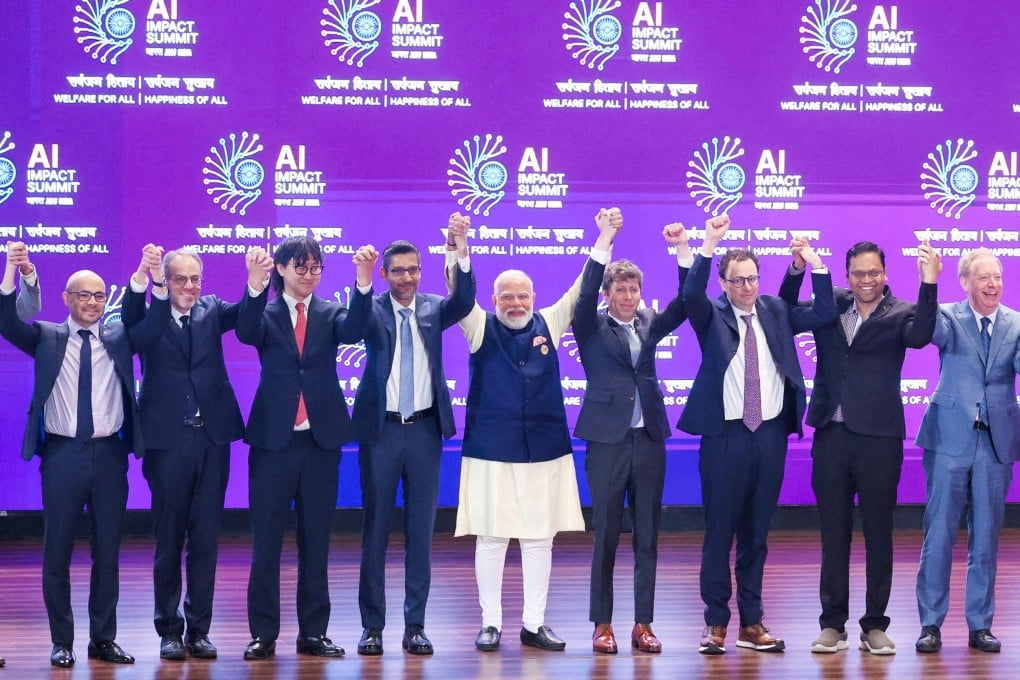
Indian Prime Minister Narendra Modi (centre) poses with global tech leaders including Google’s Sundar Pichai and OpenAI’s Sam Altman at the AI Impact Summit in New Delhi on February 19. Photo: India’s Press Information Bureau/Reuters

As tech titans and world leaders descended on New Delhi for the India AI Impact Summit in February, Prime Minister Narendra Modi set out his ambition for the country to become a major global power in artificial intelligence – a technology currently dominated by the United States and China .

“My vision is that India should be among the top three AI superpowers globally, not just in the consumption of AI but in creation,” Modi told Asian News International in an interview about the summit.
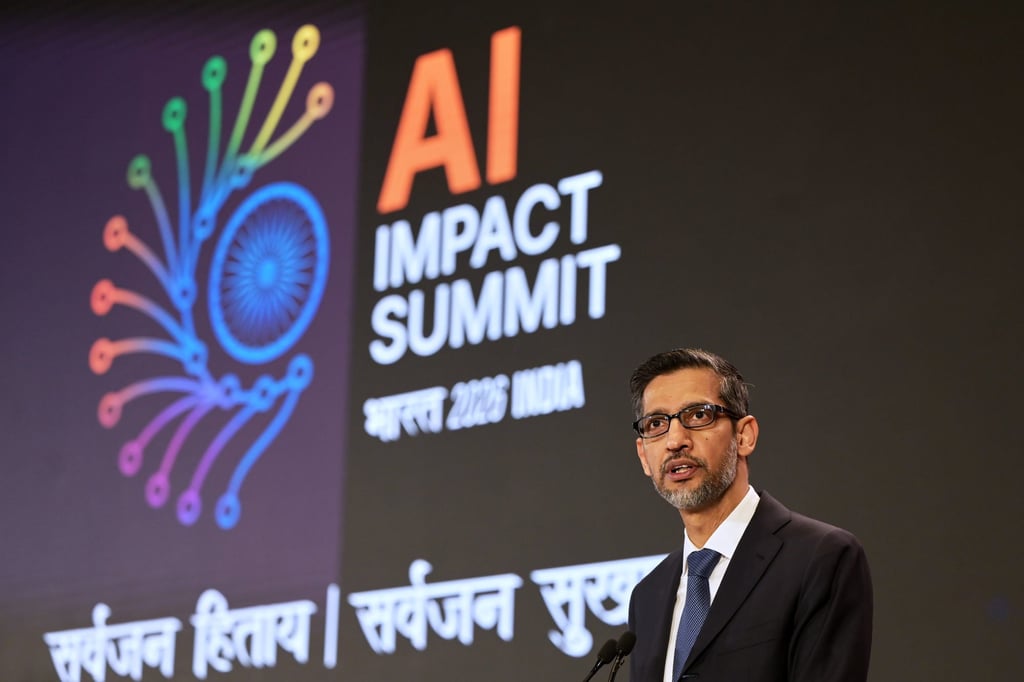
Google CEO Sundar Pichai speaks at the AI Impact Summit in New Delhi, India, on February 20. Photo: AP

Delhi is seeking to leverage its experience in building large-scale digital public infrastructure and its vast pool of tech talent as the foundation for this transformation.

That sales pitch certainly appears to be drawing attention. The five-day AI summit, which ran to February 20, produced a wave of investment pledges. India’s minister for electronics and IT, Ashwini Vaishnaw, announced more than US$200 billion in AI and deep-tech commitments over the next two years.

Reliance Group, the Indian conglomerate, pledged US$110 billion into data centres and related infrastructure, while domestic rival Adani Group said it would invest US$100 billion in renewable energy-powered AI data centres by 2035.

Microsoft , meanwhile, said it planned to invest US$50 billion by the end of the decade to help expand AI access across the Global South.