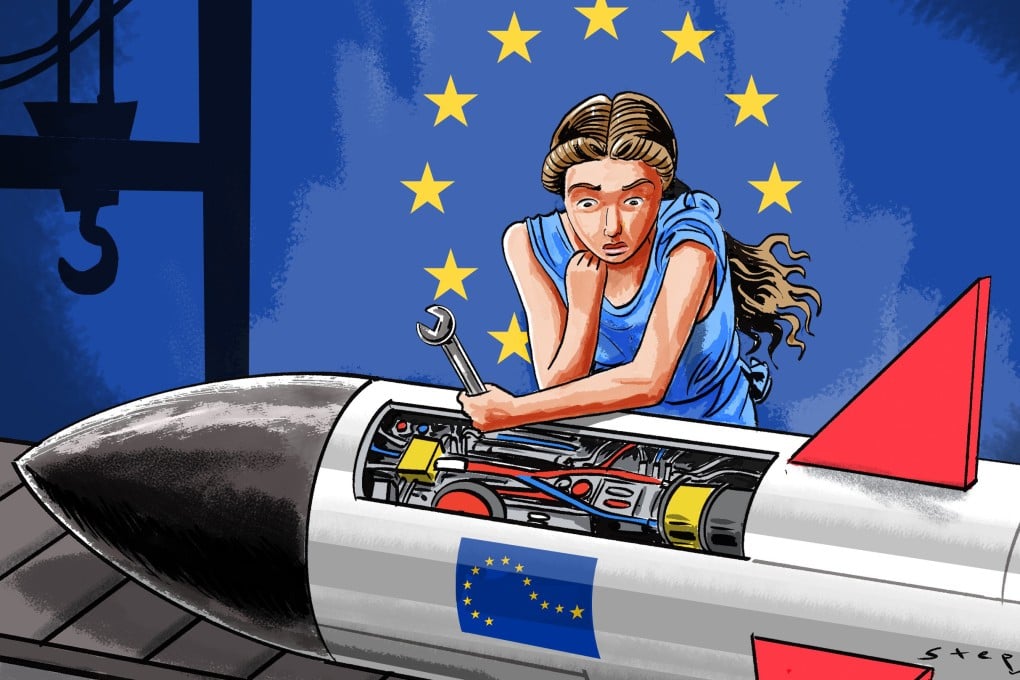
With the Middle East ablaze and war in Ukraine showing no sign of respite, a stark new consensus is hardening in Paris, London and Berlin that Europe must rearm.
Recently, French President Emmanuel Macron signalled a pivotal shift in deterrence by announcing an increase in the nation’s nuclear warheads and a “forward deterrence” plan. This follows a rare joint appeal from the British and German defence chiefs, who urged Europeans to build a moral and strategic case for a massive surge in military spending.
On the surface, the catalyst is the spectre of Russian aggression. Yet, beneath the rhetoric of defending democracy, a more uncomfortable reality is driving the push for rearmament: the fraying of the transatlantic bond. This has sparked a flurry of calls for technological independence and a European defence union capable of standing without Washington’s crutch.
But a fundamental question remains unaddressed: will a larger defence budget actually solve Europe’s security crisis? Before a single euro is spent on new hardware, Europe must first identify the actual source of its threats. Strategy, after all, is not about procurement; it is about political purpose.
After the Cold War, Europe’s strategic autonomy effectively evaporated, its defence posture increasingly tethered to Washington’s priorities. When the United States launched the “war on terror” , Europe followed into Afghanistan – a contribution later dismissed by US President Donald Trump.
When Washington pivoted to strategic competition with China, Europe adjusted its posture in the Indo-Pacific. Even in the current war with Iran, most European governments – with the notable exceptions of Spain and Norway – have aligned themselves politically with the US.