As per the report, it will take around two years for the DDR5 to come back to normal, which means the prices are going to stay high till 2028.
According to the report by 4Gamers, the long-awaited relief in the RAM market is still two years away. 4Gamers interviewed AMD's VP and GM of Client Channel Business, David McAfee, who predicted that DDR5 memory prices will return to normal in around two years. This is something that has been in the talks for a while now, as many reports indicated that the DDR5 prices will remain high throughout 2027 .
As per the interview, David believes that the AI boom resulted in such a rise in DDR5 memory prices. Many major memory makers are now actively expanding their fabs to increase the production of DDR5 memory to fulfill the demand. Due to a massive shift from DDR4 to DDR5 production, manufacturers have stopped prioritizing DDR4 memory modules, which is why the DDR4 capacity has been declining over the last few years.
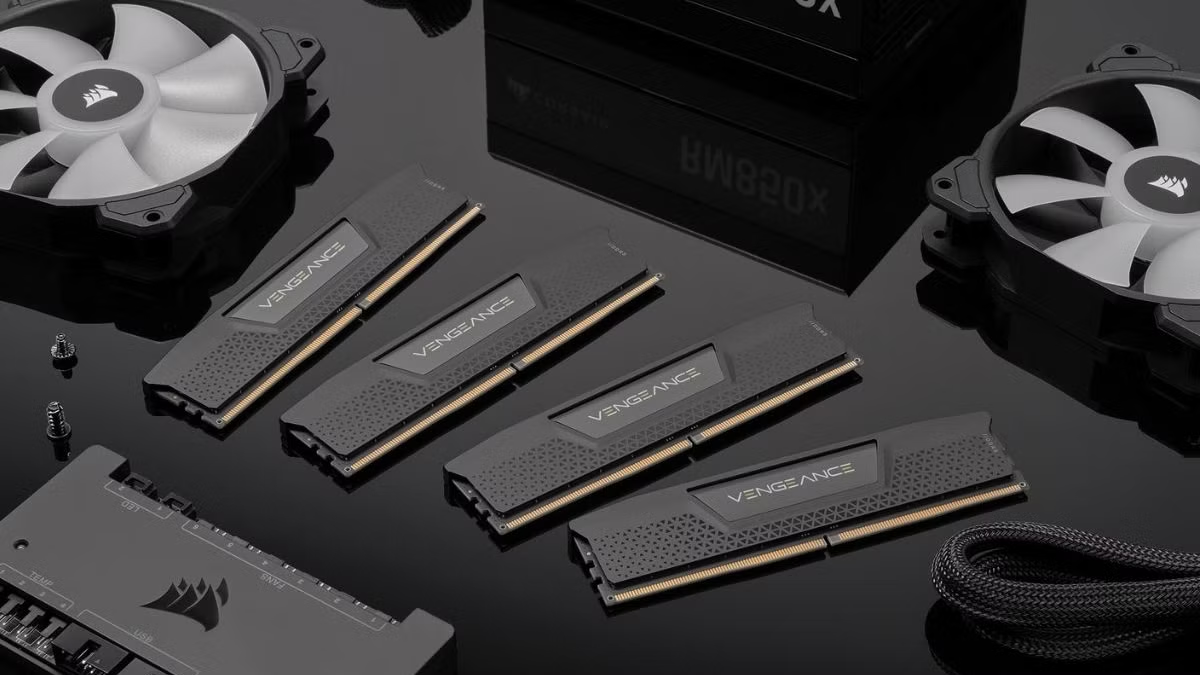
That said, with such a rise in DDR5 prices, David expects that this will continue for at least two more years before the prices come back to normal. This clearly confirms previous reports that the "shortage" in the mainstream market will remain throughout 2026 and 2027. DDR5 memory prices are at an all-time high, and in most regions, these memories are selling for 4-5X higher.
Due to such a rise, a large section of users has been forced to adopt older DDR4-based platforms. Surely, there are some regions where the popularity of DDR4 platforms has dropped significantly , but overall, DDR4 memory sells like hotcakes despite 2-3X higher prices, as the demand has increased drastically. Many manufacturers are now r amping up the production of DDR4-compatible motherboards , and even chip makers like AMD have returned with one of their most iconic processors, like Ryzen 7 5800X3D.
News Sources: 4Gamers , via Videocardz
Follow Wccftech on Google to get more of our news coverage in your feeds.