In a major development, the US government has banned imports of certain foreign-made robots and power equipment to protect the ongoing AI infrastructure buildout in America. The restrictions were unveiled by the Federal Communications Commission (FCC) through an update to its Covered List. The Covered List is a list of equipment that first emerged to cover and restrict Huawei's equipment from being used in the US due to espionage risks. FCC bans foreign-made humanoid robots over surveillance fears, striking NVIDIA partner Unitree the hardest
While the FCC's announcement doesn't explicitly mention China, it does restrict foreign-produced "advanced robotic devices" and "connected power inverters produced in foreign countries." The Commission defines robotic devices to include mobile robots, humanoids and other devices.
As part of its rationale for the announcement, the regulatory agencies outlined that an interagency body convened by the White House determined that the foreign-produced equipment could "create supply chain vulnerabilities that could disrupt U.S. economic and national security and could create a cybersecurity risk that threatened American critical infrastructure."
Reuters, which first reported the ban, quoted Counterpoint Research to outline that Chinese robotics firm Unitree would be the hardest hit by the latest announcement. Unitree is an important NVIDIA partner when it comes to using the AI company's GPUs to power a humanoid robot.
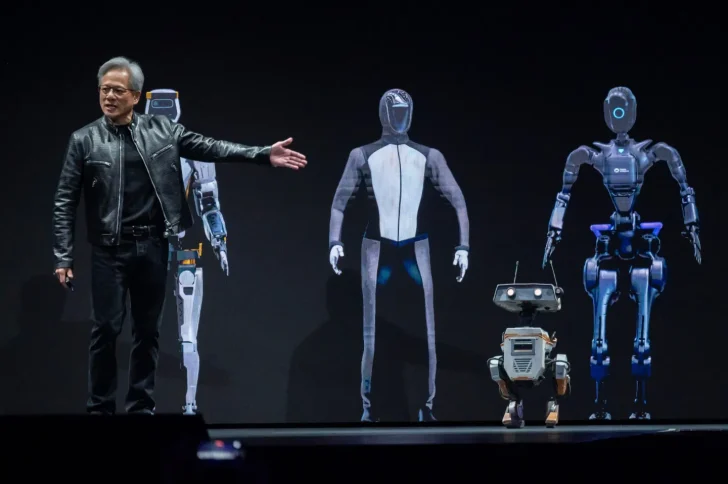
The National Security Determination for robots claims that foreign-produced systems can create cybersecurity risks for America. It adds that these systems can also "collect data that could be leveraged by malign actors to surveil Americans, enhance the capabilities of foreign intelligence services, or to remotely commandeer the robots.” The ban on robots covers new products and not older models.
As for the inverters, the Determination also notes cybersecurity risks. The "remote connectivity" features of the devices "could enable foreign firms to turn off the inverters or use them to collect and exfiltrate data, facilitate remote access and surveillance by foreign government actors, or be otherwise exploited through a cyberattack," it notes.
Unitree was in the news in 2025 when researchers discovered vulnerabilities in its robot dogs. The backdoor allowed remote surveillance of the robots' users and the devices' control, with a Common Vulnerabilities and Exposures listing (CVE 2025-2894) confirming the issue. Unitree fixed the vulnerability in May and outlined that a third-party remote control service was to blame.
Other risks that the Determination identified for the humanoid robots include :
- A vulnerability that "offered ready access to live camera feeds, microphone audio, and detailed maps of consumers’ homes."
- A humanoid-specific vulnerability that "allowed a remote actor to take over the operations of the humanoid robot and scan for other humanoid robots in the area, providing malign actors the ability to create a humanoid botnet that could spread without user intervention."
Both these reports surfaced in 2026, with the first being discovered accidentally after a DJI Romo vacuum cleaning robot user reverse-engineered the robot's cloud server communication system to connect it with his PlayStation 5 controller. The result saw him being able to control close to 7,000 devices globally across 24 countries.
Follow Wccftech on Google to get more of our news coverage in your feeds.