Intel's next-generation Diamond Rapids "Xeon 7" CPU has been spotted, featuring 32 cores & 240 MB L3 cache on the 18A-P process technology.
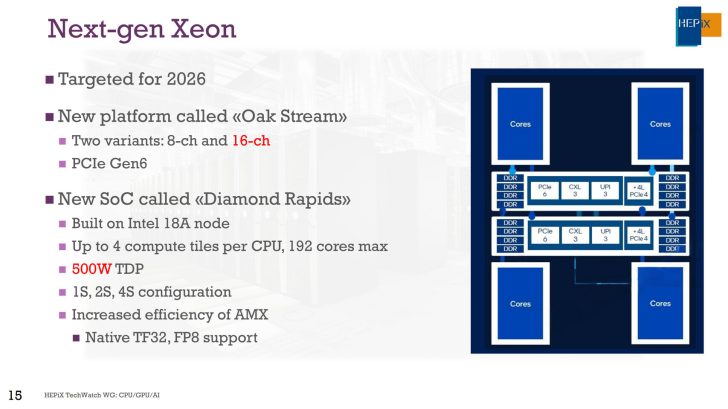
Diamond Rapids, the next-gen Xeon family , is going to be the next step up for Intel's data center ambitions. The processor is one of the first that is being built upon the enhanced 18A-P process technology, and will go on to pack up to 192 cores, PCIe Gen6 support, and 16-channel memory. These chips will compete with AMD's Zen 6-based EPYC Venice and Verano families, which feature up to 256 cores and some impressive capabilities on TSMC's 2nm process tech.
Intel has slowly been sharing some details of its Diamond Rapids "Xeon 7" family, and the most crucial of these details is the Oakstream platform, which will support these CPUs. Now, one of the Intel Oakstream reference platforms, codenamed Johnson City , has been spotted at SiSoftware by Momomo_US .

As per the listing, the Intel Johnson City (2SPCRP) is a reference evaluation platform for Diamond Rapids "Xeon 7" CPUs. This platform has been spotted with an unnamed Intel Diamond Rapids-P CPU featuring up to 32 cores, a clock speed of 1.1 GHz, 64 MB of L2 cache, & 240 MB of L3 cache.
The CPU is an early engineering sample since it was running at just 1.1 GHz, but this gives us an idea of how well 18A-P is progressing. This next-gen node, which is a boosted version of 18A, is already in risk production with the first Diamond Rapids chips rolling out and being evaluated at Intel's test labs.
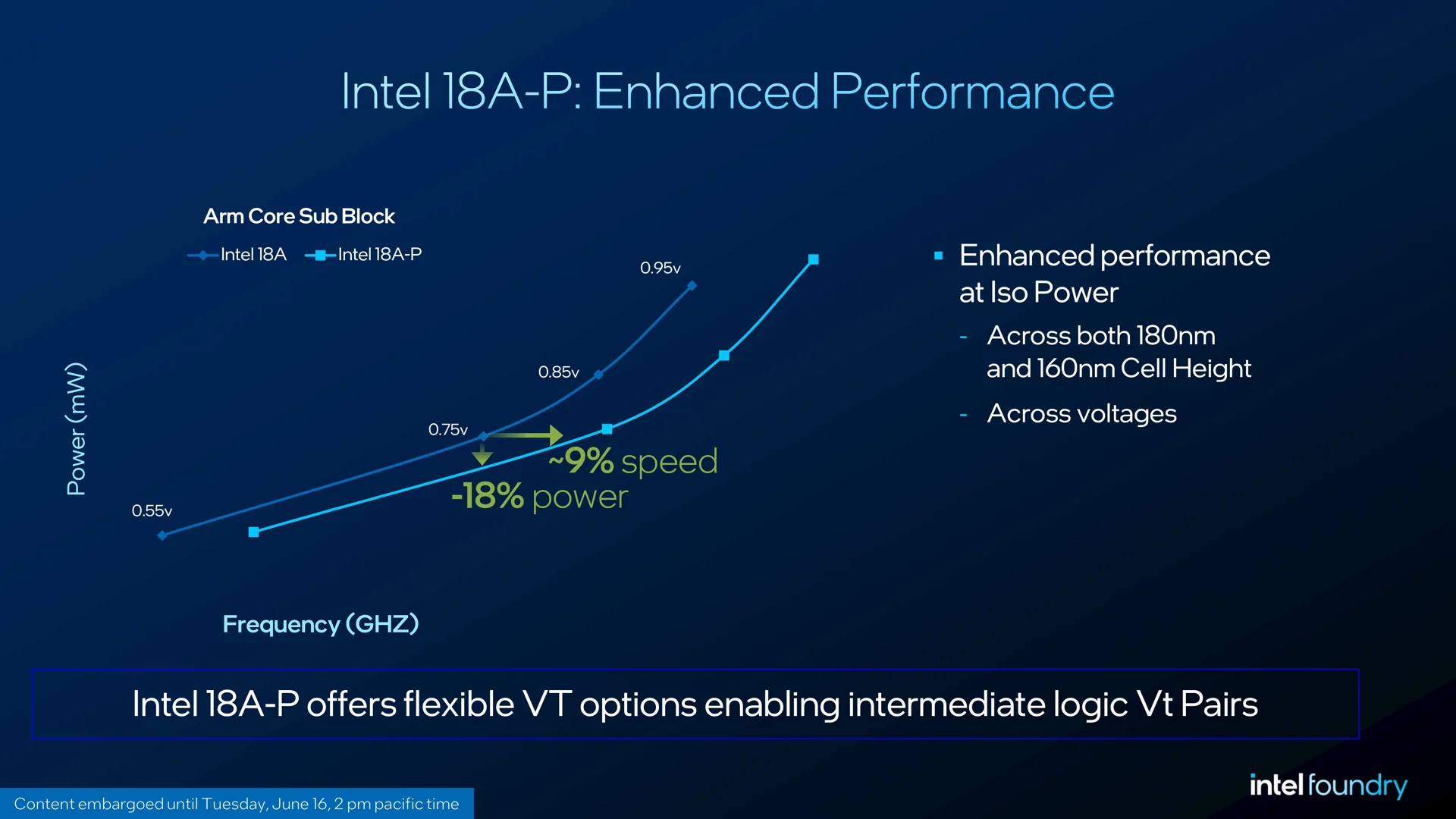
Intel's 18A-P delivers a 9% boost in performance at the same power, or 18% lower power at the same performance (on a standard ARM core sub-block) versus 18A. It builds upon the same GAA and backside power foundation and offers full design-rule compatibility with Intel 18A, allowing reuse of existing IP and design flows.
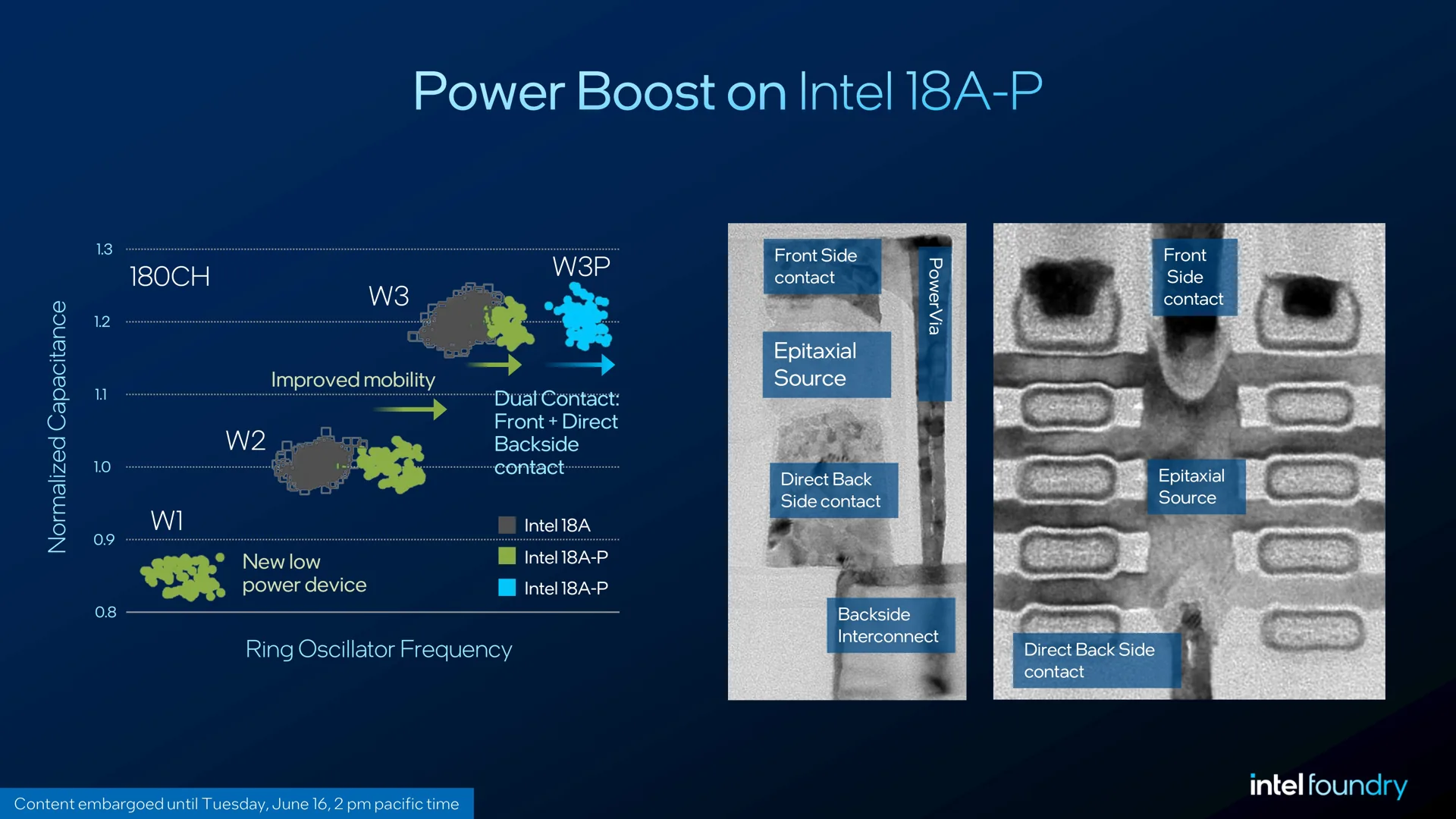
18A-P also comes with Power Boost tech , which will become the industry's first implementation of a novel dual-contact architecture that is enabled by PowerVia backside power delivery for both NMOS and PMOS transistors. With this, 18A-P offers enhanced performance at a matched footprint for power-constrained applications. 18A-P offers 160nm and 180nm high transistor cells.
The Intel Johnson City RCP supports up to 650W CPUs while the Oakridge Platform houses next-gen Xeon CPUs on a massive LGA 9324 socket . Additionally, the 240 MB L3 cache is a big number, but Intel has offered up to 288 MB of cache on its Granite Rapids "Xeon 6730P" chip, while AMD is offering up to 256 MB of L3 cache on its 32-core EPYC 9005 chips.
We can expect Intel to offer even higher caches in specific configurations. Now, as for the AMD vs Intel debate in the enterprise segment, AMD has already edged out Intel with the launch of Zen 6 EPYCs , which are on schedule for Q3-Q4 rollout this year, and ramp in early 2027. AMD expects a doubling in its data center CPU segment and is expected to go beyond 50% market revenue by the end of this year thanks to heightened customer response to its latest launches.
Intel, on the other hand, has a lot to prove with its Xeon 7 lineup, which is expected next year, but even the blue team is placing its cards on the Xeon generation that arrives after Diamond Rapids, and that is Coral Rapids ( bringing back SMT support ). So for now, Intel may try to be competitive in perf/$, but overall performance and efficiency advantage will lie with AMD's EPYC portfolio. Intel also expects greater customer adoption for its Xeon families as Agentic AI continues to drive the CPU segment to new heights.
Follow Wccftech on Google to get more of our news coverage in your feeds.