Windows 11 and its apps being RAM guzzlers isn’t a surprising revelation, but Microsoft has committed to making the OS as efficient as possible for systems housing 8GB of RAM . Unfortunately, that progress is yet to be witnessed as the company’s Weather app can consume a chock-full of memory. This is exceptionally frustrating for those who are trying to find ways to make Windows 11 work with a minimum amount of RAM or those who don’t know their way around the platform.
In addition to hogging a ton of system RAM when performing the most basic of tasks, Windows 11’s Weather also throws a ton of ads in your direction since Windows Latest has found that the app is nothing more than MSN adware. Upon first release, we noticed that Weather’s memory usage immediately jumps to 1GB, then settles down around 600MB while doing nothing.
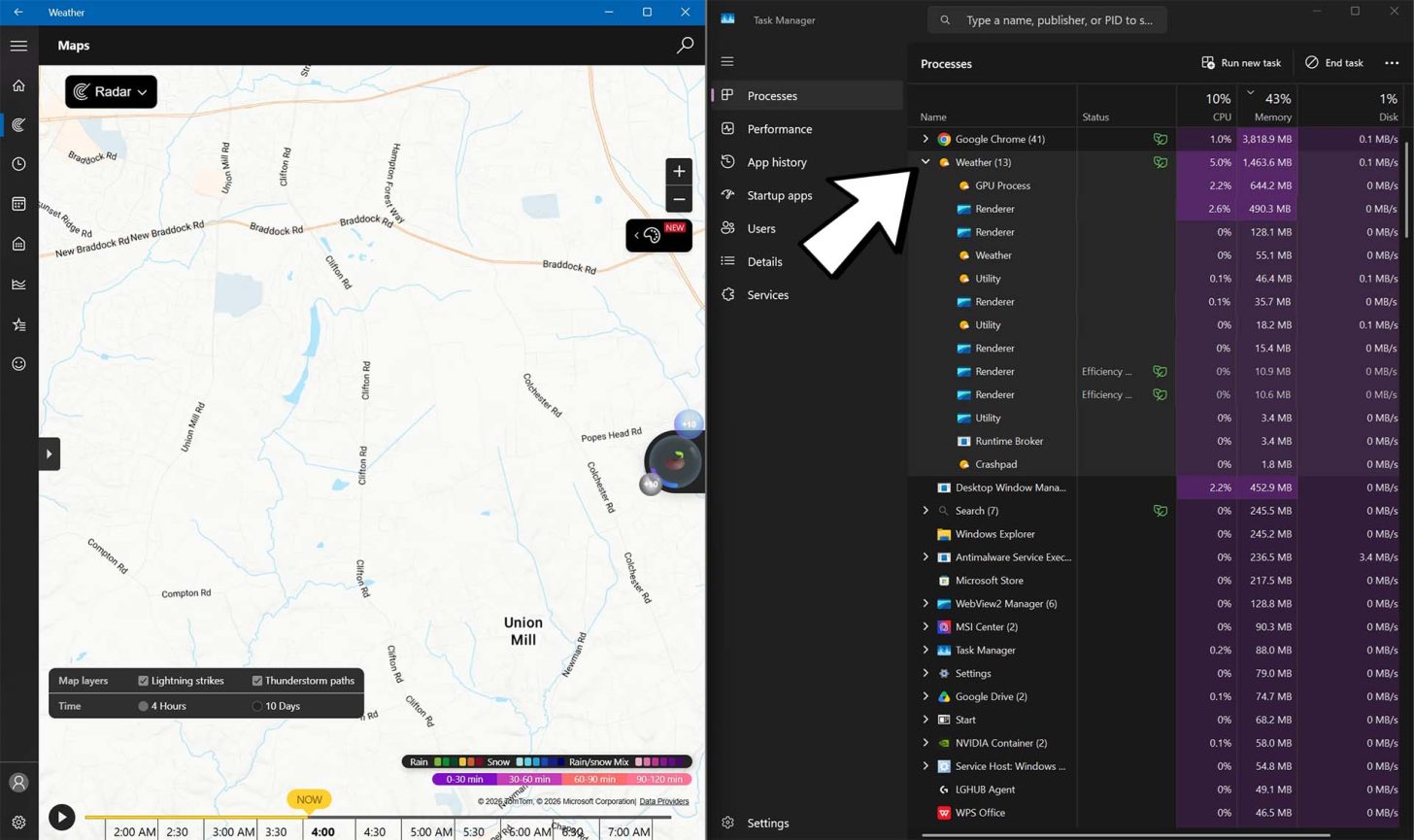
The lowest the app ever went was around 500MB, but that was when it was doing practically nothing. As soon as you begin interacting with the program, the RAM counter rises like there’s no tomorrow, and as you can see in the image, memory usage goes up to 1.5GB, with spikes of 1.6GB that we weren’t able to capture. Since our system has 32GB of RAM, we weren’t bothered at all and wanted to re-run the same behavior that Windows Latest experienced.
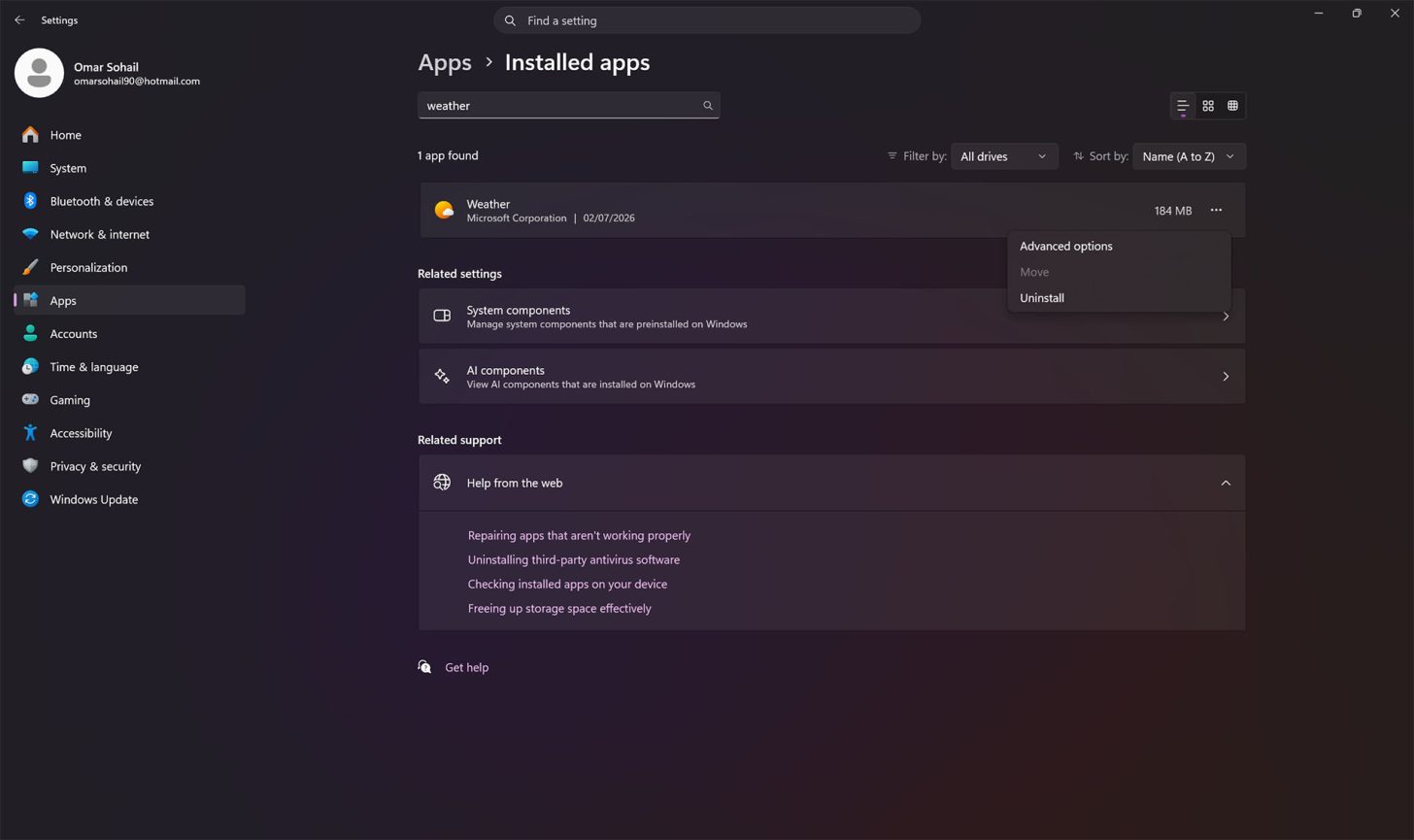
However, for systems running 16GB or even 8GB of RAM, running the Weather app can immediately cause unnecessary delay and performance issues because you’ll run out of system memory, forcing Windows 11 to begin using the SSD temporarily. For those who don’t know their way around Microsoft’s latest operating system, it’ll be troublesome for you to find out why your system feels sluggish when it’s the work of a single program.
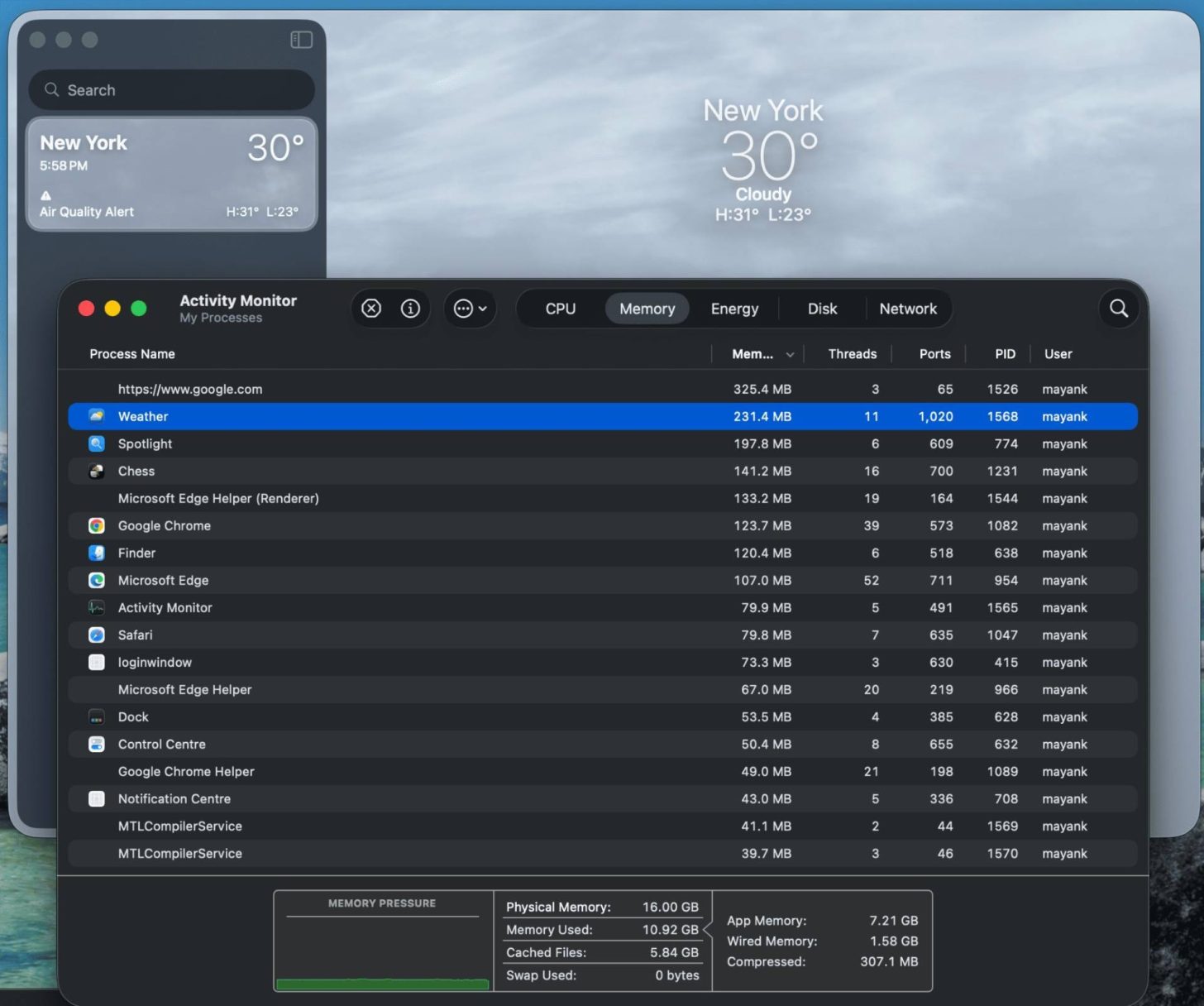
What’s even more appalling is that the app displays a multitude of ads while consuming a boatload of memory, making it more of an encumbrance. In comparison, macOS’ built-in Weather app utilizes less than 250MB of system memory, indicating that Microsoft has a ton of ground to cover when optimizing Windows 11 for 8GB RAM systems, a promise that the company has currently failed to deliver, as evidenced by the app.
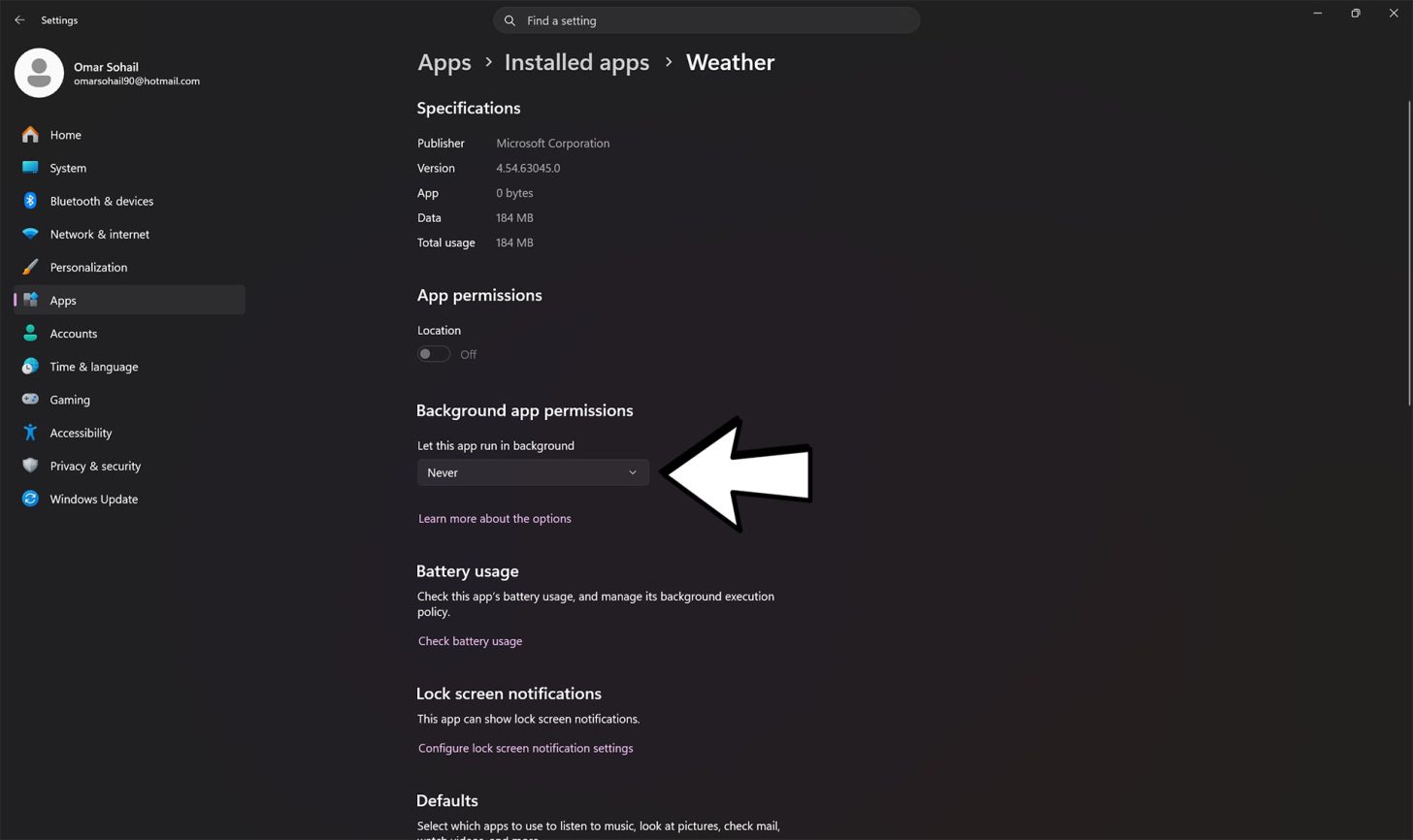
If you don’t wish to rely on viewing any kind of empirical data regarding the weather, it’s better to either outright uninstall the Windows 11 app or, at the bare minimum, set it so it doesn’t run in the background, consuming valuable system resources that could be better used for an important task. For those who prefer the Weather app, Microsoft had better move with purpose to optimize its operating system for the masses.
Follow Wccftech on Google to get more of our news coverage in your feeds.