As the iPhone 18 Pro and iPhone 18 Pro Max face a possible price hike, Apple has reportedly faced yet another setback amid the DRAM crisis: the cancellation of its highly ambitious iPhone 20 release. According to analysts, the next-generation device couldn’t be mass-produced in higher quantities without introducing production defects.
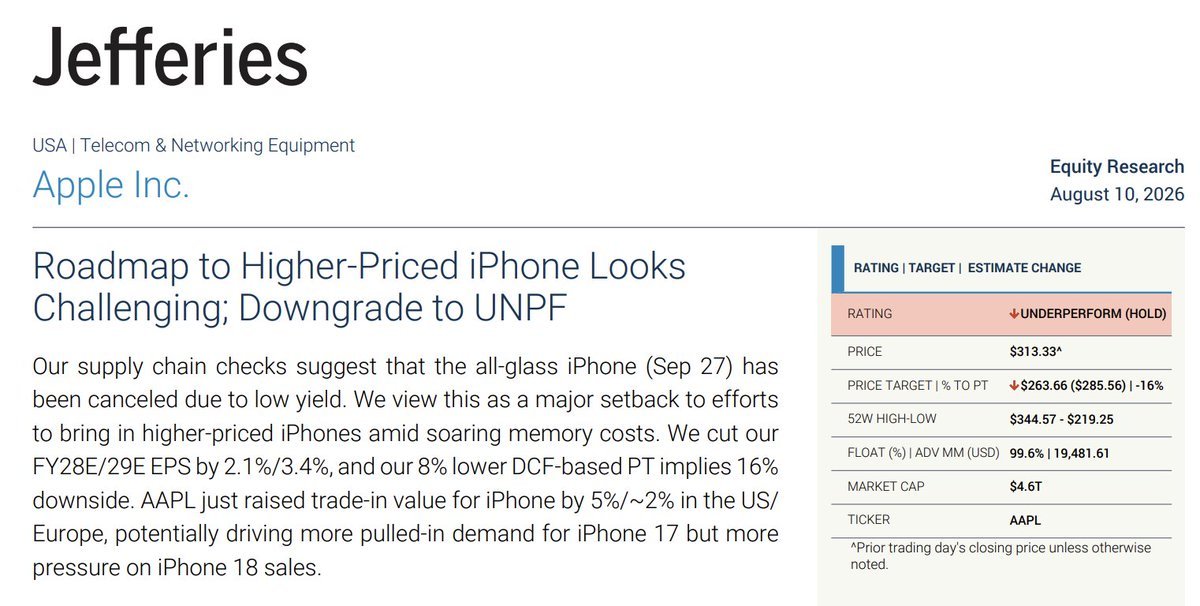
Research firm Jefferies states below that the cancellation of the iPhone 20 means Apple won’t have a high-margin product to provide it with a sufficient financial cushion as memory costs continue to rise. Similar to the California-based titan introducing two premium handsets later this year, Apple was expected to launch the iPhone 20 Pro and iPhone 20 Pro Max next year, but according to the latest update, the company will have to stick with the older design.
“Our supply chain checks suggest that the all-glass iPhone (Sep 27) has been canceled due to low yield. We view this as a major setback to efforts to bring in higher-priced iPhones amid soaring memory costs.”
Details from Seeking Alpha mention that the all-glass iPhone was estimated to have an Average Selling Price (ASP) of $2,060, making it incredibly steep to be entertained by the masses, but it would provide Apple with a solid gateway to promote the futuristic design and generate healthy margins. Aside from the difficult exterior, the quad-curved display would be exceptionally difficult to mass-produce at higher volume.
With Samsung reportedly the exclusive supplier of this advanced panel, it may have run into manufacturing difficulties. Knowing all too well the pitfalls of having just one supplier for a specific component, it’s possible Apple would have been paying a boatload for the next-generation OLEDs. In an earlier report, we mentioned that the iPhone 20’s display suffered from a distortion effect at the edges , which resulted in reduced maximum brightness.
Even though we’re speculating at this stage, it’s possible that this flaw resulted in a short lifespan of the display, forcing Apple to pull the plug on its development. Jefferies analysts haven’t mentioned whether we’ll see the all-glass design in 2028, but we’ll keep readers updated on the latest.
Follow Wccftech on Google to get more of our news coverage in your feeds.