Apple’s Liquid Glass UI could be the next aesthetic change to copy, particularly that transparency slider, but Microsoft doesn’t wish to adopt this approach. According to an executive, Windows 11 won’t offer additional options for users to tweak the appearance of the operating system with customization tools, and provides his reasoning for that. Fortunately, he hasn’t denied that such a release won’t happen.
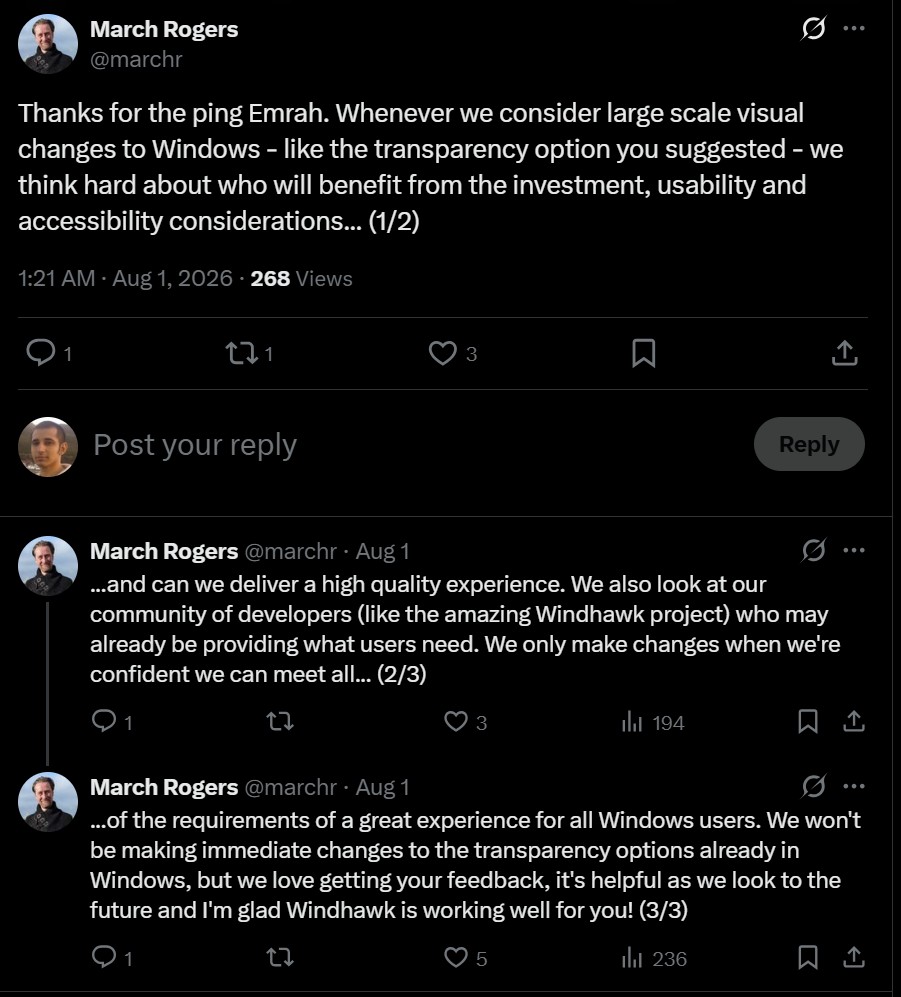
The software giant’s Partner Director of Design, Mark Rogers, was pinged by Emrah on X, inquiring about a transparency slider that could arrive to Windows 11, similar to Apple’s Liquid Glass. While Rogers doesn’t outright deny that this addition won’t make it to the operating system, he mentions that there are excellent third-party tools like Windhawk that offer the same effect. He also says that these changes will only arrive when Microsoft believes it can offer a terrific experience to users.
“We also look at our community of developers (like the amazing Windhawk project) who may already be providing what users need. We only make changes when we're confident we can meet all of the requirements of a great experience for all Windows users. We won't be making immediate changes to the transparency options already in Windows, but we love getting your feedback, it's helpful as we look to the future and I'm glad Windhawk is working well for you!”
We’d like to believe that the reason Windows 11 won’t get a native transparency slider sooner is that Microsoft’s plate is already full in tackling other aspects of its current operating system. For instance, the company is working to make the OS more memory efficient , allowing 8GB RAM systems to run fluidly. This also includes optimizing the apps. For instance, the Weather app can consume 1.5GB of memory , compared to less than 250MB on macOS.
It’s also possible that Microsoft has kept its hands away from introducing such customization options because adding a transparency slider might not be resource-friendly for Windows 11 systems. After all, it took Apple an entire year to optimize Liquid Glass when it announced at this year’s WWDC keynote that a new CPU scheduler would open apps up to 30 percent faster.
Considering that Microsoft cannot even optimize a Weather app to utilize the same amount of RAM as macOS’ native one, it would likely face severe optimization obstacles. Machines with a ton of memory and a beefy CPU would only be able to render these transparency effects. In short, Microsoft has bigger priorities to tackle, and once those are dealt with, perhaps the company will turn its attention to such features.
News Source: March Rogers
Follow Wccftech on Google to get more of our news coverage in your feeds.