At a recent preview event for Star Wars Zero Company joined by Wccftech, four key developers (Game Director Greg Foertsch , Lead Designer James Brawley , Narrative Director Aaron Contreras , and Lucasfilm Games' Executive Producer Orion Kellogg ) answered a lot of questions about the game from the assembled press, revealing many juicy details about the upcoming single player turn-based tactics title due on August 27 for PC, PlayStation 5, and Xbox Series S and X.
Keep scrolling to read the whole conversation, edited only for grammar and clarity. To read our first impressions with the preview build, head to the hands-on article .
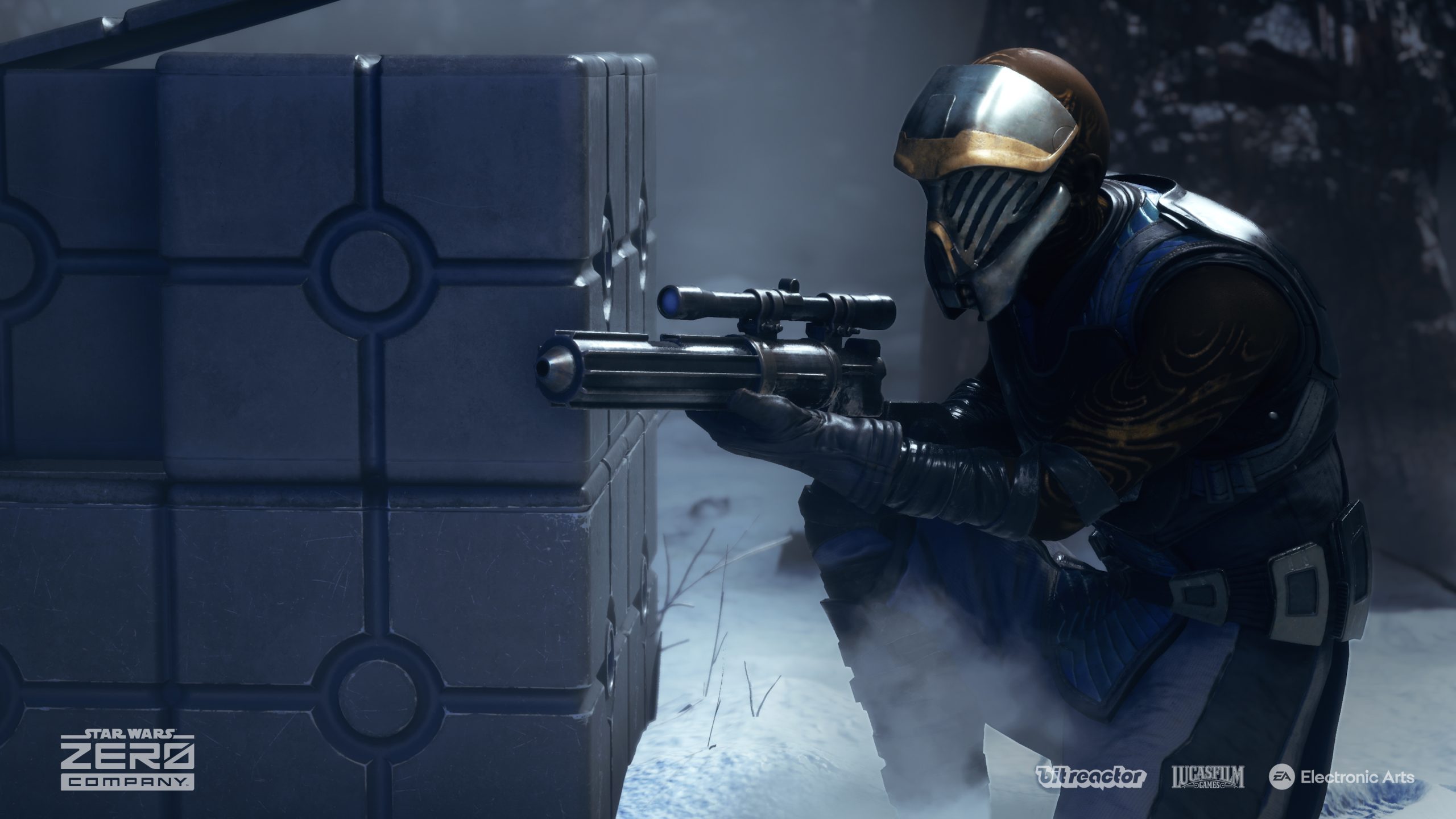
What is something that you are most excited for players to get to experience with Star Wars Zero Company?
Greg Foertsch: So, I'm pretty excited to finally share this with everybody. You're going to get a chance to play a really good chunk of the game and get to experience kind of what we're talking about with the idea that depth shouldn't cost you elegance . You should experience great presentation values and a great story and amazing gameplay. That should be an expectation, and I can't wait for all of you to get a chance to play that.
Orion Kellogg: I'm most excited, I guess, specifically for people to experience the feeling of their Zero Company coming together. You're assembling an unlikely group of characters. You're telling a really unique Star Wars story, and it's really one that could only happen in this war beneath the war in the Clone Wars, and that extends into the gameplay, too. You're finding creative ways to use the Force or weaponize Astromechs, so we are delivering experiences that are only in Star Wars. I can't wait to see the squads people create and the stories they tell.
Aaron Contreras: This is the first tactical strategy game I've worked on, not my first Star Wars. I'm really excited and have been excited throughout the process. It's been a real challenge to kind of meld a Star Wars story with, you know, tactical gameplay, including permadeath . We have these great, rich characters. Tell Ray Volkov, she's got an incredible Jedi story, but she could catch a spare blaster bolt in the head pretty early on in the game, and then she's gone, and the story goes on without her. So, really excited to see how that plays out for all of you, and just how we have the authored heroes and then the custom operators and how they blend together so well on the battlefield. Mix your team up; definitely experiment with taking different people out on the battlefield.
James Brawley: I'll definitely second that. I'm really excited that we can give players a Star Wars game that I think many people never thought they'd get. I really like to see, and I have liked to see over the course of the development of Star Wars Zero Company, the really cool team compositions that people come up with, the creativity they apply not only to how their characters are customized, but how they build their squads, how they build their individual characters, and then how they use them in combat. It's been a lot of fun, and I'm really looking forward to seeing what our player base is going to do with all of that.
Can main story characters really die forever? How does the game's story adapt to that possibility?
Aaron Contreras: Yes. Yes, they can. Permadeath is a thing in Zero Company. You can toggle it on or off, but we recommend playing with it on for the most intense experience . If Hawks, who's your player character, if they die, it's game over, and you need to restart that mission, but every other character in the game is vulnerable, with certain exceptions. So, when introducing a character in a mission, or if it's a hero mission for a character, their death would mean failure and a restart; otherwise, once a character has had their introduction and has become part of the team, they're as vulnerable as anybody else.
How was Star Wars Zero Company born? What was the inspiration behind it? Was there a strong desire for the team to tell a story set in this particular era of Star Wars? And why did it feel like the right time?
Greg Foertsch: I can start with that one. I think the genre has never truly had an IP like Star Wars enter it and make it visible to so many people. And again, this sort of belief that the genre itself can support, in a lot of ways, better storytelling, better visuals, more immersion. It's the right time to do it . I think that this was something a long time coming, and it's about time it got here. I am really excited to kind of share that with everybody.
Orion Kellogg: Yeah. And I think for us at Lucasfilm Games, we know that fans have wanted to play a game like this for a very long time. And at the beginning of our chat, you heard Greg list off the pillars that are very natural to a tactics game. We have strategy and combat. We have meaningful choices. We have the team's talent at pushing the genre into more cinematic territory. And then they, of course, start with Star Wars. So, we knew that this team, Aaron, who's had some awesome experience writing on Star Wars before, and the way they could push this genre forward, it was really, it truly is a match made in heaven . So we are so excited to finally bring it out.
Speaking of past experiences, XCOM packed a desperate sense of urgency into each battle and the global campaign. Marvel's Midnight Suns packed tremendous character knowledge and heart with its personal storytelling. How much of those past experiences did you feel like you captured in Zero Company?
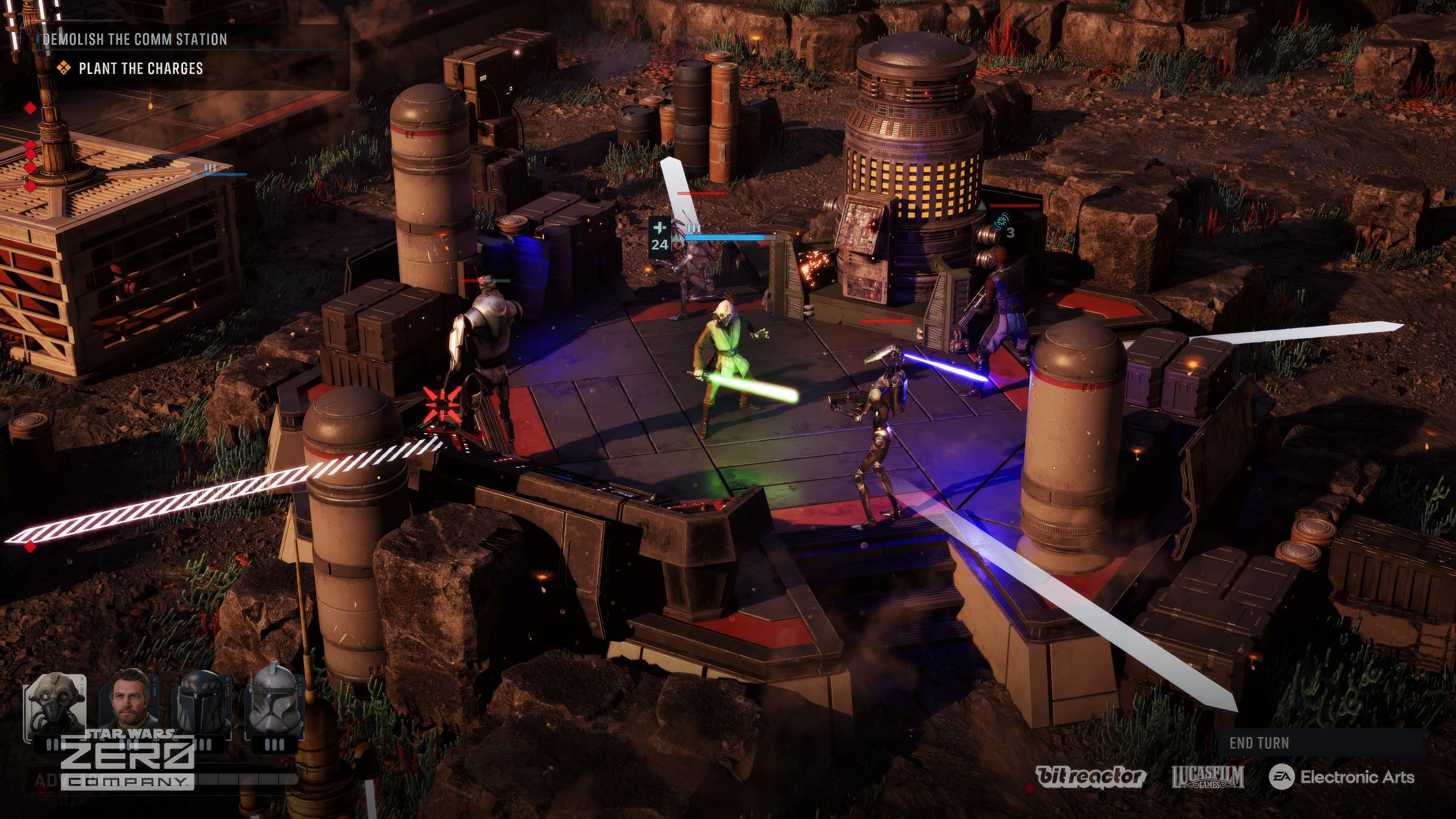
James Brawley: Well, I can speak a little bit to the tactical side of that. For those who are unaware, I worked on both XCOM 2 and Midnight Suns, on the tactical combat and on the missions themselves. I find it very important that these missions sometimes present you with flash points where you really have to take some time to decide what happens next . You see the possibilities on the board. You know what could happen to your people. You know that the consequences could be severe and permanent, and you have to really take a moment to think through what's going to happen next in that combat and what is the right course of action to take.
What do I want to do? In what order do I want to do it? Who do I take out first? What's the biggest threat on the board? So certainly for me, my own development experience lends heavily to crafting this kind of gameplay. From the beginning, it was always a priority to ensure we could tailor the gameplay to the difficulty level people want to play at . Some people find the really tense experience a bit too stressful, and we've included difficulty levels that accommodate that for the player. Some people, on the other hand, really want to be pressured into the corner, and they really want to stare at that screen and think for a few moments about what's going to happen next. And we have difficulty levels that support that, too.
Aaron Contreras: I think from a story side, speaking to the other half of the question, you can move through the Den in between each cycle, and you have the option of interacting with all of your operators, whether customer authored, on every cycle, if you want that experience. But we wanted to really leverage it as a management fantasy . You're leading this elite outfit of operators. So, you can also kind of like balance all that out and and and get into the Bond system without necessarily having to engage with everybody every turn if you don't want to. I certainly do.
I think a lot of players will talk to everybody every single cycle. But if you want a more strategic-biased experience, there's still a lot of interaction with the different characters in your squad through the strategy and tactical layer. And it was very important to us that the decisions you make in gameplay impact the team's composition . Hawks will have to navigate a squad that's made up of Republic-aligned characters, Separatist-leaning characters, people who come from the underworld, and they all have different biases towards the kind of jobs they want you to take and the actions you want to take. We really wanted to make sure that was reflected in the strategic and tactical layers, as well as in the stuff that's traditionally more narrative, like, you know, conversations and talking to people.
Orion Kellogg: Just to reinforce that feeling there. When we say "story," we have all sorts of media through which we can tell it for Star Wars. To tell a story in a game here, it's something you want to feel. You want to feel reactions to the choices that you've made. And when you get towards the end of a Zero Company campaign, you will be surrounded by your choices and you'll be living with those . So, it's not just dialogue and cinematics; it's so much more than that. It's so much more holistic, and I think you really succeeded there.
Greg Foertsch: Yeah, we draw on all of our past experiences. There's no way not to. But I think we spend a lot of time being very thoughtful. Intent is very important to us, and making sure that, you know, as we were crafting Zero Company, everything we did felt right for this game and for this IP, so that we had a game that stands on its own in the genre as its own thing.
Just how accessible is this to fans of Star Wars for those who are unfamiliar with this type of gameplay?
James Brawley: Well, that's a great question. We realize there's a lot of people out there who come from the Star Wars lineage of games and don't come from the tactical lineage of games. And for those people, we have both the normal difficulty and the story difficulty, where if you're primarily interested in engaging with the story, the story difficulty will pick up the pace a little bit. It's pretty forgiving; it's pretty hard to run into serious consequences. You can coast through a lot of the missions and just enjoy the raw gameplay of it, the raw decision-making and take down enemy units quickly and seamlessly and enjoy the story and uptake that experience as a Star Wars fan without having to worry about the learning curve of the game being too daunting and making it too difficult to for you to get into the gameplay or understand how to win the encounters.
I expect most of our players will probably play on normal difficulty, and there's enough challenge there to keep people engaged with the gameplay systems without crushing them. And then if you want to go beyond that, the hard and expert difficulty levels lean much more into the careful decision-making and understanding of the mechanics that we would expect a player to have at that level of gameplay . So, a lot of people who are fans of this genre and have played a lot of these games will probably quickly graduate up to the hard and expert difficulty levels, but for those people who are really there to sign on to the story and learn about the characters and build your guys and build your squad and you don't have to worry about running into too much difficulty, that story mode is waiting there to walk into the sunset with you.
Orion Kellogg: Again, we wanted to make a tactics game here at Lucasfilm Games. So, as Greg was saying upfront, depth shouldn't cost you elegance. We know that it'll be accessible. It'll be an elegant onboarding. You'll be able to learn these systems, but we also want you and expect you to have a challenge. That's part of the story, and so, you'll find that here.
These tactics are always great for generating anecdotes. Do you have any particular funny anecdotes or stories from your team's playthroughs during the testing of Star Wars Zero Company?
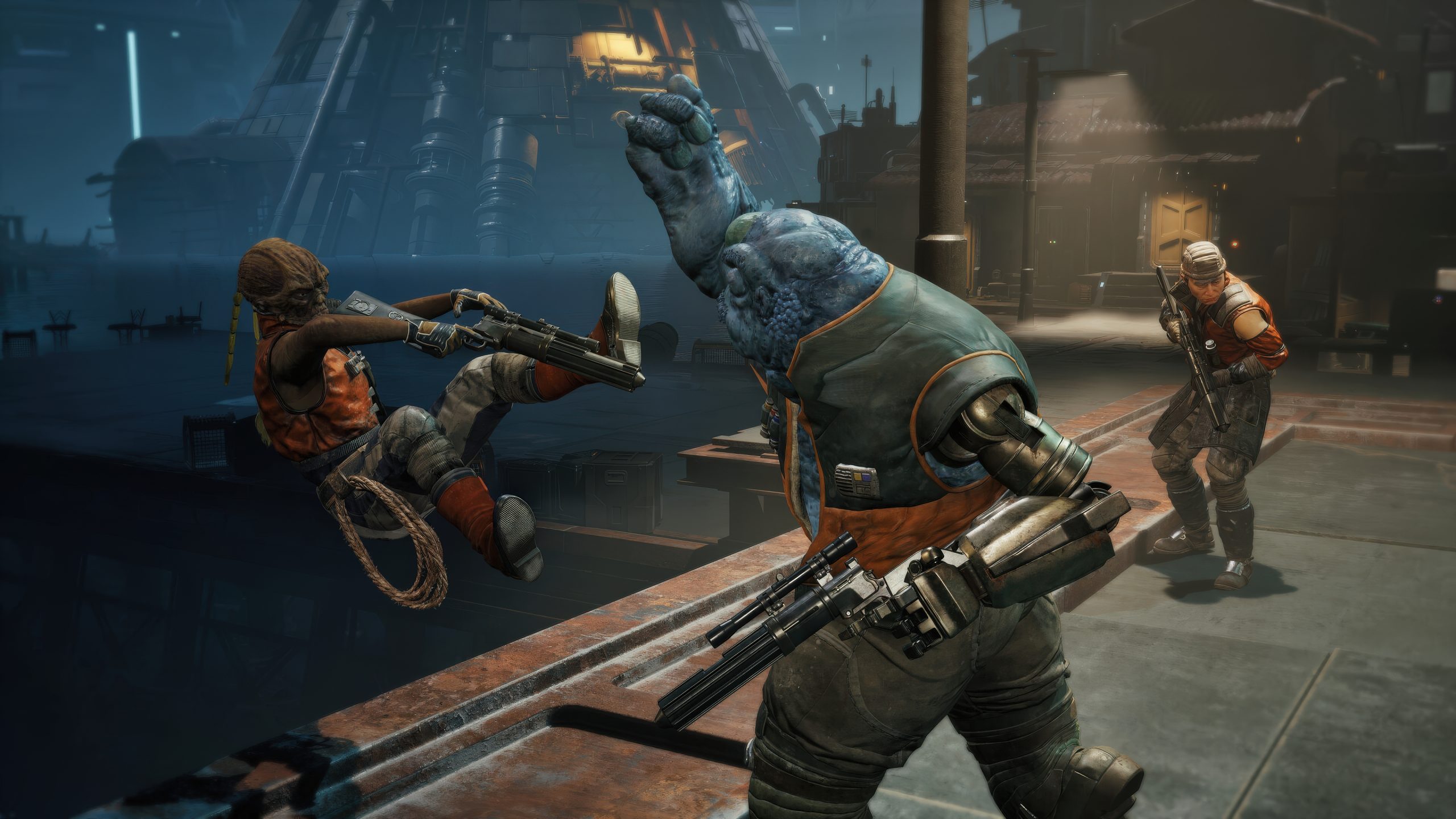
James Brawley: I do indeed. I had a moment in one of the missions where I decided to run up to a V1 battle droid and shoulder check it and knock it back through the railing. And right as I hit him and he flew into the pit, he screams as he plummets into the abyss. And I just couldn't stop laughing for a few moments. That got me so good.
Orion Kellogg: I mean, to me, Kabb's uppercut is a funny anecdote generator, so I bring him along whenever I can.
Are there any deep-cut Star Wars elements, like characters, locations, or tech, that you are excited to see make it into Star Wars Zero Company?
Aaron Contreras: Oh, we specialize in deep cuts, you could say. But I don't want to spoil it.
What are some tactics we should try? Do you have any favorite ability combos or anything like that?
Greg Foertsch: Force pushing into Overwatch is really fun.
Aaron Contreras: I really like to take out two characters who have a bad bond with each other and then try and do backup shots with each other or have them support each other in combat. When it goes right, it's fun, and they get better, and they kind of like remark on that. When it goes wrong, it's even more fun because they just start tearing into each other on the battlefield . So I like hearing them snipe at each other.
Speaking of characters, can you share your favorite character class and why?
Greg Foertsch: The Gunslinger is a lot of fun. Be able to take out a bunch of battle droids at one time.
James Brawley: I tend to find that, playing on the greatest difficulty level, I've become quite fond of my Scout.
Aaron Contreras: I usually go either Rogue or Gunslinger for my Hawks, but something about Trick having some clones in the squad as soldiers and just dropping rockets feels very Clone Wars to me , so that's probably my favorite class. Which is surprising, because it is very straightforward, but it's just so Clone Wars. I can't get my head around it.
The Clone Wars has been shown through many different tones and atmospheres. Sometimes melodramatic and romantic, other times grittier and war-torn. Where does Star Wars Zero Company fall on this spectrum?
Aaron Contreras: Great question. We try to find the heart and soul of the Star Wars era, project to project. So, for the Clone Wars, I think it is a little bit melodramatic. There are conspiracies; you're fighting in the war beneath the war. So everybody's kind of like predefined conceptions of the good guys and the bad guys are shifting now as we're heading towards important moments in the galaxy. My team and I took a lot of inspiration from film noir, screwball comedy, like mid-century 1960s espionage books and movies , and we tried to put that as our own little spice into Star Wars Zero Company. Hopefully, you'll see the way they sort of operate, especially the members of Zero Company themselves.
Kabb, Trick, Runa, Hawks, those who have been there for a long time, they have a specific pattern and way of speaking with each other that we feel really fits the period feel of Clone Wars. I think we're inspired by Andor and Rogue One as well, but I'd say it's kind of the dynamic between the characters that'll get most expressed. It's subtle, but it's kind of got its own thing.
The genre benefits from multiple playthroughs. What are some benefits of replaying Zero Company, and how does it differ each time?
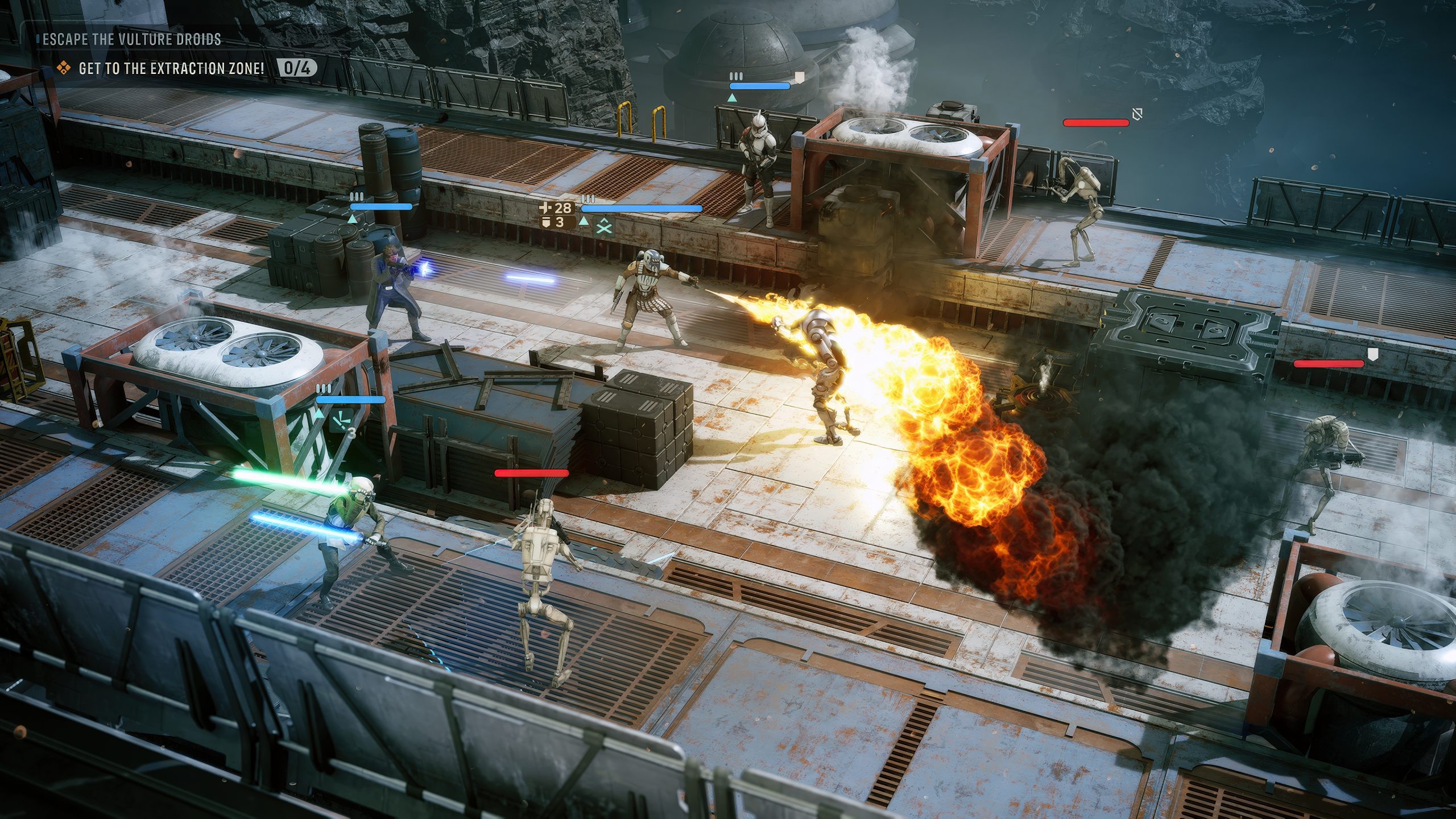
James Brawley: I have played through the game over the course of development quite a few times, and I still have characters that I haven't done a whole playthrough with that I want to spend time with, right? I think one of the richest things you can get out of playing this game over and over is the opportunity to use entirely different sets of characters when you do so .
Greg Foertsch: It's just the ability to explore different specializations and respec characters and the bonds between them. The possibilities are really, really broad. Like, there are so many things you can do going through one playthrough where you're playing with a different set of specs, and then not only that, but like just switching between Hawks's performance from the masculine side versus the feminine side. They're different performances; they're truly different deliveries of the story, and they have a very different feel. So even at that point, there's a really different flavor to it. You couple that with the way things show up in the campaign, the abilities and the specializations, and how you're choosing those... Star Wars Zero Company has a lot of depth that supports replayability .
Aaron Contreras: Yeah, I'd say that, past the tactical stuff, even in the strategy layer, there's going to be more operations and events than you can actually hit in a single playthrough. So, your campaign will be different if you play through again because of the problems you need to solve . You can choose to focus your upgrades in the Den on, like, I'm gonna trick out everybody's weapons and funnel my resources towards having the most tuned-up blasters in the galaxy. Or on this one, I want a really big team, so I maximize my squad size. There's a different strategy layer meta enhancements you can make outside of, like, what class you are and what focus points you put into for a particular character.
And then of course, past that, Hawks is a specific personality that we want you to be able to find yourself in, but it's also pretty flexible depending upon your choices. So on one playthrough, just like taking Kabb Uppercut, for example, it's sort of written so that Kabb and Hawks could be the bestest of buddies, right? They've got a certain sort of nicknames for each other, and if you really push that bond up to the max, it's going to pay off for you. On the flip side, you can totally snub Kabb, not help him when he asks you, treat him poorly, and even kick him off the team, and have a totally different bond with somebody else , and it'll feel just as real and just as much your Hawks story.
What are some of the deficiencies that we are currently seeing in the genre, and how are you addressing them in Zero Company?
Greg Foertsch: That goes back to what I was talking about with the presentation values and starting with the story. We didn't tack a story on. The story was along for the ride from the inception, right? We were always driving things together as opposed to thinking about them as individual pieces. I think the genre tends to feel like, you know, there's a badge of honor that it doesn't need good graphics. It doesn't need a good story. It's all about the gameplay. It is all about the gameplay, but that doesn't mean you have to compromise on the other stuff. You can and should have all that stuff . And so I think for us, we were trying to reach more people and show more people what is so special about this genre. And it might be the game that people didn't realize they actually wanted. If you're a Star Wars fan and have never tried a tactics game, this is for you. And it might just be the thing that you never realized you were missing in your gameplay.
Aaron Contreras: On keeping the kind of grognards, like the core tactical strategy players, in mind, and, very openly, you know, we don't have a voice one through seven for who you can put on operators. We have the Rogue, the Maverick, the Gunny. We have these richly realized characters whose species, looks, and backstories you can change to whatever you want . You can name them all after your buddies, just like in other games in the genre. We have really tried to offer more value within the experience of that space, and I think fans of the genre will pick up on that.
Can you explain the difference between Operations and tactical missions?
James Brawley: Yes, I can certainly touch on that. Tactical missions are, as many of you are familiar with, about sending your squad into a combat environment. You take turns with the bad guys, you take them out. This is where your guys get shot, where you take your shots. The Operations, on the other hand, are a little bit more of a narrative focus. Those occur on the HoloTable, and we don't believe, for example, that an intelligence outfit like Zero Company is only going out and fighting people . They're doing other things. They're engaging in espionage, gathering information, meeting with contacts, and doing dead drops. They're doing these sorts of things as well, and you can't represent those in tactical missions very easily.
So, the Operations that take place on the Holotable allow you a little bit of imagination space to think about some of the things that your guys are going to go do out in the galaxy that aren't just to bust down the door with guns and start unloading on everybody , right? That's really the key difference, is that the Pperations from a gameplay standpoint take place on the HoloTable and don't involve tactical combat, but they do involve making decisions and picking up resources and deciding who you want to deploy to certain types of operations and matching their skill sets to what that operation might require. The tactical missions, of course, are anywhere between 15 and 45 minute segments of tactical combat where you take turns with the enemies.
Aaron Contreras: Just as an example, like early on in the game, you might be working for Gorga the Hutt, and somebody owes Gorga money, and you can send somebody with people skills to collect. Then you might be given a choice in that operation, depending on who you send to, you know, to either let them go or double down and take more than is owed, right? Different people on your squad inside Zero Company will have different opinions on your choice made in that outcome . And then anyone you send on that operation, say you sent Kabb and Trick, they're going to bond up just through the shared experience of working together. You put people under pressure, you know, you're stuck with somebody who you don't really like on the job for a work shift, but then you find over the course of the shift that you actually have more in common than you thought. We tried to replicate that by letting the operations boost the bond between your operators.
Orion Kellogg: And the Operations affect the narrative part of the game, but it also affects the strategic part of the game itself. As Aaron had mentioned earlier, you can't make every choice. So meaningful choices are often the road not taken. As the galaxy map progresses cycle after cycle, you'll notice the galaxy itself has changed based on the operations that you've chosen or not chosen , and the presence of the Coil will really grow, change, and morph through your operations. That experience of navigating the Star Wars galaxy will really be impacted by them.
Hawks aside, is there a character in Star Wars Zero Company you are most excited for fans to get to know?
Greg Foertsch: It's kind of hard because they're all like your children at this point, after five years of working with this stuff. I think the one I'm most attached to at this point is Trick . Like, he's probably the one that I feel the most excited about in general, because I feel like he scratches some of my own personal Star Wars itch. But I guess a runner-up that's not really an authored hero, I'm really excited about BR1. I think making an astromech in the Star Wars galaxy and being a part of that is really, really amazing, and I can't wait for people to get to see that character a little bit.
Orion Kellogg: I'll go ahead and say I've already mentioned a few, so I'll just add another one to the list. Let's go with Tel-Rea. What does a Jedi working with a squad like Zero Company have to say? And how are they going to change your experience? I know some of the answers, but I can't wait for everybody else to find out.
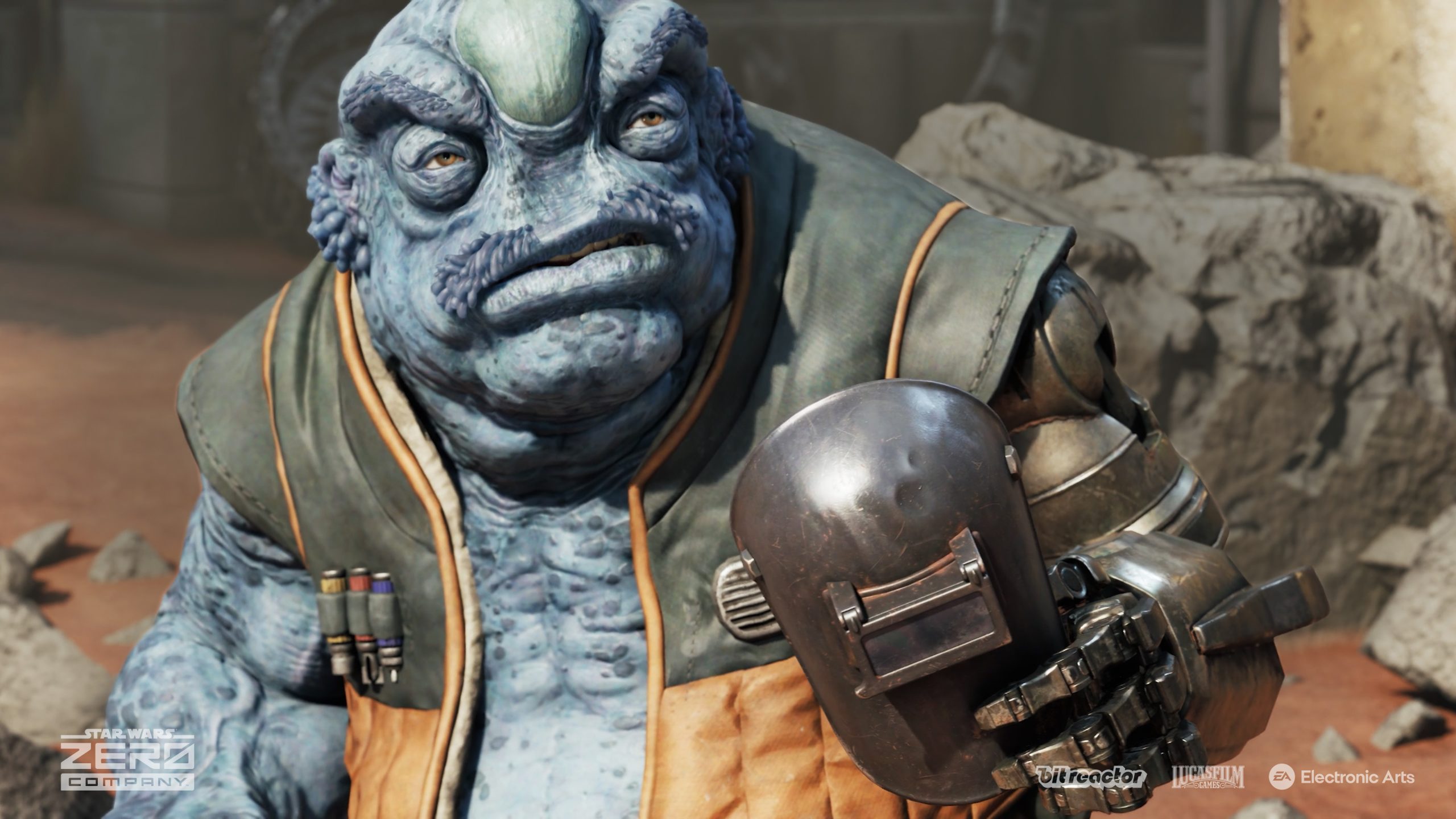
James Brawley: All right, I'll just jump in. I think Kabb is probably my favorite. Just the way he speaks, the charm of him, he's got a mustache made of polyps , and he could knock people across the map. It's a lot of fun.
Aaron Contreras: I truly can't pick one. Runa is going to be huge. Vic Michaelis as Runa is just absolutely delightful . You'll hear a lot of her, whether you want to or not, at the strategy map. Really funny. I'll shout out Clev, who's a den tech. He's sort of a secondary character who keeps things going, like the most minor character of Zero Company, who you can run into from the very first cycle. Just talk to everybody in the den. It'll be a real trick.
But, you know, maybe I'd say the character I'm most excited for the fans who play through the game, you might have to wait till after this preview event to make it that far in the game. He's a spoiler and I'm not gonna—it's a deep cut. So, somebody whom we can't talk about today. That's somebody who I'm very excited for people to meet in the course of the story.
Thank you for your time.
About the author : With over two decades of experience in gaming journalism, Alessio Palumbo has led the gaming vertical at Wccftech since August 2015. He started working at a young age for Italian websites like Everyeye.it, Gamestar.it, Nextgame.it, and Multiplayer.it before kickstarting the indie English-language publication Worlds Factory as its founder and Editor in Chief. In the last decade, he has coordinated the overall output of Wccftech's gaming section, managed PR relations, assigned reviews, produced daily news coverage, edited gaming content as needed, and delivered game reviews. Arguably, his trademark content is the long series of exclusive developer interviews that have been cited by Wikipedia and by the biggest news media and gaming publications. His passion for technology also makes him knowledgeable when it comes to gaming hardware and tech. His favorite genres include RPGs, MMORPGs, and action/adventure games.
Follow Wccftech on Google to get more of our news coverage in your feeds.