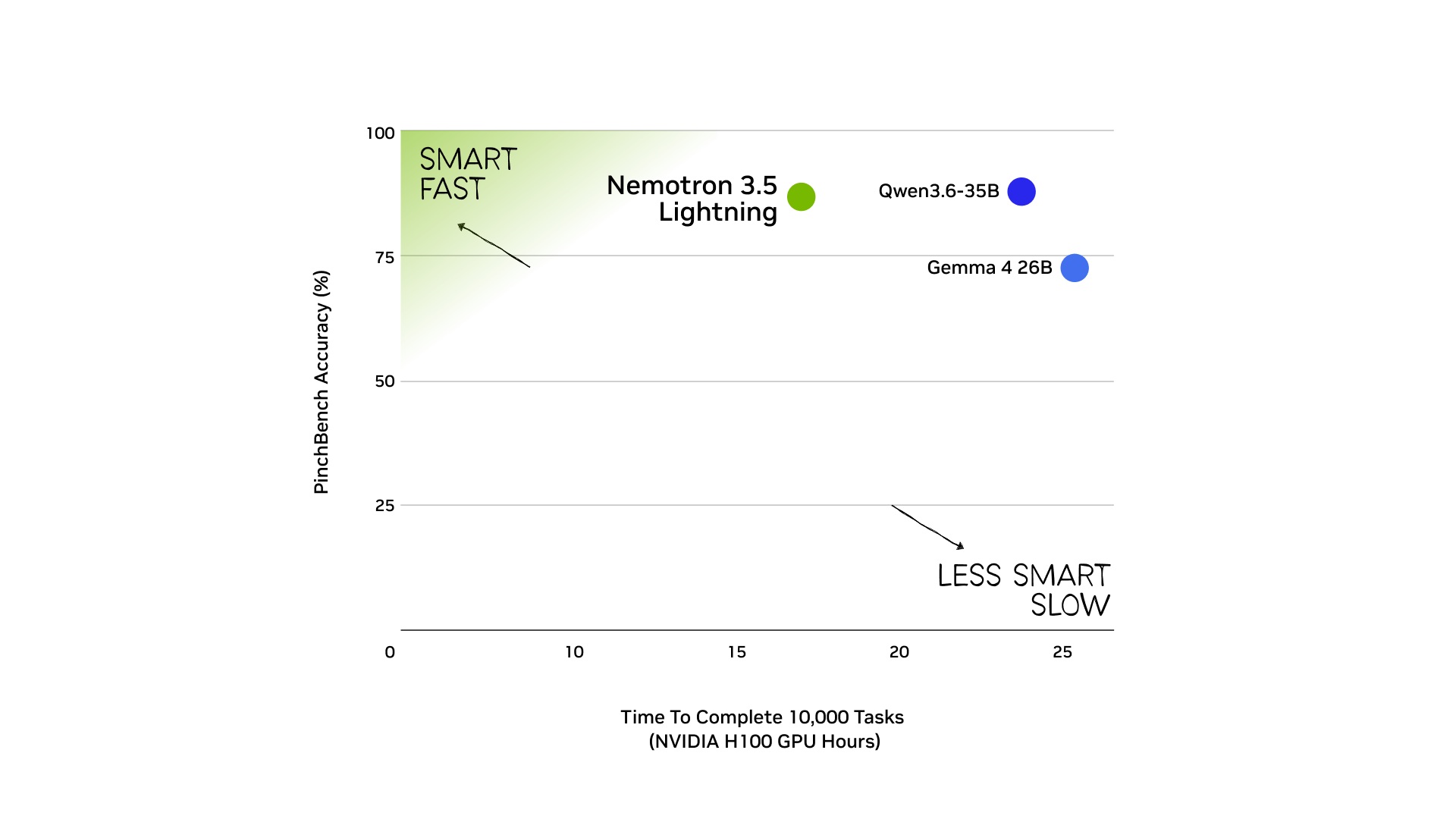
NVIDIA has released some major updates for DGX & RTX systems supporting new open models such as Nemotron 3.5, LTX 2.5 & more.
In addition to the release of Nemotron 3.5 Lightning , NVIDIA is offering some big updates on the client "AI PC" side. These updates target NVIDIA's DGX and RTX platforms with faster performance and optimizations to accelerate Open AI models, and add new capabilities on these platforms, for further enrichment of the PC platform.
The following are the major highlights of today's release:
- Scale DGX Spark with NVIDIA Sync Cluster Assistant — connect two or more systems into a high-speed cluster, with streamlined networking, workload routing, and health monitoring.
- Get more from DGX Spark — Google Chrome is coming as a native ARM64 Linux build, and the new NVIDIA Sync Resource Monitor will provide real-time and historical CPU and GPU views across one system or an entire cluster.
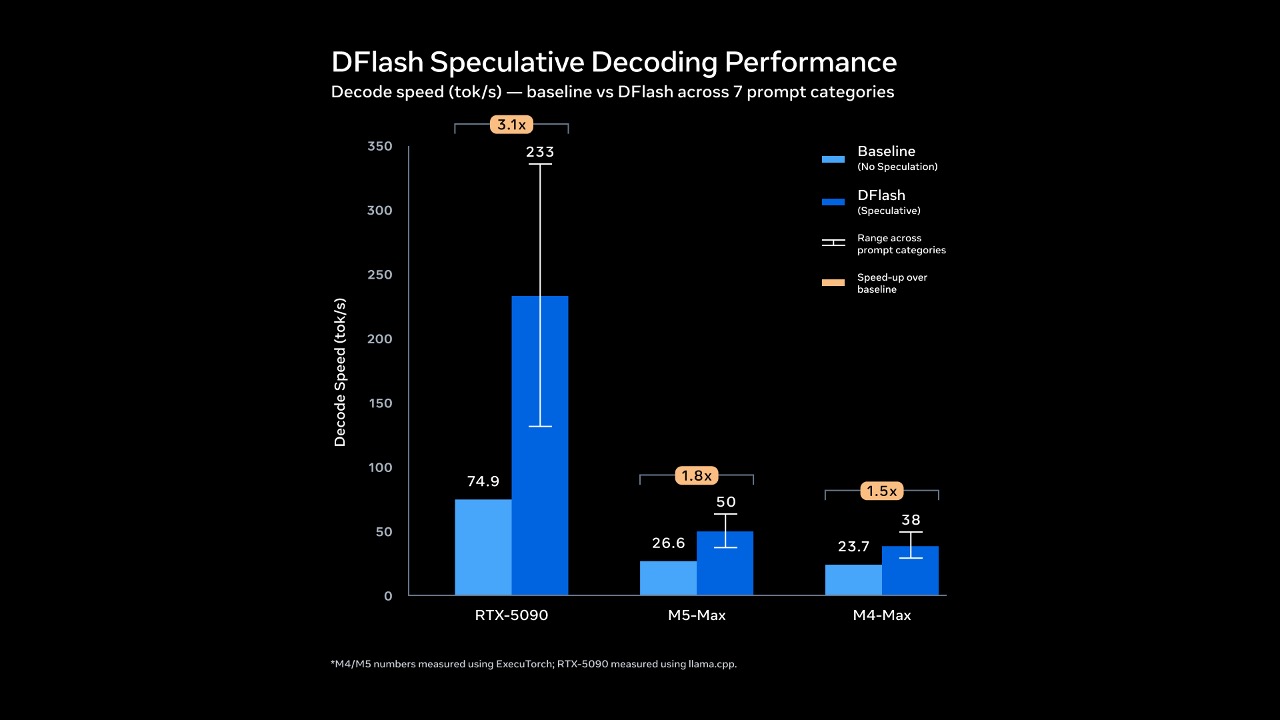
- Run Meta’s Muse Glimmer locally — the 30B open-weight model is optimized for always-on local agents, with more than 200 tokens per second on an RTX 5090 .
- Create high-quality video locally with LTX-2.5 — the open video model adds multishot generation and generative editing, with a 2x performance boost and 40% memory savings on NVIDIA RTX GPUs, DGX Spark, and DGX Station .
- Explore more open models accelerated by NVIDIA — including Cosmos 3 Edge, MiniMax-H3, Poolside’s Laguna S 2.1, DeepSeek-V4-Flash, Thinking Machines Lab’s Inkling-Small, Unsloth Desktop, and Wan-Animate-2.
Starting with the New Open model support, NVIDIA's DGX & RTX platforms now feature full support for Cosmos 3 Edge (4-billion parameter), MiniMax-H3 (33-billion parameter), Laguna S 2.1 (118-billion parameter), DeepSeek V4-Flash (284-billion parameter), Wan-Animate-2 (14-billion parameter), and Inkling-Small (276-billion parameter) AI models.
The company is also bringing support for Unsloth Desktop, which launches today and adds local model inference, image/video diffusion, fine-tuning, agent integrations, web research, and code execution in a fully open-source desktop app.
NVIDIA's RTX platforms, such as the RTX 5090 and RTX PRO 5000 Blackwell, deliver up to a 26x and 16x boost over the Apple M3 Ultra, respectively, in Wan-Animate-2, offering users an open-weight model that transfers motion and facial expressions from a driving video onto a static character image.
Talking about GenAI, LTX-2.5 is a brand-new video generation model that features a new diffusion video decoder that complements the variational autoencoder video decoder, improving video quality by giving a second decode path for higher-quality final renders.
In LTX 2.5, the RTX PRO 6000 96 GB GPU offers 20% faster performance and 40% memory savings while creating videos. Users can also leverage NVIDIA's NVFP4, FastVideo, and ComfyUI for enhanced text, image, and video-to-video generation.
Meta is also releasing Muse Glimmer, its latest 30-billion open-weight model with a 120K+ context video, which is purpose-built for coding and Agentic AI. The model is optimized for NVIDIA's RTX & DGX systems while also supporting NVIDIA's Jetson platforms, driving over 200 TPS on a single RTX 5090 GPU. Some of the features of Muse Glimmer include:
- Custom agents: Adapt the model for specific tasks, tools, data, and areas of expertise.
- Private data processing: Read, summarize, and act on local files, documents, emails, and messages.
- Credential handling: Use application programming interface keys, authentication tokens, and other sensitive information while keeping inference on the device.
- Multistep tasks: Complete many sequential tool calls and recover from errors or unexpected results.
- Long-running workflows: Break larger projects into steps, track progress, and resume interrupted sessions with context intact.
For the DGX Spark specifically, NVIDIA has a few major updates. First is the release of the new "NVIDIA Sync Cluster Assistant," which makes it much easier to cluster multiple DGX Spark PCs together, increasing memory, inference, and compute capacity for larger models. The feature is available on both Windows and macOS.
DGX Spark is also receiving Google Chrome as a native ARM64 Linux build, which can be installed directly from the DGX Dashboard on the DGX OS. There's also a new NVIDIA Sync Resource Monitor, which provides real-time and historical views of CPU and GPU usage across individual or clustered DGX Spark systems.

NVIDIA continues to lead the AI PC space by delivering faster performance, smarter optimizations, and broad support for the latest open AI models on its DGX and RTX platforms.
From clustering DGX Spark systems for greater scale to running high-speed local models like Meta’s Muse Glimmer (over 200 tokens/sec on RTX 5090) and enhanced video generation with LTX-2.5, these updates empower users with more powerful, efficient, and versatile on-device AI capabilities, solidifying NVIDIA’s role at the forefront of the AI PC revolution.
Follow Wccftech on Google to get more of our news coverage in your feeds.