Google spoiled its own Pixel 11 party by unveiling the brand-new smartphone series hours earlier than the planned event, removing a sizable chunk of anticipation.
While the Pixel 11 has shaped up to be a strong albeit iterative update, there are still a few surprises that have caught us off guard.
The series brings notable refinements to the displays and physical design, including a 40 percent thinner, all-glass camera bar. All three phones feature IP68 ratings and Corning Gorilla Glass Victus 2 with a new coating that offers 2x the scratch resistance of the Pixel 10.
- Pixel 11: Features a 6.3-inch Actua display with a 1080 x 2424 resolution. Unlike the Pro models, it uses a standard 60–120Hz panel (no LTPO), reaching up to 2,000 nits in HDR and 3,000 nits peak brightness. It measures 152.4 x 71.1 x 7.62mm and weighs 195.6 grams.
- Pixel 11 Pro: Sports a 6.3-inch Super Actua LTPO display (1–120Hz) with a sharper 1280 x 2856 resolution. It reaches 2,400 nits HDR and a massive 3,600 nits peak brightness. It shares the exact dimensions of the base model (152.4 x 71.1 x 7.62mm) but weighs 204.1 grams.
- Pixel 11 Pro XL: Features a larger 6.8-inch Super Actua LTPO display (1344 x 2992 resolution) with the same 3,600 nits peak brightness as the smaller Pro. It measures 162.6 x 76.2 x 7.62mm and weighs 226.7 grams.
Google has upgraded the camera arrays and introduced a suite of new software capabilities, though the gap between the base and Pro models has widened.
- Hardware Specs: The standard Pixel 11 features a new 48MP main sensor (f/1.7) that is larger than last year’s (1/1.56-inch) for 56% better light sensitivity, alongside a 13MP ultrawide, a 10.8MP telephoto (5x optical, up to 30x Super Res Zoom), and a 10.5MP selfie camera. The Pixel 11 Pro and Pro XL retain a 50MP main sensor (1/1.3-inch) and 48MP ultrawide but drastically upgrade the 48MP 5x telephoto to a larger 1/1.95-inch sensor (enabling 30% better light sensitivity and up to 120x Pro Zoom). The Pro models also jump to a massive 42MP front-facing selfie camera.
- Camera Software: New across the board are Camera Looks (customizable photo profiles to emulate film styles) and Magic Capture (Google’s take on Single Take, which pulls five HDR+ 12MP photos from a short video clip). Also new is Creator Suite , adding a storyboard editor, project folders, and a pacing-matched Teleprompter. The Pro models get exclusive features, including cloud-based Pro Stable Video and an Instant Night Sight mode that is up to 4.5x faster than previous iterations.
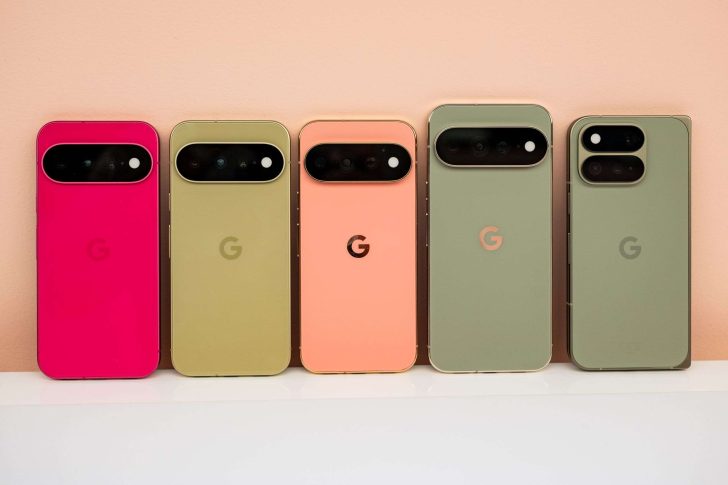
Confirmed to be named HiLight , this feature acts as a modern reimagining of the classic notification LED. Built directly into the rear camera bar, it glows in distinct patterns when you interact with Gemini AI. Users can also assign custom colors to specific favorite contacts for incoming calls (with messaging support coming in a future update). Importantly, HiLight is entirely exclusive to the Pixel 11 Pro and Pro XL; the standard Pixel 11 misses out on this hardware feature.
Instead of adopting silicon-carbon tech, Google is sticking to traditional lithium-ion cells with capacities slightly tweaked from last year. All models now support built-in Pixelsnap magnetic wireless charging (Qi2.2-certified) up to 25W.
- Pixel 11: 4,985 mAh battery with 30W wired charging (reaches 50 percent in 30 minutes).
- Pixel 11 Pro: 4,850 mAh battery with 30W wired charging (reaches 50 percent in 30 minutes).
- Pixel 11 Pro XL: 5,115 mAh battery with 45W wired charging (reaches 75 percent in 30 minutes).
Launching with Android 17 out of the box, the entire series guarantees 7 years of OS, security, and Pixel Drop updates.
- Tensor G6 Processing: Powering the phones is the new Tensor G6 chip (paired with the Titan M3 security coprocessor). Hardware analysis reveals a 7-core CPU configuration (1x Arm C1-Ultra at 4.1GHz, 4x C1-Pro at 3.3GHz, 2x C1-Pro at 2.6GHz) and a PowerVR C-series GPU with six compute units. The CPU promises 20 percent better efficiency, 25 percent faster web browsing, and 15 percent faster app loading.
- Upgraded TPU: The new Tensor Processing Unit packs 50 percent more computing power and double the memory bandwidth. Combined with the latest Gemini Nano, it executes on-device AI tasks 3.5x faster while consuming 3.5x less energy.
- AI Integrations: The phones debut Gemini Intelligence , delivering more agentic AI capabilities at the system level. Other distinct software additions include the ability to trigger Circle to Search directly within the camera app and real-time audio dubbing via Live Translate (supported on apps like YouTube). Rambler is a new voice input built for how you actually talk, while Magic Capture ensures effortless photos.
- RAM and Storage: Base storage is finally bumped to 256GB (Zoned UFS) across the board. However, RAM has taken a slight hit on the entry-level Pro configurations: the base Pixel 11 comes with 12GB, and the entry-level Pro and Pro XL also start at 12GB (you must upgrade to 512GB/1TB storage tiers to get 16GB of RAM).
- Google Pixel 11 (12GB/256GB): $899
- Google Pixel 11 (12GB/512GB): $1,019
- Google Pixel 11 Pro (12/256GB): $1,099
- Google Pixel 11 Pro (16GB/512GB): $1,219
- Google Pixel 11 Pro (16GB/1TB): $1,499
- Google Pixel 11 Pro XL (12GB/256GB): $1,299
- Google Pixel 11 Pro XL (16GB/512GB): $1,419
- Google Pixel 11 Pro XL (16GB/1TB): $1,649
- Google Pixel 11 Pro Fold (16GB/256GB): $1,899
- Google Pixel 11 Pro Fold (16GB/512GB): $2,019
- Google Pixel 11 Pro Fold (16GB/1TB): $2,249
Follow Wccftech on Google to get more of our news coverage in your feeds.