TechSpot means tech analysis and advice you can trust .
Winners & losers: Everything is more expensive these days, and most people's wages haven't risen at the same rate. Unless they're a CEO, that is. Company bosses now get more than ever, pushing their pay packages astronomically higher than the average person working for them. But nowhere is this gap more evident than at Tesla, where Elon Musk's compensation was 2,522,203 times the median employee's pay.
A report by The American Federation of Labor and Congress of Industrial Organizations (AFL-CIO) – the largest federation of labor unions in the United States – revealed that CEOs now take over 300 times as much pay than working people. But that figure excludes Musk because his $158 billion compensation skews the numbers.
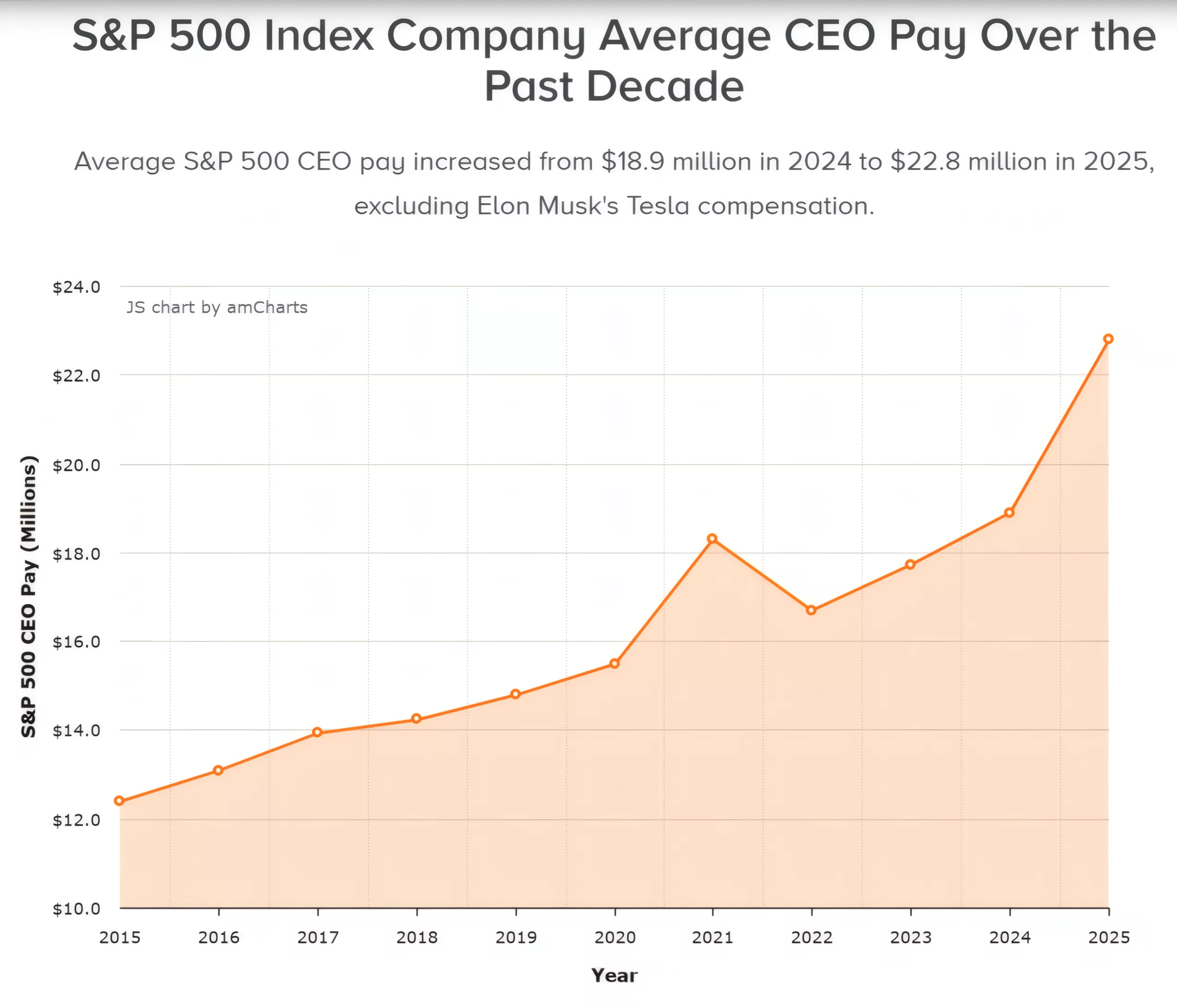
Including Musk, average S&P 500 CEO compensation reached $340.1 million in 2025, up roughly 1,700% from the previous year. Without Musk's Tesla pay package, the average rose 21%, from $18.9 million in 2024 to $22.8 million in 2025.
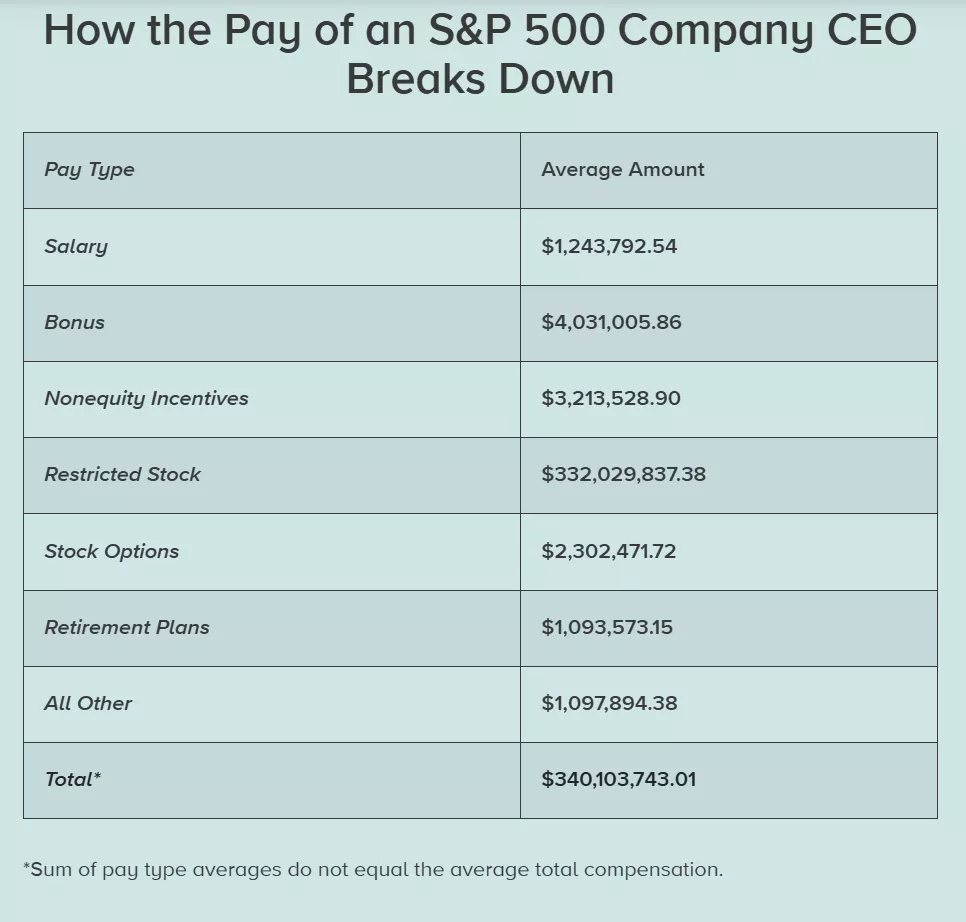
The average CEO-to-worker pay ratio across S&P 500 Index companies was 5,387-to-1 in 2025. Excluding Musk, the ratio increased from 285-to-1 in 2024 to 312-to-1 in 2025.
Musk's net worth currently stands at $823 billion. That's down from when he became the world's first trillionaire in June after SpaceX's IPO pushed his net worth to $1.1 trillion. The 2025 pay package of the world's richest person was 14 times higher than the total compensation of all other S&P 500 company CEOs combined.
Back in 2015, the average pay of an S&P 500 CEO was $12.5 million, meaning the figure has almost doubled in a decade (excluding Musk). By comparison, average US private-sector pay increased about 45% over the decade, from roughly $52,000 a year in 2015 to $75,500 in 2025.
// Related Stories
The AFL-CIO notes that workers' share of US national income has fallen to the lowest level since World War II. A recent report by the US Government Accountability Office (GAO) found that employees at Amazon and gig economy workers are increasingly dependent on food stamps and Medicaid.
The AFL-CIO argues that CEO compensation should reflect executives' actual contributions to their companies. It also says corporate success is not driven by one person alone, and that workers should receive a fair share of the value they help create.
The group believes that excessive CEO compensation contributes to growing economic inequality and creates the risk that CEOs will make short-term decisions to maximize their pay.