The Server CPU segment is estimated to see a big surge in the coming years, with stats showing the TAM surpassing $200 billion by 2030.
Latest data from research outlets including BofA Global Research , Mercury Research , and IDC show that the server CPU TAM (Total Addressable Market) will expand significantly in the coming years due to a surge in AI demand, especially Agentic workflows, which are more heavily dependent on CPUs than GPUs. Server CPUs are already seeing a large increase as the latest architectures are designed specifically to meet AI requirements.
As per the statistics, the total server CPU TAM is expected to reach beyond $210 billion ( inline with AMD's $220 billion TAM estimation ), with AI CPUs representing 86% of the market share. From 2026 to 2030, Non-AI server CPUs will reach a TAM of up to $30 billion, whereas AI-specific server CPUs will amount to $180 billion by 2030. The share for the current year is already estimated to hit 69%, a 16% climb versus 2025, & 46% climb versus 2024.
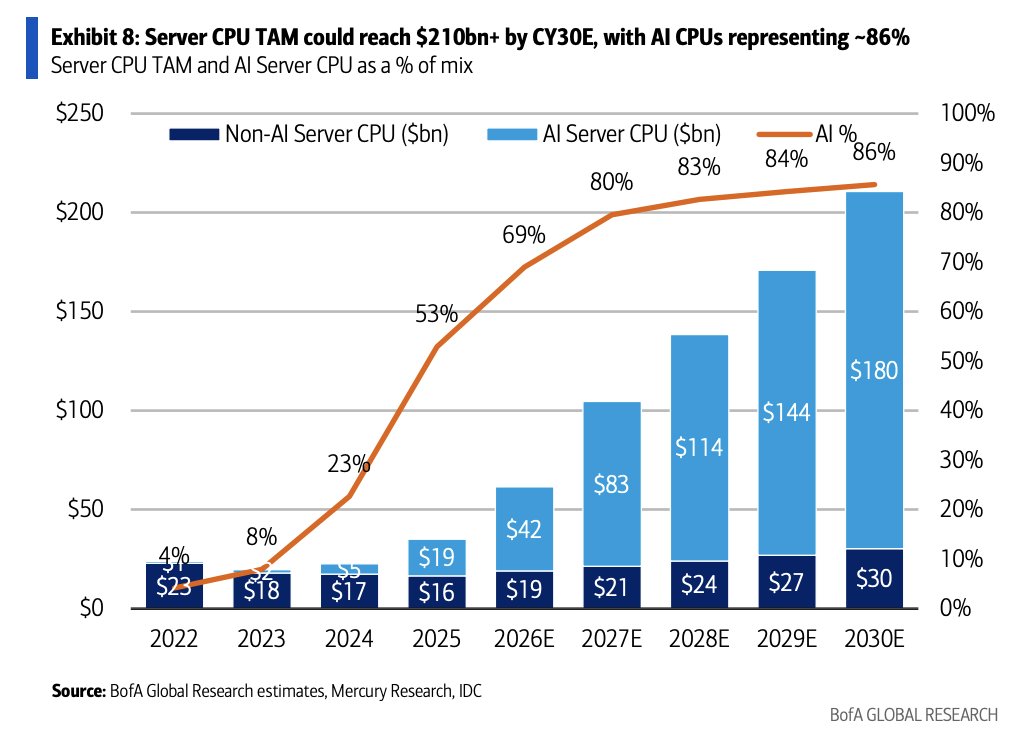
There are several players in the Server CPU segment who will compete to take the lion's share. x86 competitors like AMD & Intel have been going at each other for decades, but ARM poses a huge threat to these two rivals.
While Intel has been losing share to AMD for years thanks to its strong EPYC lineup, ARM brings another heated competitor to the battle, with many firms making their own custom AI chips, and the likes of NVIDIA , Qualcomm , and ARM itself, going all-in on the AI server segment.
In the coming years, Intel is expected to drop from 62% to 35.8% (2030 estimated), while AMD will be positioned at around 31%. Arm Merchant and Arm Customers will make up another 30-35% of the market.
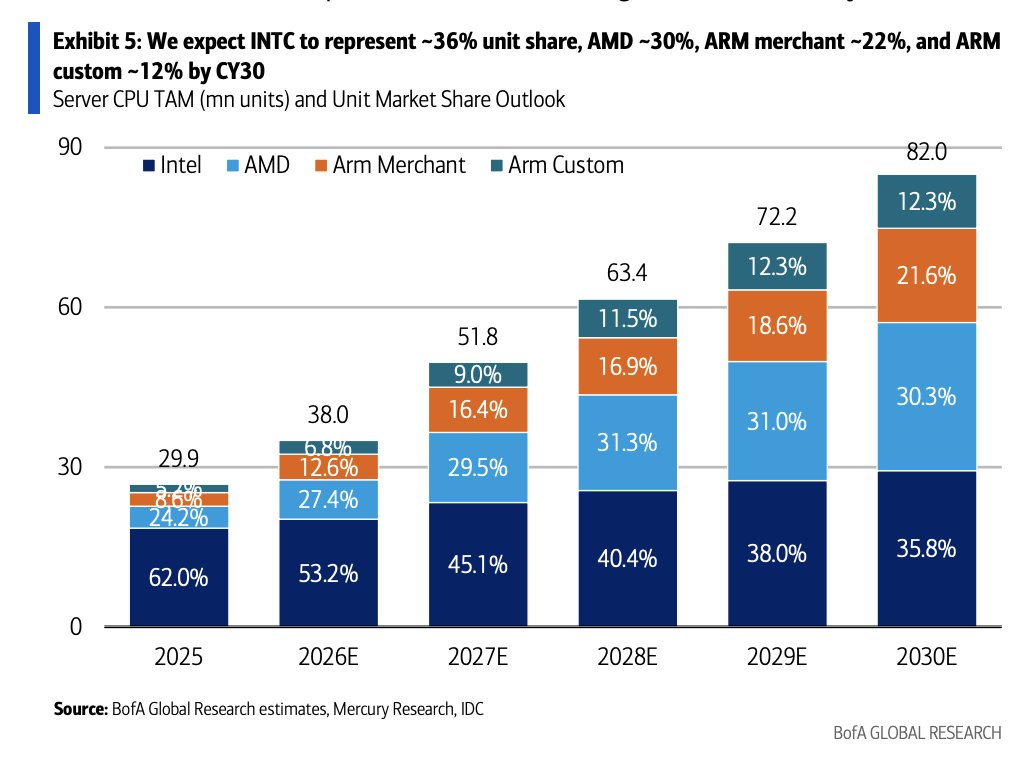
Talking about unit shipments, the total number of AI Server CPUs shipping in 2026 is estimated to be at 38 million, which is a 27% increase versus the 29.9 million shipments of 2025.
For 2030, it is estimated that total shipments will reach a staggering 82 million units, which goes on to show the scale of the demand there is. Now we can't see into the future and tell you whether the demand will hold or not, but current estimations point to AI demand remaining strong for decades as firms have engaged in multi-year contracts, partnerships, and agreements to keep on adding to the AI ecosystem.
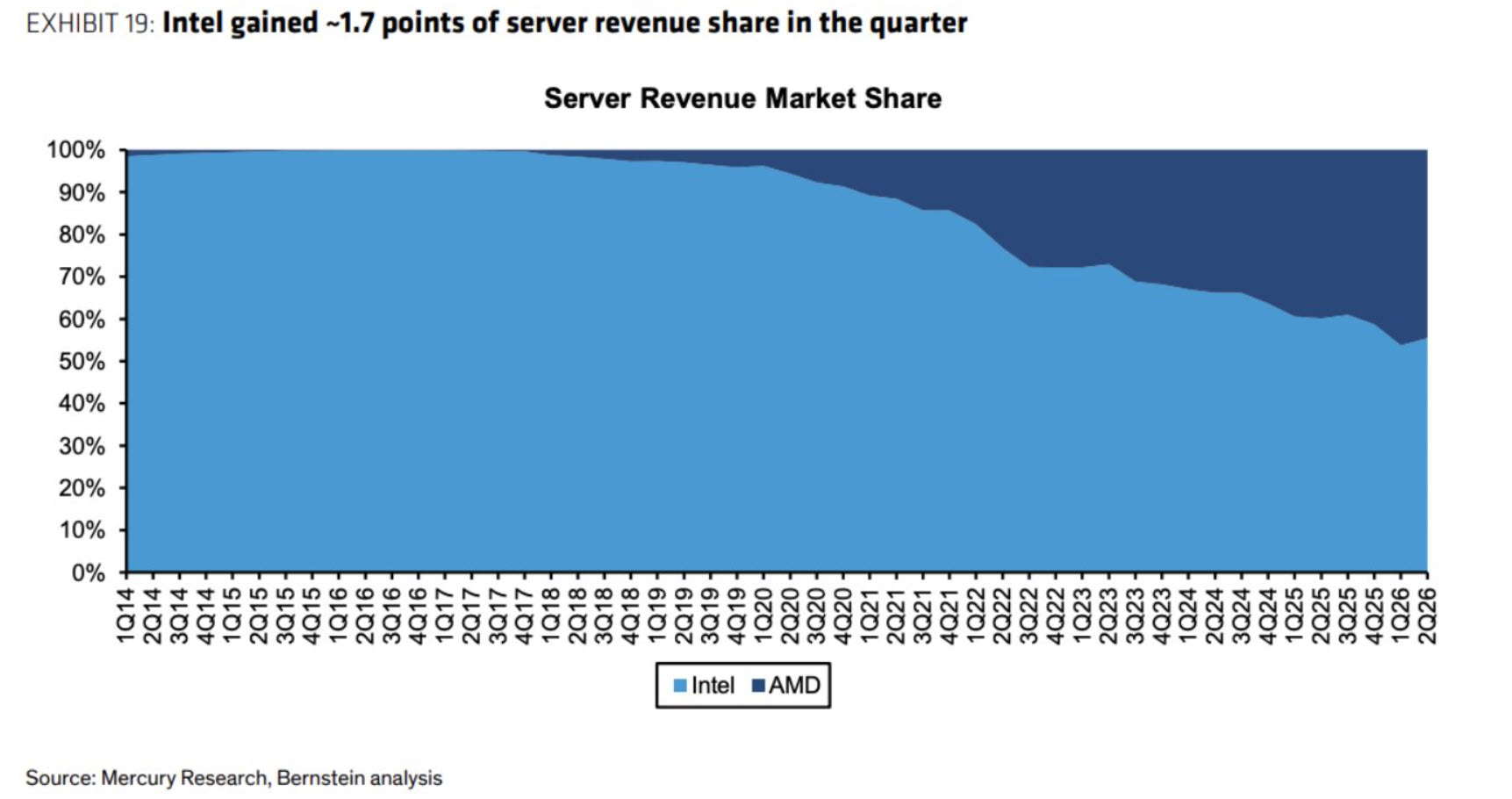
On the other hand, while Intel has been losing unit market share to AMD, the company seems to be doing well in terms of revenue market share.
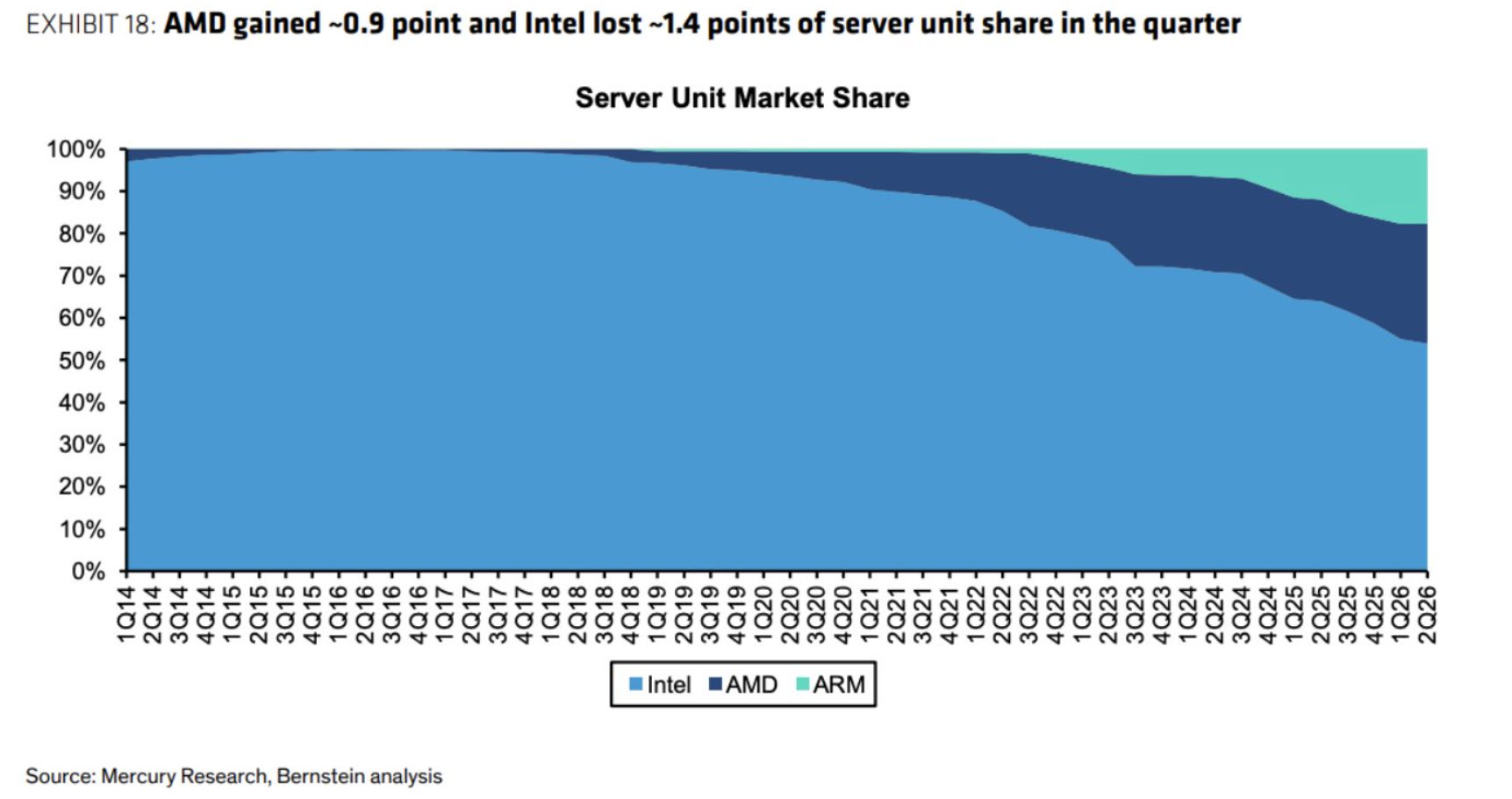
With chip prices going up and demand for CPUs on the rise, along with shortages in every corner of the tech industry, Intel's server chips have become an ever more useful resource for AI firms to adopt, which has been mentioned by Chipzilla itself as it continues to ship even older chips as the supply of newer chips runs dry .
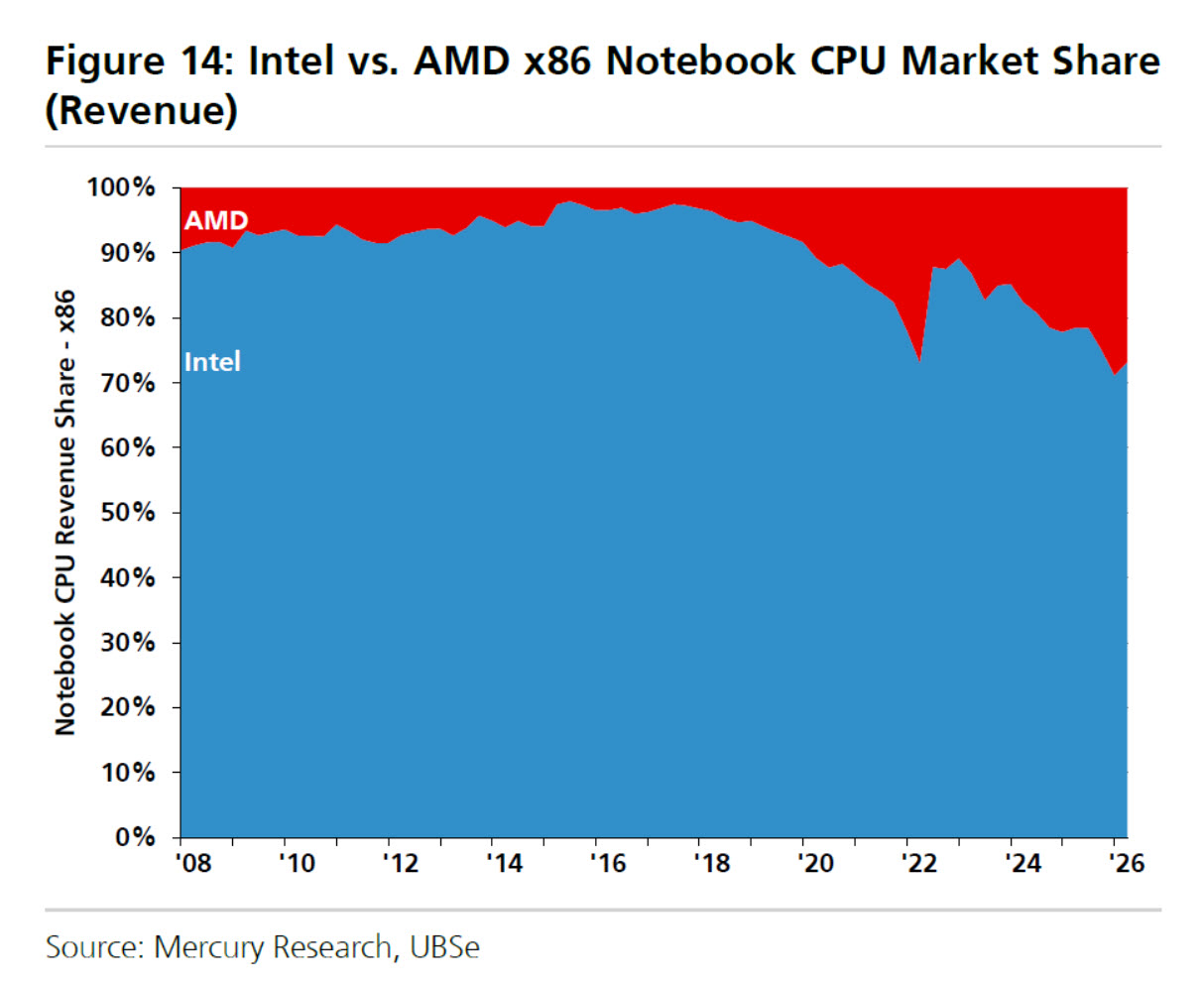
Meanwhile, on the client side, Intel seems to be going through a minor recovery phase. AMD's Ryzen Desktop and Mobile offerings have clawed away a massive chunk of share from Intel. But recently, Intel has started to see a return of customers to its platforms.
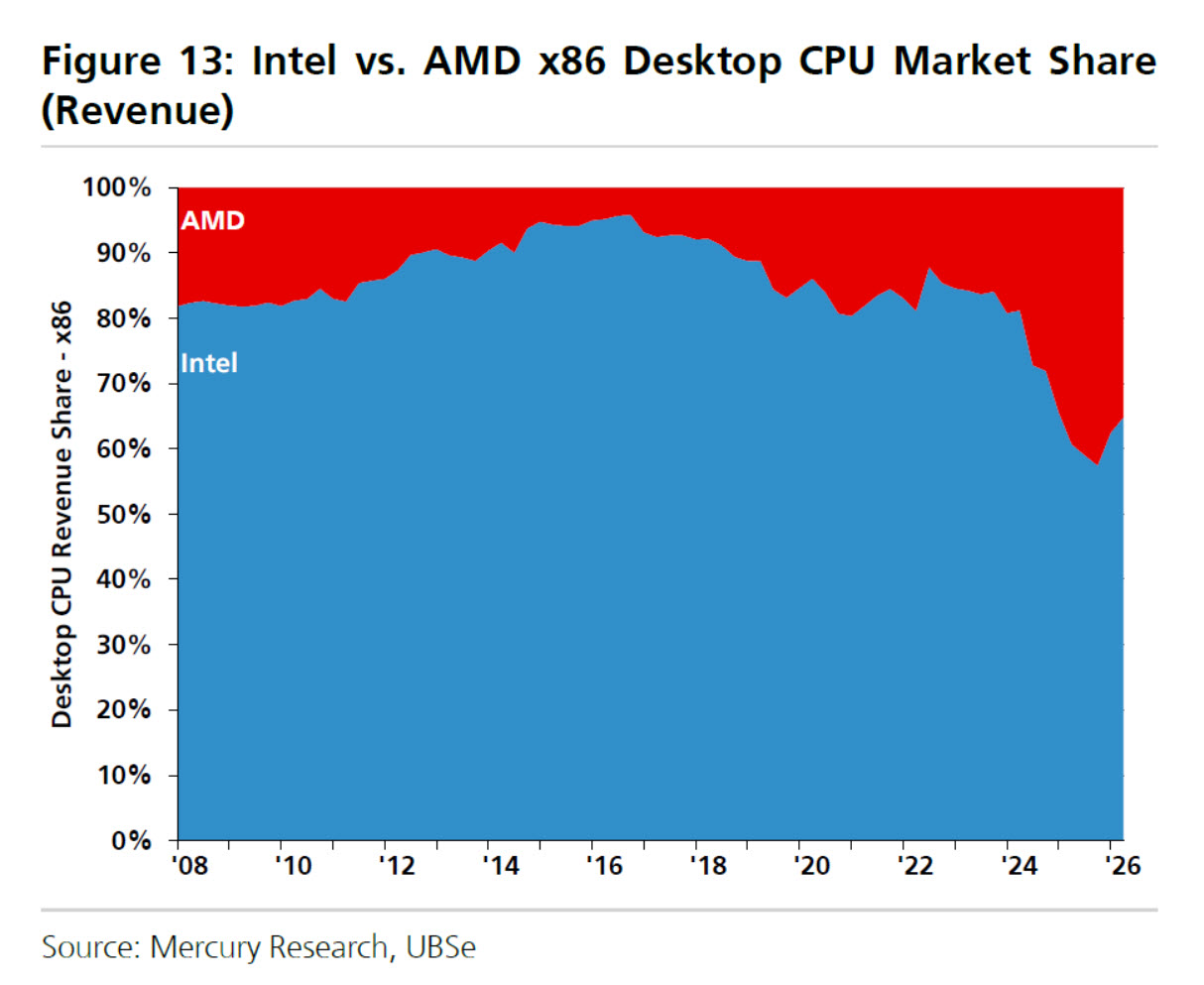
The company is massively promoting its DDR4-based platforms due to higher DDR5 costs, and is extending life cycles of Raptor Lake CPUs for years to come. There has also been a surge in retail-specific discounts on Intel CPUs, and the result is that both Desktop and Client fronts are seeing an improvement in CPU market share (revenue).
But we know that the PC market as a whole is in its worst condition right now, and reports point out a massive decline in the coming years due to increased prices and persistent shortages on the component front. In the meanwhile, AMD & Intel will try to offer competitive solutions to retain their current revenue targets in the client segment while earning record profits from the server segments.
Surging AI demand, particularly from agentic workflows that lean heavily on CPUs, is set to dramatically expand the server CPU TAM beyond $210 billion by 2030, with AI-specific chips claiming the vast majority (around 86%).
Shipments are projected to climb sharply, competition intensifies among Intel, AMD, and rising ARM-based players, and while Intel continues to lose unit share it is gaining in revenue. On the client side, Intel shows modest recovery amid a challenging PC market, but the real growth engine remains the booming AI server segment, supported by multi-year industry commitments that point to sustained demand for years ahead.
News Sources: P Equity Research (X) , John Intel (X) , Jukan (X)
Follow Wccftech on Google to get more of our news coverage in your feeds.