NAND shortages are intensifying as Phison warns that it will take years to catch up to demand, signaling a rise in SSD prices.
Memory and Storage are two major components of AI data centers. As memory demand grows, so do storage requirements, and major NAND producers are now alerting the markets that it will take years for supply to catch up with demand.
According to Phison CEO Pua Khein-Seng, it is said that the NAND production capacity cannot meet demand in the short term. The company is building up a "strategic' inventory to ensure a stable supply of Enterprise SSDs for CSPs and AI firms for the next two years, but the demand is so high that it will take years for production to catch up.
Phison's CEO states that while the impression in the market is that manufacturers can easily build & expand new production capacity, the reality is that the time required to set up new production is much longer. NAND manufacturers told Cheng that even the two-year timeline was ambitious, and it would actually take around four years to set up new production capacity.
Pua Khein-Seng stated that the market often believes that after memory prices rise, manufacturers can quickly increase capital expenditures and expand production capacity, but in reality, the time required to add new NAND production capacity is much longer than the market imagines.
He revealed that during a recent exchange with senior executives of the NAND manufacturer, he asked how long it would take from investment to actual mass production. He originally estimated it would take about two years, but the answer they gave was "four years".
Commercial Times
As such, the current estimation is that NAND shortages will persist for at least four years from now, and during this period, NAND prices will increase substantially as demand continues to grow. Phison will hold back from selling a large amount of its inventory as part of its "strategic" inventory since it will be unable to obtain a sufficient supply in the future, affecting its "long-term" partnerships.
To make matters worse, while AI firms and cloud providers are adjusting their DRAM specs , NAND capacity has not decreased that much, which highlights the importance of storage in the AI era. The rise of Agentic AI and GenAI use cases requires large amounts of data to be stored in the cloud, which means that more storage capacity is required.
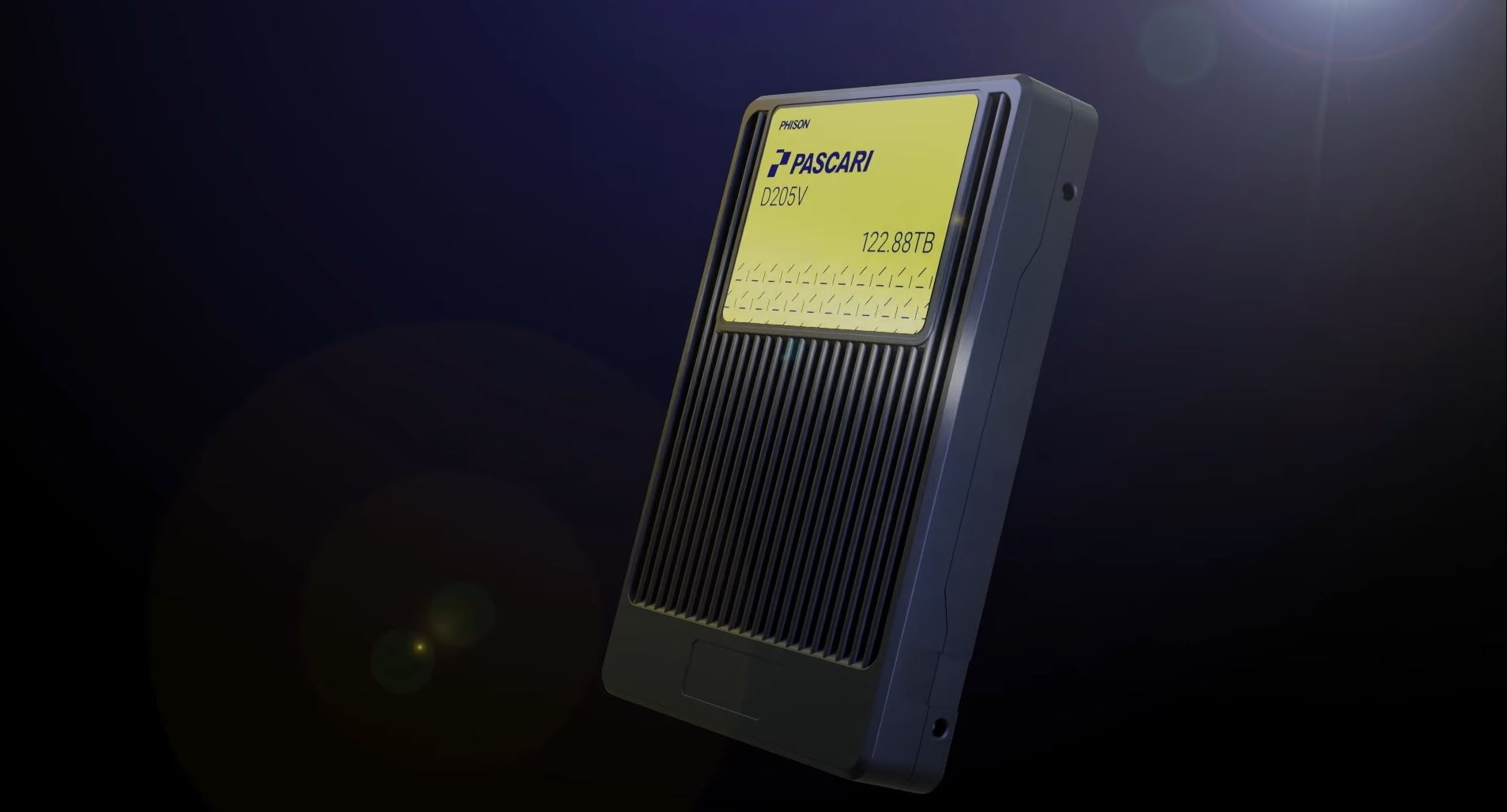
Phison is working to accelerate its NAND product roadmap in the Enterprise SSD and AI-SSD segments, but despite rising costs, its gross margins won't increase in a significant way due to rising NAND procurement costs. Phison did hit a record-high gross margin of 65.3% during Q2 2026.
Looking ahead, Phison is shifting its strategy as part of its "Phison 3.0" initiative, which will see it focus more on AI Storage, Edge AI, and AI platforms rather than relying on NAND controllers & storage modules.
Follow Wccftech on Google to get more of our news coverage in your feeds.