TechSpot means tech analysis and advice you can trust .
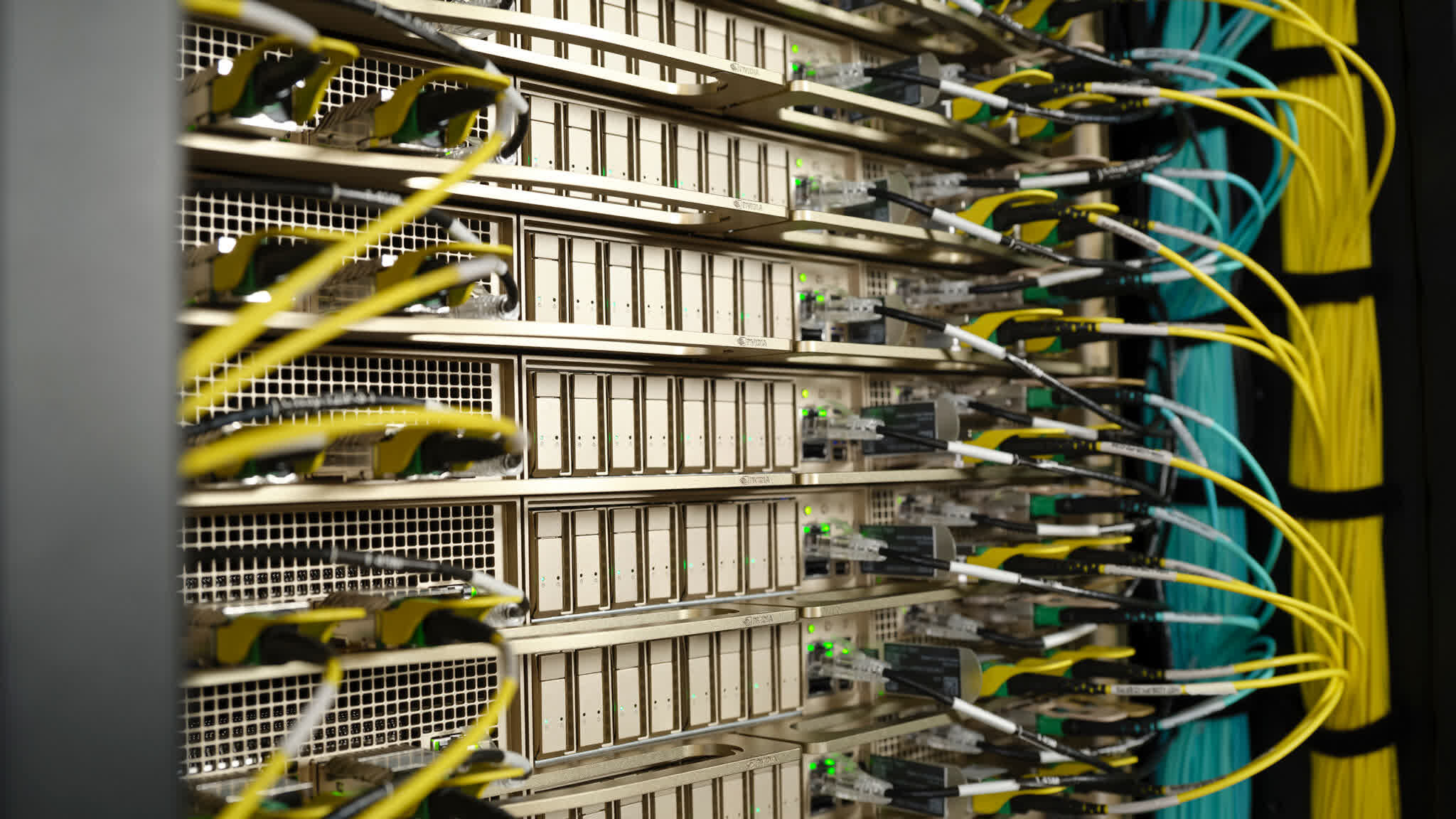
Why it matters: Nvidia has quietly assembled every piece of a cloud giant, and it doesn't even need to own the buildings. That is the theory making the rounds, and once you see it laid out, the last two years stop looking like a chip company having a very good run and start looking like a plan. The financing arrangement Nvidia signed this month with BlackRock, Goldman Sachs, and four other Wall Street heavyweights, aimed at funneling more than $500 billion of outside capital into AI data centers, would be the last piece clicking into place. Most outlets filed it under the now usual "more AI money" headline, but there is a more interesting read.
I should note, going deep into data center financing is not our usual beat. However, we do cover big tech , and Nvidia at this point is the biggest of them all, and it's not thanks to gaming GPUs. The framing that tech analyst Ryan Shrout gave to this announcement caught our attention. He pointed at a post by Clark Tang, calling it "a theory of what is happening right beneath our noses by Nvidia." We are reading these reports the same way you probably are, as tech people watching an industry rearrange itself in real time.
Tang is a partner at Altimeter Capital who covers AI and semiconductors, and who is best known publicly for calling Nvidia early and being right about it. Keep that in mind, because he is arguing the bull case on a company he almost certainly has a position in. His thesis in one line: what we are watching is Nvidia speedrunning the creation of a "synthetic hyperscaler." The argument is a good one though, and there is enough data behind it to kick the tires.
– Clark Tang (@_clarktang) August 12, 2026
So what is a hyperscaler (again)?
Strip away the branding and Amazon AWS, Microsoft Azure, and Google Cloud are really two businesses wearing one logo.
- The first business is financial. It pools everybody's hardware spending and smooths it out, so you rent infrastructure as an operating expense instead of buying it as a capital expense.
- The second is operational. It writes software that hides the hardware so thoroughly that you never have to think about the machine your code is running on.
Put those two together and it works like this: buy hardware in bulk, borrow money cheaply, and then use software to slice one box across many customers so it is never sitting idle, and you get the number that has defined cloud computing for the last 15 years: an operating margin somewhere in the 35% to 40% range.
But AI came along and broke that recipe.
// Related Stories
The old cloud playbook does not work on AI workloads
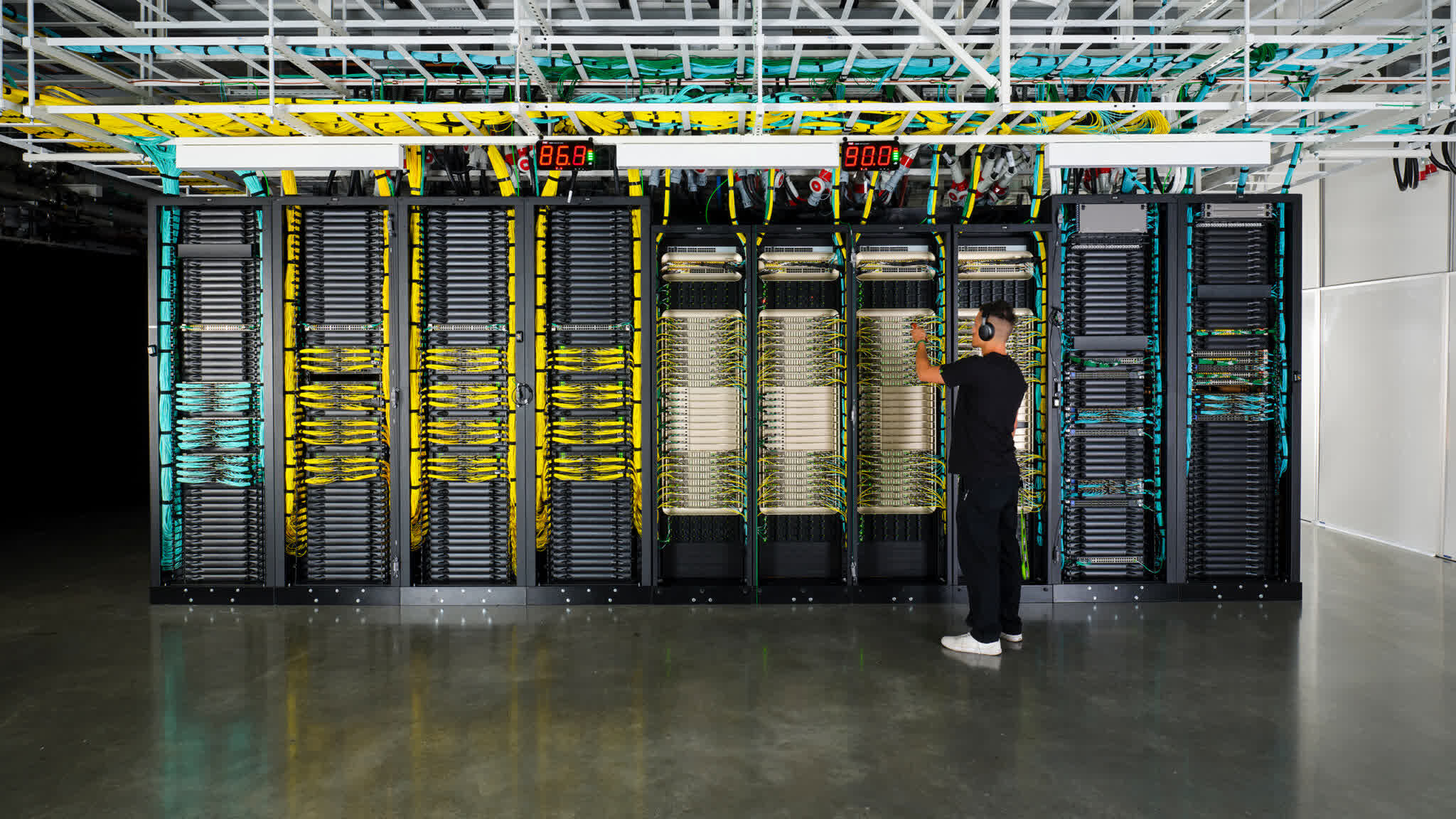
AI training requires a single enormous cluster where every node stays in lockstep, and a single straggling node stalls everything. Inference wants tokens per watt and fast time to first token. Neither one cares how many virtual machines you can cram into a chassis, which was the entire optimization target of the cloud era.
A warehouse full of cheap, redundant CPUs is a wonderful business right up until the job becomes a synchronous training run. Add a hard ceiling on available power, and the economics of the building flip.
Nvidia noticed. So did the hyperscalers, and here is where Tang's argument gets interesting.
The hyperscalers are massive tech companies with an established fleet of distributed data centers earning that 35% to 40% operating margin. It was in their interest to commoditize Nvidia's hardware, which carries roughly 75% gross margins, when an in-house ASIC could in theory do a similar job at a fraction of the markup.
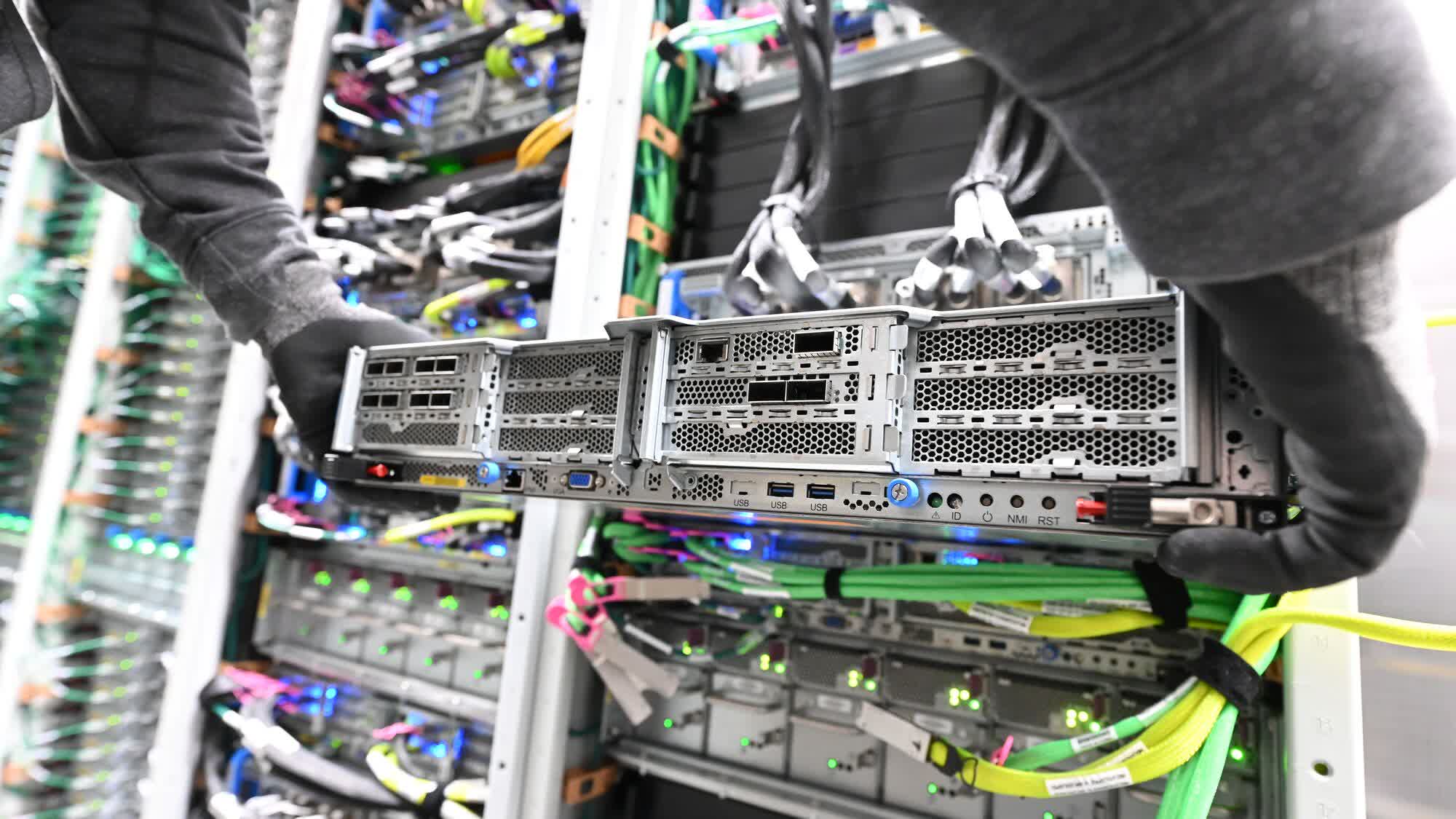
So the cloud giants built their own accelerators: Google has TPUs , Amazon has Trainium and Inferentia, Microsoft has Maia , and Meta has MTIA . They own the enterprise relationships and everyone's data sits captive on their platforms. They can also move at their own pace, which meant Nvidia's ability to push faster hardware was tied to how quickly its largest customers felt like moving.
Enter "Neoclouds"
This created an opening. A group of entrepreneurs looked at the fat margins the hyperscalers were earning on what was essentially stock Nvidia hardware with a software layer on top, and decided they could do that for less.
Enter the neoclouds, which co-developed software with Nvidia specifically for these workloads: hot swaps, predictive maintenance, storage built for training pipelines with cheaper ingress and egress because the goal was winning workloads rather than trapping data. Bare metal, no virtualization overlays dragging clusters below Nvidia's own reference performance. And, crucially, a willingness to operate at roughly 20% margins that the big clouds would never accept.
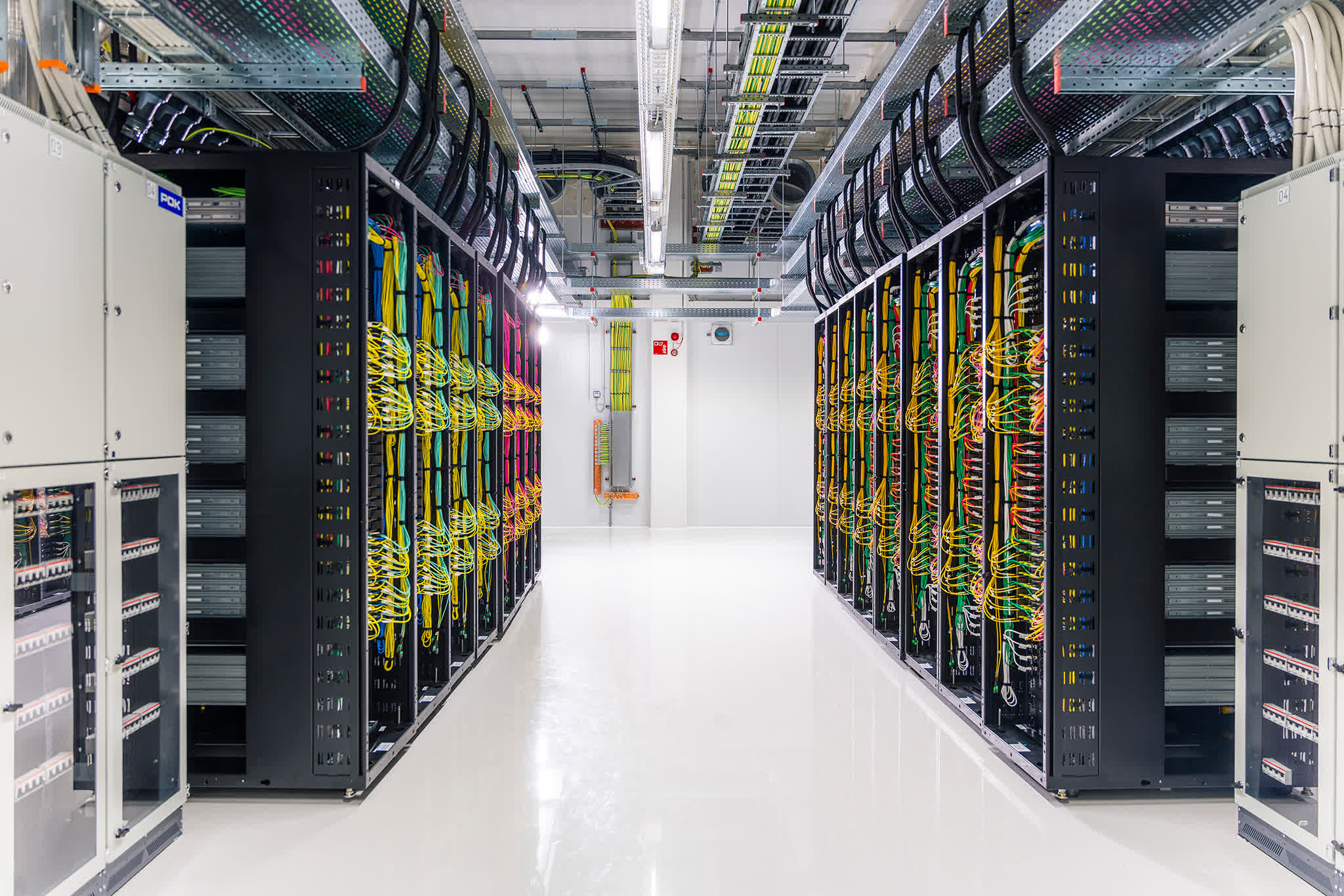
What the neoclouds could not replicate was the investment-grade balance sheet needed for the buildout. Lenders would only finance GPUs that already had a signed customer attached, which ruled out building ahead of demand. That is the constraint CoreWeave, Nebius, Lambda, Crusoe, and Nscale have all had to work around while the incumbents could simply write the check.
Tang argues that advantage is eroding anyway. Google just posted its first negative free cash flow quarter and raised $50 billion in equity, and Microsoft is carrying $329 billion in leases that are signed but have not yet started. If even Google and Microsoft are stretched, the money for everyone else has to come from outside.
What Nvidia has actually been building
Line up what Nvidia has been shipping for the past two years and Tang's case is that they now have both halves of a hyperscaler, just distributed across other people's companies.
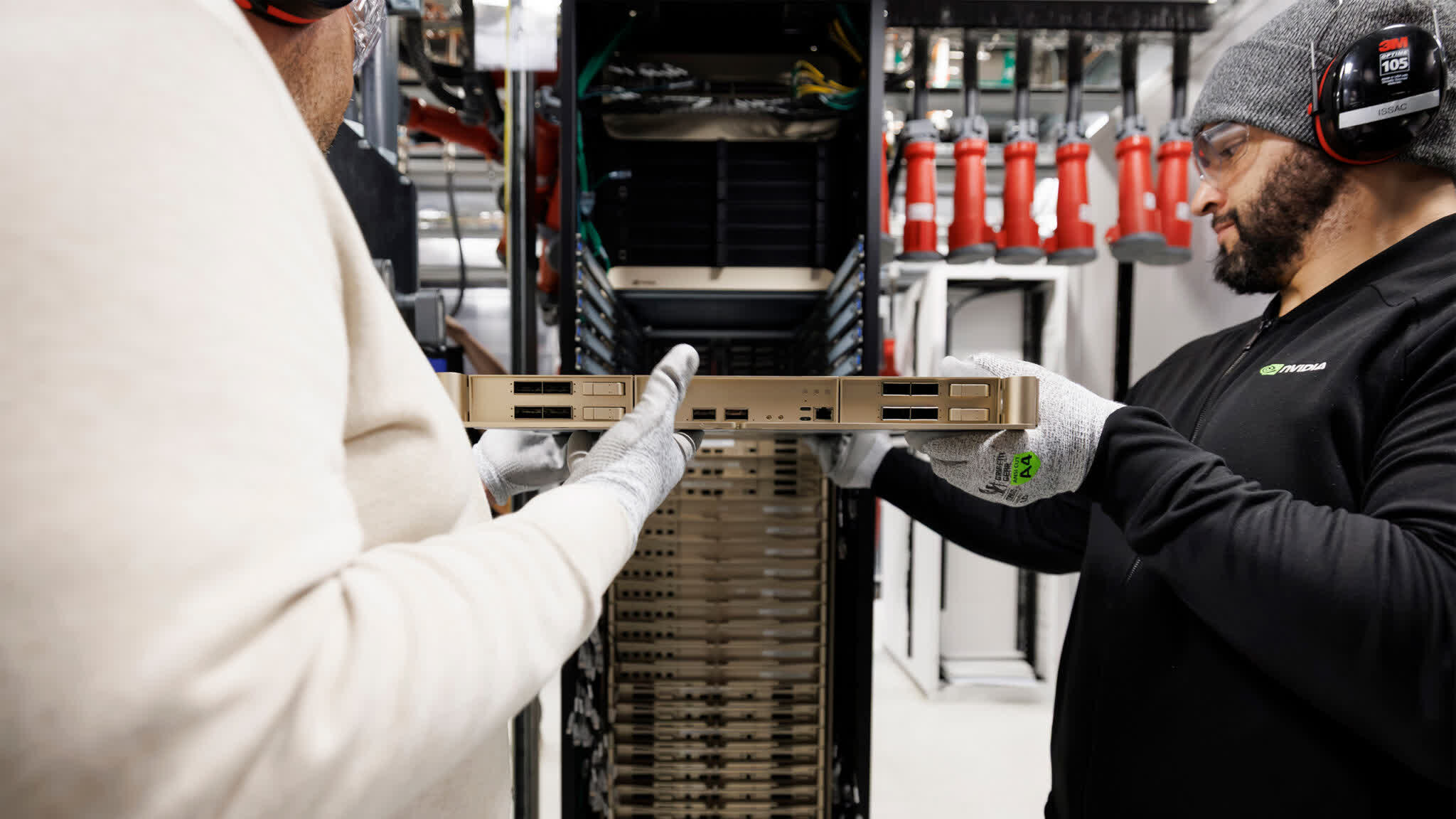
The operational half: DSX OS and Mission Control for running GPU fleets, DSX reference designs and Omniverse digital twins as playbooks for building the facility itself, and Dynamo for inference serving. In other words, the secret sauce that used to be a hyperscaler moat, handed to any competent team with a site and power.
The financial half is the part that landed last week. Nvidia signed Apollo, BlackRock, Blackstone, Brookfield, Goldman Sachs, and KKR to create independent financing platforms targeting more than $500 billion of third-party capital.
The pitch to those investors is that Nvidia standardized the asset (AI infrastructure) with reference designs, and that the compute is, in Jensen Huang's words, "fungible and transferable across customers and operators." That is what turns a warehouse of depreciating silicon into something an infrastructure fund can actually underwrite.
But it took Nvidia a few years for this to take proper shape. The CoreWeave master agreement dates to 2023, the BlackRock AI infrastructure partnership to 2024, Brookfield's $100 billion vehicle to 2025, KKR to this year. Six financing platforms later, Tang's one-word summary of the sequence: chess.
The earnings that explain why the money had to come from outside
Conveniently, three neoclouds reported in the same week, and App Economy Insights put the numbers side by side. They read like a stack of evidence for exactly the problem the financing platforms are meant to solve...
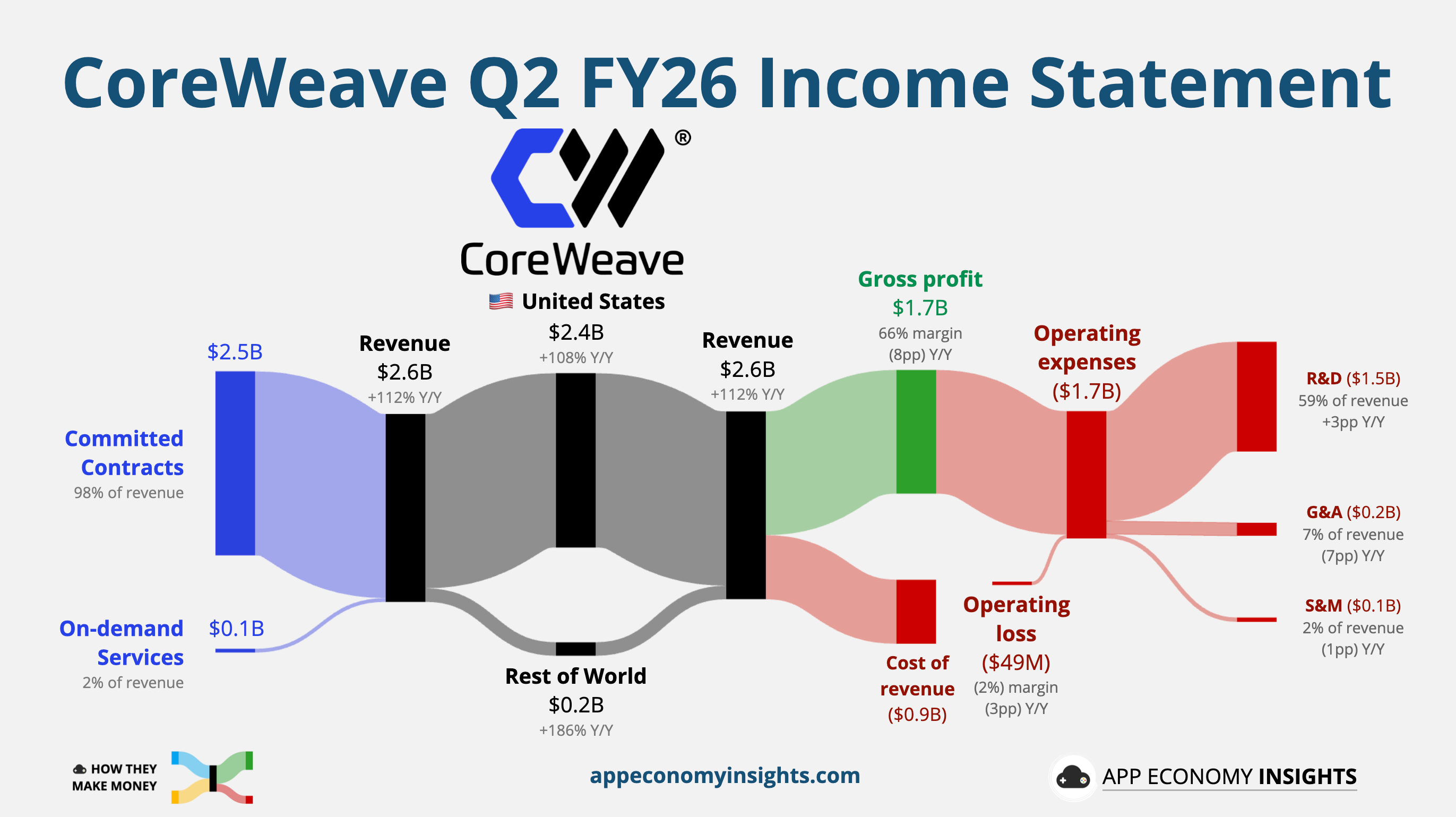
CoreWeave is the purest version of the model: buy GPUs, rack them, rent them to OpenAI, Microsoft, and Meta. Revenue more than doubled to $2.6 billion, with 98% of it coming from committed contracts rather than on-demand usage. And it still lost $626 million.
Note where that loss comes from: the operating loss was only $49 million, while interest on its GPU-collateralized debt came to $640 million. The business roughly breaks even on operations and the financing eats it alive.
Nebius , rebuilt as an AI cloud out of the Yandex breakup, grew revenue 454% to $582 million with gross margin up to 77%, and still posted a $176 million operating loss because depreciation alone came to $260 million as new infrastructure hit the books. However payback in new contracts is going down, and customers are prepaying more than $9 billion in 2026, which means the customers have quietly become the lenders.
Cerebras is renting its own wafer-scale silicon rather than Nvidia's, and its $477 million operating loss is mostly post-IPO stock compensation noise against a $34 million core loss. The detail that stuck with us is that Cerebras is temporarily renting back systems it had already sold in order to meet cloud demand. If you want a single image for how tight compute is right now, that is it.
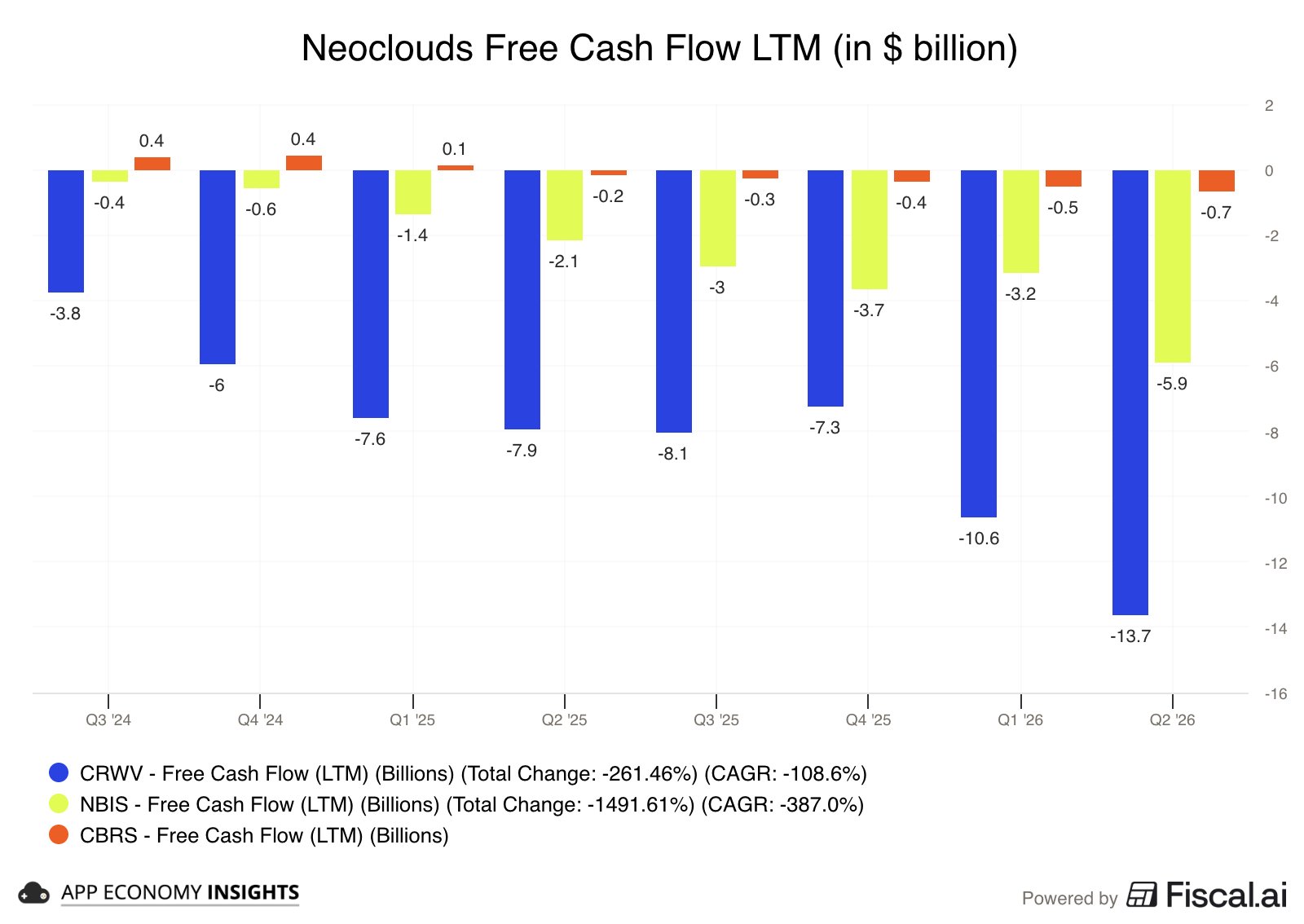
Put the three together and the trailing free cash flow reads negative $13.7 billion, negative $5.9 billion, and negative $0.7 billion. Demand is contracted years out. The cash goes out the door years early. That gap is what $500 billion of outside capital is for.
The obvious objections
Tang takes the three big criticisms head on. On circularity , his argument is that August 10 was the opposite of Nvidia financing its own demand, since six firms underwriting separately replaces Nvidia's balance sheet rather than extending it. Fair, though we would note these are memorandums of understanding, and nobody has disclosed a dollar as committed.
On whether GPUs hold their value long enough to underwrite, he points to CoreWeave contracting six-year-old Nvidia A100s through 2029 and pushing a roughly 25% price increase across its fleet in July. The collateral, he argues, is aging like an aircraft rather than a smartphone.
$500 billion that can only buy Nvidia reference architecture is "a moat dressed up as a risk."
On the complaint that all this capital stays tethered to Nvidia and starves rival accelerators, he has the best line in the post: $500 billion that can only buy Nvidia reference architecture is "a moat dressed up as a risk."
The business side of enterprise tech (and bubble talk)

We are reading this as interested observers rather than infrastructure analysts. But if you have been following the memory price spikes, the data center construction boom, the AI-related layoffs, and the endless stream of vibe-coded projects and bug bounties, this is the machinery running underneath all of it.
It is also where the bubble question actually lives. Not in whether the chatbots are useful, but in whether the money being committed to buildings and GPUs today gets repaid by revenue that has not arrived yet.
The neoclouds are burning cash at a rate that leaves very little room for demand to wobble. And they are not the only ones building. Meta is scaling its own silicon by the gigawatt, and SpaceX has started selling access to its Colossus cluster. So do the neoclouds stay essential infrastructure partners, or do they turn out to be relief valves that get squeezed shut once mega-cap capacity finally lands?
What is harder to argue with is the shape of this new thing. Nvidia has published the operating software, the facility blueprints, and the serving stack, then arranged the capital, without owning the buildings, the power contracts, or the customer relationships.
The idea is to collect on the hardware regardless of which logo ends up on the door. Whatever you want to call that, it is not just a chip company anymore.