TechSpot means tech analysis and advice you can trust .
Forward-looking: Researchers have built miniature boats and flying devices that turn sound into thrust. Their 3D-printed cavities respond to specific frequencies, producing motion without motors, gears, or magnetic parts. The work points to a lighter, simpler way to power extremely small robots.
The technology was developed by EPFL's MicroBioRobotic Systems Lab in Switzerland, and the study was published in Science Advances. It relies on acoustic resonance: when sound at the right frequency enters a hollow chamber, the air inside vibrates strongly. The cavity directs some of that air through an opening, creating a small jet that pushes the device.
The result is a simple propulsion method built into the structure itself. Instead of using sound waves to push an object from outside, as in acoustic levitation experiments, the EPFL devices use sound energy to create their own movement. "Our work shows the feasibility of transforming a simple, cleverly designed mechanical piece into robotic matter," says Selman Sakar, head of the MICROBS Lab.
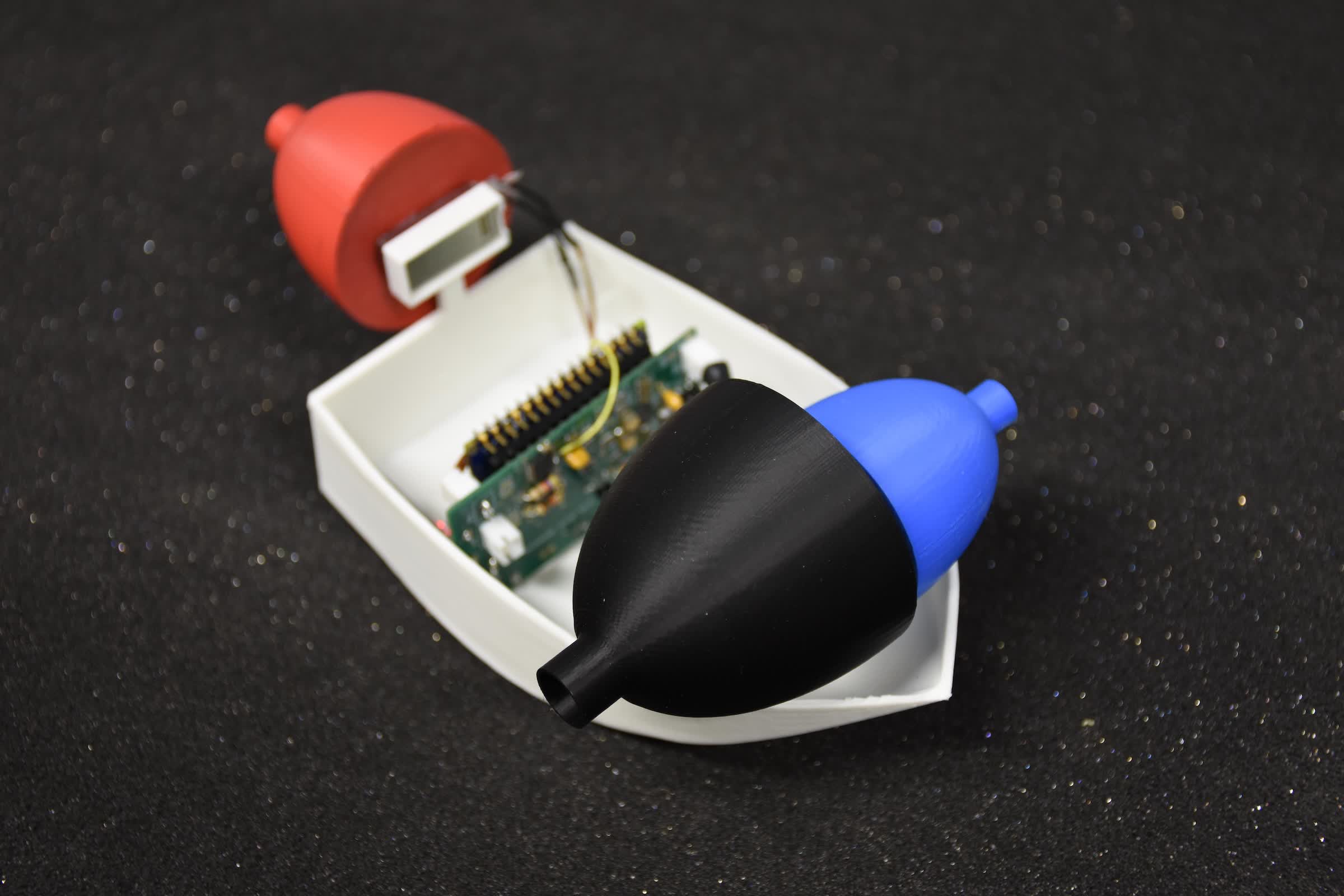
The effect is related to what happens when air is blown across the top of a bottle. Air trapped inside the bottle vibrates at certain frequencies, producing a tone. EPFL's researchers designed cavities to turn that vibration into airflow with enough direction to create thrust.
The team made the resonators from materials including 3D-printed plastics, rubber-like polymers, and glass. Because the system does not need motors or other moving mechanical parts, it can be made very small.
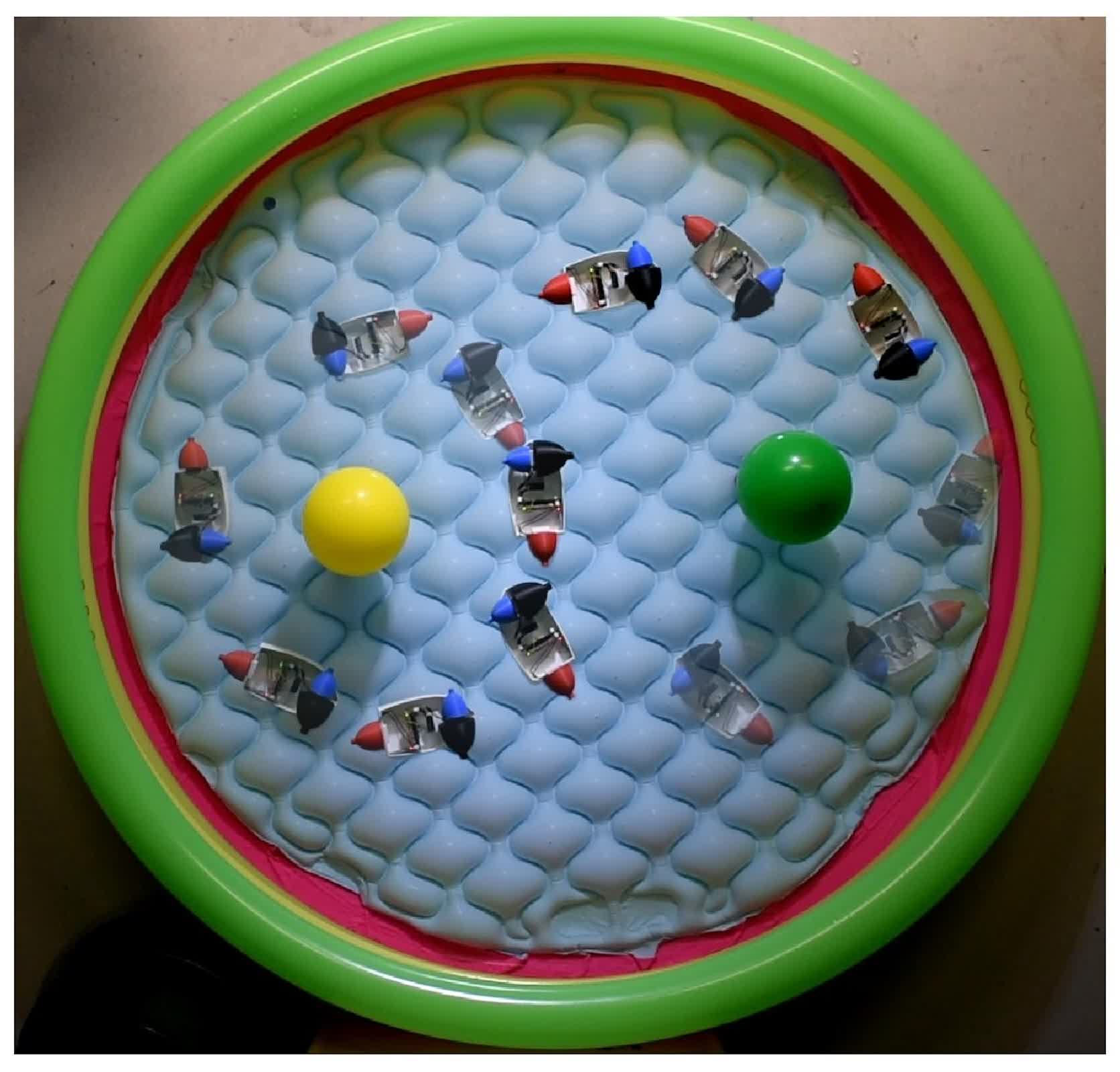
For one demonstration, the researchers installed up to three resonators on small boats. Each cavity responded to a different audible frequency and was placed to move the boat in a particular direction. By changing the sound frequency from a speaker, the team could activate individual cavities, move the boats, and steer them around obstacles. The researchers also programmed the boats for autonomous navigation.
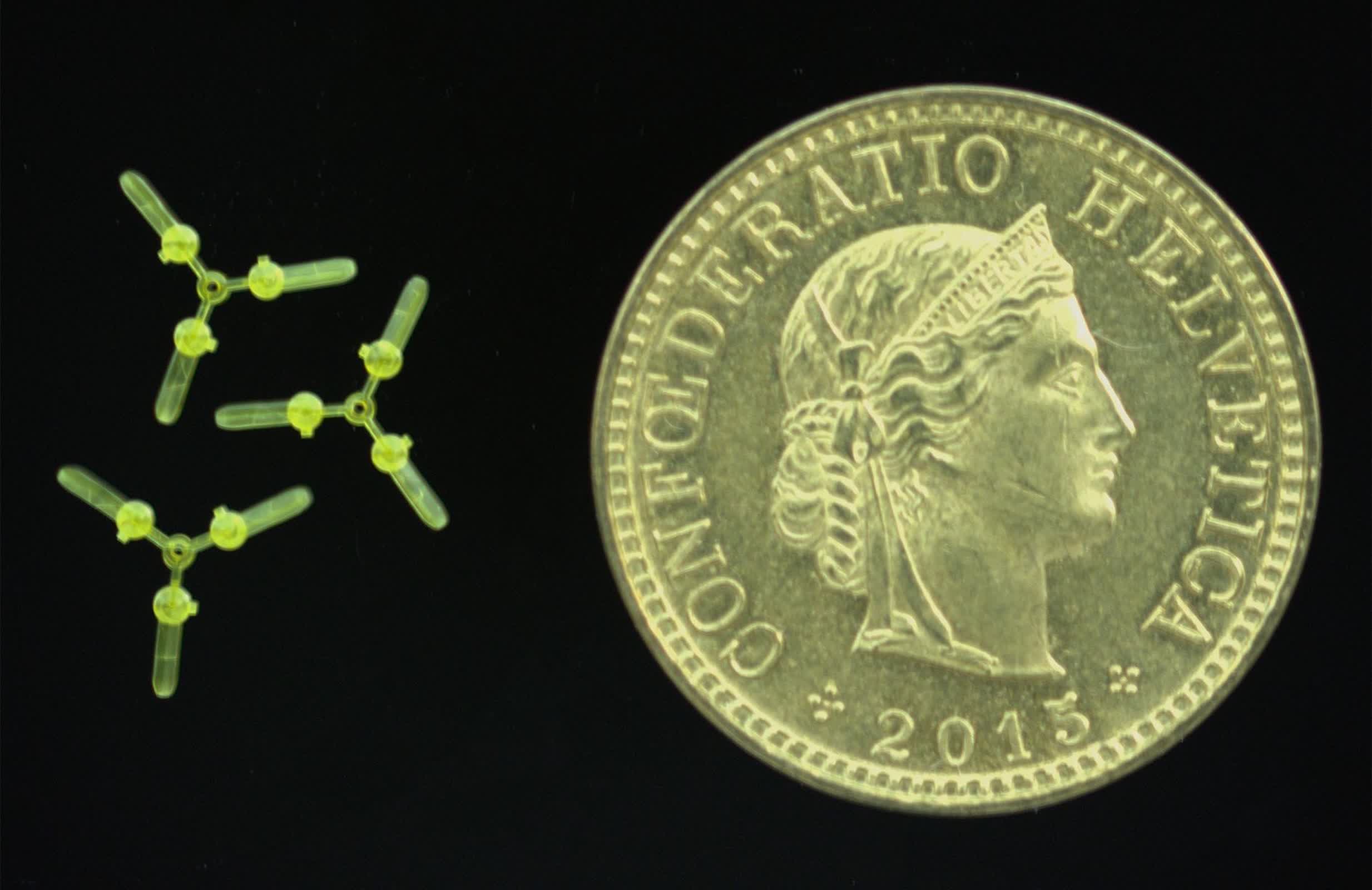
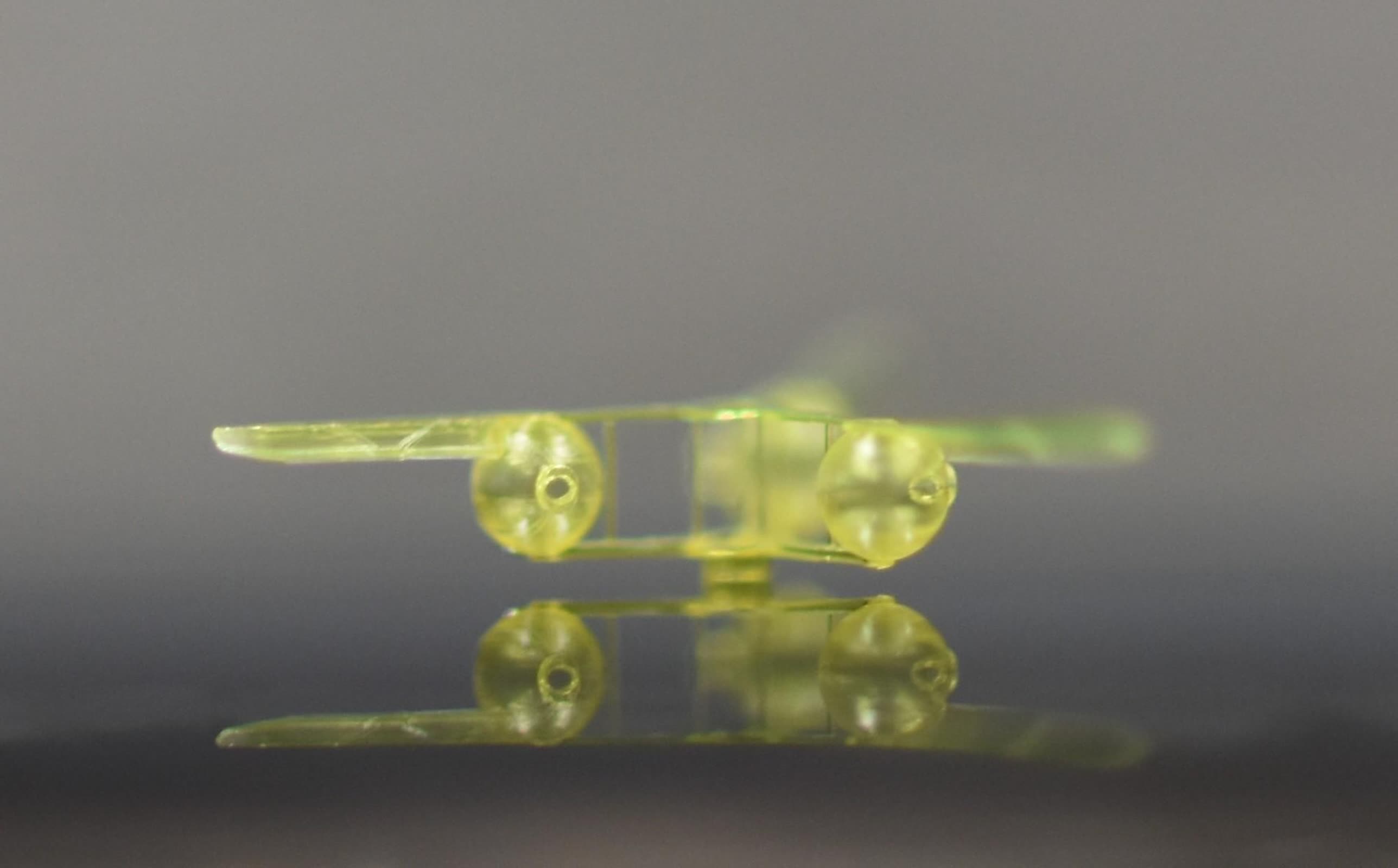
The team then used 3D nanoprinting to build microfliers. These devices operate at ultrasonic frequencies, so their propulsion sound is not audible to people.
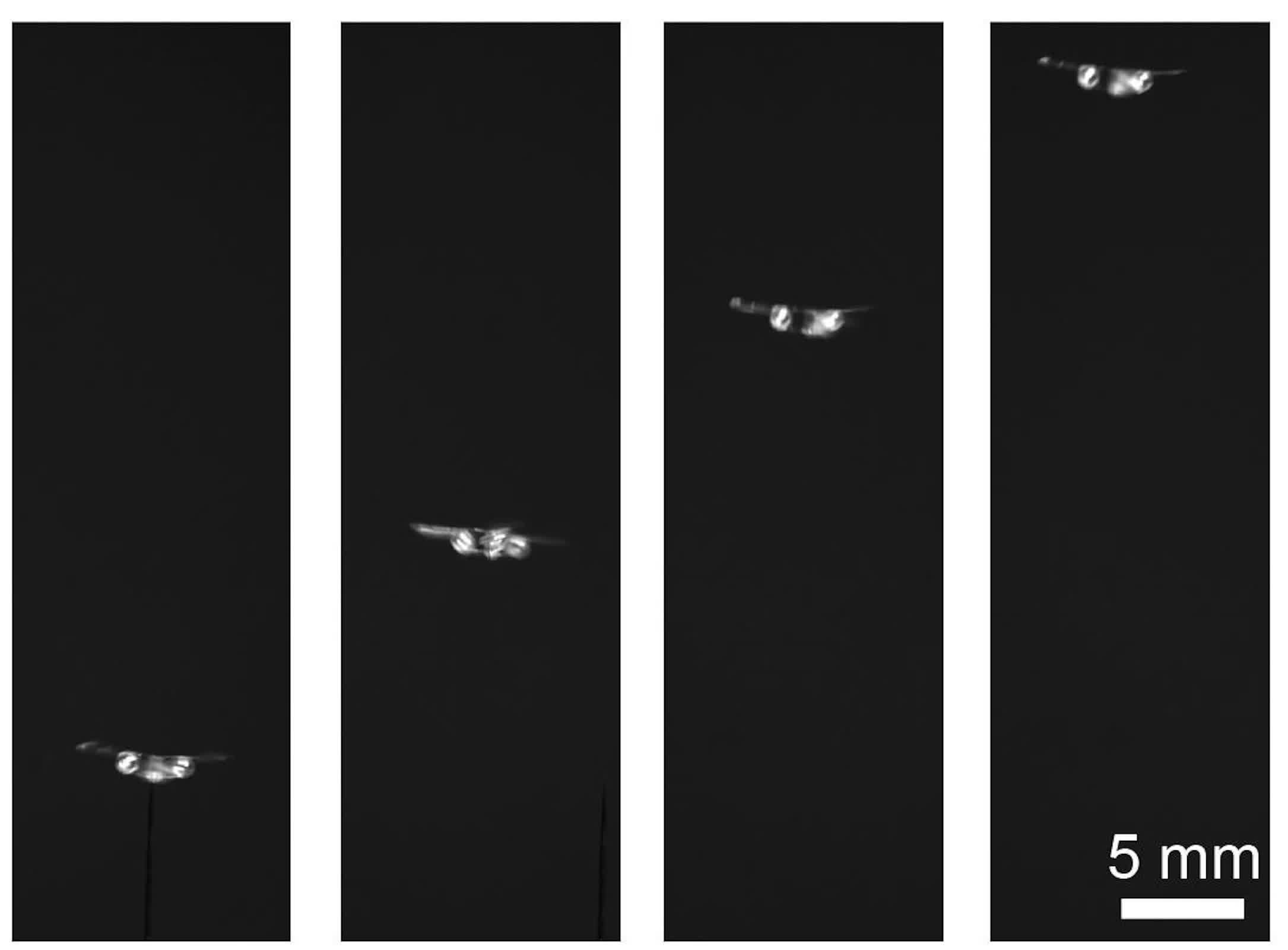
One flying design weighed 150 micrograms and used three cavities to produce downward thrust. It lifted from the surface in a rocket-like motion. The second design used three blades arranged around a central point. Each blade included a resonator that produced thrust when exposed to the correct frequency. The blades spun at up to 13,000 rpm, generating enough lift for the device to hover like a tiny helicopter.
// Related Stories
The demonstrations are limited for now. The microfliers rose less than 5 millimeters, and the boats were extremely light. But the experiments show that resonant cavities can act as propulsion systems for small robotic devices.
The concept differs from ultrasonic cooling systems such as xMEMS' fan-on-a-chip, which uses a piezoelectric membrane to move air. EPFL's system depends on the cavity's shape and its response to a specific sound frequency.
"Our concept is compatible with even further miniaturization, enabling advanced designs that push the boundaries of robotics and aeronautics," says Junsun Hwang, the study's first author and a MICROBS Lab PhD student.
Sakar said a future device could include several resonators, each responding to a separate frequency. "This would allow specific parts of the device to move, bend or vibrate, potentially leading to aerodynamic robotic devices that can change shape in response to sound," he says.