The Hydra tuning utility has received a major update, bringing unlocked VRAM OC and power limits to NVIDIA's RTX 50 GPUs.
Yuri Bubliy, aka 1usmus, has released the latest update of his pet project, HYDRA , which is one of the most widely used overclocking and tuning utilities. The tool offers a lot of advanced features & the latest update brings some big additions for NVIDIA RTX 50 GPU owners.
These new Hydra capabilities include: Unlocked VRAM Overclocking & Power Limit Control for NVIDIA RTX 50 GPUs. Why this is important is very simple: NVIDIA has been very stringent on overclocking support through higher power limits on its recent iteration of GPUs. The majority of RTX 50 GPUs don't feature any power limit control beyond what NVIDIA permits, with only a few models such as MSI's RTX 5090 Lightning OC offering that to a certain extent.
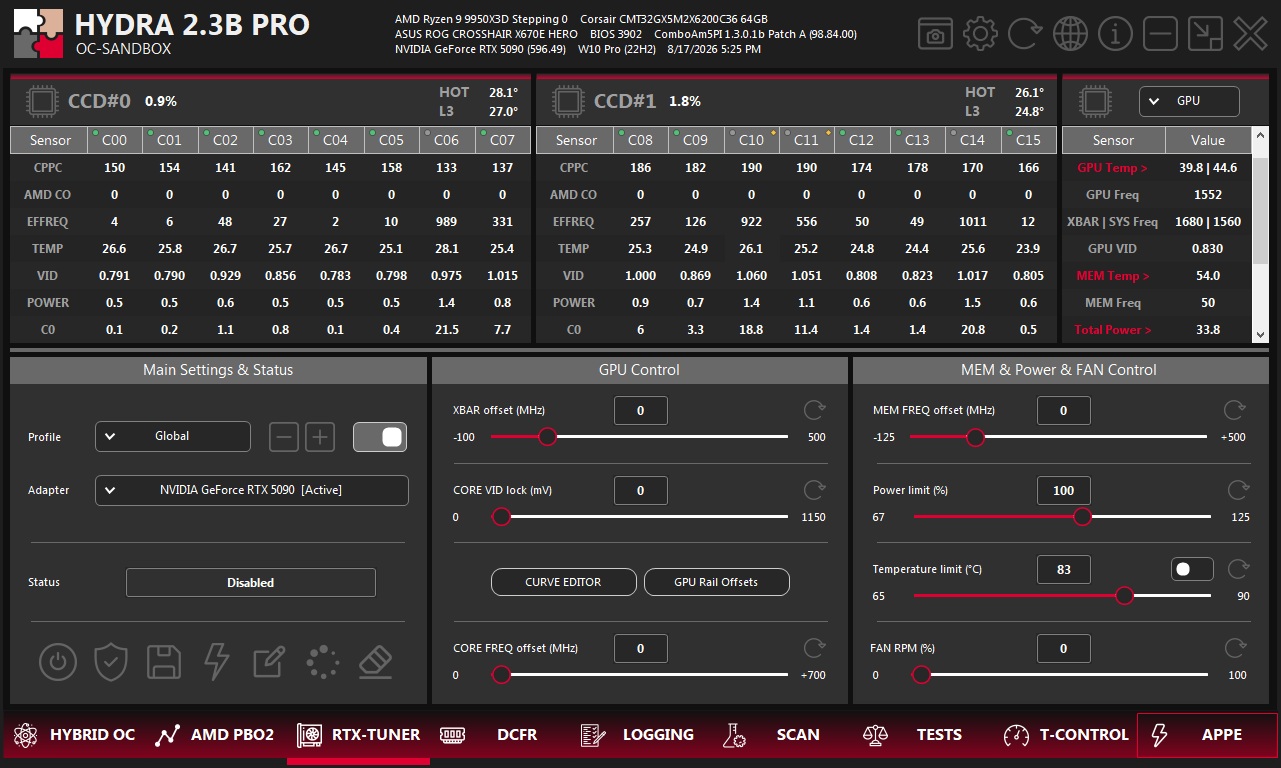
Furthermore, NVIDIA's GeForce RTX 50 GPUs ship with the latest GDDR7 memory dies, which offer anywhere from 28 Gbps to 34 Gbps speeds, but these modules hold even more potential. We've seen a glimpse of this potential through mods such as the one from Teclab , where the RTX 5070 Ti was pushed beyond 36 Gbps speeds, bypassing its original 34 Gbps limit. But these mods require a lot of expertise, whereas HYDRA offers a 1-stop solution.
So, coming to the HYDRA update, one thing that 1usmus makes clear is that his solution is not a security hack, vBIOS modification, or a magic driver; it's a native solution integrated within HYDRA to give enthusiasts more control over their hardware such as the RTX 50 series. The first release of this update comes with "user safety" in mind, so the tool isn't going too aggressive with the PL or VRAM clock. These limits include:
- Up To 36 Gbps for GDDR7 Memory Modules (on RTX 50 Series)
- Up to 125% Power Limit
- Compatible with an NVIDIA RTX 50 graphics card from any vendor
To demonstrate the tool, 1usmus used an ASUS RTX 5090 ROG Astral LC graphics card and pushed its memory to the specific 36 Gbps VRAM frequency. With this frequency, the card achieved a 2.3 TB/s memory bandwidth. This is a 28.5% increase in memory bandwidth, which should deliver a nice boost in performance.
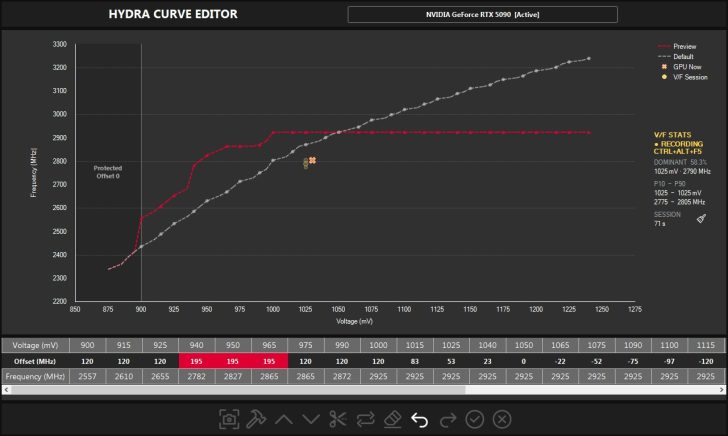
For the power limit demonstration, the RTX-TUNER feature in HYDRA was leveraged. This feature has been improved significantly, and users will no longer face any Curve modification restrictions. The tool also offers support for Rail Offsets (MSVDD and NVVDD), plus XBAR offset control has also been added. These enable far better extreme overclocking capabilities than the reference configuration.
The power limit for the graphics card was set to 105%, which increased the power draw from the base 600W to 640W.
Now, as is always the case with manual overclocking and power limit changes, it can cause potential harm or damage to the graphics card. Changing power limits, voltages, frequencies, or anything beyond the stock configuration should be done with extreme care. Only experts or PC enthusiasts with a good knowledge of overclocking should indulge in such overclocking changes; otherwise, beginners might end up breaking their expensive GPUs.
The first release of HYDRA with these features also carries experimental support for NVIDIA's RTX PRO 6000 GPUs, and the release is currently planned for next week. It will initially be available to early access members of the HYDRA utility, with a public release planned for later.
Follow Wccftech on Google to get more of our news coverage in your feeds.