Over the years, Arc System Works has confirmed, time and time again, why it is such a beloved name among fighting game enthusiasts. From the Guilty Gear and BlazBlue series to games based on other IPs like Dragon Ball FighterZ and Granblue Fantasy Versus: Rising , there hasn't been a time when the studio didn't deliver a high-quality product.
As such, the announcement of MARVEL Tōkon: Fighting Souls last year was met with unbridled enthusiasm. With the MARVEL Vs. CAPCOM series seemingly done, the new game by the creators of Guilty Gear seemed like the comeback CAPCOM would never have the chance to develop.
Now that the game is finally out, describing it as just a spiritual successor to the series would diminish its value. It does feel like MARVEL at times, but it is its own beast, delivering not only one of the best fighting game experiences of the generation, though with a deeply flawed PC version, but one of the most accessible fighting games to date that doesn't sacrifice depth for it.
Although the heart and soul of MARVEL Tōkon: Fighting Souls are its combat mechanics and competitive multiplayer features, the game delivers plenty of single-player and offline content to get newcomers eased into the experience before they can take the fight online.
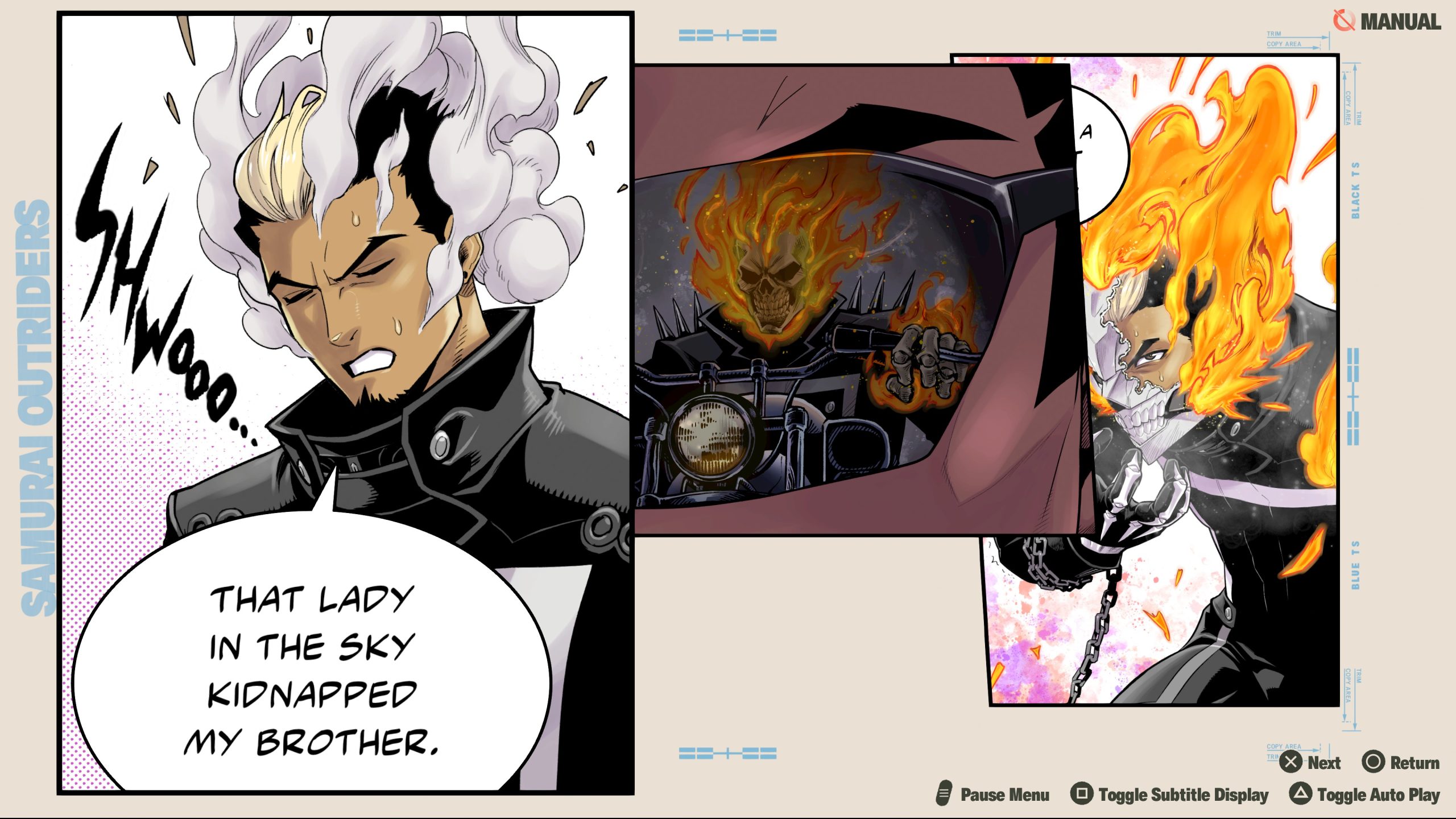
The most prominent part of the game's single-player content is Episode Mode , which centers around a cosmic tournament. Organized by The Champion , an Elder of the Universe who conquers and destroys worlds that fail to produce worthy combatants, this tournament sees five teams of fighters - Fighting Avengers , Unbreakable X-Men , The Amazing Guardians , The Knights of Doom , and Samurai Outriders - take part to defeat The Champion and his spokesperson The Promoter and save not only Earth , but also the realms captured by the Elder of the Universe and sealed into a pocket dimension.
With five different teams, Episode Mode follows the individual stories of each, mixing comic-book style sequences created by some incredible artists, including Fairy Tail 's creator Hiro Mashima , with intense fights that work great as an introduction to the game's intricate combat mechanics. The stories themselves fall within the boundaries of the MARVEL universe, so there's no major twist or anything of the sort, but the interactions between characters are rather entertaining, ultimately making this story mode worth a playthrough even for those with only a passing interest in these characters.
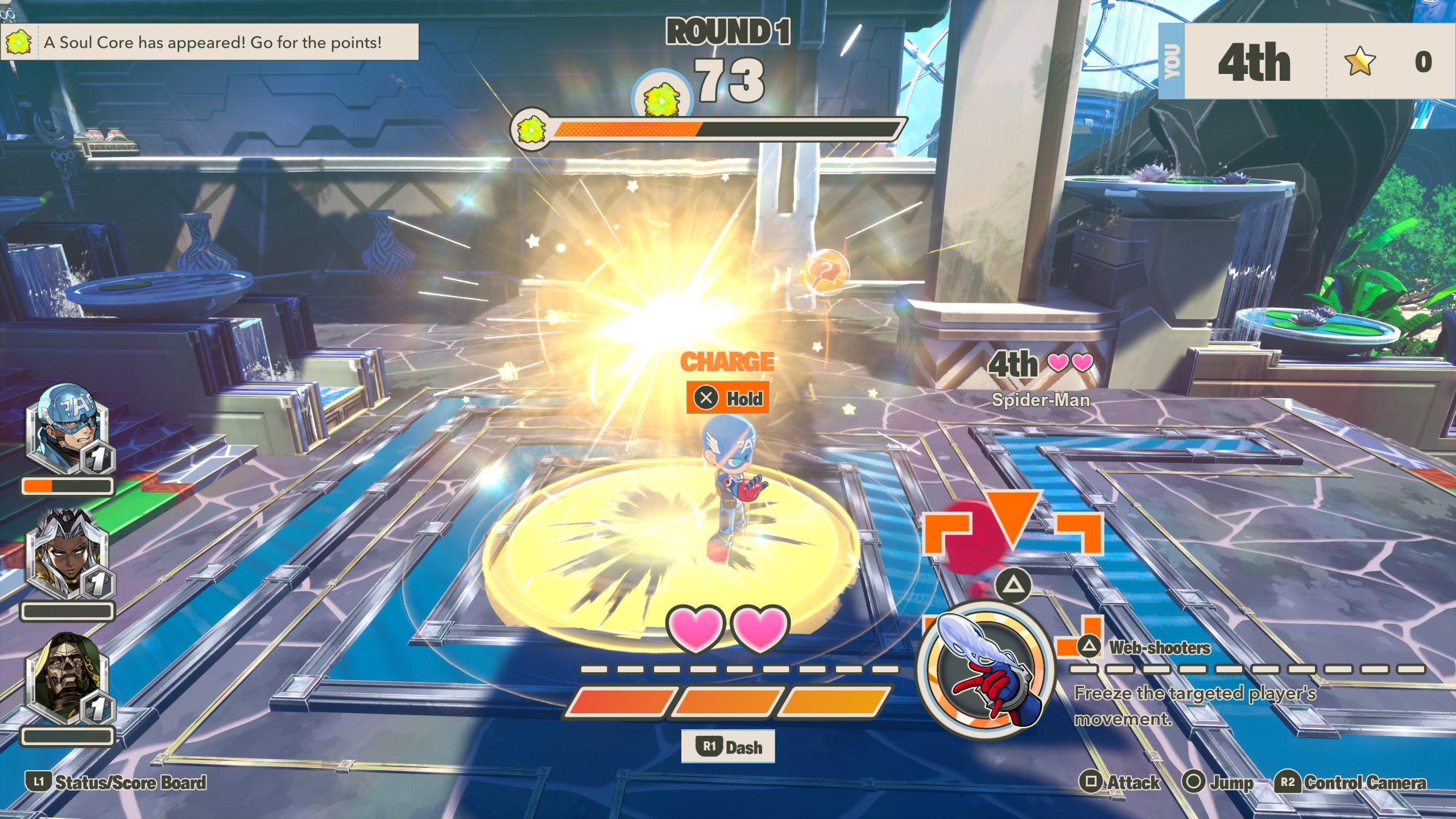
While MARVEL Tōkon: Fighting Souls ' Story Mode is not particularly innovative, the other single-player modes show how Arc System Works did its best to provide something valuable for those who are not really keen on competitive play. The star of the show is Arcadia Rumble , an offline mode where up to four players, either human or AI-controlled, engage in arena battles with their avatars and in regular fights with their picked team of heroes. The arena portion of this mode feels like a chaotic and fun party game where avatars zip around earning points by fighting against other avatars directly or picking items. Making this mode even more interesting are the passive bonuses accumulated during the arena fights, which add interesting twists to the regular gameplay.
All-Star Arena , on the other hand, is a unique take on both the classic arcade ladder and Survival modes. In the former, players pick a team of their choosing, defeat AI-controlled opponents, and pick different paths on the different courses themed around the five canonical teams. In the latter, players go up against a series of opponents with their health carrying between fights and Technical Bonuses that can provide positive effects to make a run last longer.
For the competitive-minded players, these offline play modes are nothing more than diversions they won't play through more than once, but for those looking for some casual fun, they are solid offerings that can teach many of the basics of the experience without getting overwhelmed by more competent players. However, once the story mode is completed and the novelty of the other modes wears off, it's unlikely many will continue to play them for long.
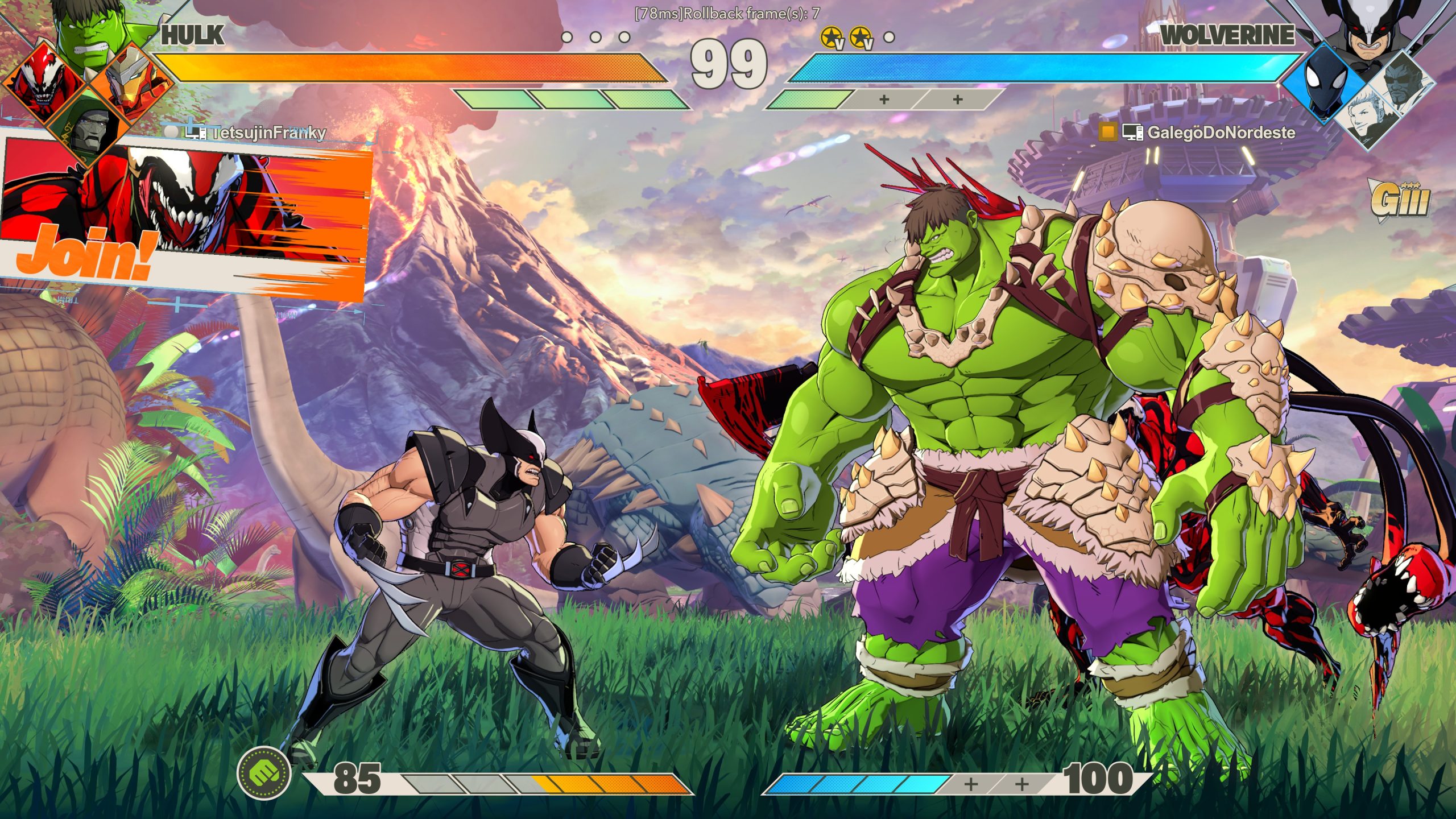
MARVEL Tōkon: Fighting Souls is the first-ever 4 versus 4 tag fighting game, taking the formula made popular by the MARVEL Vs. CAPCOM series and refined by other games, including Arc System Works ' own Dragon Ball FighterZ , and bringing it up to eleven.
On paper, controlling teams of 4 characters promised to raise the bar of entry even more than the games mentioned above, requiring players to learn to play as 4 different fighters to achieve success in a competitive setting. However, that is not the case at all with MARVEL Tōkon: Fighting Souls .
Instead of featuring four health bars for each character, the game has a singular health bar for the entire team, meaning that switching between characters is not required at all. This is a significant change for the tag fighter subgenre of fighting games, as it makes the experience very accessible: if one wishes, it is entirely possible to play an entire first-to-3 match using the leading character, using the secondary characters only as assists.
To avoid undermining the whole tag-team aspect of the experience, Arc System Works approached assists in a rather clever way. Depending on their position on the team, and the direction pressed with the Assist button, each character unleashes a certain type of attack ( Shooter , Vertical , Assault ) for free, with only a short cooldown preventing spamming of certain attacks. In addition, each character on the team can unleash a generic Assist that works as a combo extender, or to make certain attacks safe on blocks, at the cost of a bar of the Assemble Gauge .
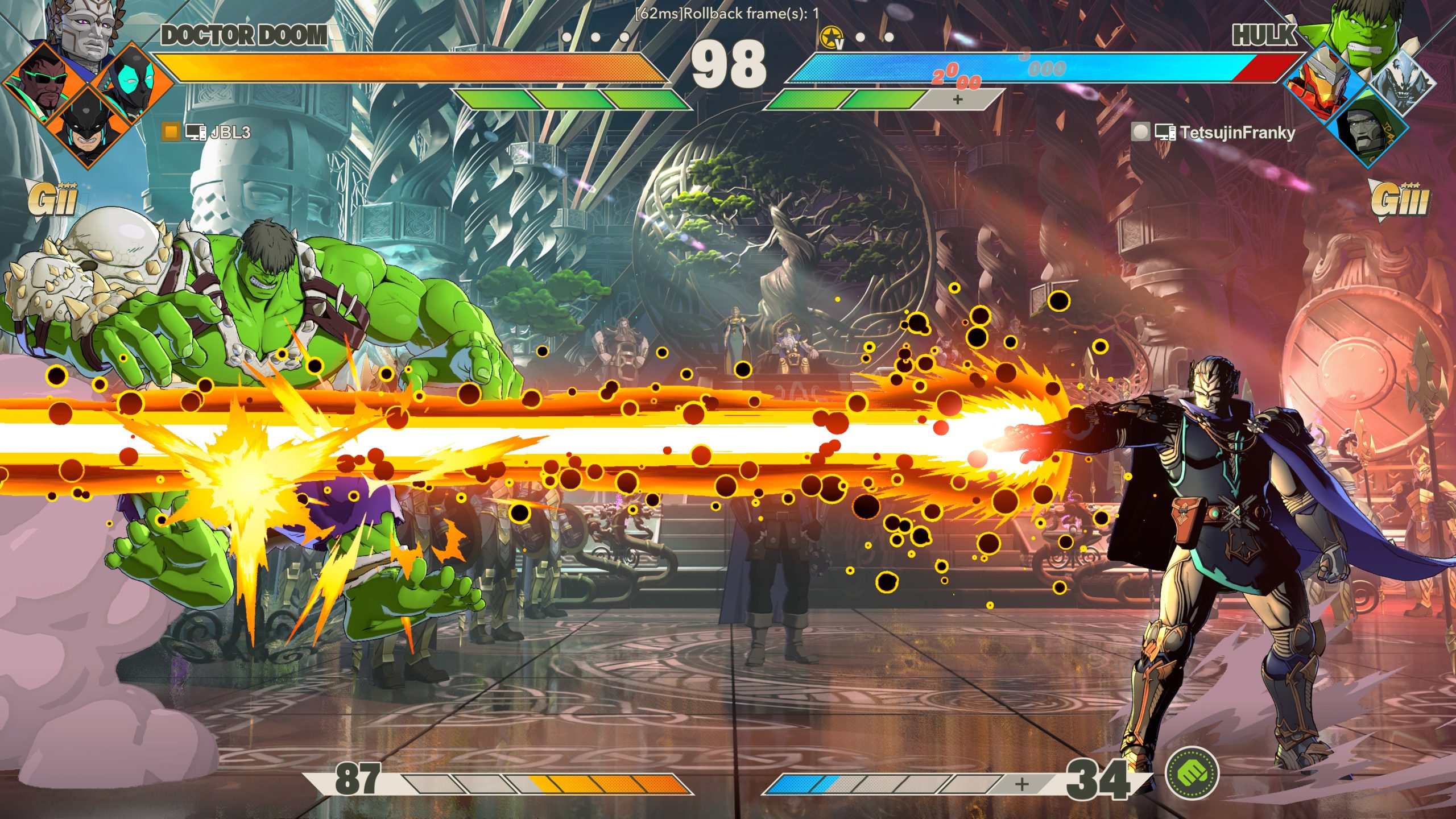
With such a wealth of combat options, MARVEL Tōkon: Fighting Souls sounds like a really overwhelming fighting game on paper, but that is not the case at all. On the contrary, actually: I have found it to be among the most accessible, one that is very easy to pick and play, and not only because it is possible to play with a single character and use the other three as Assists only, which are progressively unlocked during the match by breaking walls or after losing a round.
For starters, MARVEL Tōkon: Fighting Souls is chock-full of play modes aimed at helping players learn the game. Training Mode , for example, not only comes with every option that has become a requirement for modern games, including frame data, but also has some training scenarios geared towards improving at specific parts of the game, such as anti-airing, pressuring, using defensive mechanics (of which the game has quite a few, including an invincible back-step reminiscent of Street Fighter V 's V-Shift ) and more.
The Command List is also very comprehensive, listing not only every move a character has, but also any secondary effect one may have, further highlighting the incredible job Arc System Works did with character design. While the three buttons + Assist control scheme is simple, and the combo rules are relaxed, there isn't a single character that plays like another.
Even in terms of tutorials, MARVEL Tōkon: Fighting Souls delivers beautifully. Startup Battle may be a little long-winded for some players, but it truly covers everything from fighting game basics to the game's unique mechanics. The character-specific lessons are just as comprehensive and also include some combos to help players get started.
However, the one feature that I wish more fighting games would implement is another. At times during a match, you may spot on the sides of the screen tags like Armor , Overhead , and the like. These tags appear to quickly explain why your defense has been ineffectual, or why your attack did not land. During gameplay, these may be difficult to spot in the heat of the moment, but they are invaluable when watching replays, which is something anyone who wants to get better at any fighting game should do, as the game spells out for you what you did wrong.
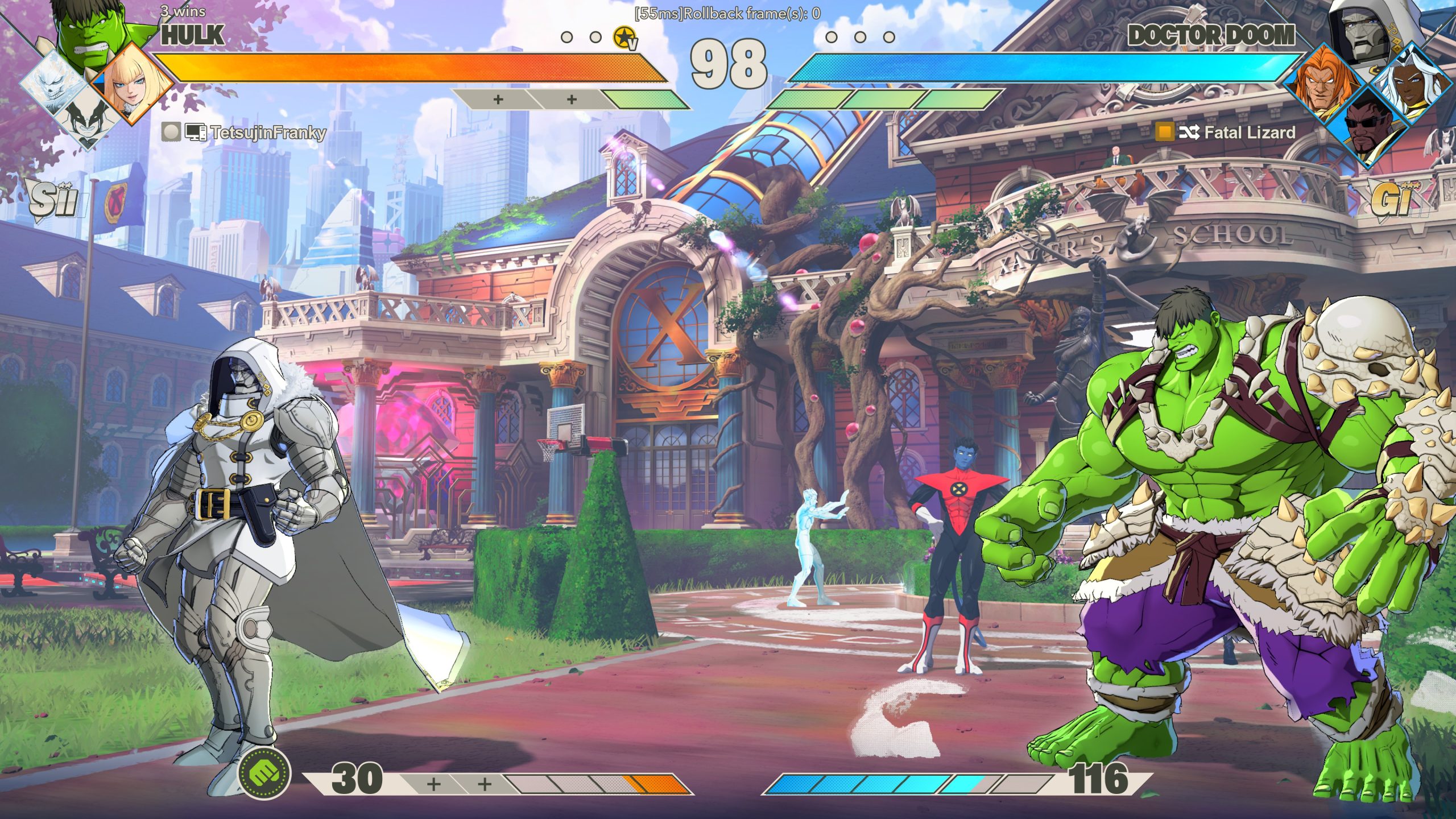
Much like the offline modes, MARVEL Tōkon: Fighting Souls features a wealth of online modes. Not falling into the same pitfall as Guilty Gear Strive , Arc System Works delivered a proper Ranked Mode at launch, alongside a Casual Match mode, which may not be the best for newcomers, as it matches players depending on the criteria set by the player, such as connection quality and region, rather than skill.
Rounding out the online modes is a lobby system reminiscent of the one in Dragon Ball FighterZ . Supporting up to 64 players at once, it is possible to roam around and interact with others via one's own customizable avatar. Custom Rooms are also available for setting up matches with other users without going through the public lobby.
Like every modern fighting game, every online mode in MARVEL Tōkon: Fighting Souls is powered by rollback netcode , which delivers a superior experience compared to the now-dated delay-based netcode.
Generally, the experience works well. Although wired connections are essential for fighting games, I did not experience any significant issues when playing against Wi-Fi players, especially with a 5-bar connection. I also played games against players in the US (I am based in Italy), and the experience was surprisingly smooth.
Unfortunately, there were times when online matches were unplayable. The vast majority of them were played before Arc System Works launched its first major PC patch addressing the performance issues that plagued the game at launch, but I still got some wonky matches after it, probably from players who did not adjust their settings to hit the stable 60 FPS required for the netcode to function properly. To be absolutely sure I do, I have set the resolution to 1440p instead of my usual 4K, which my system has the horsepower to handle properly ( i7-13700F, RTX 4080, 32GB RAM).
Besides experiencing these wonky online matches, it's the matchmaking itself that is making me a little worried about MARVEL Tōkon: Fighting Souls ' online play. In a game like Street Fighter 6 , I get Ranked Matches in seconds even at high MR, but in MARVEL Tōkon , the wait times are significantly longer. I am not even a high-ranked player, as I am currently sitting in Gold 3, so it's definitely not a matter of a shrinking pool of players. Unfortunately, this is likely caused by PS5 players disabling crossplay in droves due to the technical issues of the PC port, which need serious attention to make sure the game isn't dead online on PC.
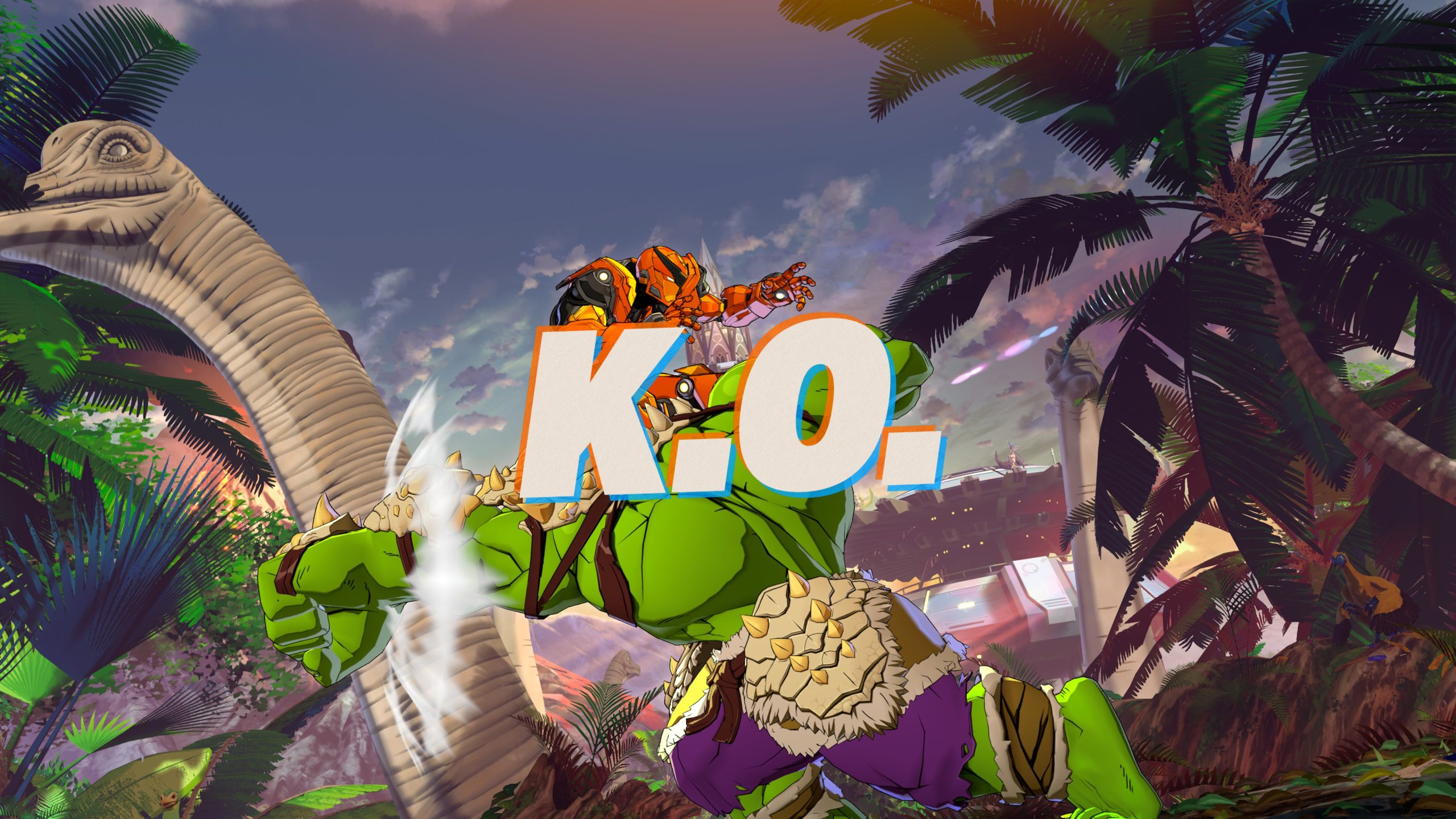
Small online play issues aside, I am enjoying my time with MARVEL Tōkon: Fighting Souls way more than I expected. Not being a huge lover of tag fighters due to the chaotic nature of the neutral game, I expected to play it for a few hours before returning to Street Fighter 6 full-time, but the incredible character and combat design, the rocking soundtrack, and the learning tools Arc System Works implemented are making me stay. For how long, it depends on a few things, including fixing the PC version to let PS5 players turn crossplay on again, but even so, MARVEL Tōkon: Fighting Souls could very well become the modern tag fighter I will play the longest.
PC version tested. Review code provided by the publisher.
You can find additional information about our standard review process and ethics policy here.
WCCFTECH RATING
Marvel Tōkon: Fighting Souls is a highly accessible 4v4 tag fighter that manages to offer deep combat without overwhelming newcomers. Its phenomenal character design, impressive learning tools, and solid single-player modes establish it as one of the best fighting games of the generation, but a flawed PC version and long matchmaking times drag the experience down
- Solid offline modes offerings
- Accessible yet deep combat mechanics
- Exceptional character design
- Some of the best learning tools in modern fighting games
- Though solid, the novelty of the offline modes wears off quickly
- Long matchmaking times for Ranked and Casual matches
- Deeply flawed PC port that is prompting PS5 players to turn off crossplay, exacerbating the matchmaking issues
Follow Wccftech on Google to get more of our news coverage in your feeds.