With the demand for its CoWoS chip packaging technology booming, TSMC might be losing some market share to Intel, suggests data from SemiAnalysis Chipbook. CoWoS, which is short for chip-on-wafer-on-substrate (CoWoS), is a key step in the AI chip manufacturing process. It involves combining multiple GPUs and memory chips in a single package, which is then used in a data center or other computing infrastructure.
While TSMC's well-oiled chip manufacturing machine has ensured that global AI computing chips, primarily GPUs, have not been in short supply despite the ongoing multi-billion dollar buildout, other aspects of the semiconductor industry have experienced bottlenecks. These are packaging production and memory chips, both of which are indispensable for a modern AI chip.
While packaging is responsible for combining the computing and memory chips in a single package, memory chips are responsible for storing the data while the computing chips perform their calculations. The shortage of memory chips has also changed the fortunes of Korean manufacturer SK hynix overnight and caused significant upheaval at Samsung, where workers have successfully protested to secure chip bonuses from booming profits.
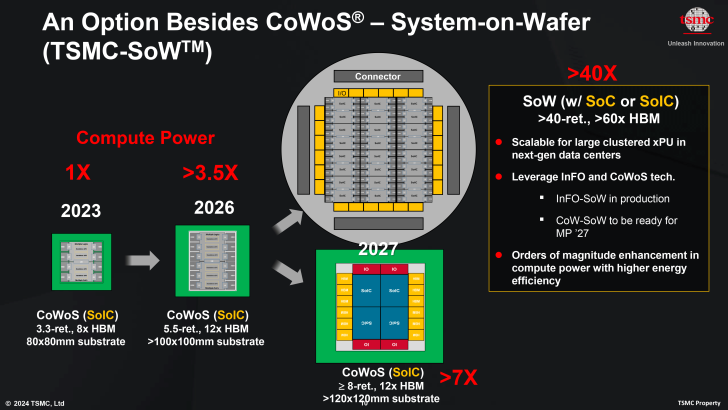
Packaging constraints were among the earliest that TSMC highlighted at the start of the ongoing AI wave. As early as in 2023, the firm had boosted its packaging capacity to 15,000 wafers per month. Yet, despite the multiple capacity expansions, TSMC continues to feel the strain from AI demand. A report in July, from Commercial Times, had claimed that since TSMC was unable to meet the demand for packaging, orders were spilling over to Intel and other firms .
Now, this report appears to be corroborated from data coming courtesy of SemiAnalysis Chipbook. This data analyzes chip exports from South Korea and outlines that $1.3 billion of chips is heading to Malaysia while chips shipped to Taiwan have dropped below the $3 billion mark. These chips are high-bandwidth memory (HBM) products that are typically used in AI chips. With Intel being the only major chip manufacturer in Malaysia, it is likely that these chips are destined for the firm's facilities.
Intel's primary chip packaging products are its EMIB and EMIB-T products, which are typically used for power-efficient chips. On the other hand, TSMC's CoWoS, which has a higher interconnect density, is the preferred approach for high-power chips such as those manufactured by NVIDIA.
Follow Wccftech on Google to get more of our news coverage in your feeds.