GMKtec has been making Mini PCs for years now. They are based out of the technology hub of Shenzhen, China, and have maintained strategic partnerships with AMD, Intel & Microsoft, and currently offer a wide array of solutions, all the way from entry-level to enthusiast-grade designs based on mobility chips from AMD & Intel.
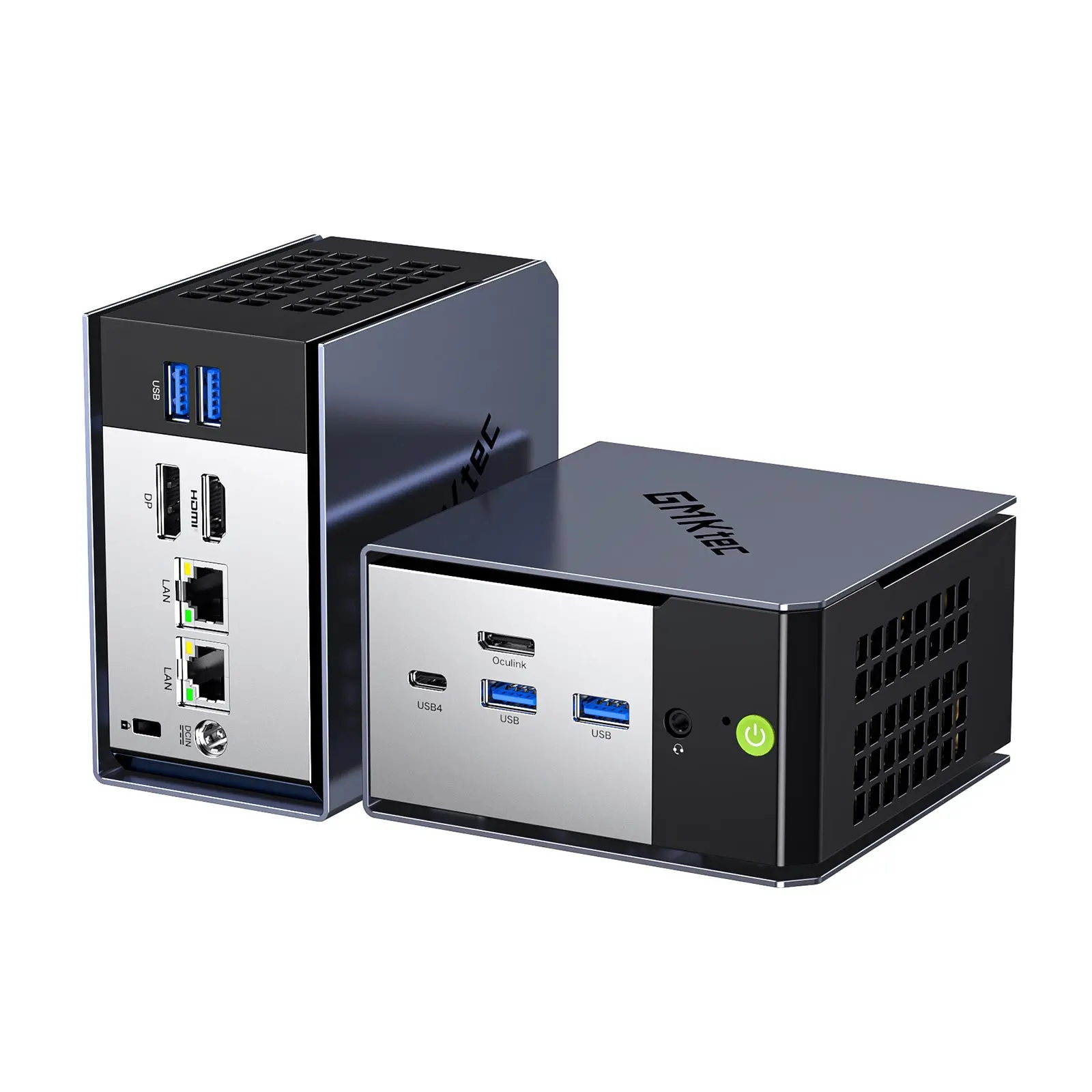
The latest offering from GMKtec that targets the premium segment with AMD's Ryzen AI 400 APU family. For this, GMKtec is introducing its EVO X1 PRO, which is the smaller sibling to the EVO X2 AI we tested last year. While the EVO X2 features the Ryzen AI MAX SKUs, the EVO X1 series goes with the mainstream Ryzen AI offerings, packing a combination of powerful CPU, GPU, and NPU architectures.
In terms of specifications, the GMKtec EVO X1 PRO Mini PC is equipped with the AMD Ryzen AI 9 HX 470 CPU. This is essentially the highest tier you can get on the "Gorgon Point" family. There's also the Ryzen AI 9 HX 475, which only packs a slightly faster NPU, but both chips are top-notch in the performance they have on offer.
The AMD Ryzen AI 9 HX 470 CPU features 12 cores in total with 24 threads. These are a combination of four standard Zen 5 and eight denser Zen 5c cores.
The CPU has a base frequency of 2.0 GHz across all cores, while the boost clocks are rated at 5.2 GHz for the standard cores and 3.3 GHz for the denser cores. The chip features a 24 MB L3 cache, a 12 MB L2 cache, and comes configured with a default TDP of 28 W, which can be adjusted to 15-54W.
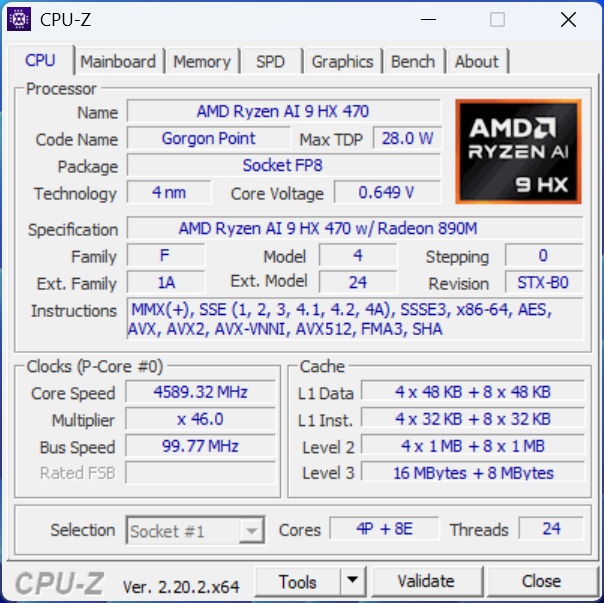
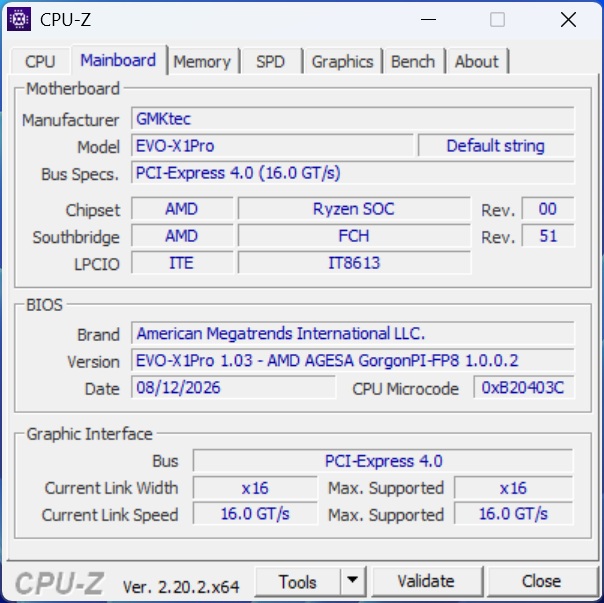
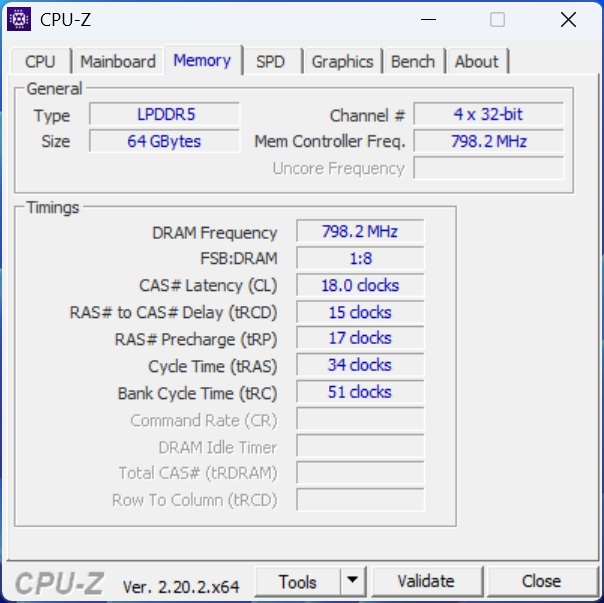
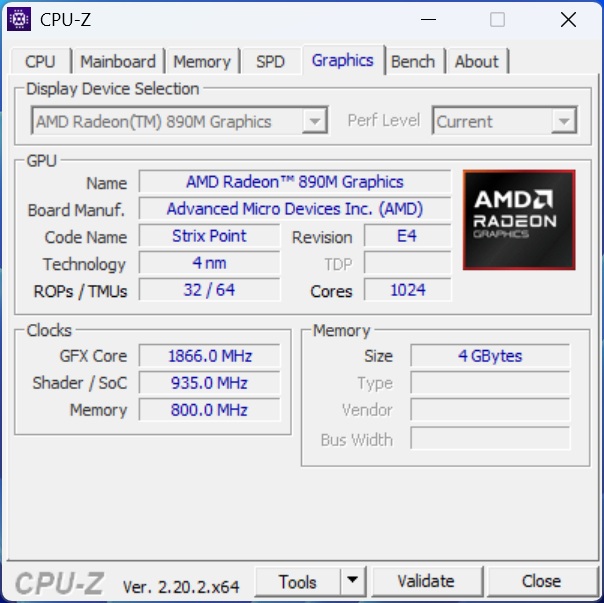
For the iGPU, the AMD Ryzen AI 9 HX 470 is configured with the Radeon 890M GPU, which offers 16 compute units (1024 SPs) that clock up to 3.1 GHz and feature a maximum TOPS rating of up to 30. The Radeon 890M iGPU supports all the latest APIs and AI Frameworks.
Plus, the RDNA 3.5 GPU architecture also supports the latest upscaling & frame generation features, such as FSR2, FSR3, FSR4, FSR frame-Gen, and AFMF2, while adding advanced latency reduction technologies such as Anti-Lag 2
On the NPU side, the AMD Ryzen AI 9 HX 470 is equipped with an XDNA 2 NPU, which offers a peak TOPS of 55 and supports all the latest AI frameworks. The overall TOPS are rated at 86 for the Ryzen AI 9 HX 470, making it the second-fastest AI offering in terms of TOPS within the Gorgon Point family.
AMD Ryzen AI 400 "Gorgon Point" Mobile Lineup (Official):
| SKU | Cores / Threads | Boost Clock | Cache | NPU | GPU | Memory | TDP |
|---|---|---|---|---|---|---|---|
| Ryzen AI 9 HX 475 | 12/24 | 5.2 GHz | 36 MB | 60 TOPS | 16CU 890M @ 3.1GHz | 8533 MT/s | 15-54W |
| Ryzen AI 9 HX 470 | 12/24 | 5.2 GHz | 36 MB | 55 TOPS | 16CU 890M @ 3.1GHz | 8533 MT/s | 15-54W |
| Ryzen AI 9 465 | 10/20 | 5.0 GHz | 34 MB | 50 TOPS | 12CU 880M @ 2.9GHz | 8533 MT/s | 15-54W |
| Ryzen AI 7 450 | 8/16 | 5.1 GHz | 24 MB | 50 TOPS | 8CU 860M @ 3.1GHz | 8533 MT/s | 15-54W |
| Ryzen 7 449 | 8/16 | 5.0 GHz | 24 MB | 15 TOPS | 8CU 860M @ 2.8GHz | 8000 MT/s | 15-54W |
| Ryzen AI 7 445 | 6/12 | 4.6 GHz | 14 MB | 50 TOPS | 4CU 840M @ 2.9GHz | 8000 MT/s | 15-54W |
| Ryzen 5 439 | 6/12 | 4.6 GHz | 14 MB | 8 TOPS | 4CU 840M @ 2.8GHz | 7500 MT/s | 15-54W |
| Ryzen AI 5 435 | 6/12 | 4.5 GHz | 14 MB | 50 TOPS | 4CU 840M @ 2.8GHz | 8000 MT/s | 15-54W |
| Ryzen AI 5 430 | 4/8 | 4.5 GHz | 12 MB | 50 TOPS | 4CU 840M @ 2.8GHz | 8000 MT/s | 15-54W |
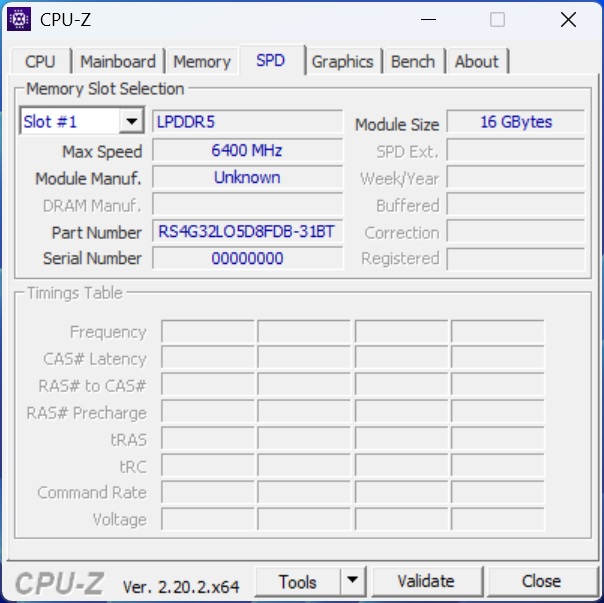
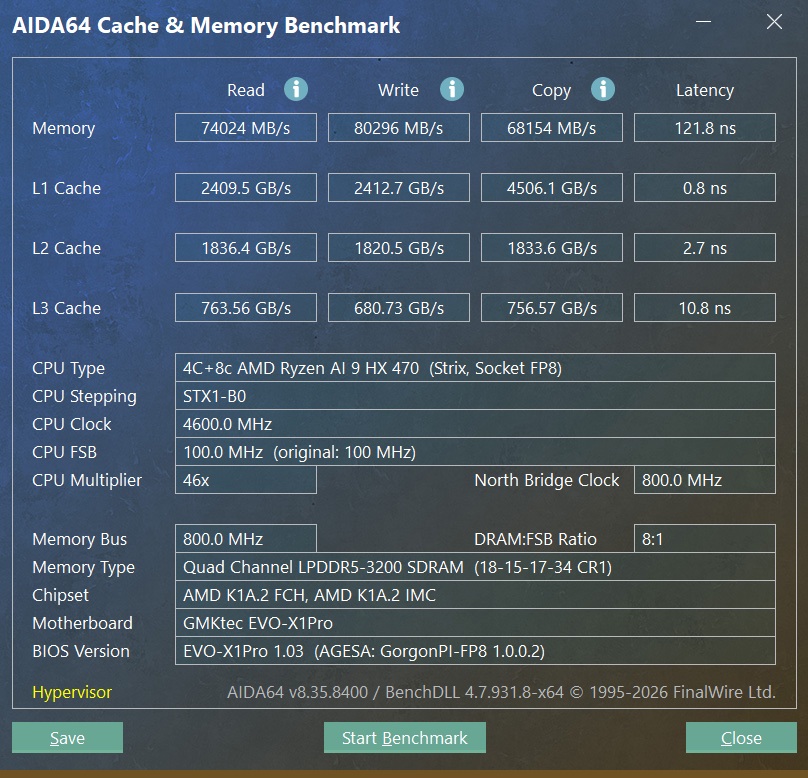
With the internals of the CPU covered, let's talk about the rest of the specifications. First, we have the memory, which comes in the form of 64 GB of LPDDR5X. These are 64-bit DRAM modules that are rated at 6400 MT/s speeds, and this is soldered memory. GMKtec only offers the Mini PC in 64 GB configurations.
GMKtec is offering two configurations; both feature 64 GB of memory, but the storage for one variant is listed at 1 TB, and the other is listed as 2 TB. Both are PCIe Gen4x4 devices, and the slots are also rated at the same Gen4 speeds. Since these are full-length (2280) slots, you can configure them with up to 8 TB SSDs for up to 16 TB of capacity.
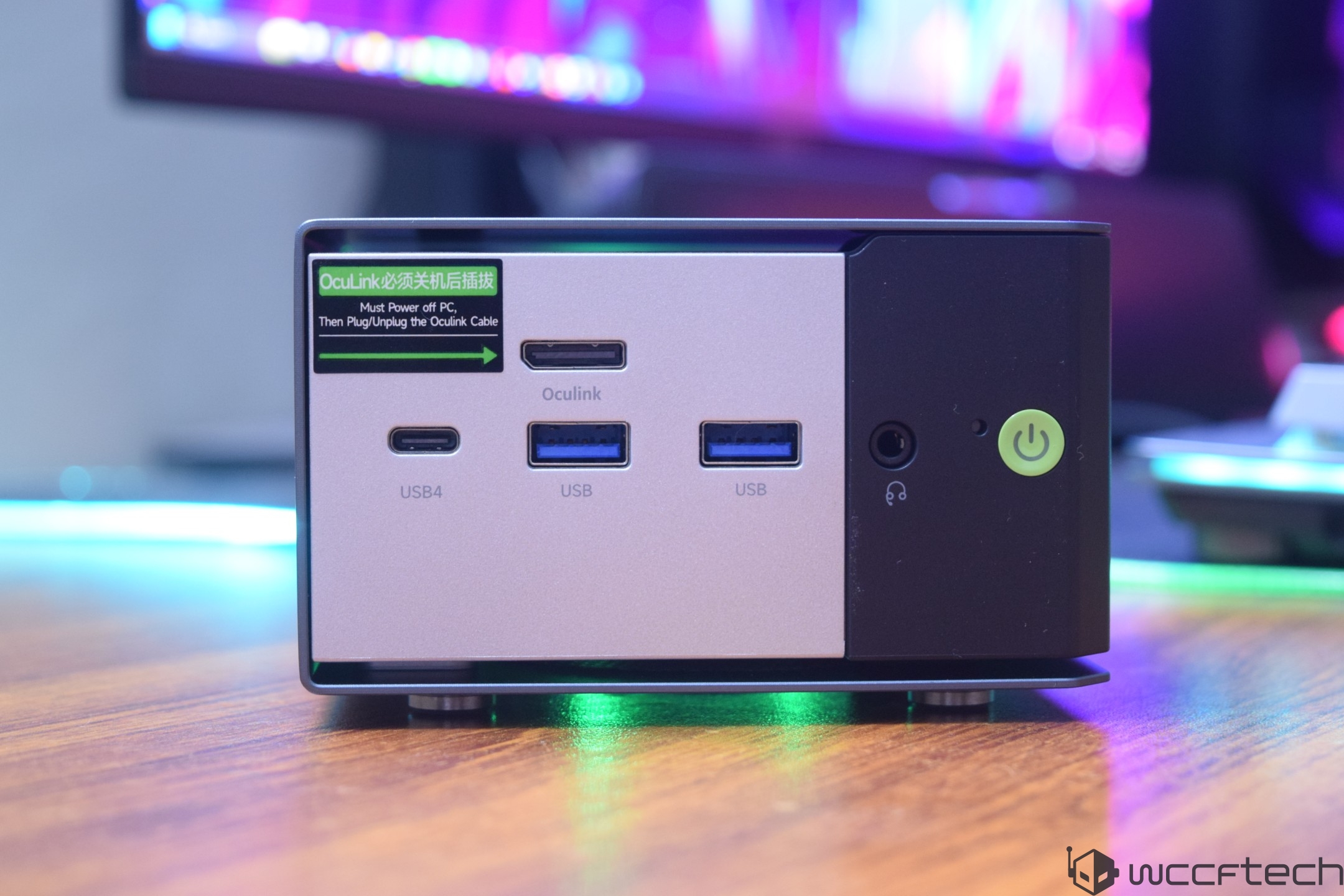
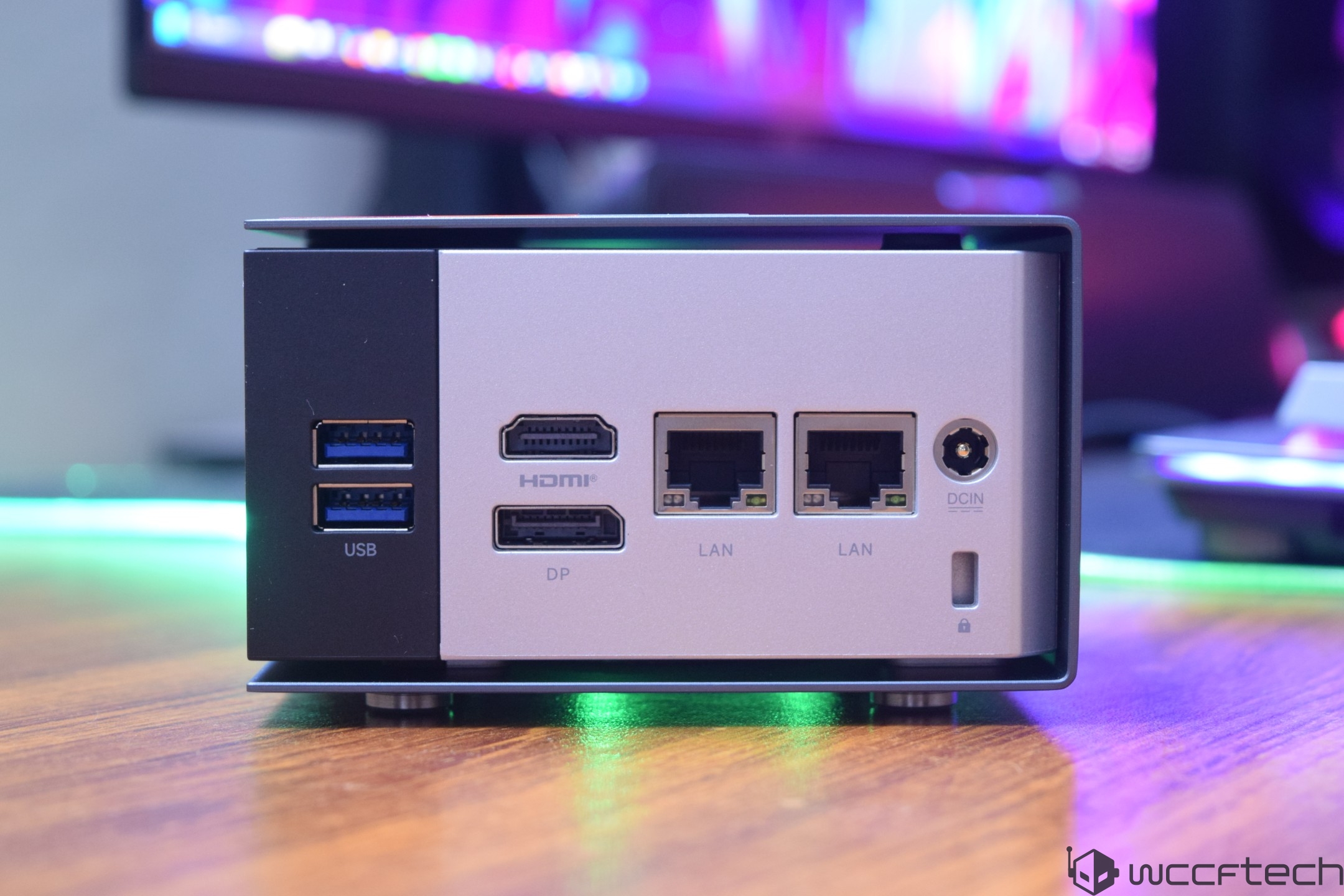
IO includes two USB 3.2 Gen2 ports (Type-A), a USB4 40 Gbps port (Type-C), an OCuLink port (PCIe Gen4 x 4), a 3.5mm audio jack, a Power Button, & a Reset button on the front. The back features dual 2.5 GbE LAN ports, two USB 3.2 Gen 2 (Type-A) ports, a DP port, an HDMI port, a Kensington Lock slot, & a DC Power Input jack.
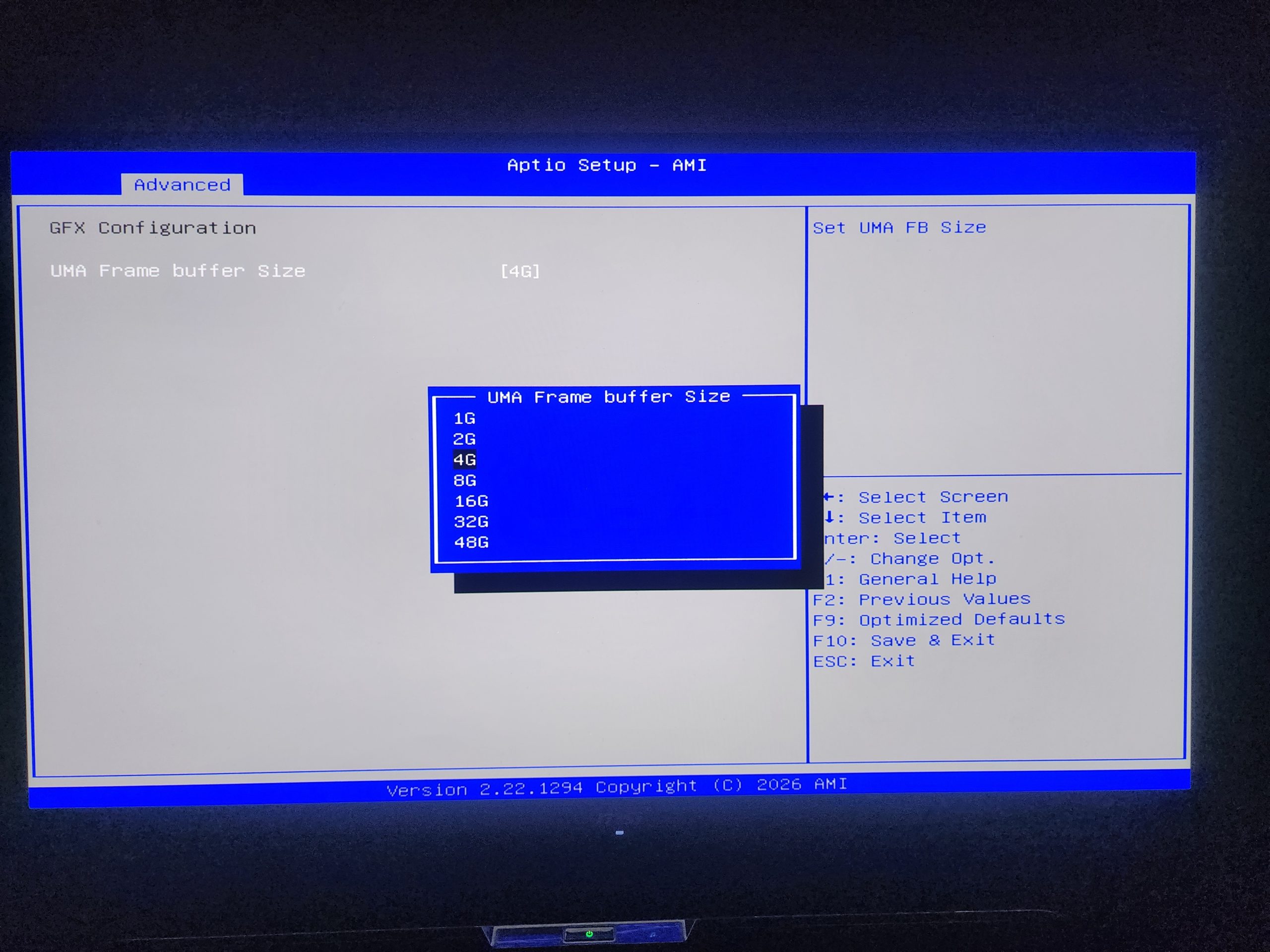
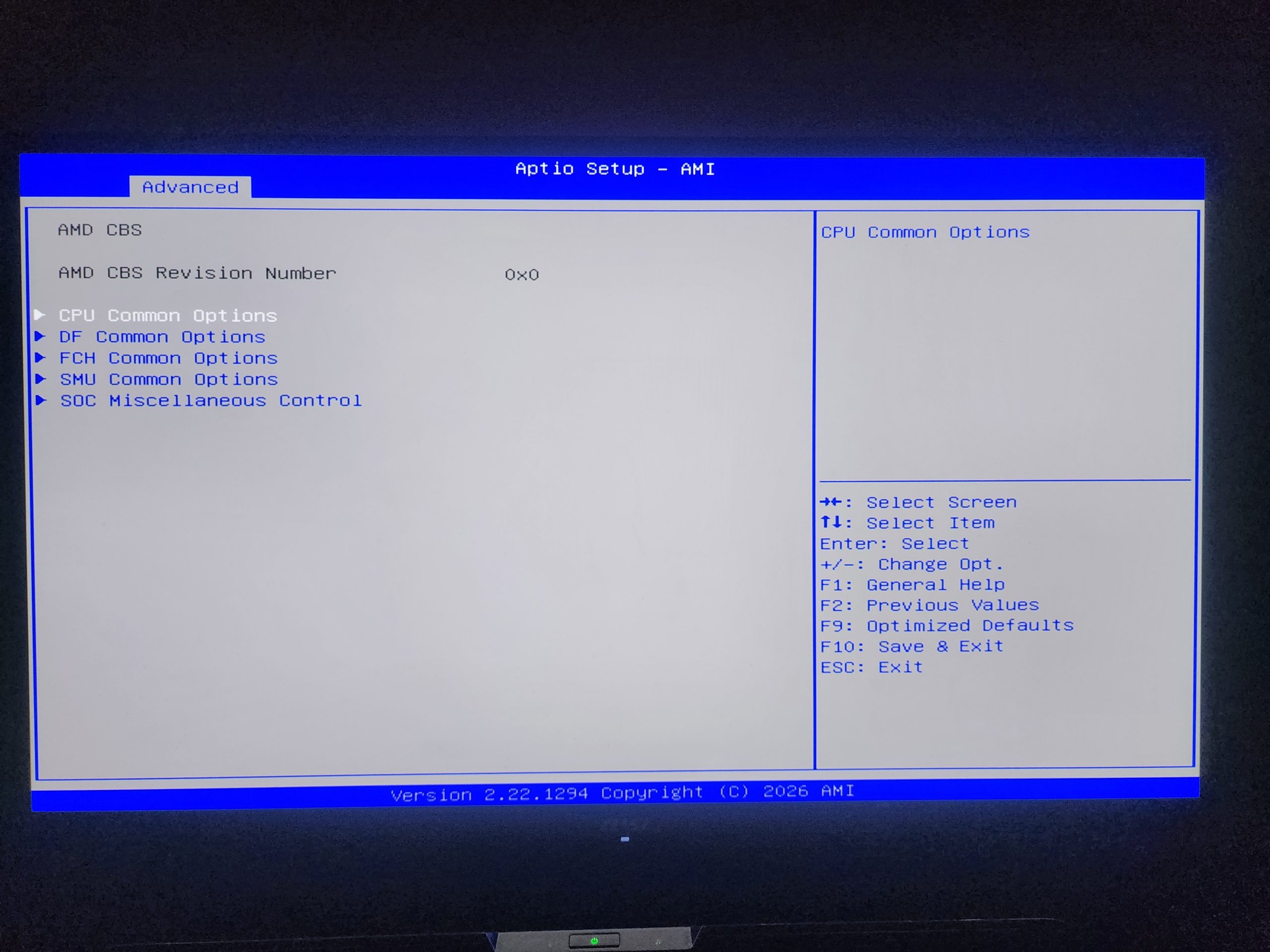
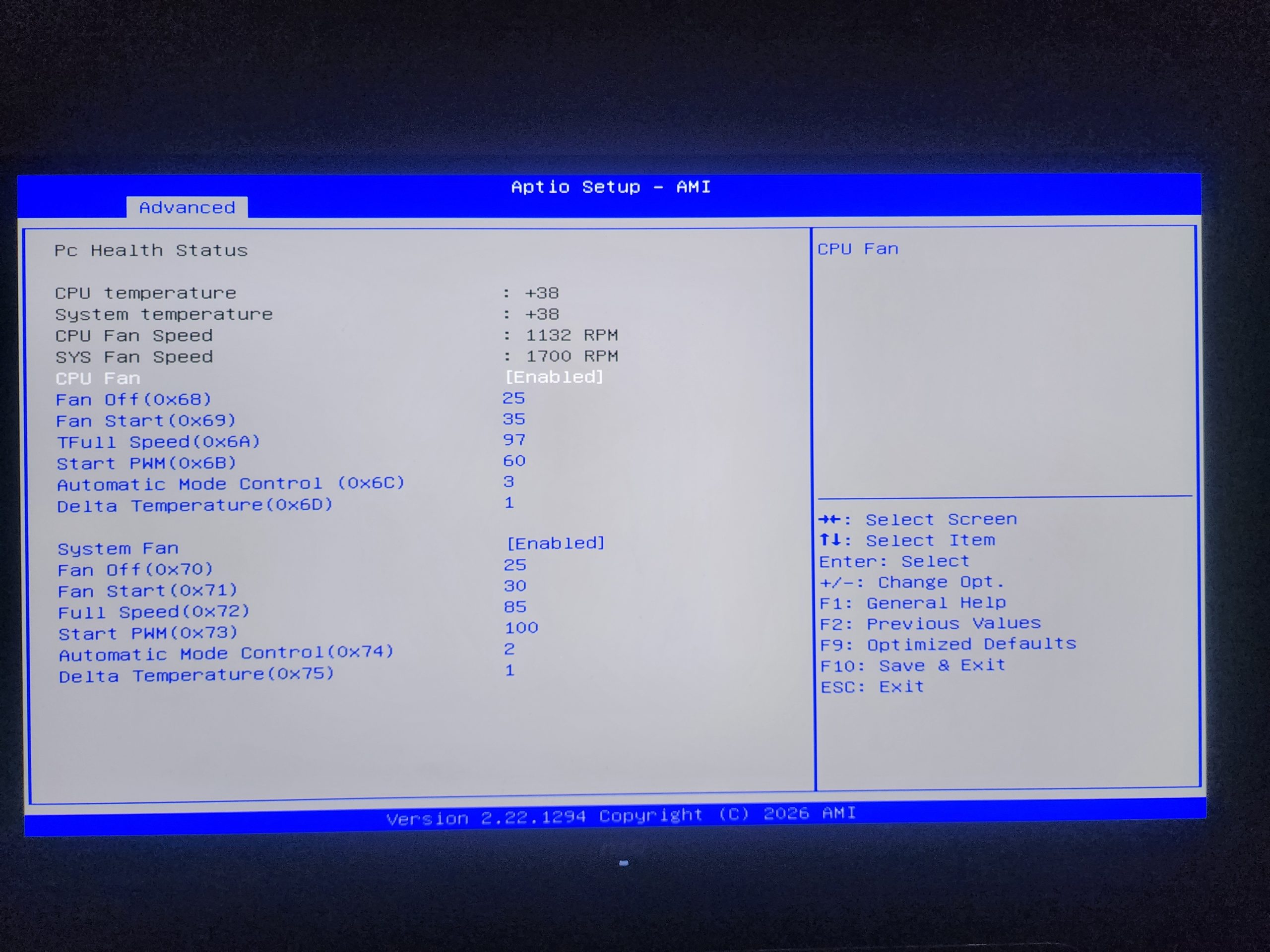
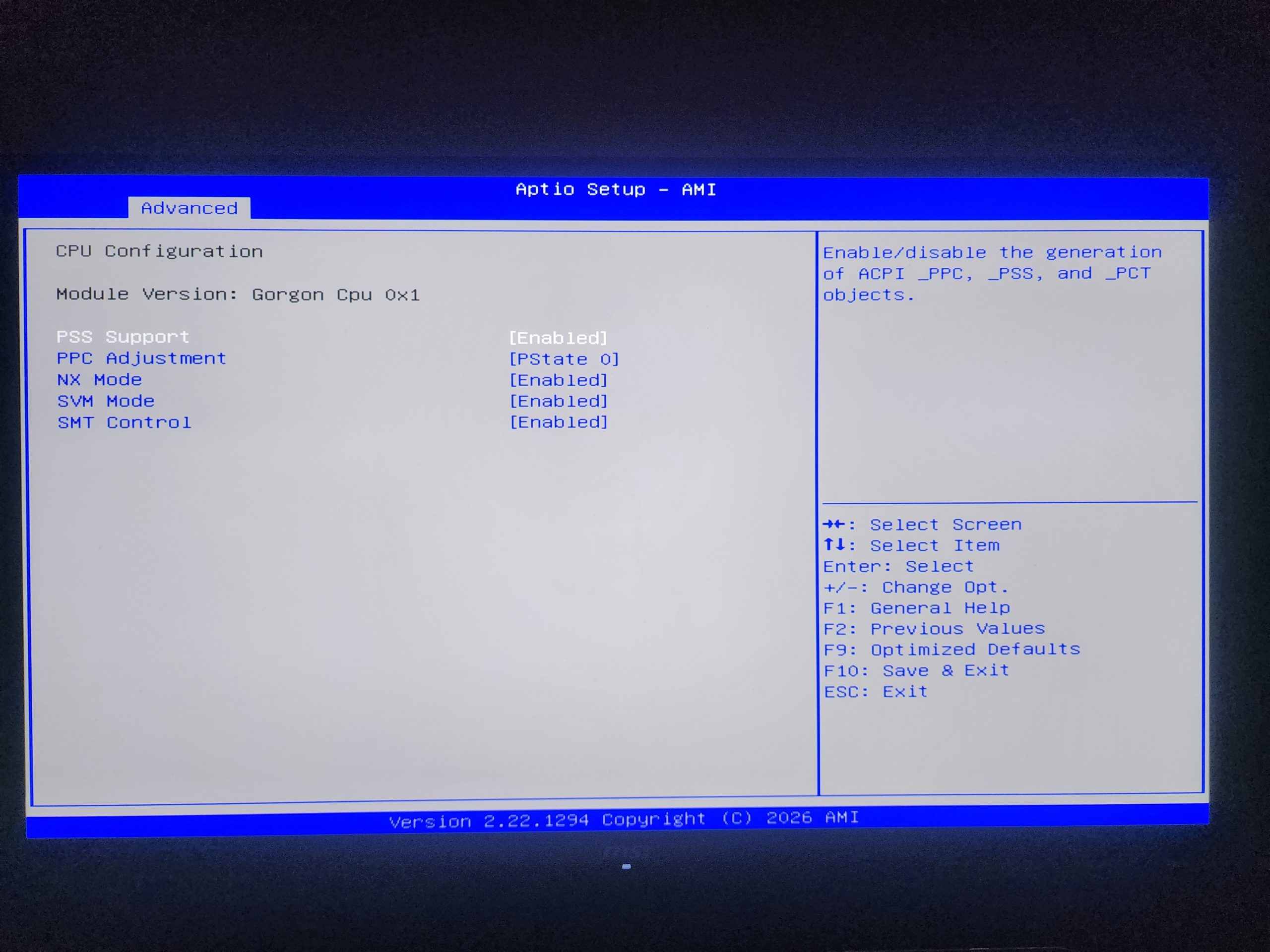
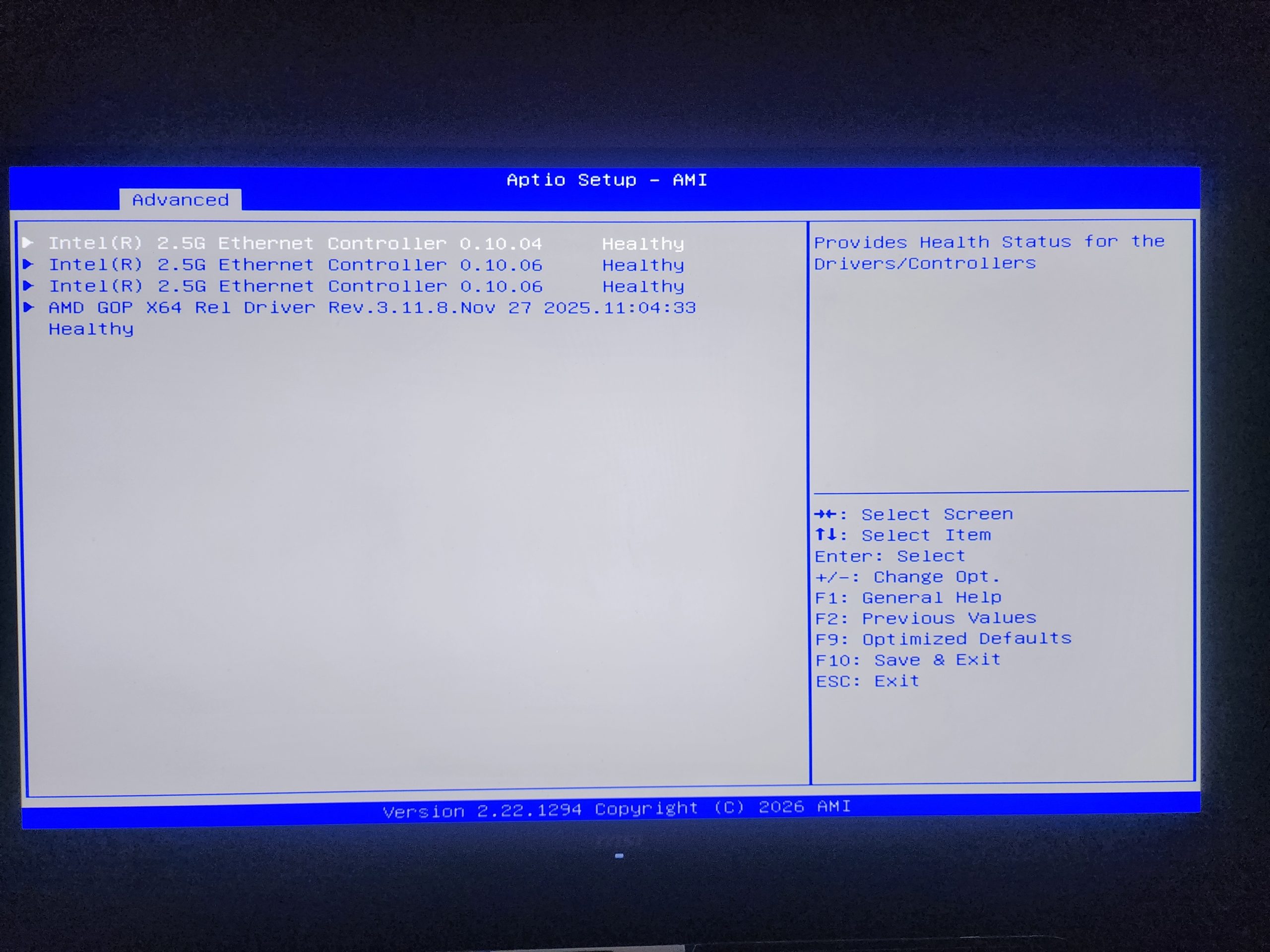
Talking a little bit about the BIOS, it is a basic design with a lot of tuning options. The first page lists various information about the Mini PC and has one important setting, the "Power Limit Select".
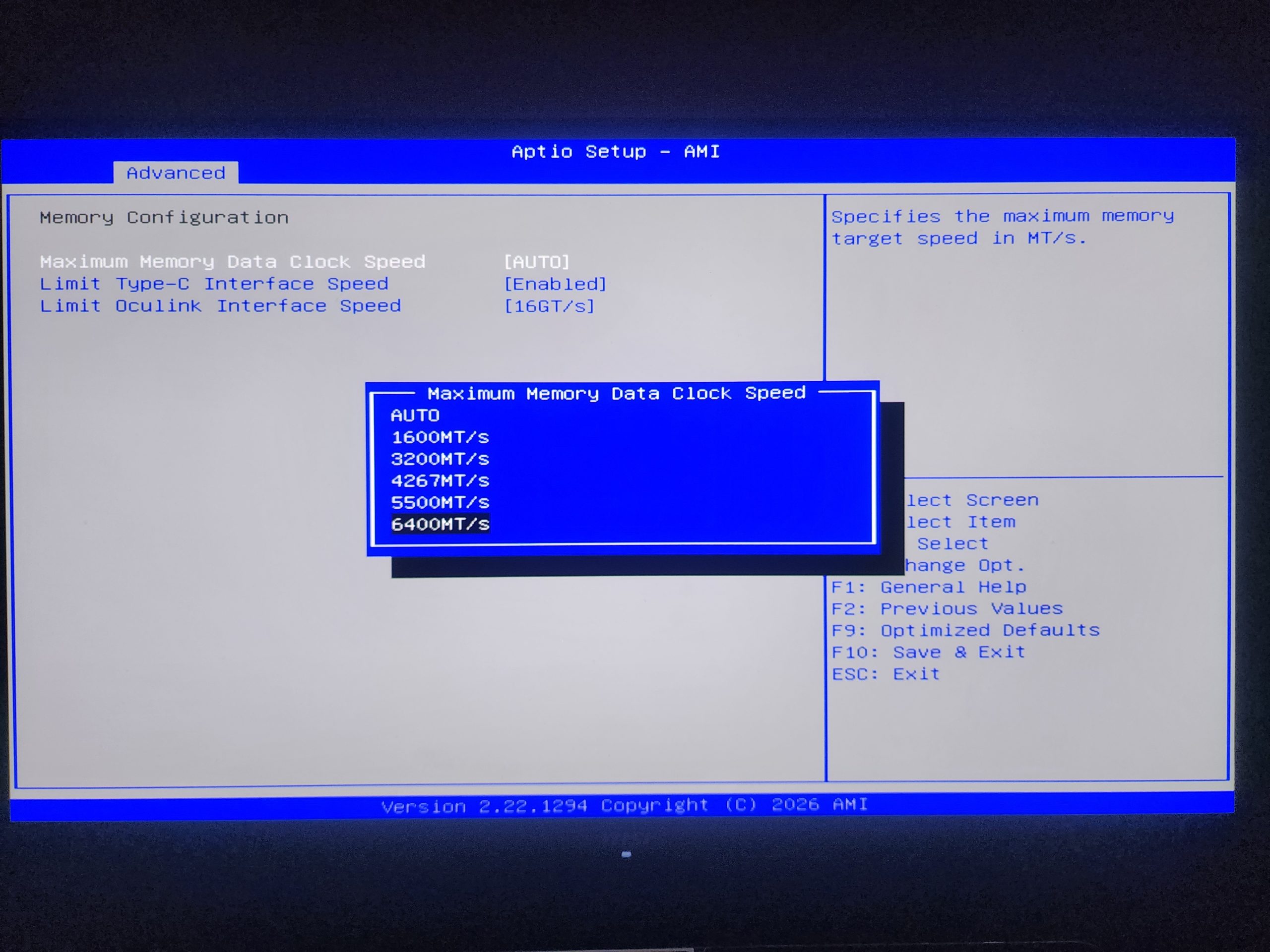
This gives three options: Performance mode with a 65W target, Balanced mode with a 54W target, and Quiet mode with a 35W target. Then we have all the other settings that let us dive deeper into the power and device tuning. One thing we noticed is that the LPDDR5X for the EVO X1 PRO is locked at 6400 MT/s, while the Non-PRO variant allows up to 8533 MT/s support.
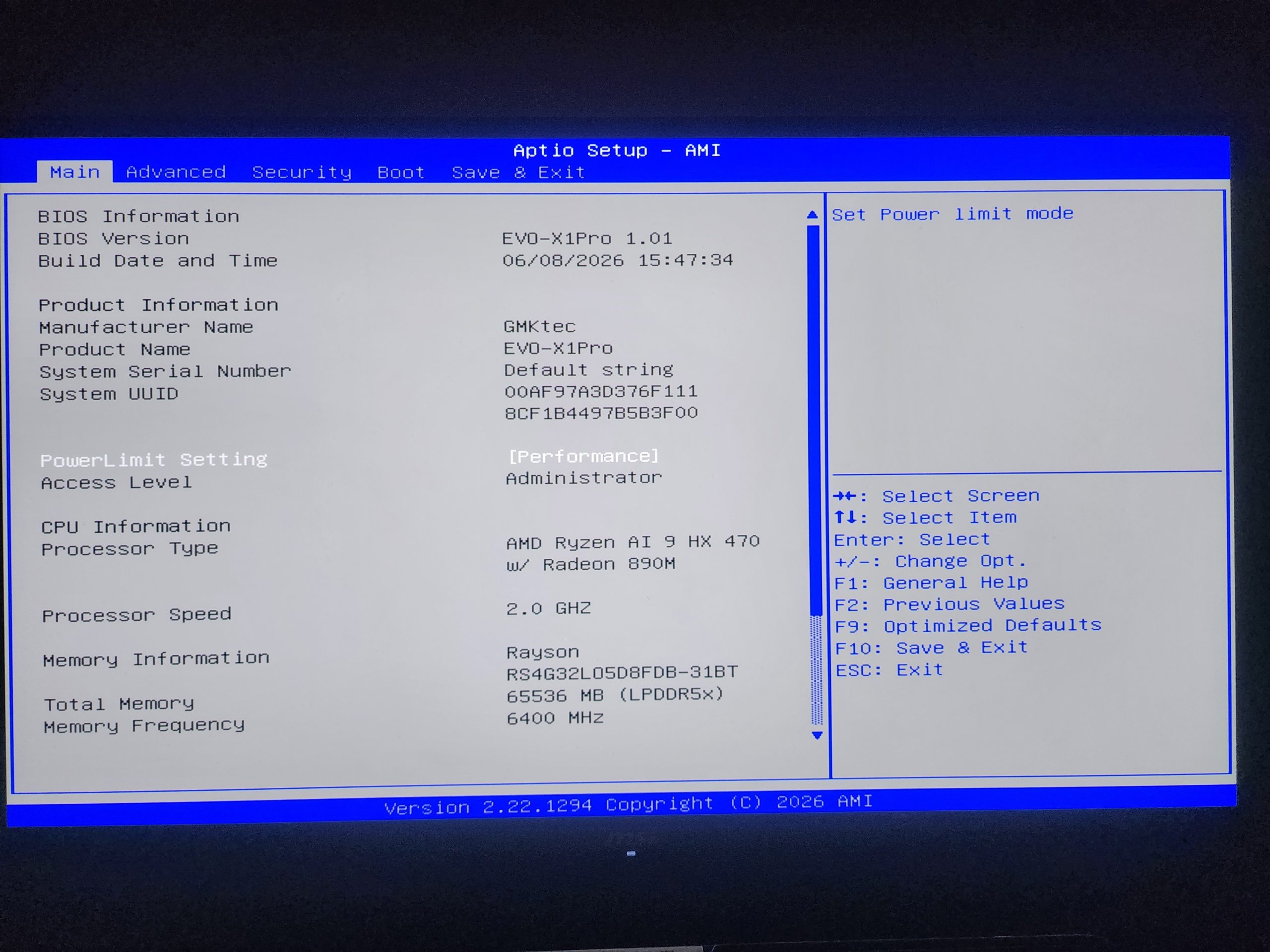
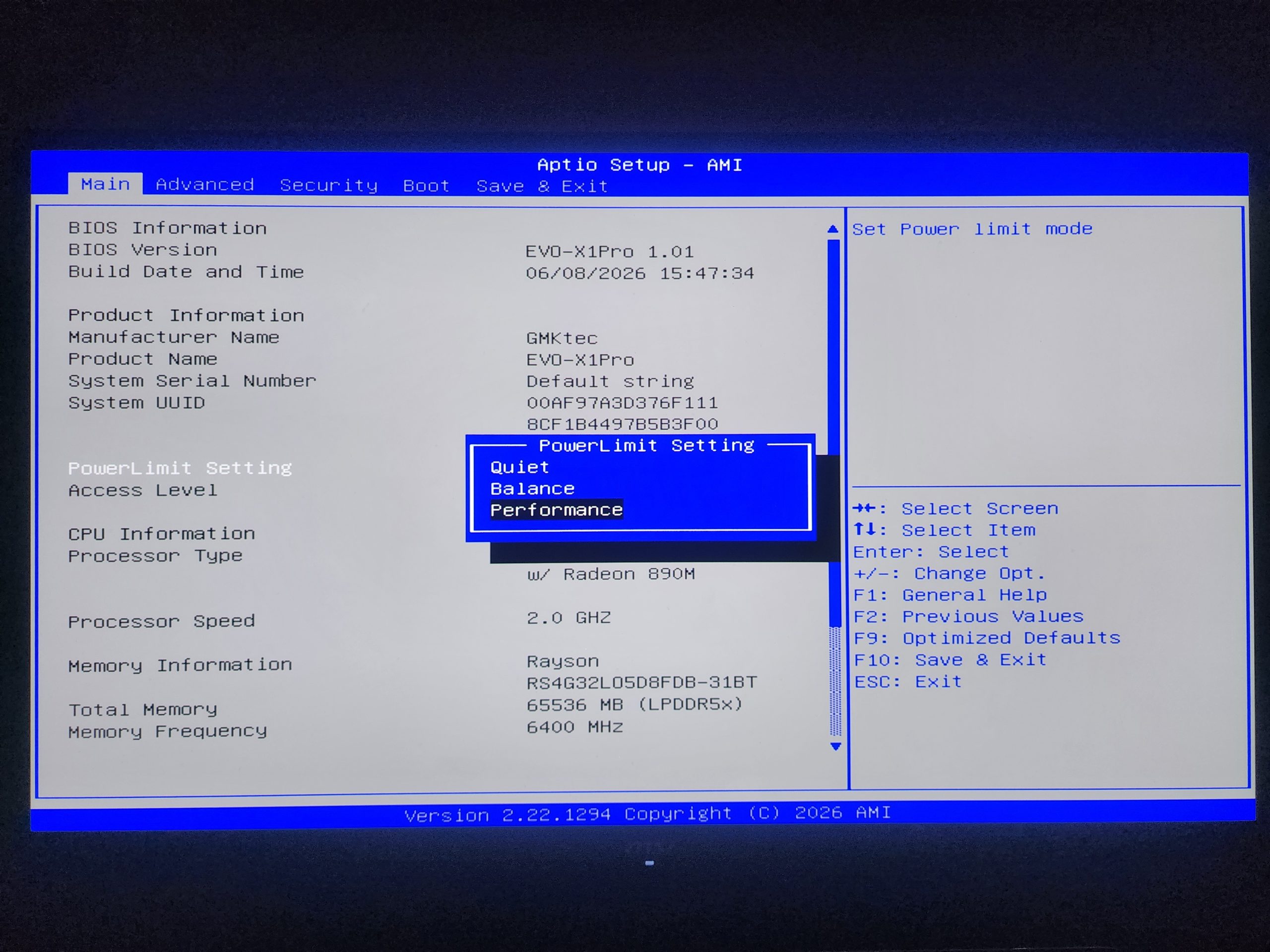
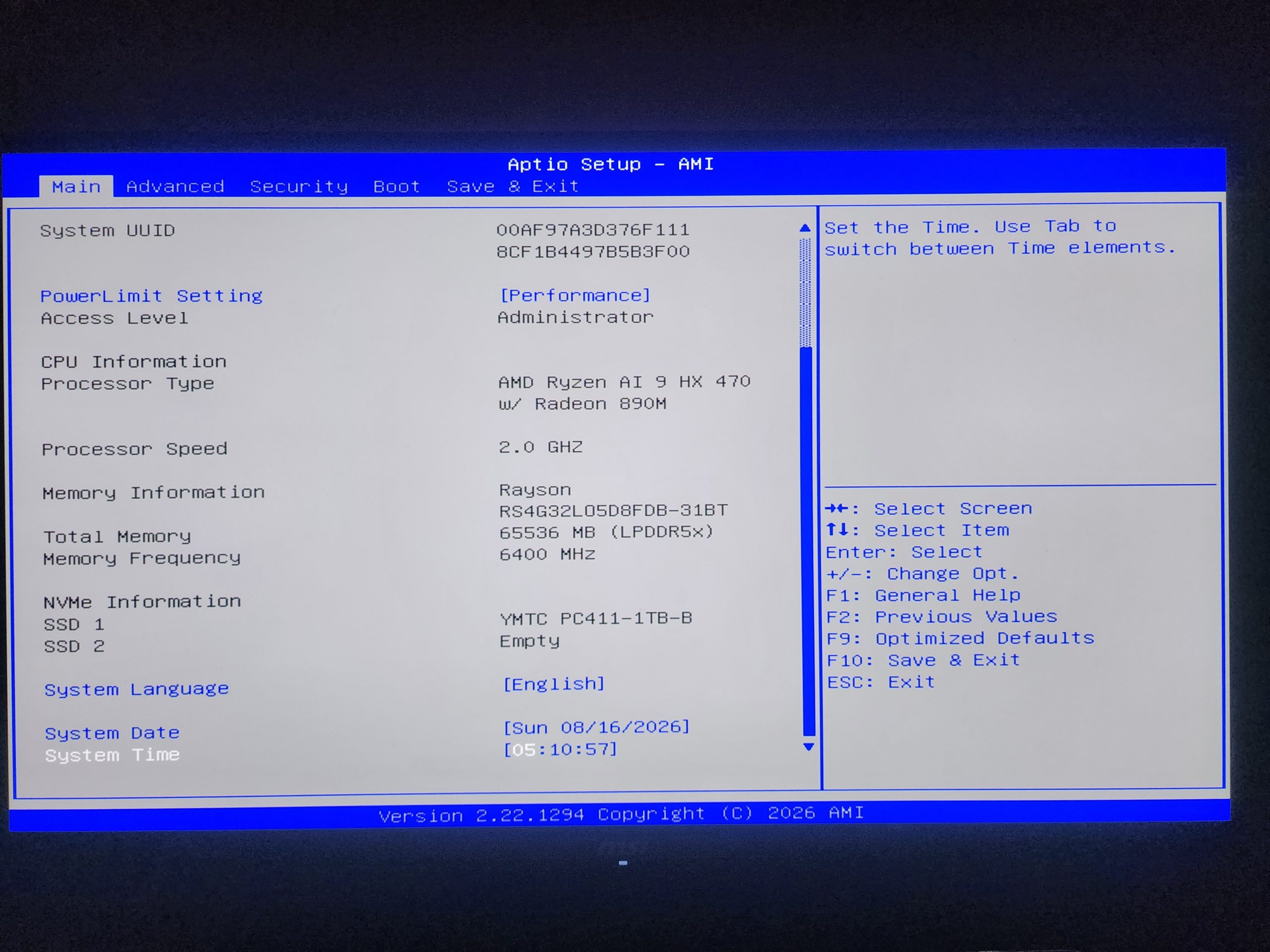
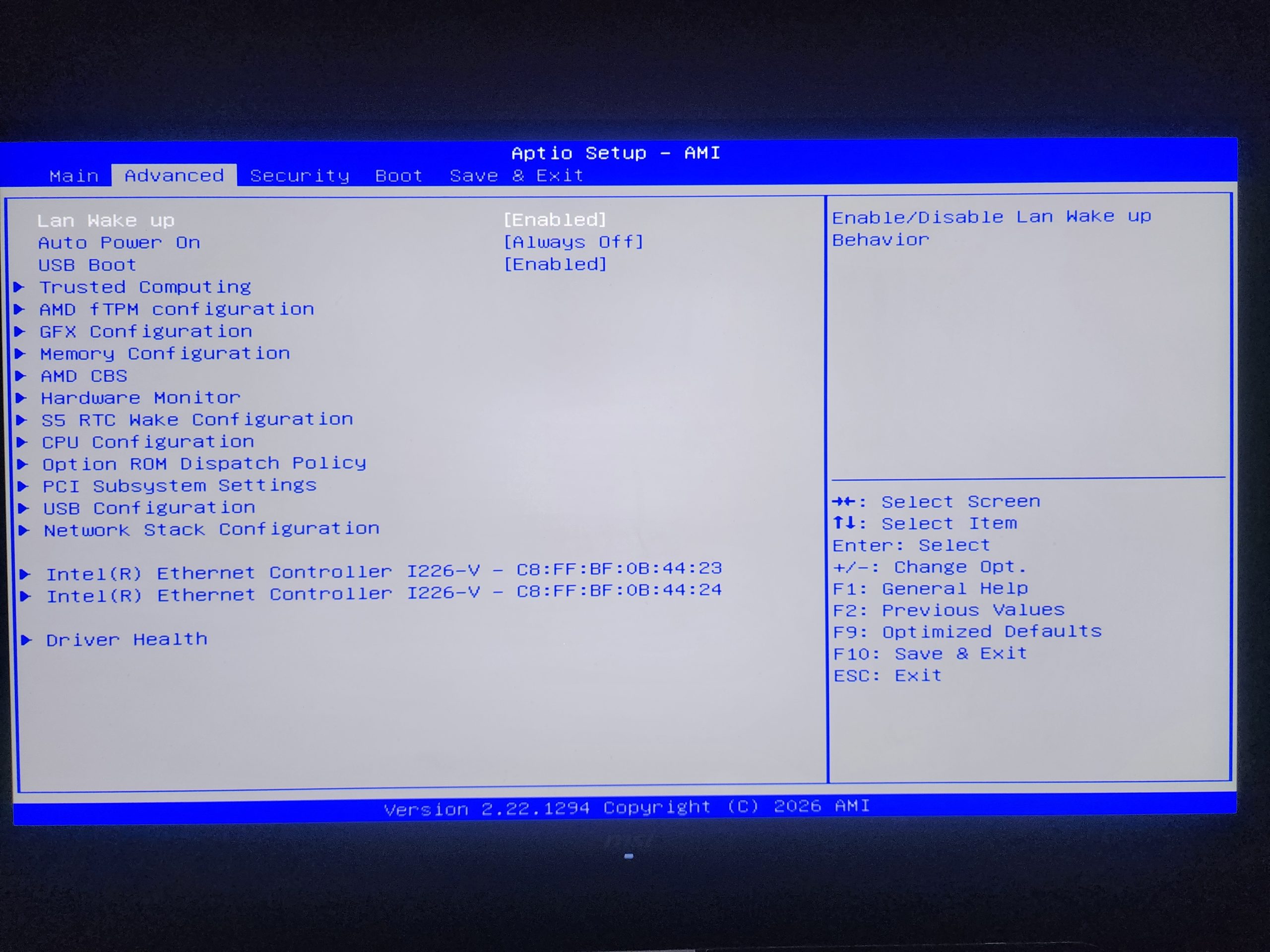
![The BIOS Aptio Setup by AMI shows memory configuration settings with 'Maximum Memory Data Clock Speed [AUTO]', 'Limit Type-C Interface Speed [Enabled]', and 'Limit Oculink Interface Speed [16GT/s]'.](/media/wccftech/wp-content/uploads/2026/08/20260816_171024-scaled.jpg)
The GMKtec EVO X1 PRO Mini PC comes in a silver colored cardboard package, which has a simplistic look with a "GMKtec" logo on the front.
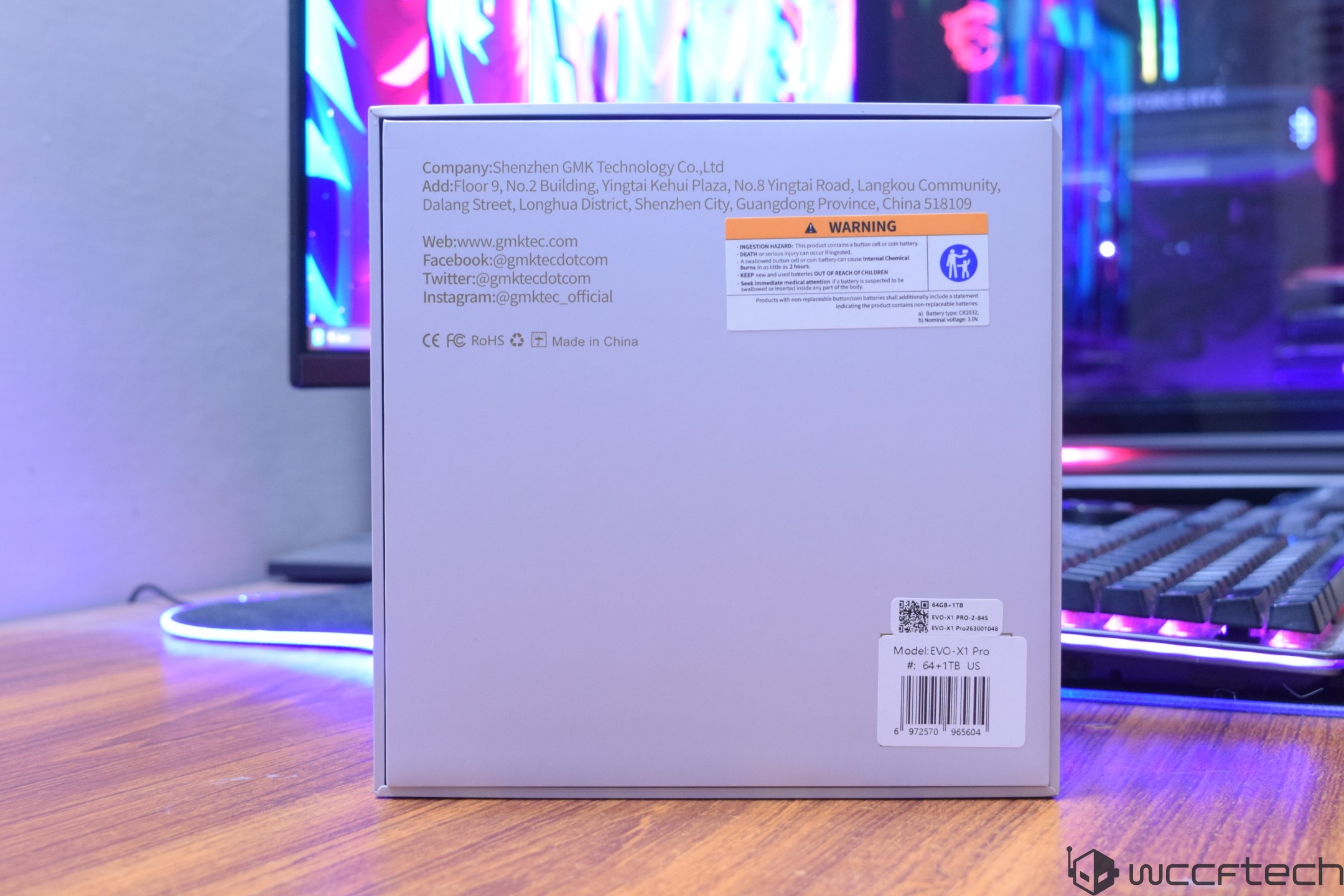
The back of the box has some basic specifications that list the specific configuration for this model. We got the AMD Ryzen AI 9 HX 470 variant with 64 GB of memory and a 1 TB SSD.
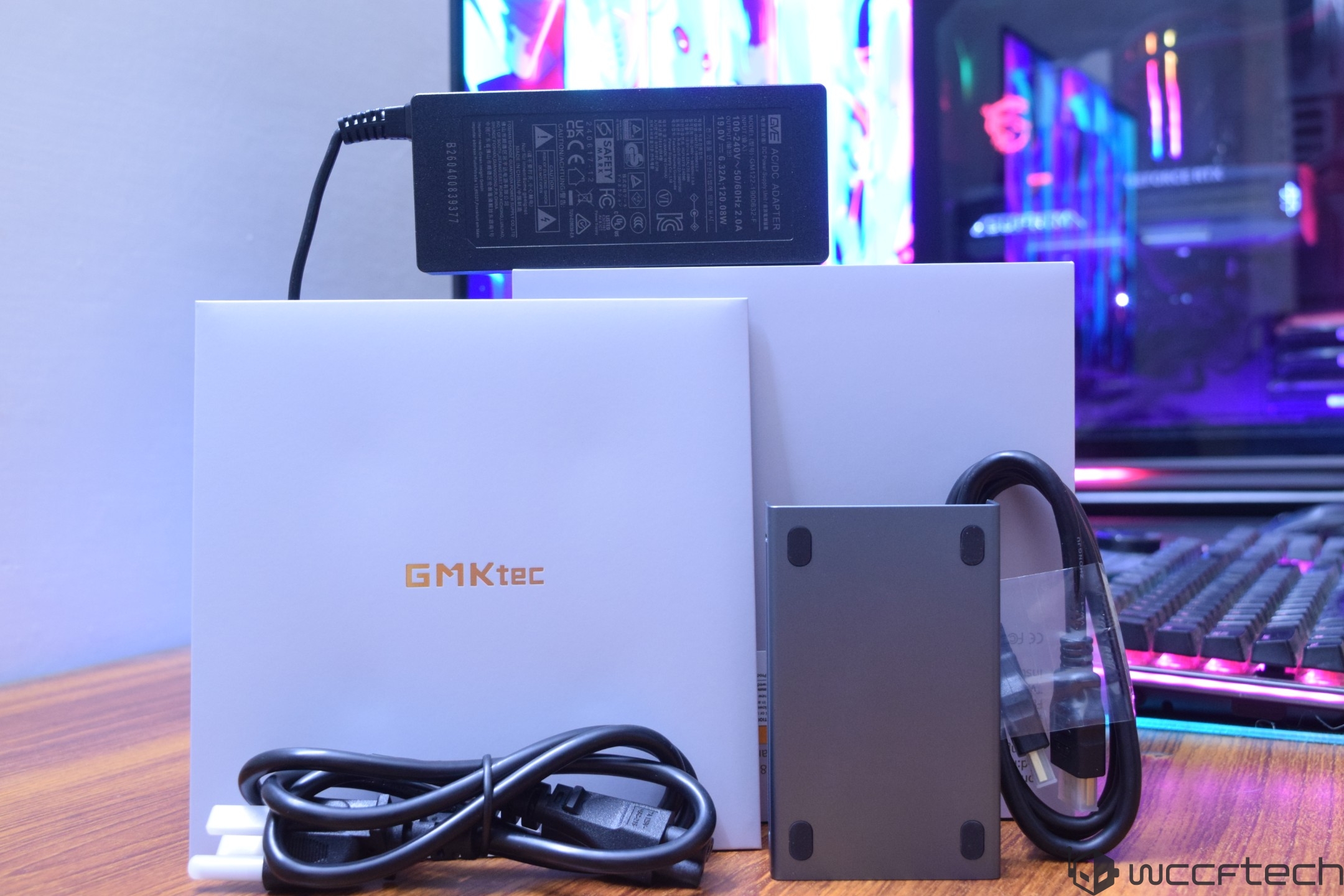
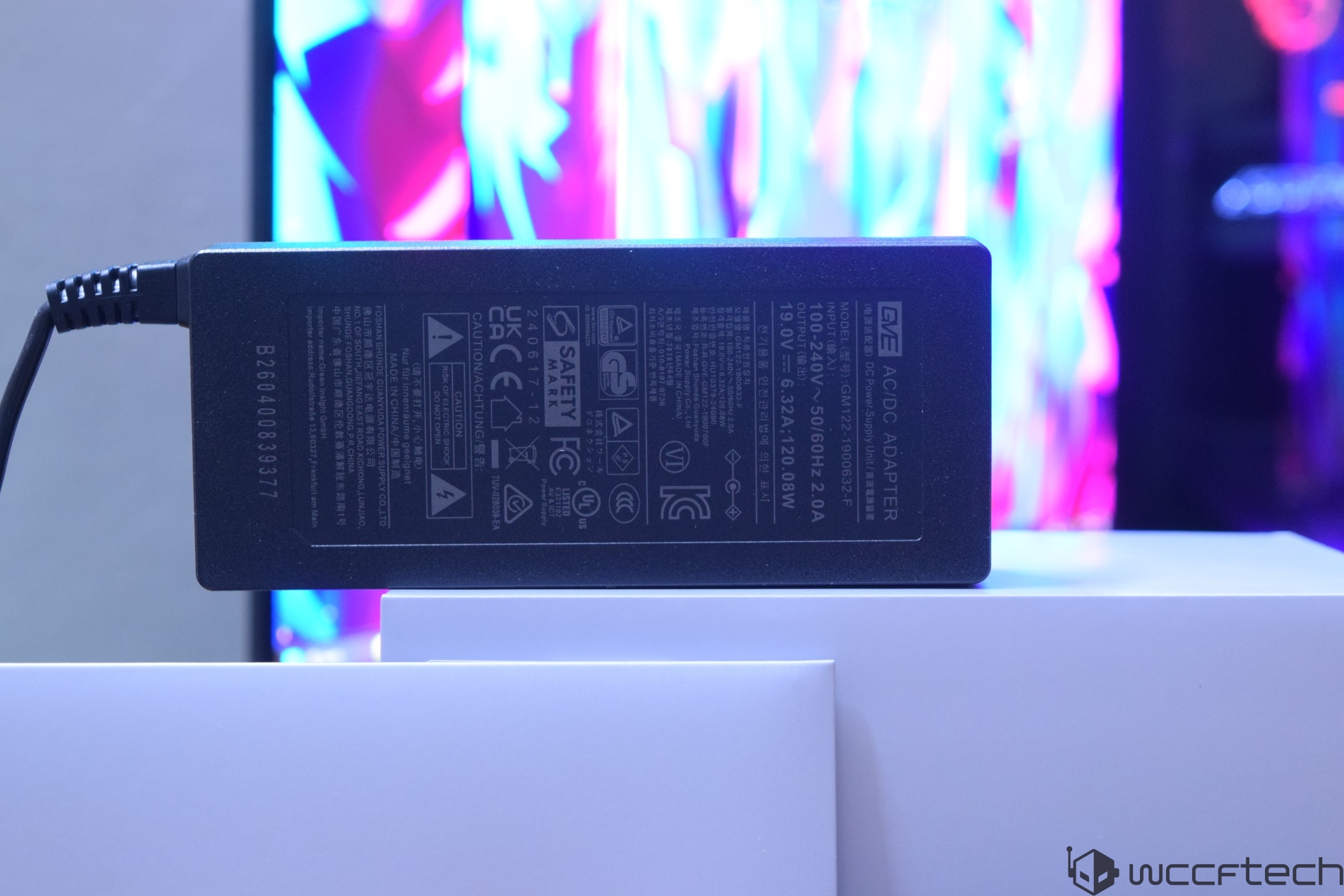
Within the box, you can find the Mini PC in the top compartment, along with a guide/warranty booklet, the power adapter, the power cable, and an HDMI cable underneath the box. The adapter offers 120.08W of power to the system.
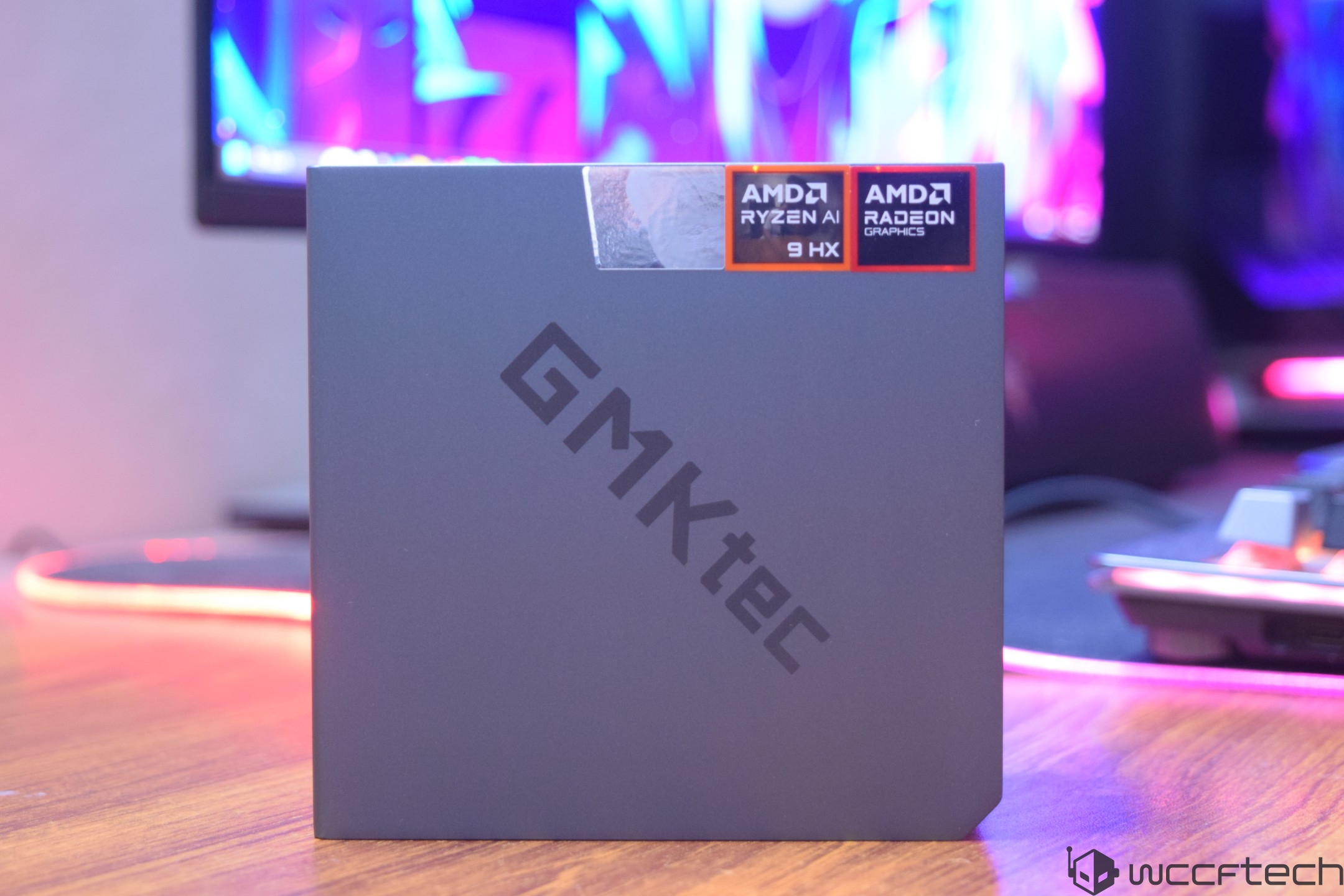
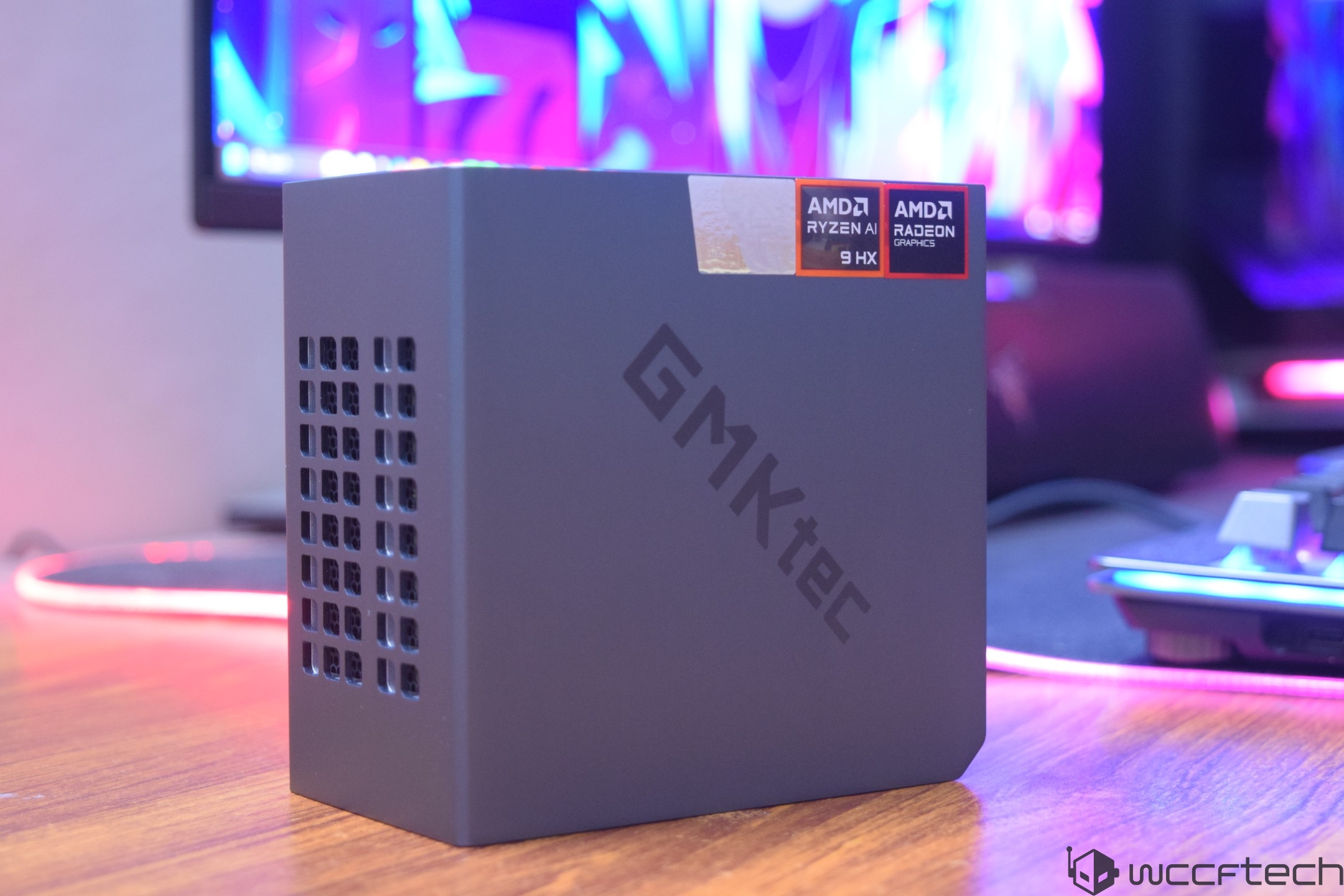
GMKtec's Mini PCs really do stand out from the rest of the market offerings, with a stylish dual-tone design. The front cover is all metallic, while the chassis is a mix of an outer plastic shell with an internal aluminum frame.
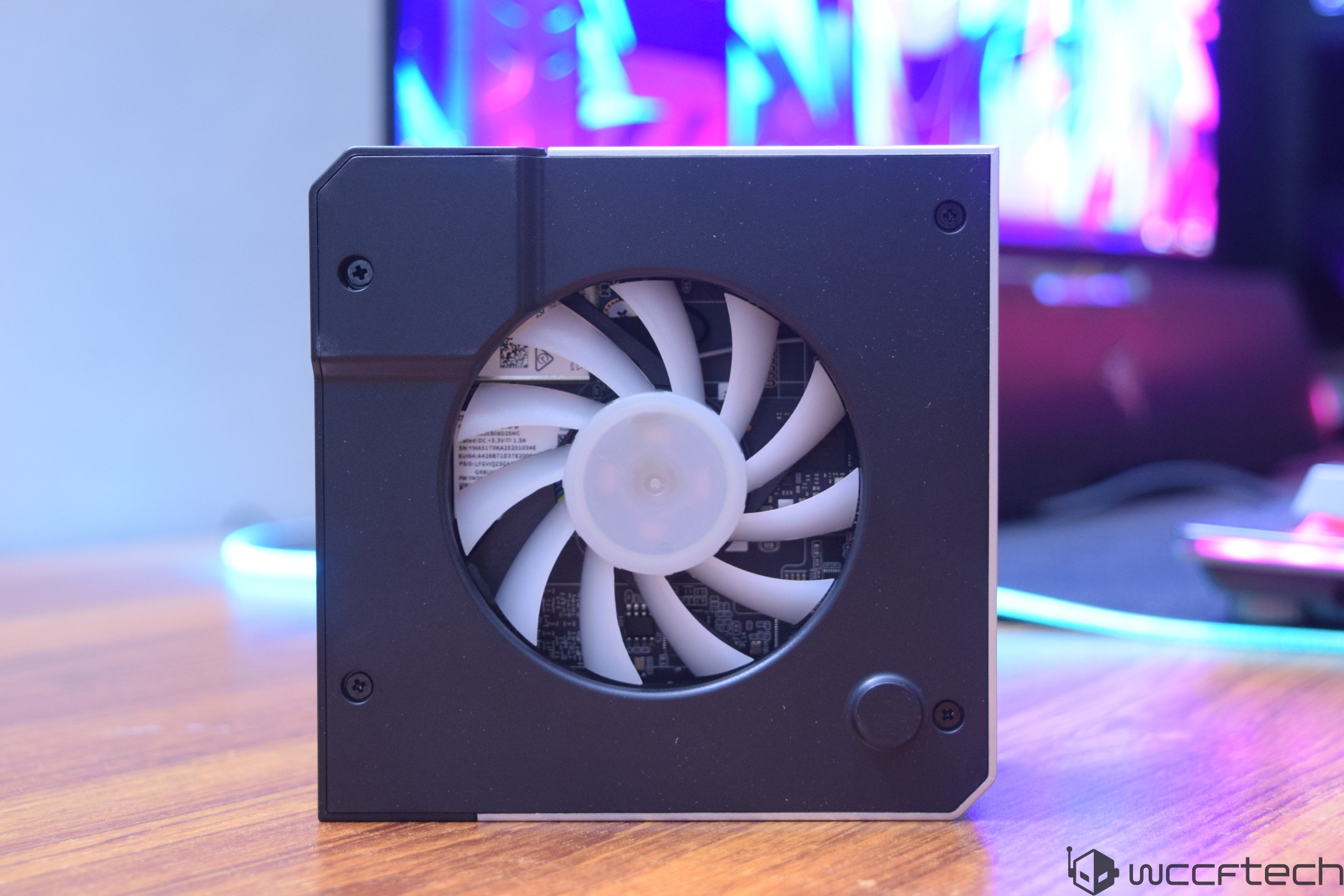
There are three exhaust vents/ports on the EVO X1 Pro. Two around the sides, and one at the bottom. These ensure that the PC receives adequate airflow and remains cool with higher heat dissipation through the vents.
The front I/O on the GMKtec NucBox EVO X1 PRO Mini PC comes with a Power Button, two USB 3.2 Gen2, a single USB4 Type-C port, an OCuLink port, an audio jack, a power button, and a reset button. The power button lights up when the PC is running.
The back I/O on the GMKtec NucBox EVO X1 PRO includes a DC IN 5525 connector, two USB 3.2 Gen 2 ports, dual 2.5 GbE LAN ports, HDMI/DP display outputs, and a Kensington Lock slot.
The back side has large vents that push air out of the chassis. The sides also feature rubber feet so that the PC can sit vertically.
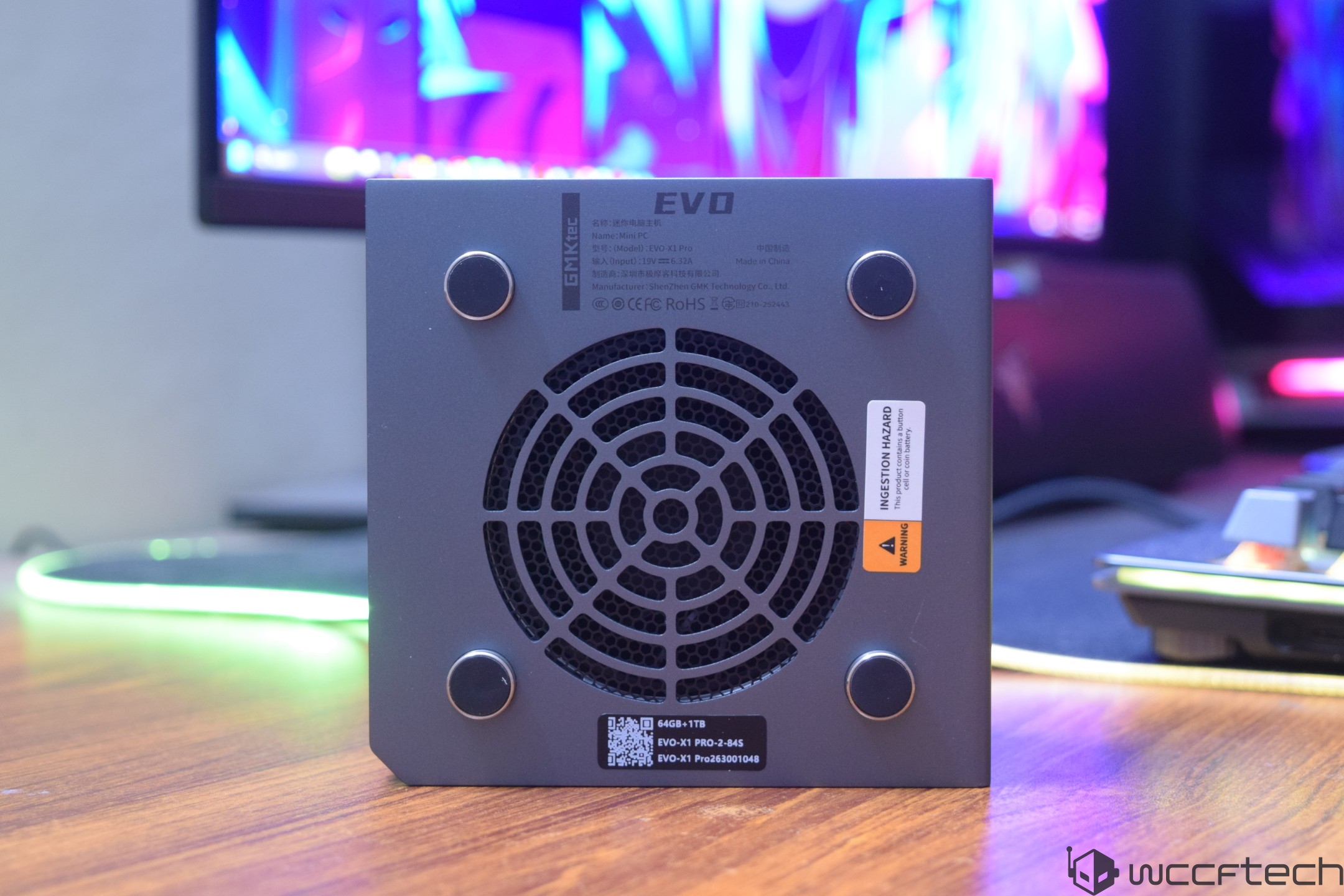
The interior of the Mini PC can be accessed by removing four screws at the bottom.
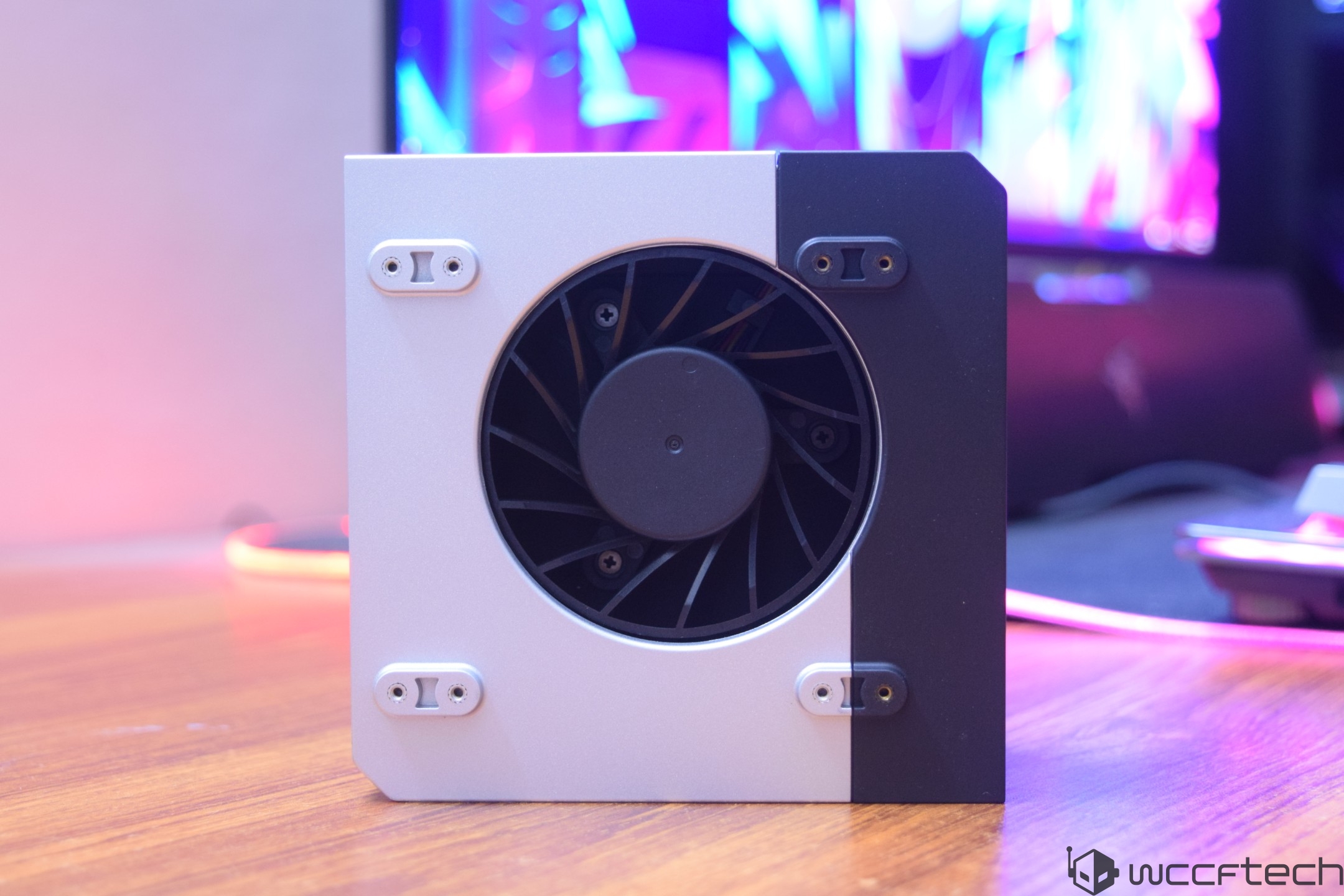
Upon removing the cover, you are met with two fans: one is a standard 92mm design which cools down the backside that holds the SSD and memory, and the other is a blower-type design which cools the Ryzen AI 9 HX 470. The inside of the chassis is equipped with a large copper plate which makes direct contact with the CPU and the memory.
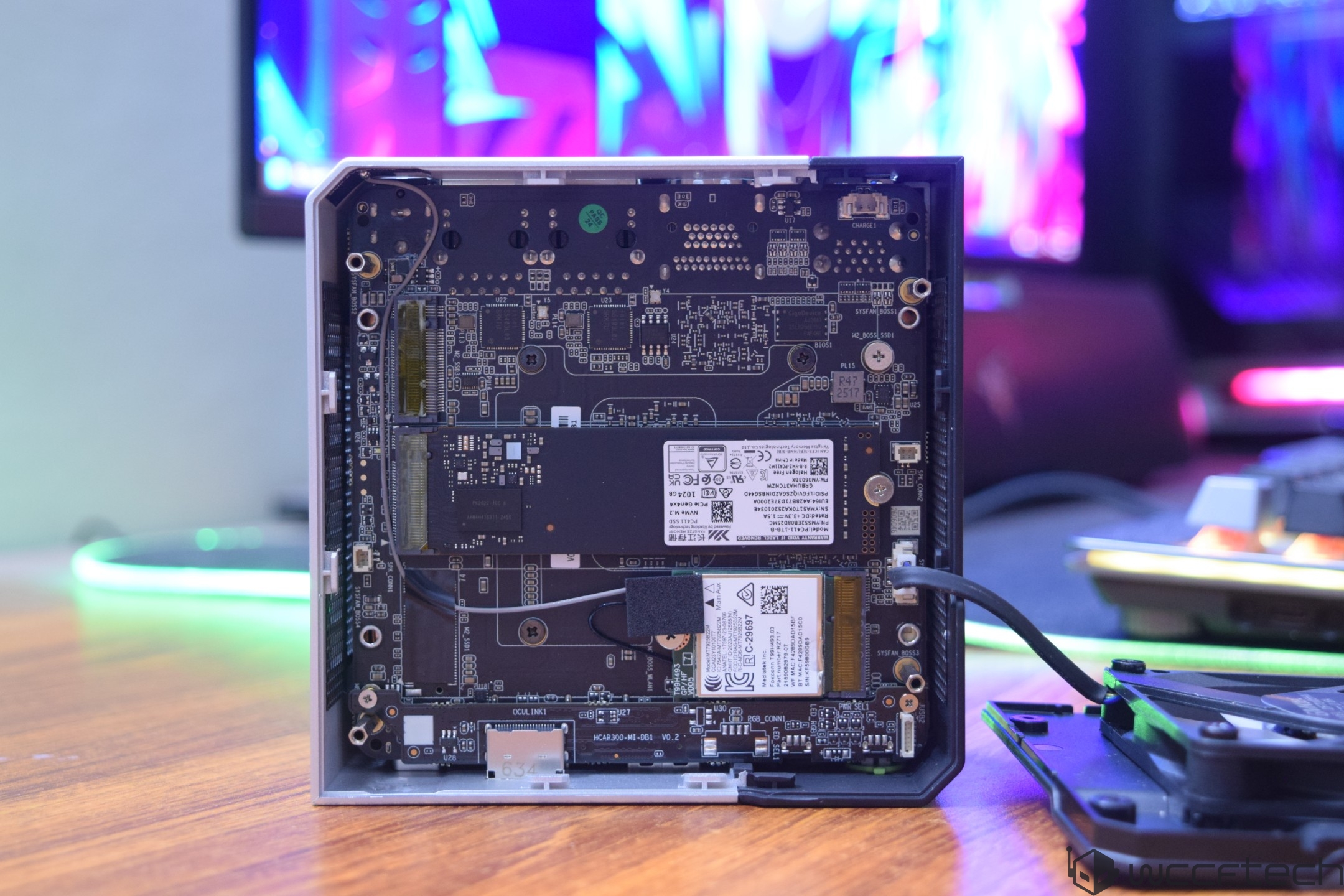
The only upgradable part of the EVO X1 PRO is the storage, which features two M.2 slots that can be equipped with dual 8 TB drives. The Mini PC features Rayson RS4G32LO5D8FDB-31BT 6400 DDR5-6400 LPDDR5X memory and a YMTC 1 TB Gen4x4 SSD. The SSD is rated at up to 6800 MB/s read and 6000 MB/s write speeds, while adopting HMB technology.
We start by comparing the 3DMark CPU Profile tests. First of all, the EVO X1 PRO is surprisingly close to the 358H, which features 16 cores, and is also up to 24% faster than the Ryzen AI 9 HX 370 in multi-threading tests.
0
4000
8000
12000
16000
20000
24000
10207
10377
7820
4843
2464
1248
9819
9826
6514
4298
2281
1175
9436
8893
6829
4364
2303
1171
8538
8399
7602
4445
2273
1157
7650
7688
5893
4011
2230
1266
7633
7640
5890
4008
2226
1265
5789
5756
5770
3773
2182
1146
In Blender, the EVO X1 PRO blazes past the Panther Lake-based Mini PC with a lead across all three tests.
In CPU-Z, the Ryzen AI 9 HX 470 is also ahead of the Core Ultra X7 358H in both single- and multi-core tests. You will notice a 3.1% increase in single-core and a 22.1% increase in multi-core perf vs the Ryzen AI 9 HX 370 chips.
0
4000
8000
12000
16000
20000
24000
Cinebench 2024 and Cinebench 2026 see the repeat of this across both single- and multi-core tests.
0
400
800
1200
1600
2000
2400
0
1000
2000
3000
4000
5000
6000
In Geekbench 6, the 358H is faster in both single- and multi-core tests.
0
4000
8000
12000
16000
20000
24000
For office use, the AMD Ryzen AI 9 HX 470 is a very speedy chip, leading across all office apps.
0
2000
4000
6000
8000
10000
12000
In WinRAR compression tests, the Ryzen AI 9 HX 470 is faster than the 358H despite the latter featuring faster LPDDR5X memory.
0
5000
10000
15000
20000
25000
30000
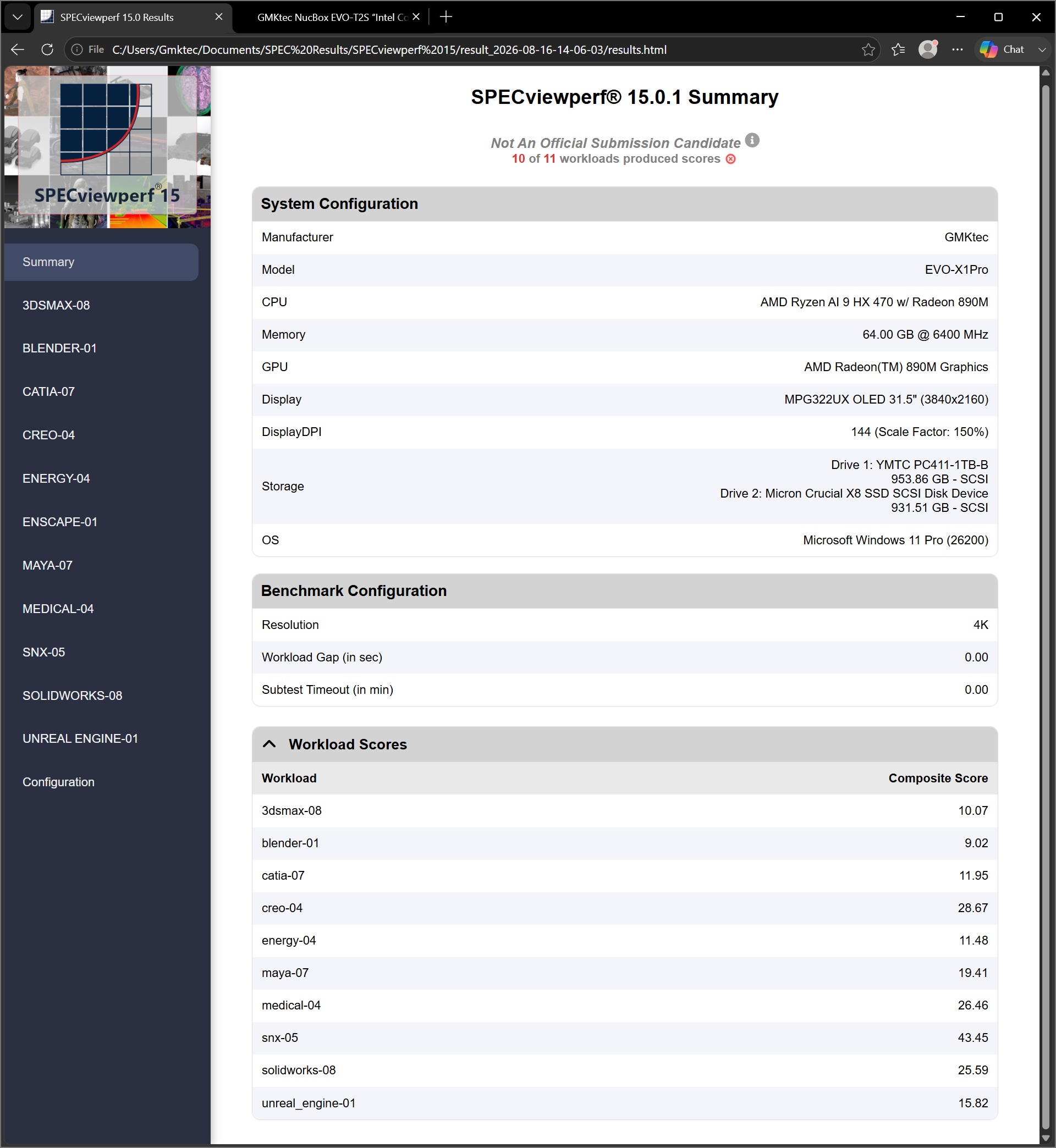
Lastly, we wanted to share the SPECviewPerf performance across all 11 workloads, which is as follows:
Next up, we have our first AI benchmarks for the latest Intel and AMD CPUs. First up, we have the Geekbench AI benchmark numbers, which are as follows:
0
4000
8000
12000
16000
20000
24000
0
11667
23334
35001
46668
58335
70002
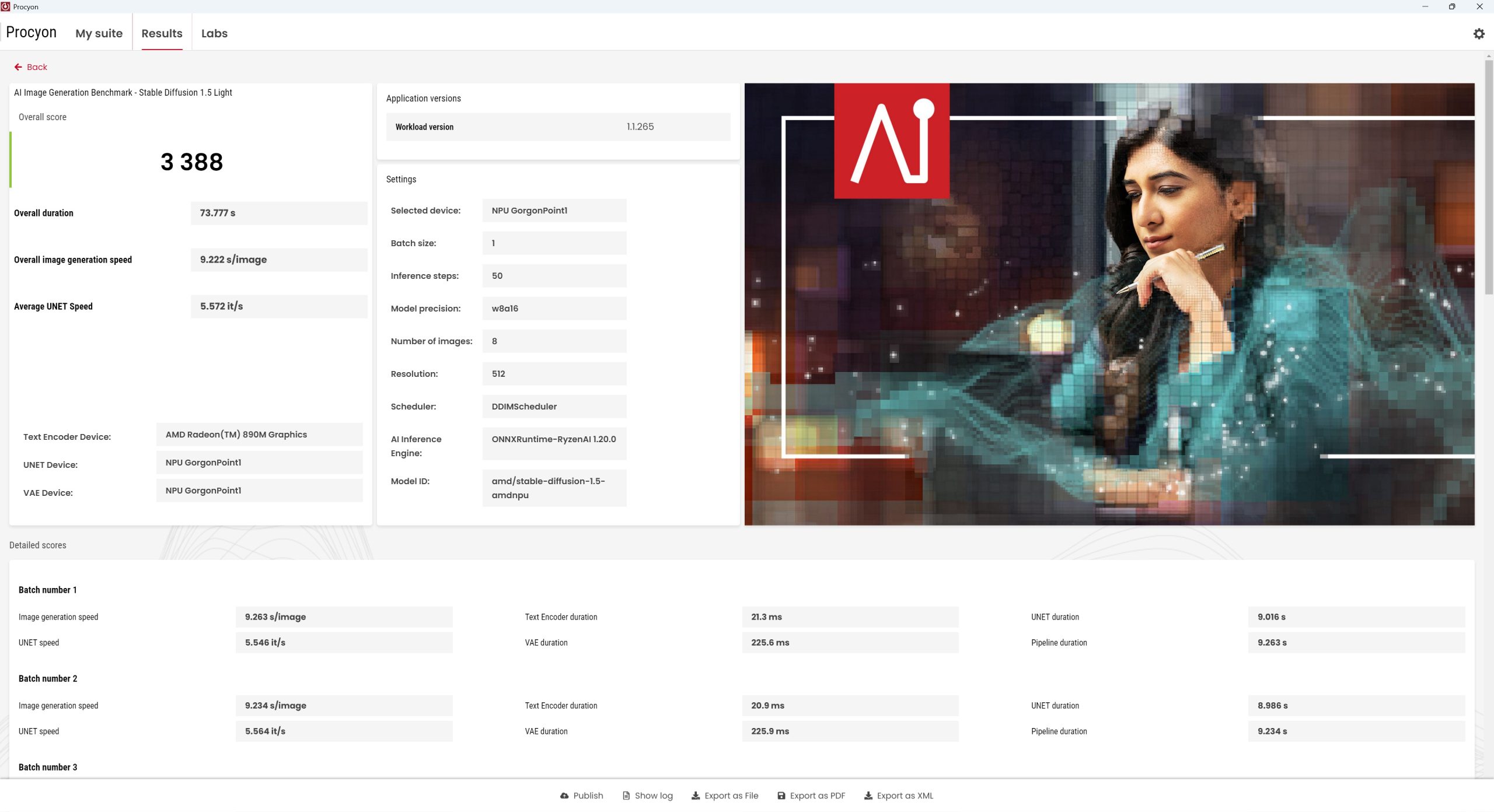
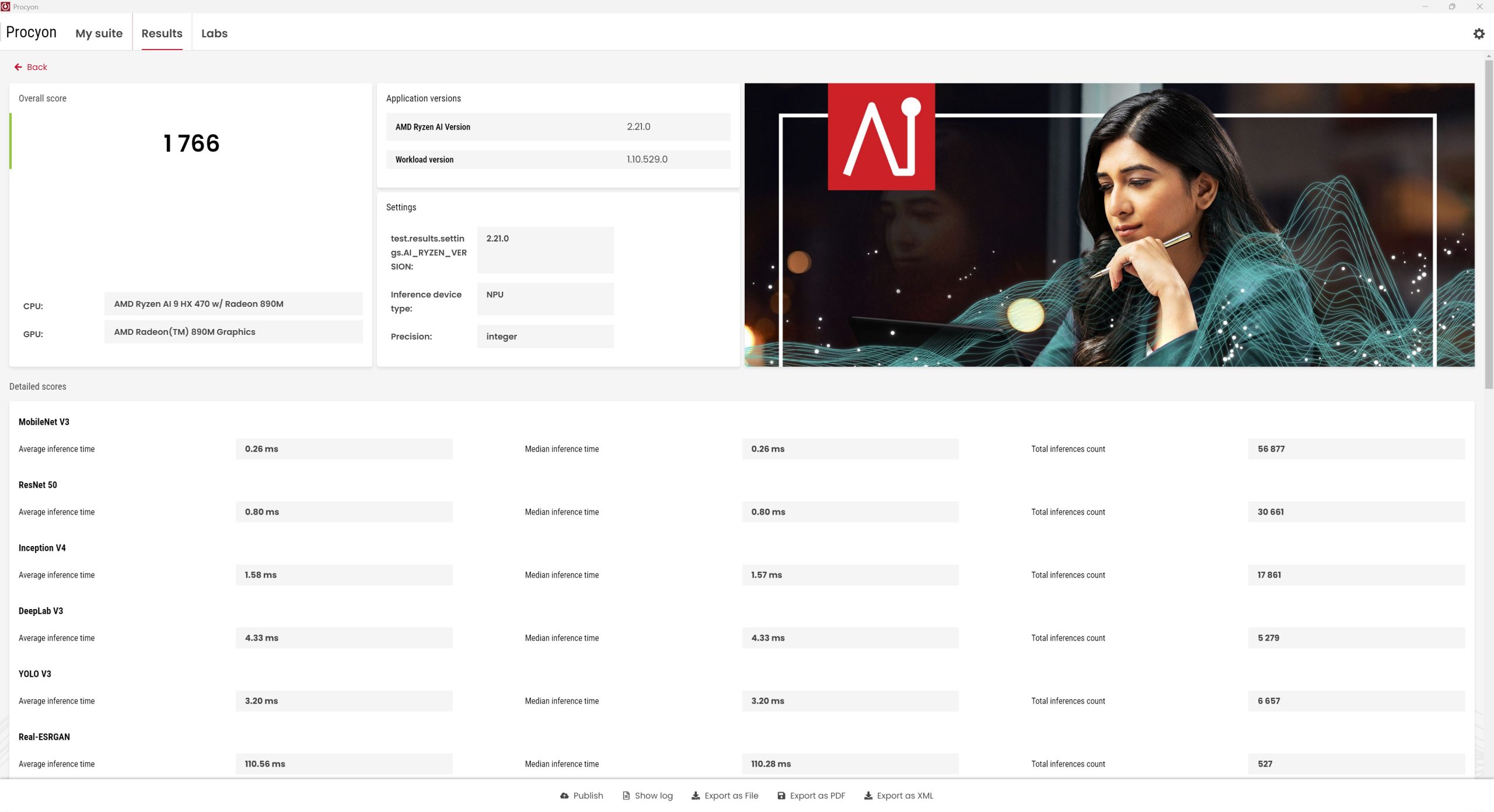
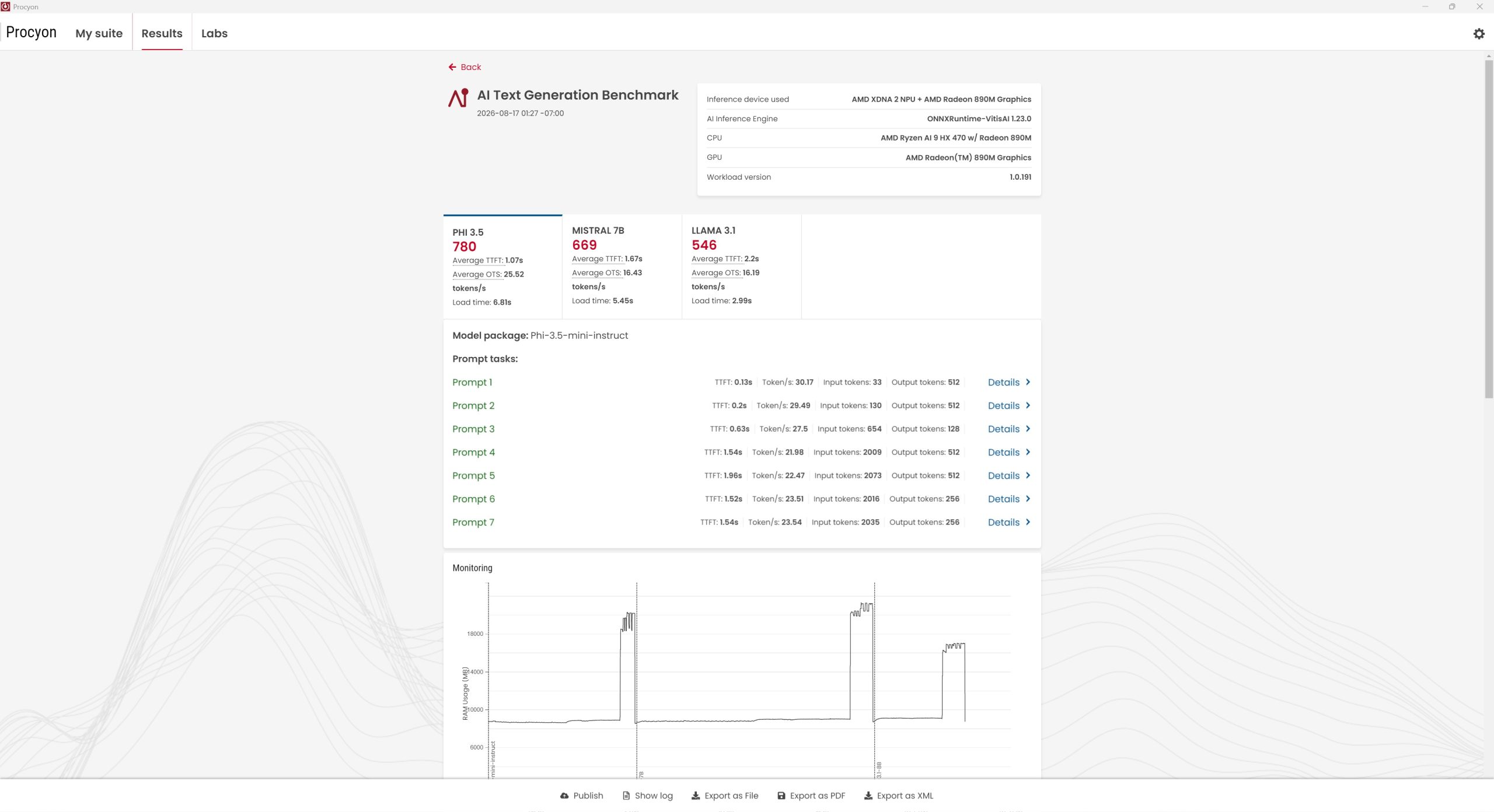
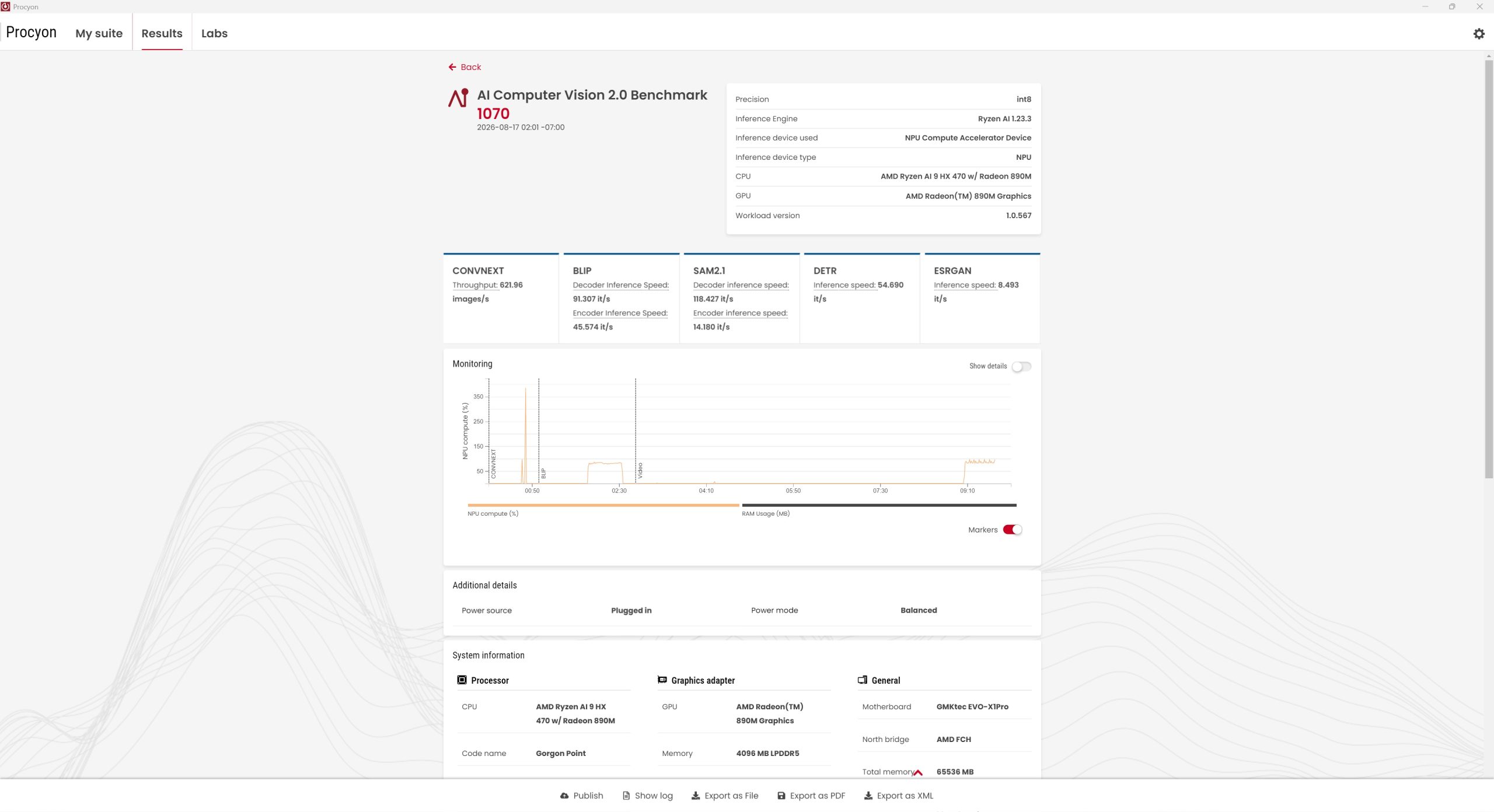
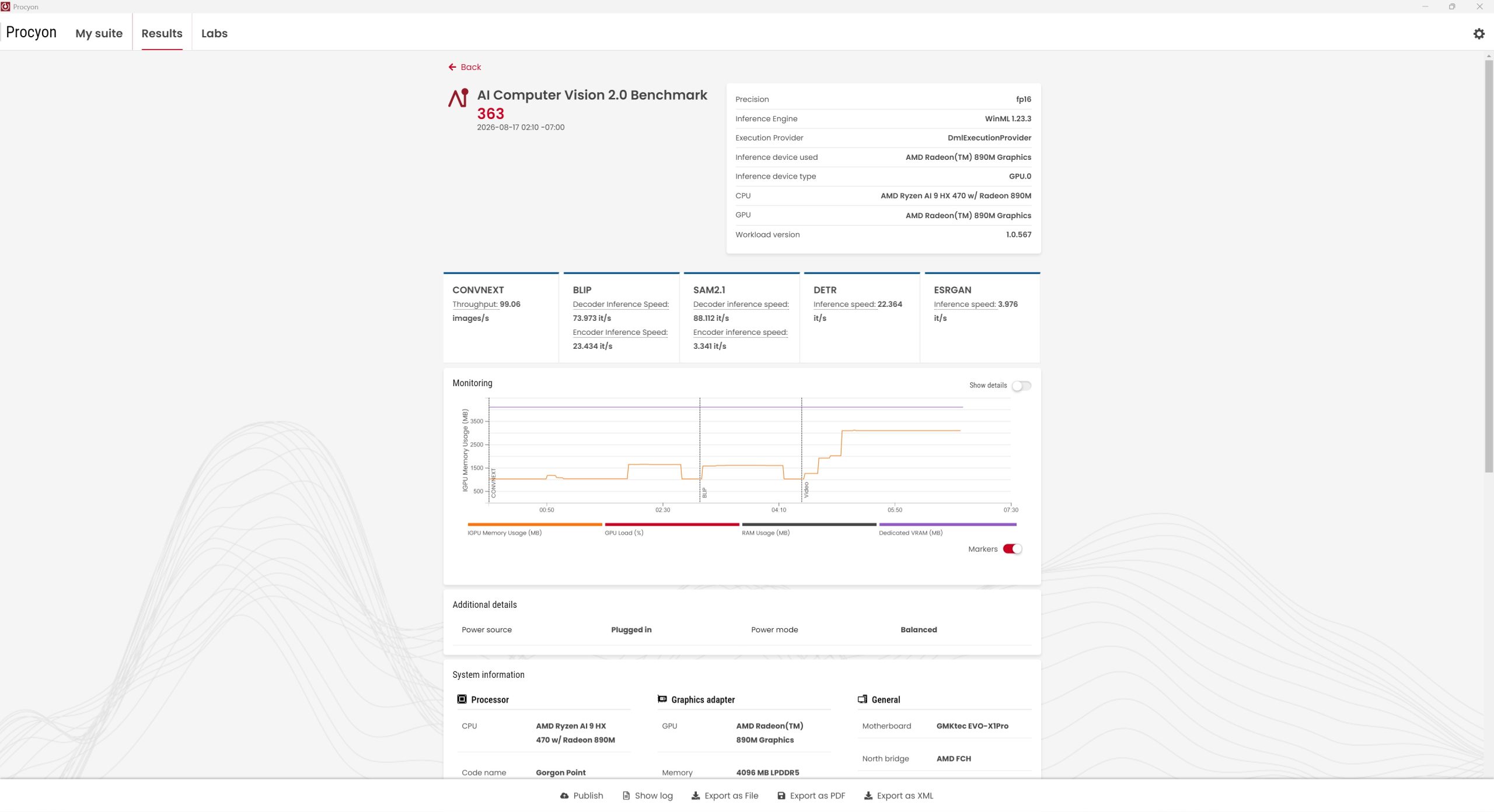
For UL Procyon, we again see AMD's latest CPUs and its XDNA AI accelerators, such as the NPU alongside the GPU, offering decent capabilities.
0
400
800
1200
1600
2000
2400
0
700
1400
2100
2800
3500
4200
With 86 TOPS of AI compute at its disposal, the GPU and NPU combination conforms to the Copilot+ requirements, but Ryzen AI MAX and Panther Lake chips are much ahead, offering over 100+ TOPS.
While on the topic of AI performance, we want to state that GMKtec has loaded several useful AI applications such as its own custom OpenClaw software, Herdsman AI, and its AI PC software on the Mini PC. These provide lots of local AI capabilities, while also enabling users to utilize cloud AI services such as Kimi and DeepSeek. The AI PC software lets users select from various LLMs in the model store, such as Qwen, DeepSeek, and Llama. The GMKtec Claw software has an expert for all your Agentic AI workflows, making it very handy for most users. One thing to note is that the systems will be configured for each region.
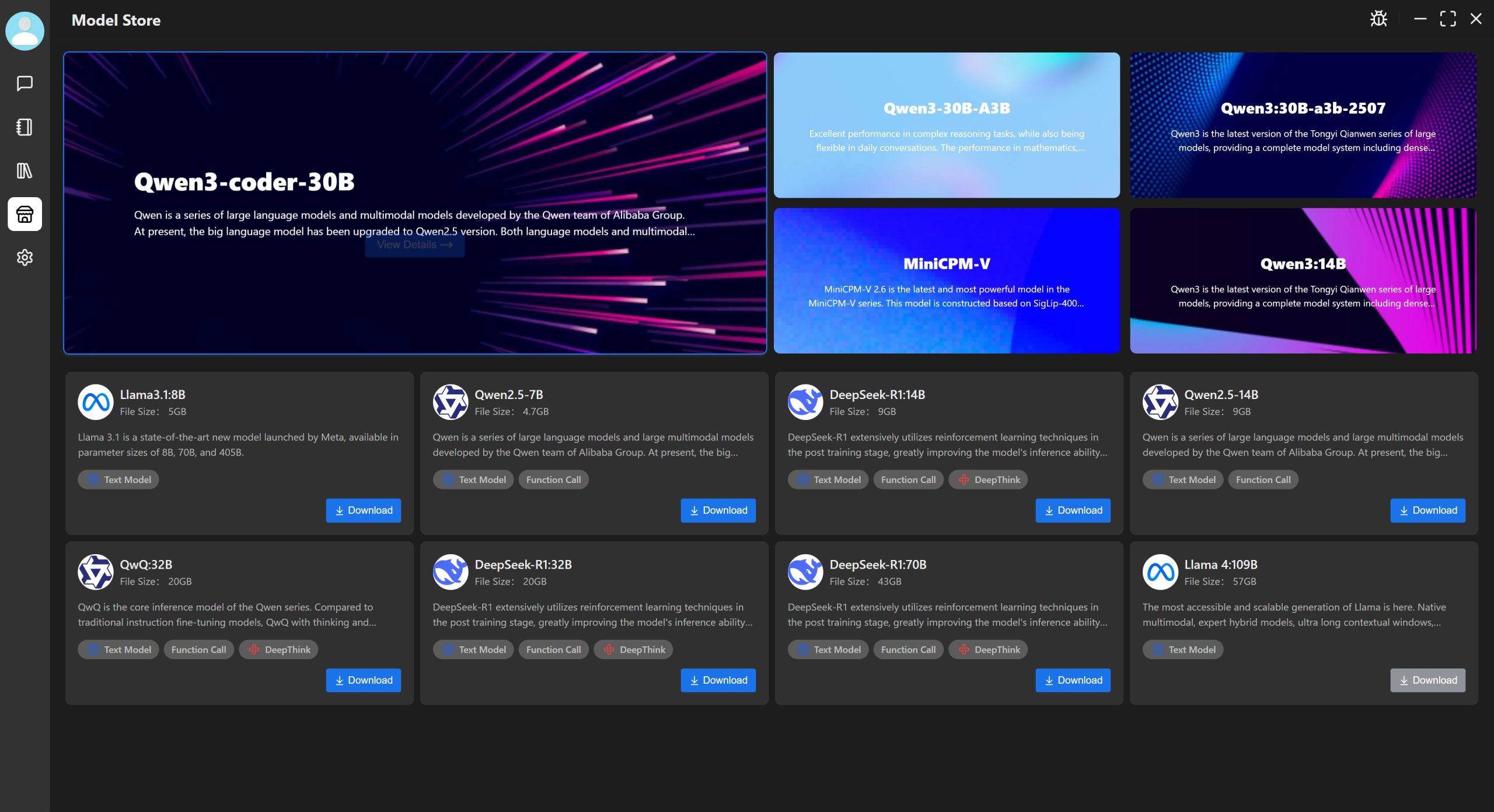
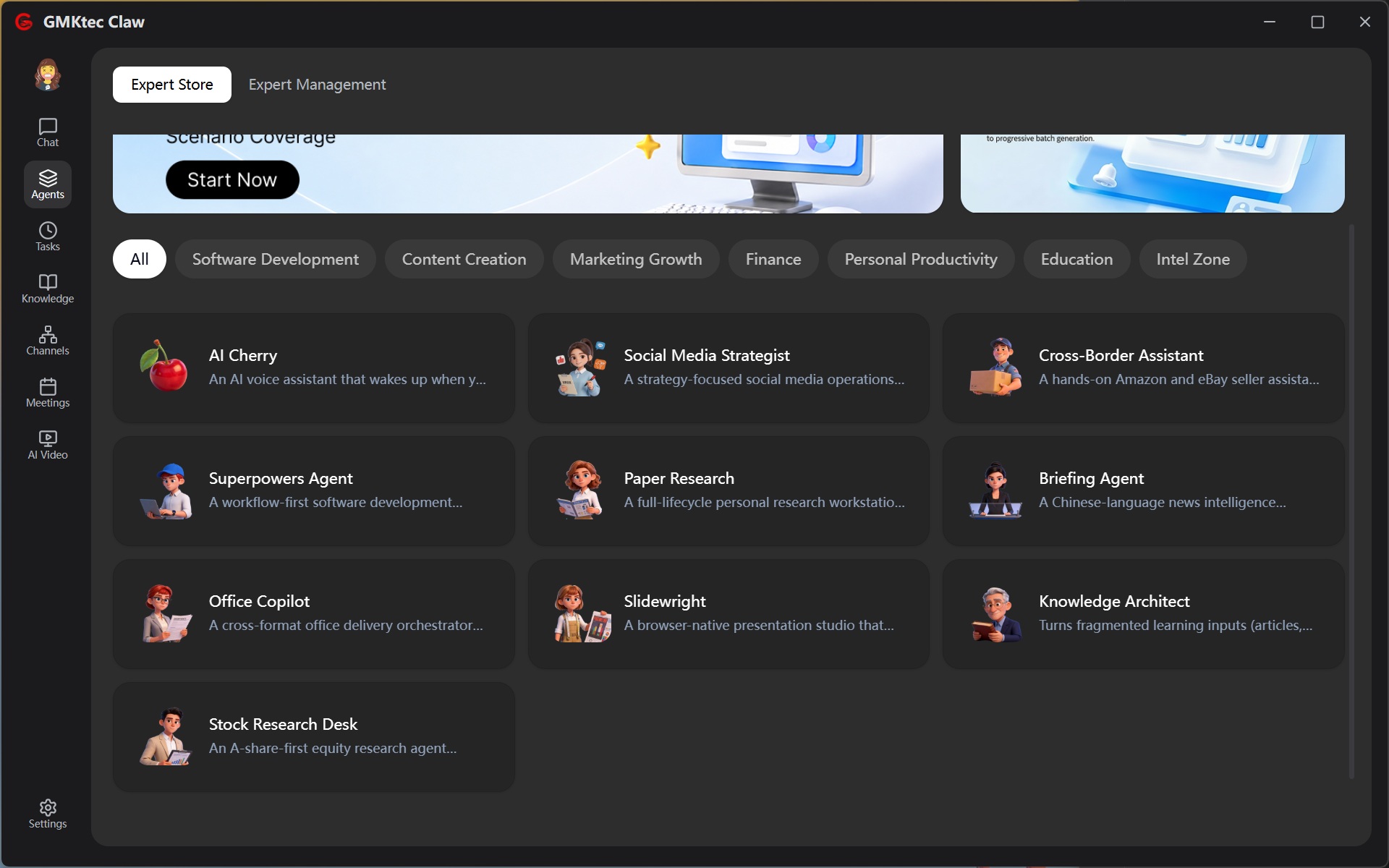
We also loaded up LM Studio and tried various models, with the performance of each LLM listed below:
Based on the tests we conducted, most 7-20b AI LLMs ran decently on the machine, making it a replacement for many cloud services which you would otherwise have to pay for. AMD also has a lot of useful AI tools that can be downloaded directly through its Radeon Adrenalin Software.
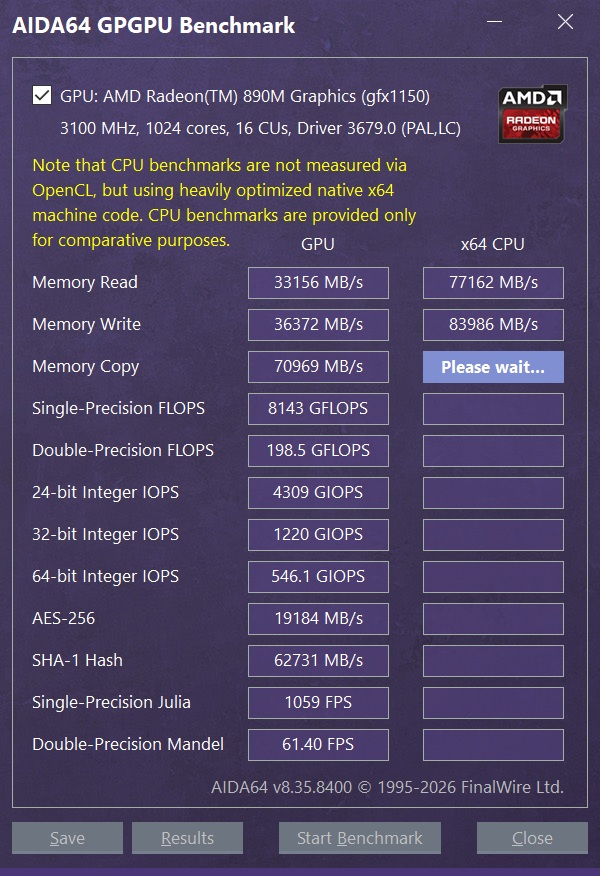
Now we are going to look at the GPU performance, and before we present to you the gaming numbers, we first have to see how the performance fares in synthetic benchmarks. For this purpose, we first want to outline the single-precision FLOPs each iGPU offers. Intel's Arc and AMD's Radeon series are based on entirely different architectures, and despite the FLOPS of the Radeon iGPU being higher, it doesn't necessarily mean that the Radeon iGPU will be faster. But with that said, the following is how the chips compare:
0
5000
10000
15000
20000
25000
30000

The RDNA 3.5 iGPU architecture has been on the market for a while, and since there have been no big updates, the RT performance remains a bit lacking.
0
500
1000
1500
2000
2500
3000

In Steel Nomad, the Radeon 890M iGPU on the Ryzen AI 9 HX 470 offers a slight bump over the one featured on the Ryzen AI 9 HX 370 chips.
0
500
1000
1500
2000
2500
3000

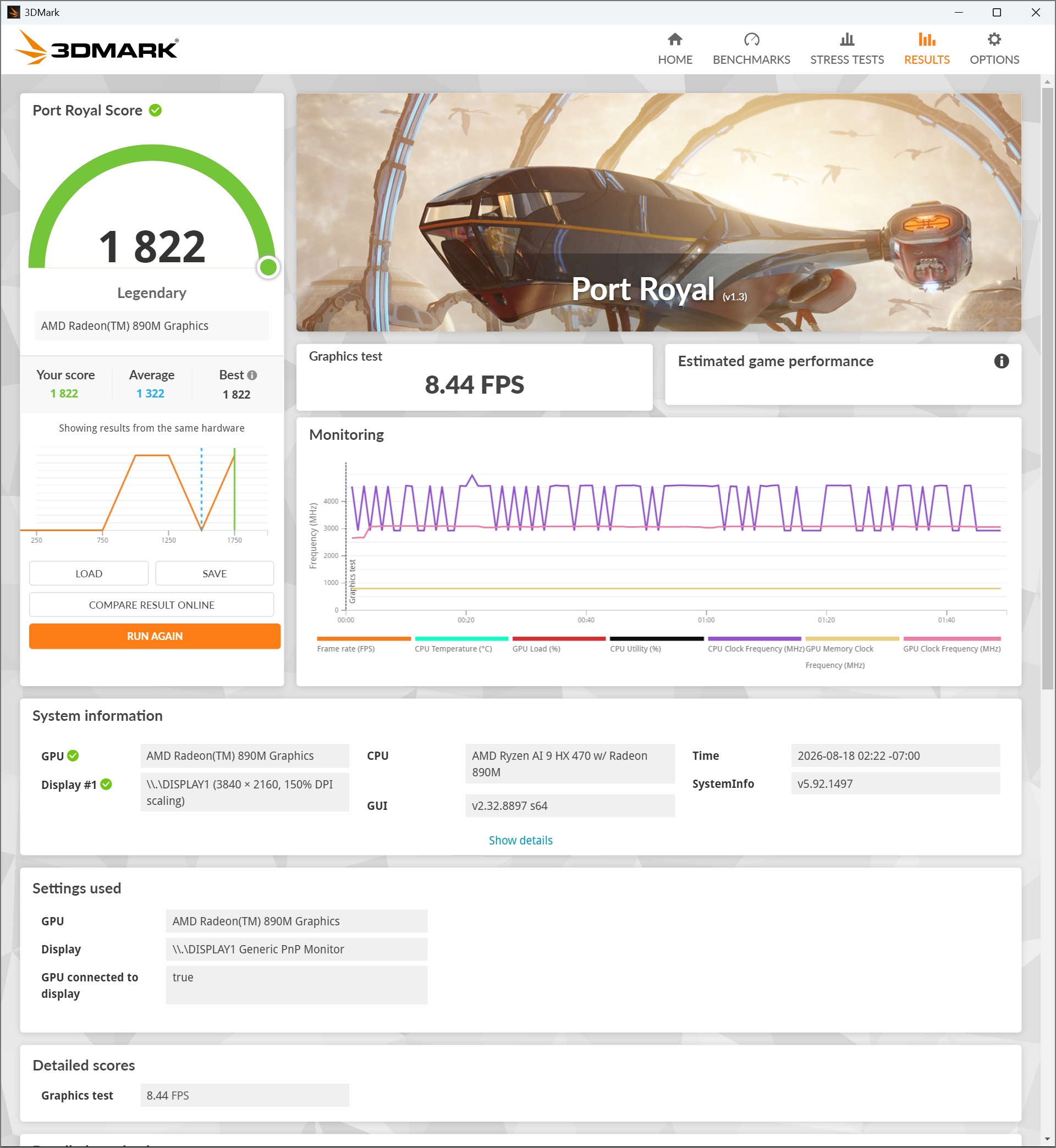
In 3DMark Port Royal, the Radeon 890M iGPU is just about as fast as the Xe+ Alchemist iGPU.
0
1000
2000
3000
4000
5000
6000

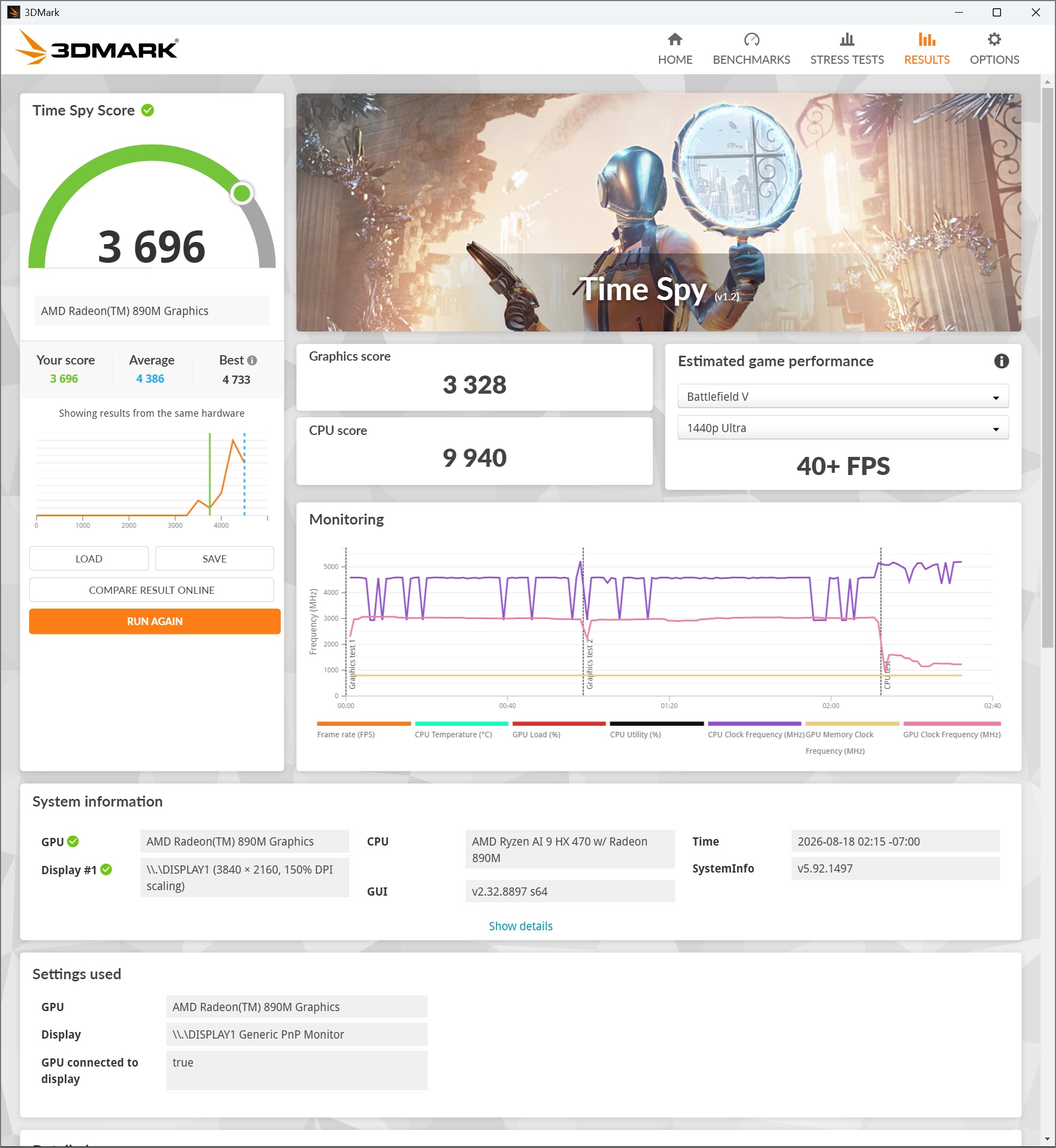
In 3DMark Time Spy, the EVO X1 PRO performs well, but it's the CPU score here that shows the biggest uplift.
0
4000
8000
12000
16000
20000
24000

For Fire Strike, AMD's Gorgon Point APUs once again show decent uplifts across GPU and CPU tests.
0
7000
14000
21000
28000
35000
42000

Lastly, we have 3DMark Night Raid, where the 3.1 GHz Radeon 890M cracks over 30K points.
0
21095
42190
63285
84380
105475
126570
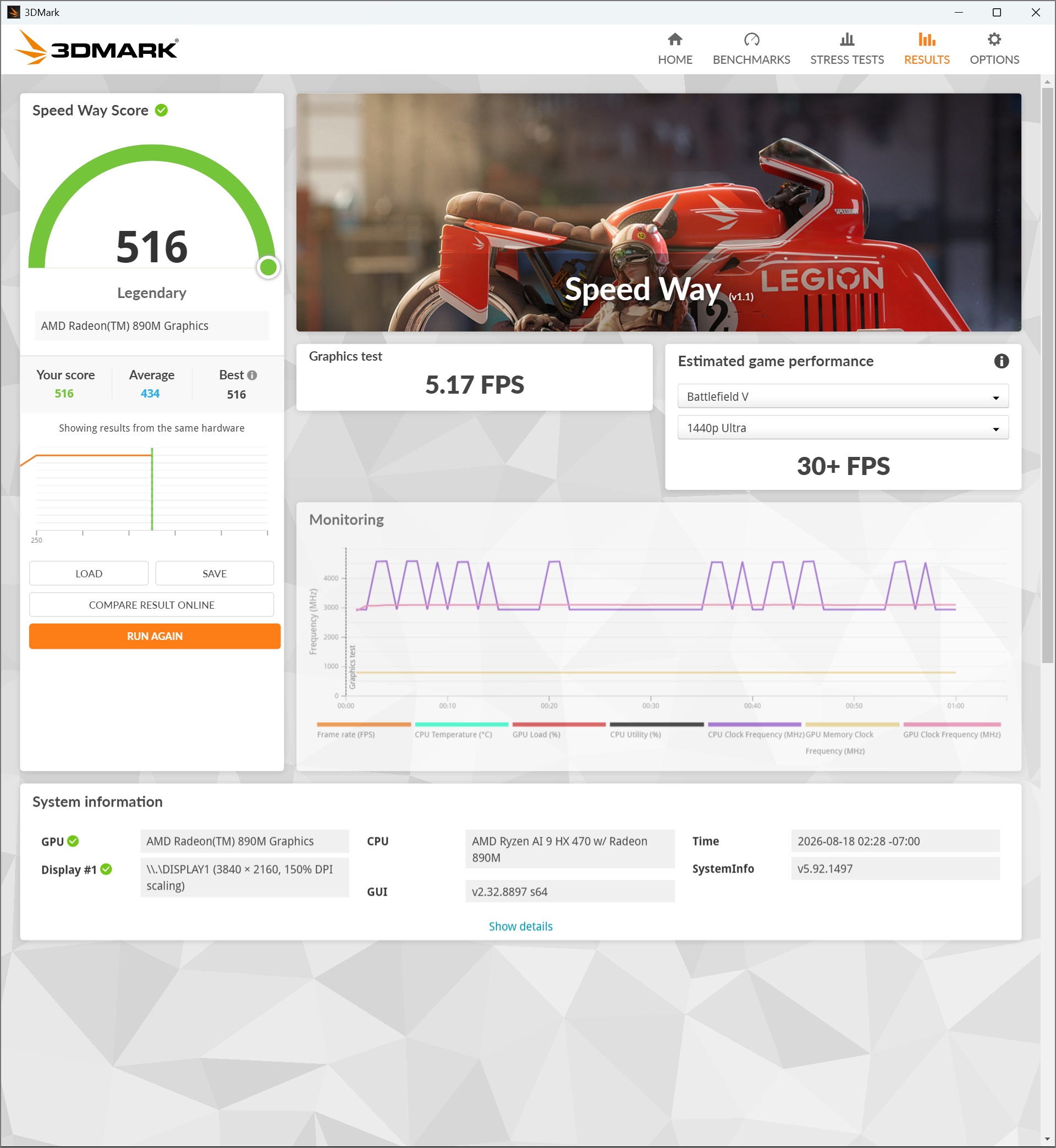
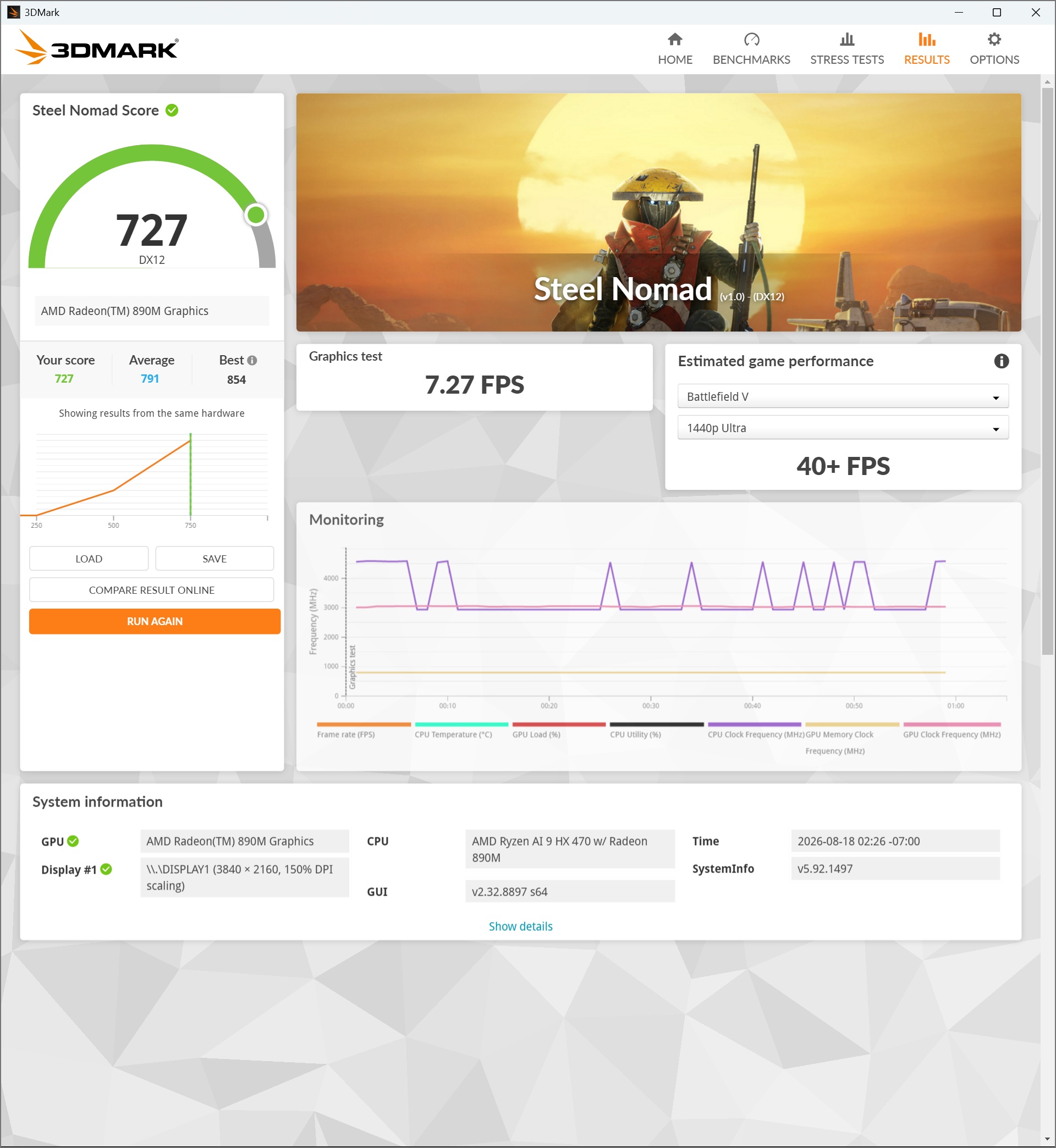
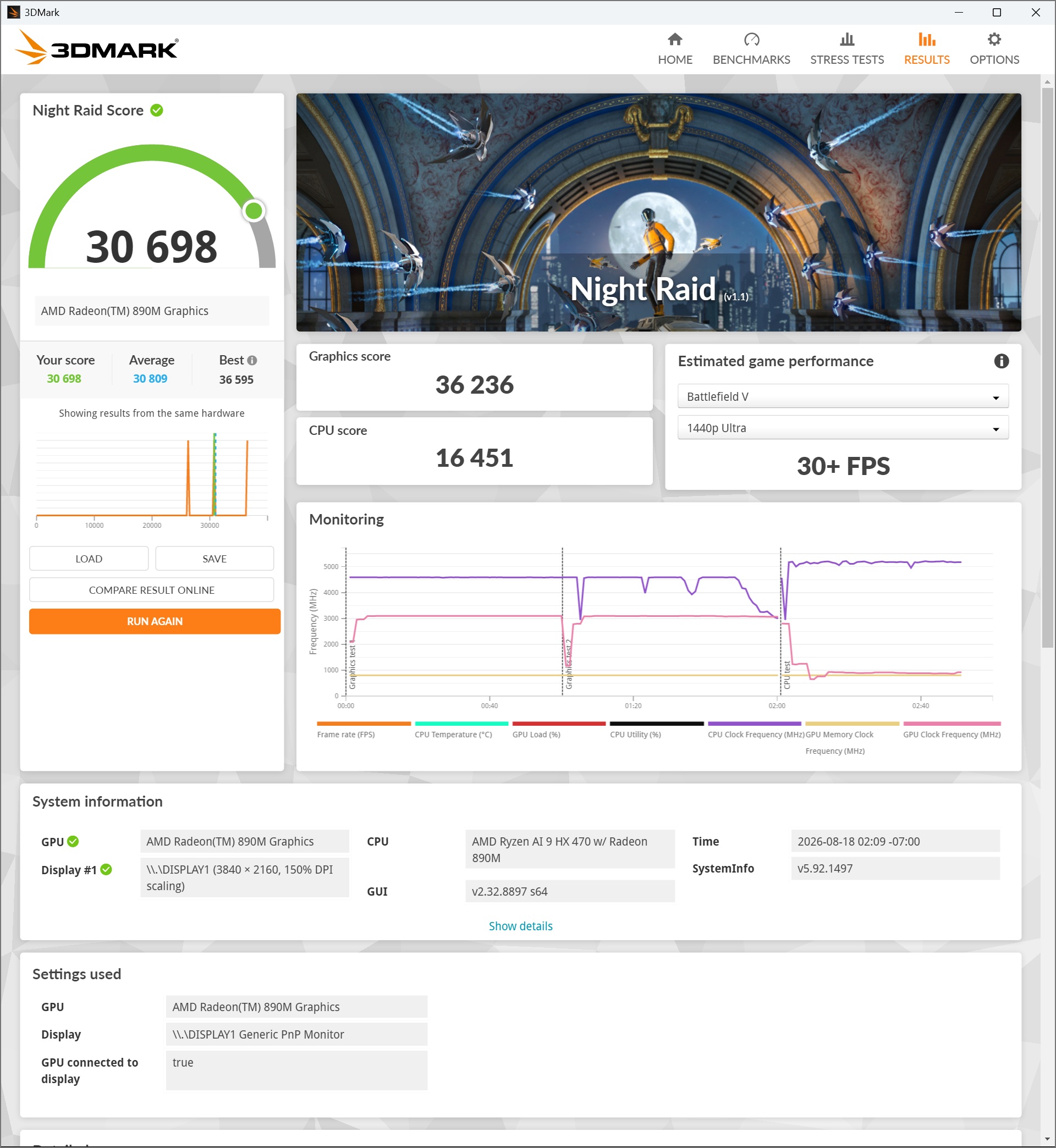
With the synthetic performance out of the way, we can start taking a look at pure gaming numbers, and we start off our testing spree with Cyberpunk 2077 running at Medium Preset at 1080p with Balanced XeSS/FSR upscaling.


In Forza Horizon 5, we only ran the game using Quality Upscaling at the Medium Preset at 1080p.

In F1 24, we used the High Preset at 1080p.

In Horizon Zero Dawn at the "Favor Quality" preset, we used the FSR 2 upscaling set to Balanced.

Metro Exodus only saw 30 or so FPS, which is to be expected since it is a brutally heavy title.

In The Callisto Protocol, the Ryzen AI 9 HX 470 on the EVO X1 PRO somehow performed worse than the other Radeon 890M setups. The TDP is lower, but we were expecting close or similar figures.

The entry-level iGPUs barely manage 30 FPS even with frame-gen enabled at the same settings.
Lastly, we tried some 1080p gaming at maxed settings across various titles with a mix of upscaling and frame generation, and the results are as follows.
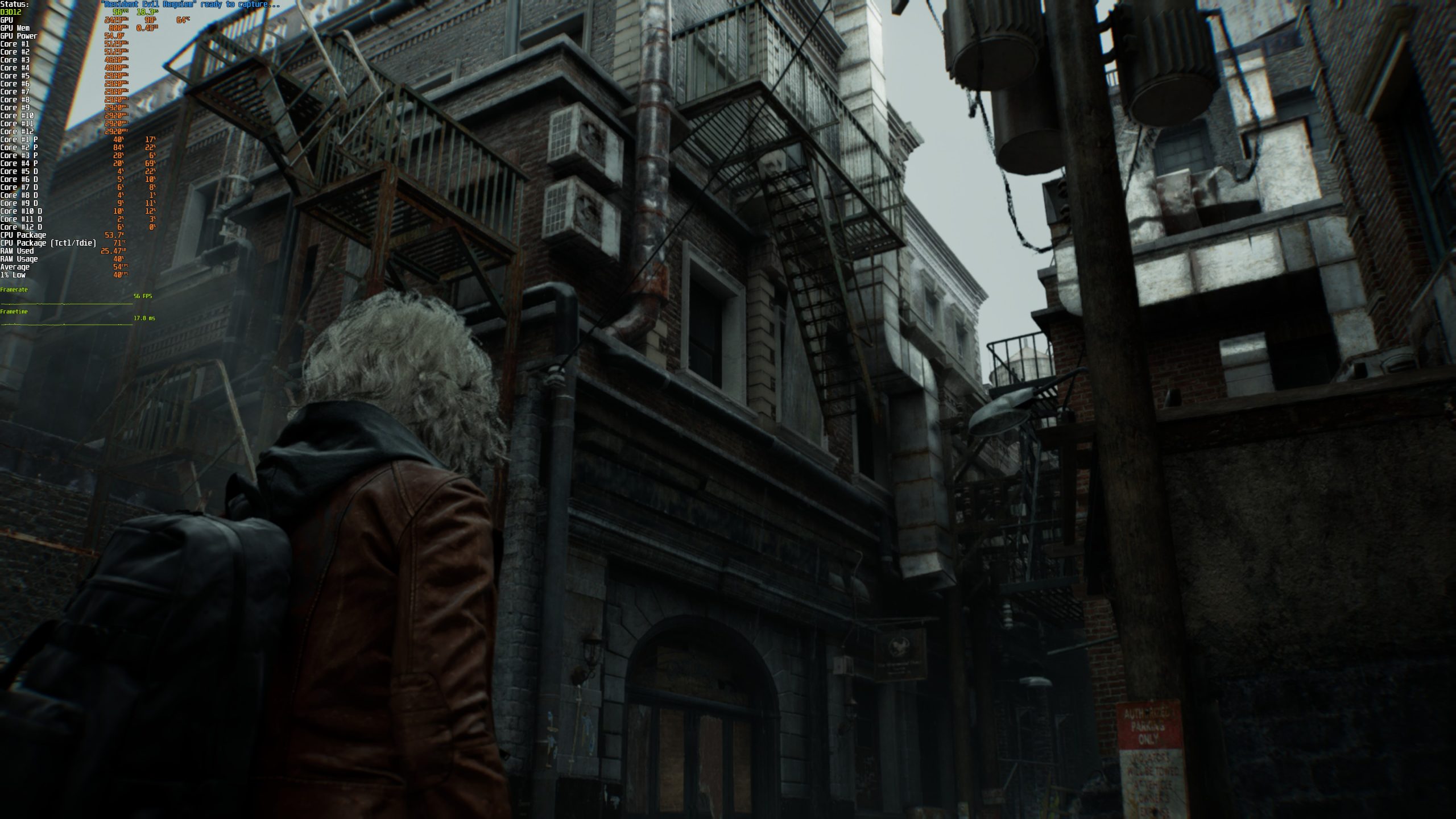
Next, we can see the power consumption of the latest Mini PCs.
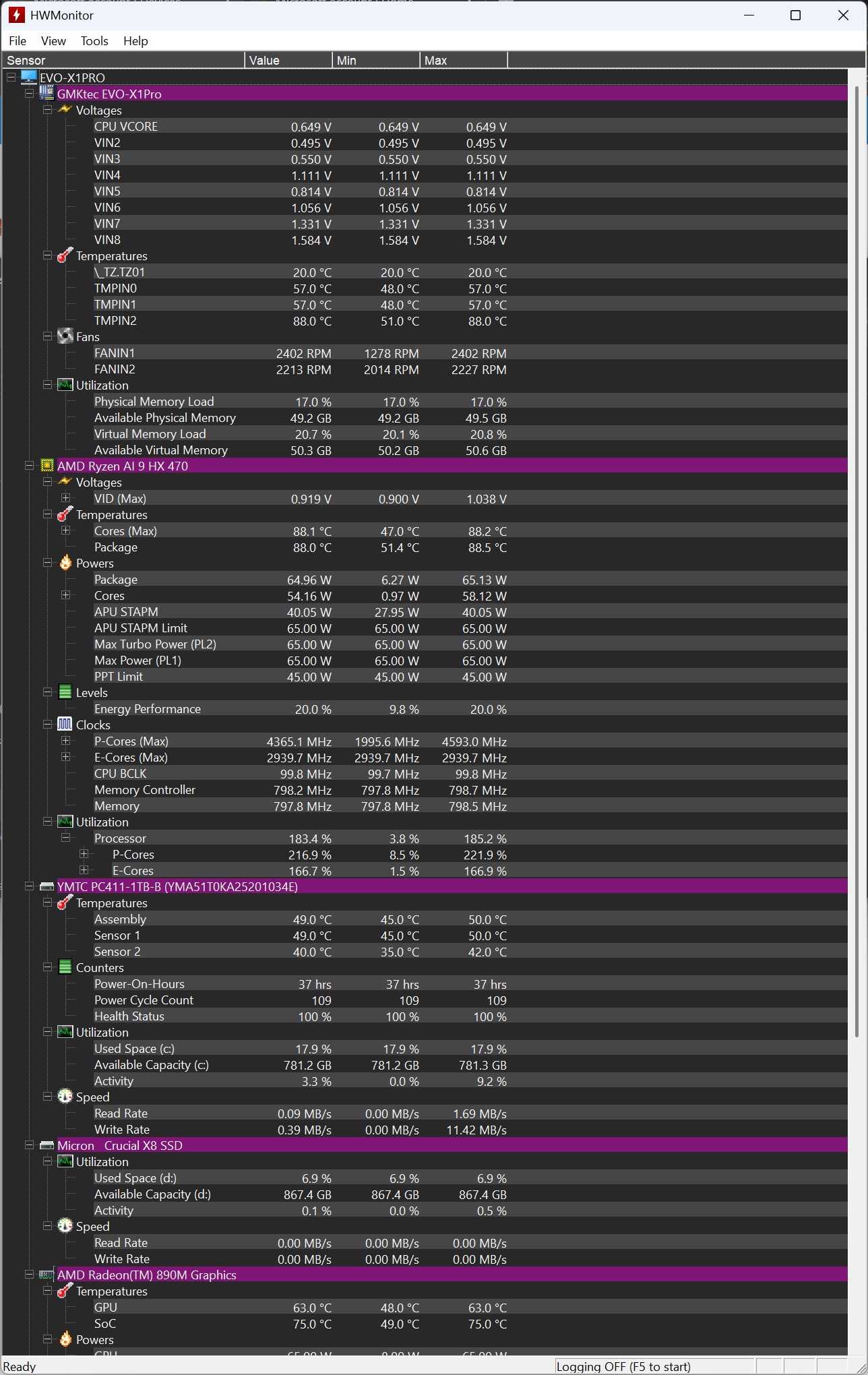
The following thermals show temperatures:
The EVO X1 PRO is a soft update to the EVO X1 launched by GMKtec a while back. The new update is the obvious integration of the AMD Ryzen AI 9 HX 470, which brings familiar CPU (Zen 5), GPU (RDNA 3.5), and NPU (XDNA 2) architectures with a few bumps here and there. The result is better CPU performance, in fact, more than what I expected from this tiny little Mini PC.
While the CPU performance was impressive, it looks like the GPU is showing signs of aging. The Radeon 890M at 3.1 GHz is still a capable chip, but Intel is definitely a leap ahead now with its new Panther Lake lineup, and AMD's very own Strix Halo chips are offering a bigger uplift using the same architecture. You can still get a great gaming experience, but AMD does need to roll out a new chip with a better integrated graphics chip. Medusa Point can't come soon enough!
For the NPU, the EVO X1 PRO is a capable machine for entry-level AI LLMs, and we had fun trying out several models and agent tools. GMKtec sweetens the deal for its EVO X1 PRO with apps such as the GMKtec Claw &AI PC, both super handy.
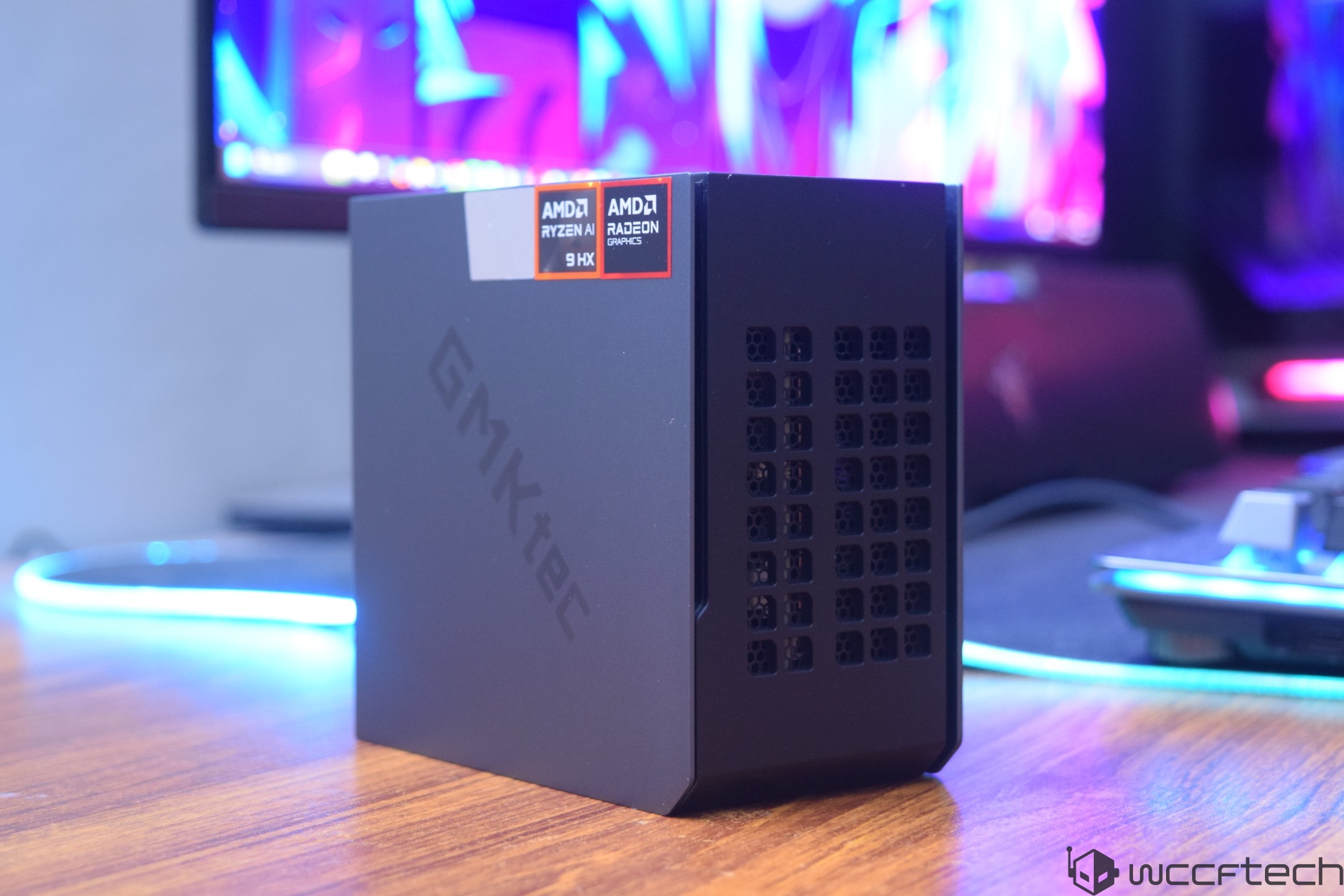
The 64 GB LPDDR5X memory is great, offering lots of memory to users, and you can allocate a decent chunk to the iGPU alone to get more out of games and AI LLMs. The dual NVMe slots, dual LAN ports, and an OCuLink connector give users lots of room for expandability. Though we would like to see a 32 GB variant that offers some price flexibility.
Price-wise, the model we received comes at a $1599 tag, which is around $ 500-ish cheaper than the Panther Lake and Strix Halo options. This is decent enough, but the price is a premium due to rising component costs. Other competing options are now also sitting in a similar price range, but the EVO X1 PRO with a better AMD Gorgon Point chip is a powerful solution, especially in the CPU department. Furthermore, its compact size is very impressive given how well it performed under prolonged load, without any worries of overheating.
Our Pros/Cons of the EVO X1 PRO:
- +Strong CPU Performance +Gorgon Upgrades +Very Efficient +Truly a Mini PC Design +Dual LAN, Dual NVMe +OCuLink Port included +Massive 64 GB LPDDR5X Memory +Dual Cooling Fans
- -Very High Prices (Due To Memory Shortages) -Only a single USB4 port -GPU performance a bit lacking - Pre-loaded AI Apps may not be for everyone
The GMKtec NucBox EVO X1 PRO can be bought from the following links ( Official Page ):
- EVO X1 PRO 64+1024 G B : Amazon Link
- EVO X1 PRO 64+2048 G B : Amazon Link
You can find additional information about our hardware review process and ethics policy here.
Follow Wccftech on Google to get more of our news coverage in your feeds.