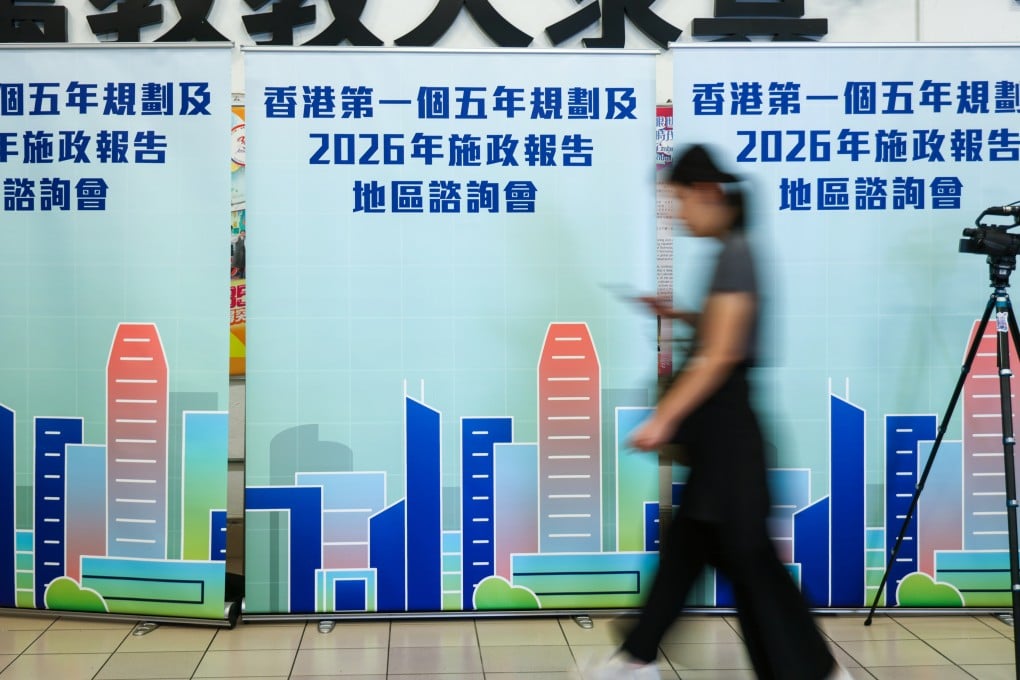
Hong Kong is formulating its
first five-year plan for economic and social development. Such plans are likely to become a regular feature of governance, and will shape how the city allocates land, builds housing and infrastructure, develops industries, trains talent and improves public services. They can also give government departments a common frame for action, rather than leaving them to operate in separate silos.
Yet successive five-year plans should do more than set medium-term priorities. They should point towards a common destination, so that each plan becomes one stage in a longer journey rather than a self-contained list of tasks. The question is therefore not only what Hong Kong should do in the next five years, but what kind of city it seeks to become over the next two decades.
Hong Kong can learn from China’s approach to long-term planning. China has set out clear milestones: by 2035, it
aims to basically realise socialist modernisation; by the middle of this century – coinciding with the 2049 centenary of the People’s Republic – it
aims to build a great modern socialist country in all respects and achieve national rejuvenation. These goals give
China’s five-year plans a wider purpose and a recognisable direction of travel.
Hong Kong should develop a comparable sense of strategic clarity. This does not mean producing another long policy blueprint packed with targets, budgets and performance metrics. It means articulating a long-term mission statement that explains what the city ultimately seeks to become and why.
A 2049 horizon would be a natural one: it would align with a major national milestone.
Under national planning, the city is
supported in strengthening its status as an international financial, shipping and trade centre, and an international aviation hub. It is also developing as an international innovation and technology centre, a regional intellectual property trading centre, an East-meets-West centre for cultural exchange, and an Asia-Pacific centre for international legal and dispute-resolution services.