The ongoing AI boom and its impact on global chip manufacturing have created an opportunity for Chinese chip manufacturing equipment providers to cater to growing domestic demand, says a report from local media. Along with pressure on memory and packaging supply, the machines used throughout the chip manufacturing process, such as deposition, etching and testing are also in short supply, with lead times of leading Western, Korean and Japanese suppliers touching 24 months.
The Chinese firms, with shorter lead times and growing domestic demand, might be able to capture some of the market in the current historic period of capacity expansion in the semiconductor industry.
While lithography is the key bottleneck when it comes to manufacturing advanced chips, the semiconductor supply chain is made of dozens of companies operating from the upstream design equipment providers to the downstream assemblers. Some of the n on-lithography equipment used throughout the supply chain includes machines used to deposit and etch the designs and clean and test the wafers.
As TSMC, SK hynix, Samsung and other chip manufacturers respond to the booming AI demand by expanding their production, this supply chain is now under stress. This demand has led lead times for ASML's machines to stretch up to two years as it remains the only major advanced lithography equipment provider in the world.
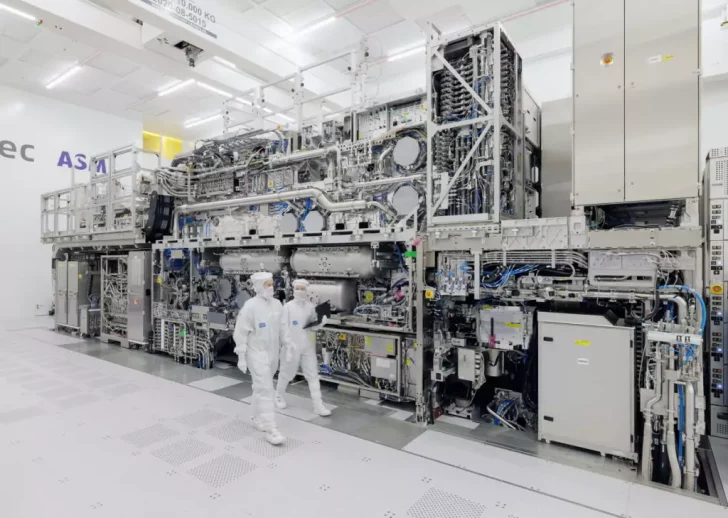
Now, a report from the Chinese publication JW Insights suggests that the demand stimulated by leading edge chip manufacturing process nodes, such as those below the 3-nanometer manufacturing process, growing demand for NAND devices and mature foundry processes is contributing to high lead times for non-lithography chip equipment as well. The lead times for some machinery have stretched to as much as 24 months as executives outline that the shift is a long term reshaping of the industry's dynamics instead of a short term event.
Another impact of the disruption is on the Chinese equipment industry. According to the details, as Chinese chip manufacturers such as SMIC and CXMT continue to spend heavily on capacity expansion, the role of the domestic equipment companies is shifting from developing machinery and advanced technology to ensuring equipment can be shipped at scale.
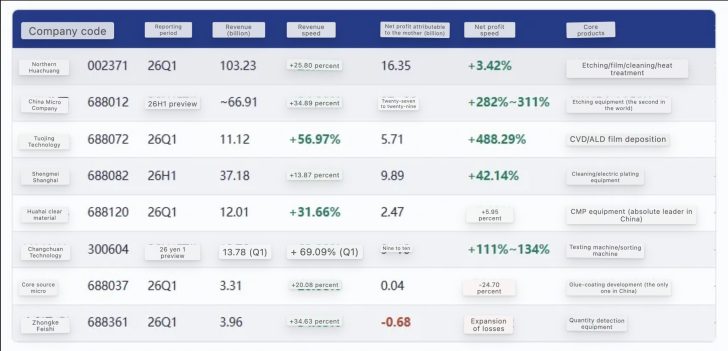
As a result, the domestic Chinese chip manufacturers have started to force the introduction of domestic equipment in their production lines.
Data compiled by the publication shows that most major Chinese domestic equipment providers reported double-digit revenue growth in the first half of 2026. Additionally, some companies, such as those providing deposition and etching products, have also reported profit growth ranging from 300% to greater than 400%. However, others have also reported losses as they step up their research and development efforts.
Follow Wccftech on Google to get more of our news coverage in your feeds.