The atmosphere-less Moon is frequently bombarded by meteors, asteroids, and comets, and now it can add another item to that list: SpaceX rockets.
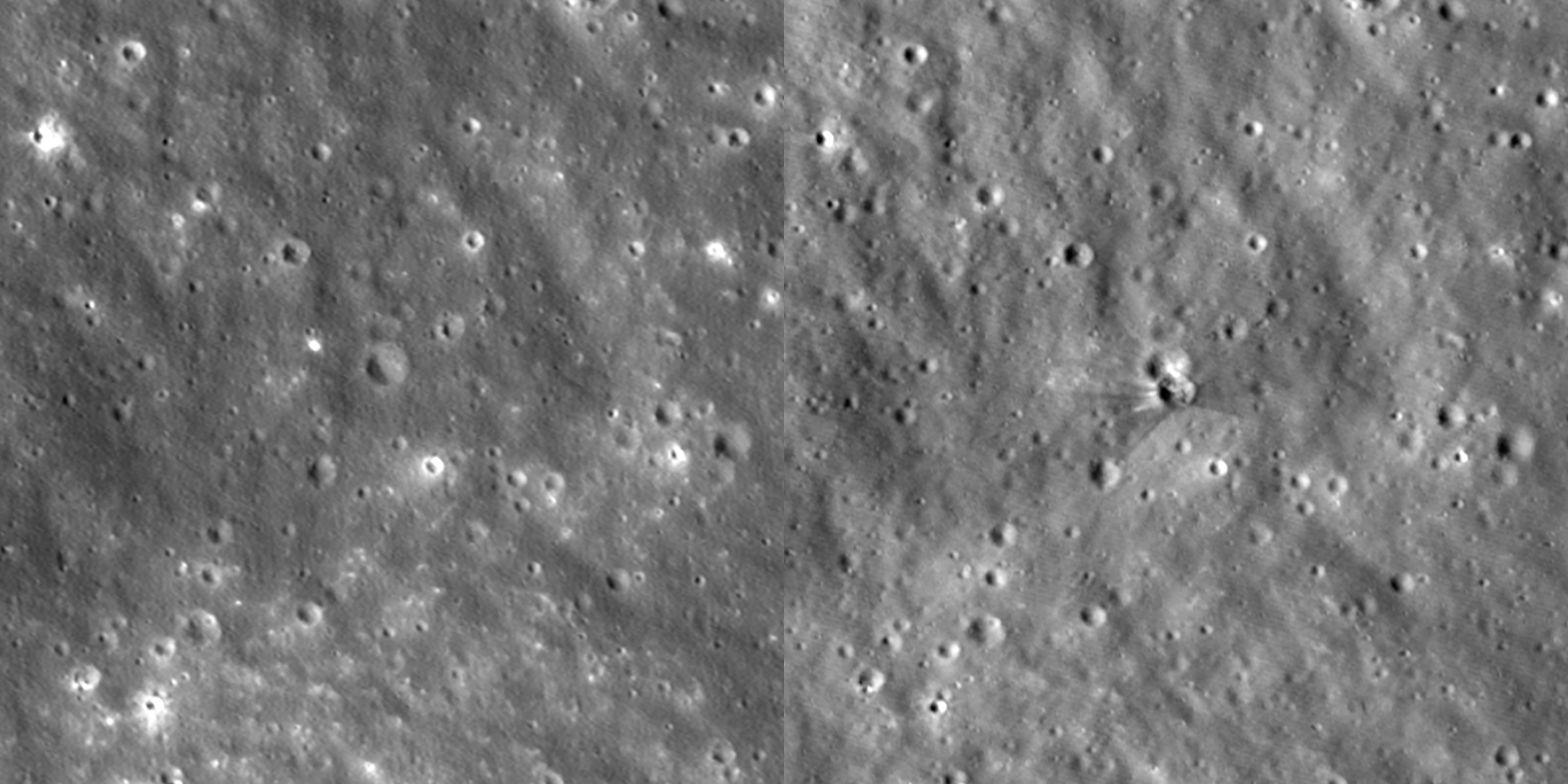
After news that one of the company’s Falcon 9 rockets had crash-landed on the Moon on August 5 after being discarded in space by the Elon Musk-owned company, researchers and space agencies were in a race to capture images of the landing site.
The first photos to emerge were taken by the Danuri lunar orbiter, operated by the Korea AeroSpace Administration (KASA), which flew over the site shortly after impact.
But NASA wanted its own photos, and on August 11 and August 12 the space agency’s Lunar Reconnaissance Orbiter (LRO) captured a series of images of the new crater.
NASA engineers tilted the spacecraft so its cameras would point toward the crater each time LRO passed above the crater; the LRO flies roughly 60 miles above the Moon while traveling one mile per second.
The orbiter circles the Moon from pole to pole every two hours, while the Moon slowly rotates underneath it. To photograph a specific spot, the spacecraft must wait until that location turns into view, which took six days in this case.
As well as being in the right spot, NASA also had to time the camera shutter just right: if it was released 10 seconds too early, it would miss by 10 miles.
NASA scientists believe that the crater is about 6 feet wide and less than 10 feet deep, based on the length of its shadow.
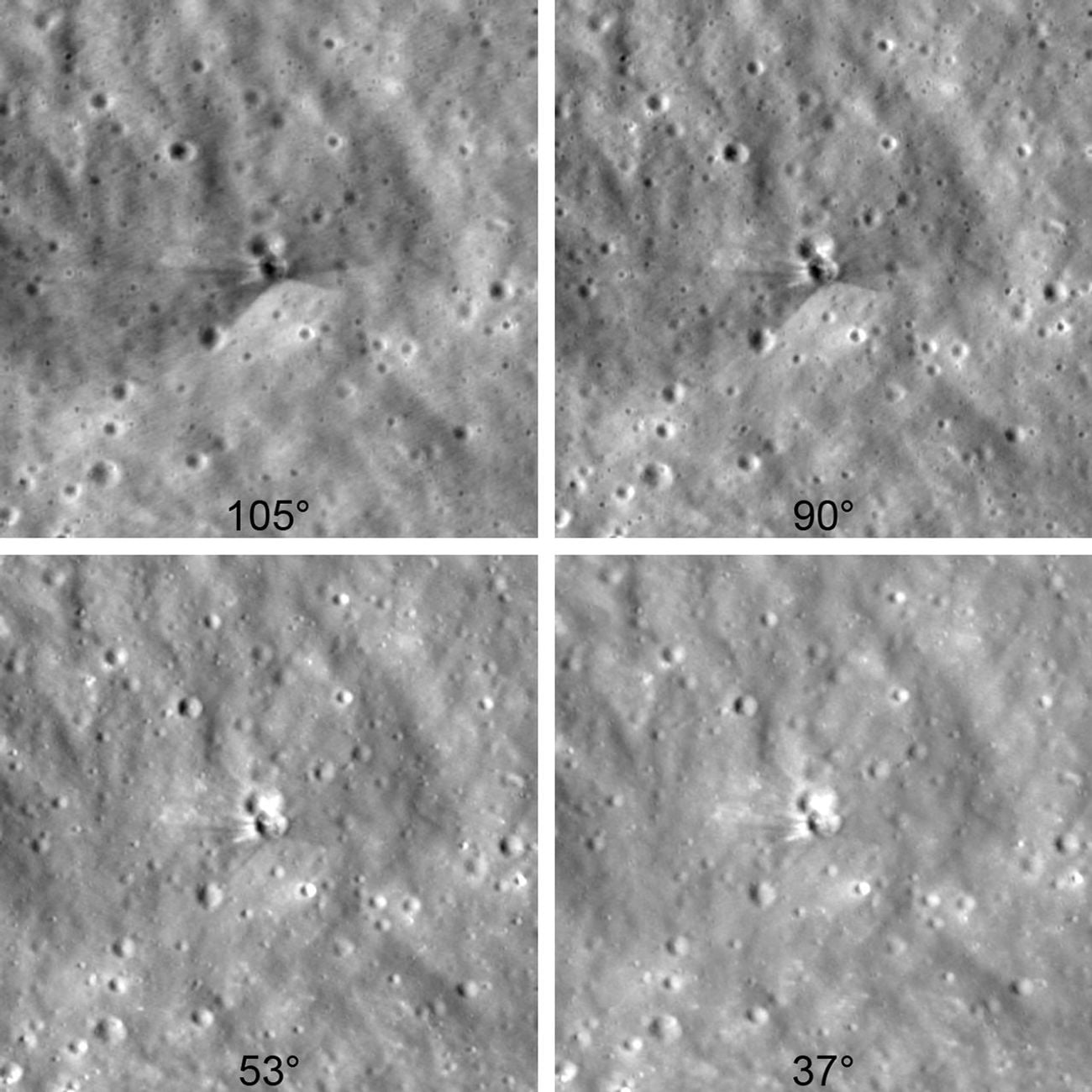
The Falcon 9 made its crash landing after spending more than a year in an unstable orbit. The rocket launched in January 2025 and completed its mission to deliver lunar landers. For more than a year afterward, the gravity of Earth, the Moon, and the Sun gradually altered its trajectory until it eventually struck the lunar surface.
The almost 46-foot-long and 8,800-pound Falcon 9 upper stage impacted the Moon near the Einstein crater, named for physicist Albert Einstein. The crater is located toward the edge of the side of the Moon visible from Earth.