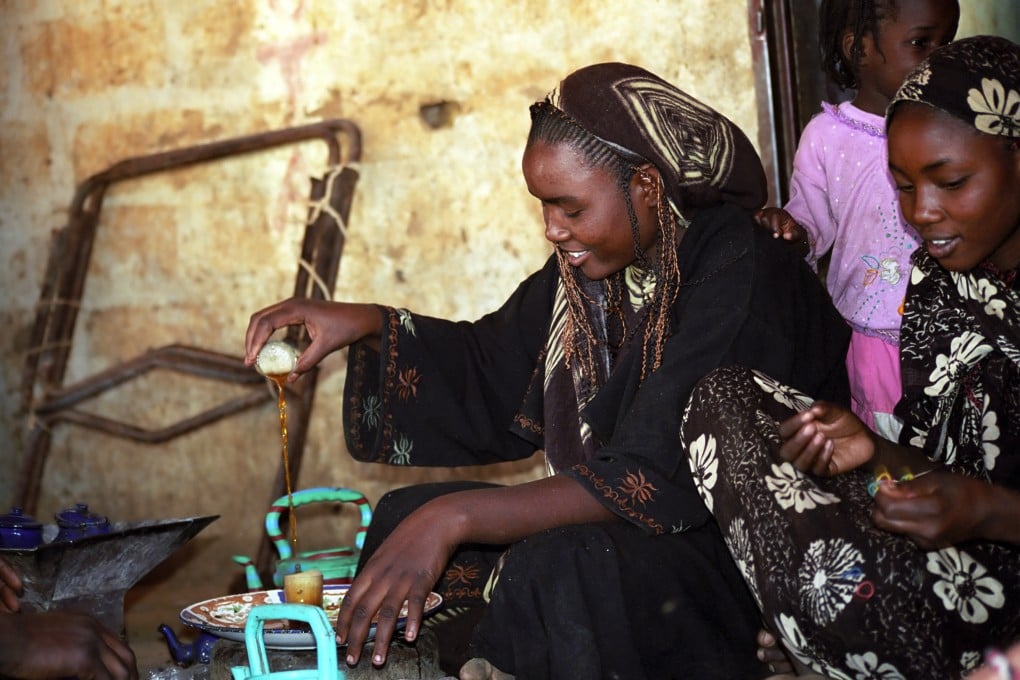
West Africa has embraced Chinese green tea – from government offices in Mauritania to roadside stalls in Senegal, Mali and Niger, it is at the heart of a tradition that brings people together.
The ritual – known as ataya , or attaya in some countries – involves preparing and serving strong, sweet green tea in three rounds, giving family, friends and colleagues the time to talk and socialise.
Chinese tea dominates several markets where ataya is widely consumed.

More than 90 per cent of Mauritania ’s tea imports by value came from China in 2024, accounting for US$65.1 million of its US$66.4 million in tea purchases, according to data from the Observatory of Economic Complexity.
The tea culture has even made it into a guide for Chinese visitors put out by the embassy in Mauritania. It says Mauritanians traditionally serve tea to guests, a practice known as “three cups of tea upon meeting”.
In Gambia , another country in the Sahel, China supplied US$28.5 million of the country’s US$31.3 million in tea imports in 2024 – or about 91 per cent.