Being one of the largest high-tech companies in the world, Alibaba consumes many x86 CPUs and other third party technologies. Off-the-shelf x86 processors are not optimal for all datacenter workloads, so just like Amazon Web Services and Google, the company is developing its own system-on-chips (SoCs) based on Arm architecture.
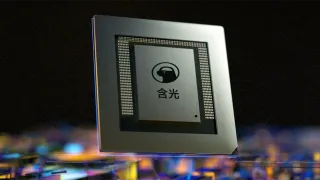
Alibaba's Yitian 710 server SoC features 128 cores and is made using a 5nm fabrication process, reports CnTechPost . Alibaba's wholly owned semiconductor subsidiary T-Head taped out in mid-2021 and was formally introduced on Tuesday, according to Reuters . The SoC will be used by Alibaba itself in its datacenters and will not be available to others, so for now the processor will not compete against offerings from AMD, Ampere, or Intel.
"Customizing our own server chips is consistent with our ongoing efforts toward boosting our computing capabilities with better performance and improved energy efficiency," said Jeff Zhang, president of Alibaba Cloud Intelligence and head of Alibaba’s research arm Damo Academy, reports Time . "We plan to use the chips to support current and future businesses across the Alibaba Group ecosystem."
The Yitian 710 is currently the most advanced SoC ever developed in China and is the third chip developed by T-Head since it was established in 2018. For some reason, neither Alibaba nor T-Head disclose which Arm cores the processor uses and which foundry (TSMC or Samsung Foundry) produces it using its 5 nm node. Ampere, a developer of commercial Arm-based server SoCs uses Arm's Neoverse N1 cores for its 128-core Altra Max M128-30 CPU, but plans to switch to proprietary cores with its next-generation processors.
Custom-designed system-on-chips allow Alibaba to get performance and capabilities it needs at predictable power budgets. Furthermore, since the SoCs are developed entirely in house, it can also save some money as it will not have to pay a premium for server processors designed by companies like AMD or Intel.
Alibaba is not the only company to develop custom SoCs for performance-demanding applications. AWS and Google are also designing their own processors for their datacenters, whereas Apple installs its custom Arm-powered SoCs into its smartphones, tablets, desktops, and laptops.