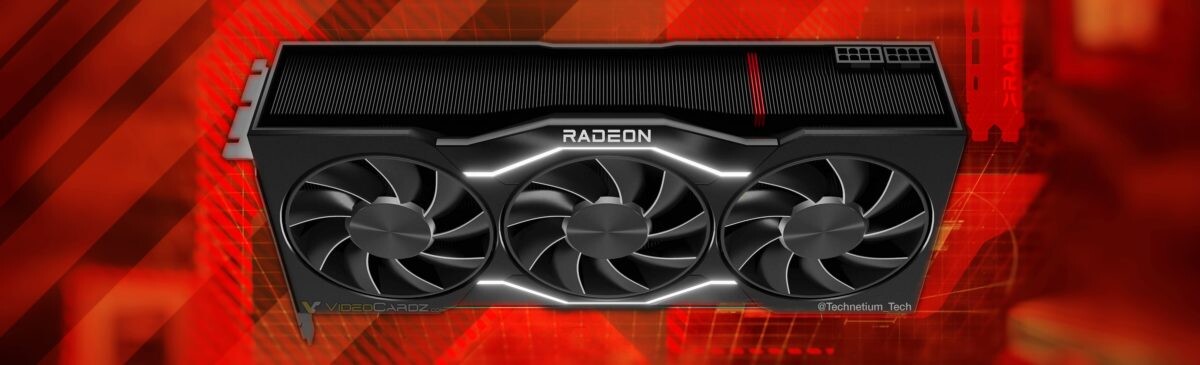
AMD is reportedly bringing back the "XTX" brand extension to the main marketing names of its upcoming Radeon RX 7000-series SKUs. The company had, until now, reserved the "XTX" moniker for internal use, to denote SKUs that max out all hardware available on a given silicon. The RX 7000-series introduce the company's next-generation RDNA3 graphics architecture, and will see the company introduce its chiplets packaging design to the client-graphics space. The next-generation "Navi 31" GPU will likely be the first of its kind: while multi-chip module (MCM) GPUs aren't new, this would be the first time that multiple logic chips would sit on a single package for client GPUs. AMD has plenty of experience with MCM GPUs, but those have been single logic chips surrounded by memory stacks. "Navi 31" uses multiple logic chips on a package; which is then wired to conventional discrete GDDR6 memory devices like any other client GPU.
The rumored Radeon RX 7900 XTX is features 12,288 stream processors, likely across two logic tiles that contain the SIMD components. These tiles are [for now] rumored to be built on the TSMC N5 (5 nm EUV) foundry process. The Display CoreNext (DCN), and Video CoreNext (VCN) components, as well as the GDDR6 memory controllers, will be built on separate chiplets that are likely built on TSMC N6 (6 nm). The "Navi 31" has a 384-bit wide memory interface. This is 384-bit and not "2x 192-bit," because the logic tiles don't have memory interfaces of their own, but rely on memory controller tiles shared between the two logic tiles, much in the same as a dual-channel DDR4 memory interface being shared between the two 8-core CPU chiplets on a Ryzen 5950X processor.