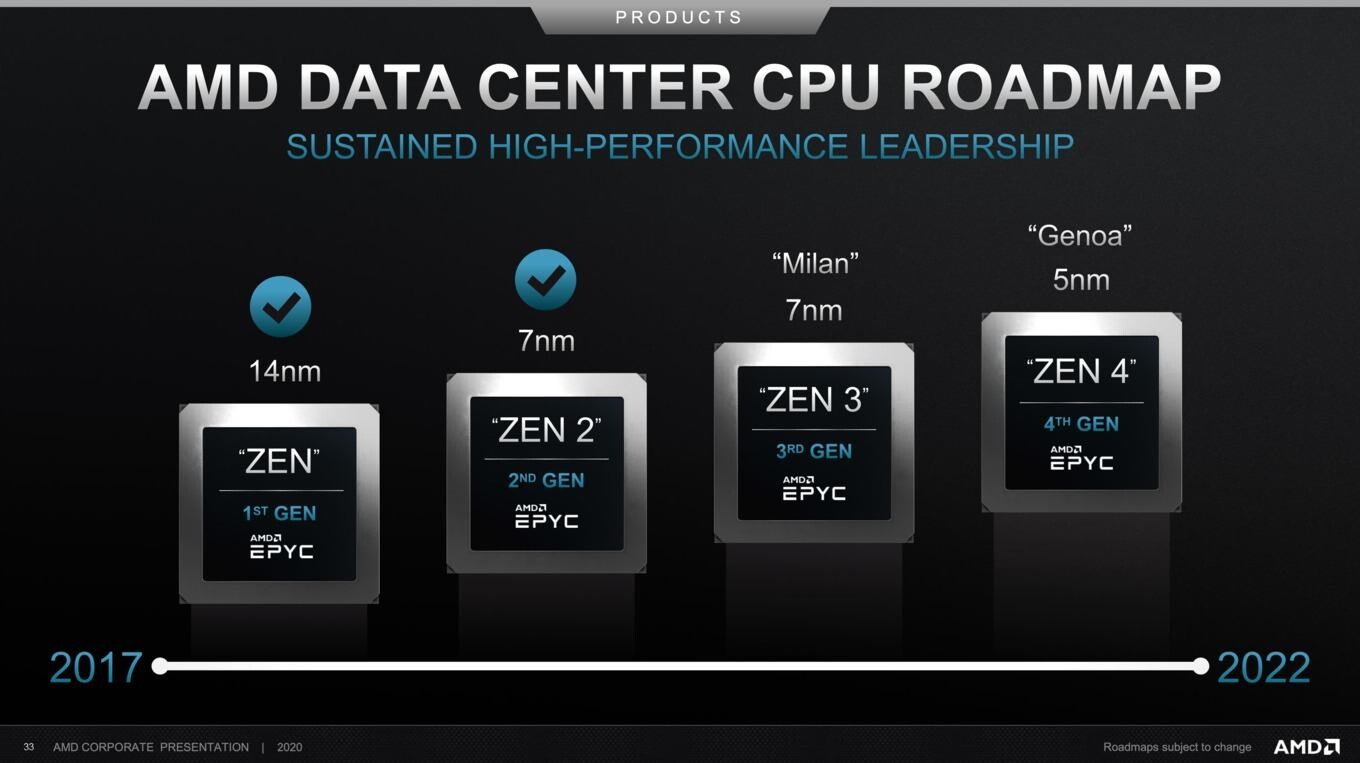
According to a report courtesy of Hardwareluxx, where contributor Andreas Schilling reportedly gained access to OEM documentation, AMD's upcoming EPYC Milan CPUs are bound to offer up to 20% performance improvements over the previous EPYC generation. The report claims a 15% IPC performance, paired with an extra 5% added via operating frequency optimization. The report claims that AMD's 64-core designs will feature a lower-clock all-core operating mode, and a 32-core alternate for less threaded workloads where extra frequency is added to the working cores.
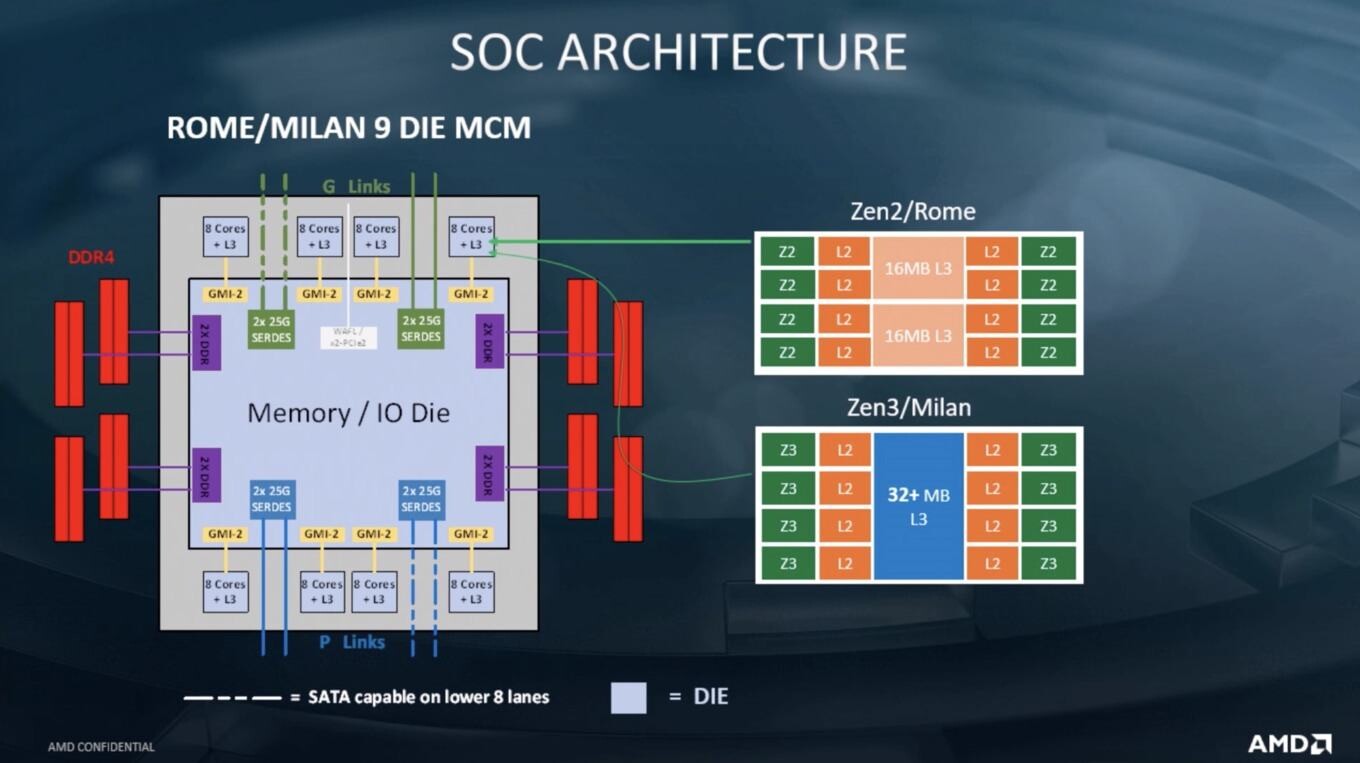
Apparently, AMD's approach for the Zen 3 architecture does away with L3 subdivisions according to CCXs; now, a full 32 MB of L3 cache is available for each 8-core Core Compute Die (CCD). AMD has apparently achieved new levels of frequency optimization under Zen 3, with higher upward frequency limits than before. This will see the most benefits in lower core-count designs, as the amount of heat being generated is necessarily lesser compared to more core-dense designs. Milan keeps the same 7 nm manufacturing tech, DDR4, PCIe 4.0, and 120-225 W TDP as the previous-gen Rome. It remains to be seen how these changes actually translate to the consumer versions of Zen 3, Vermeer, later this year.