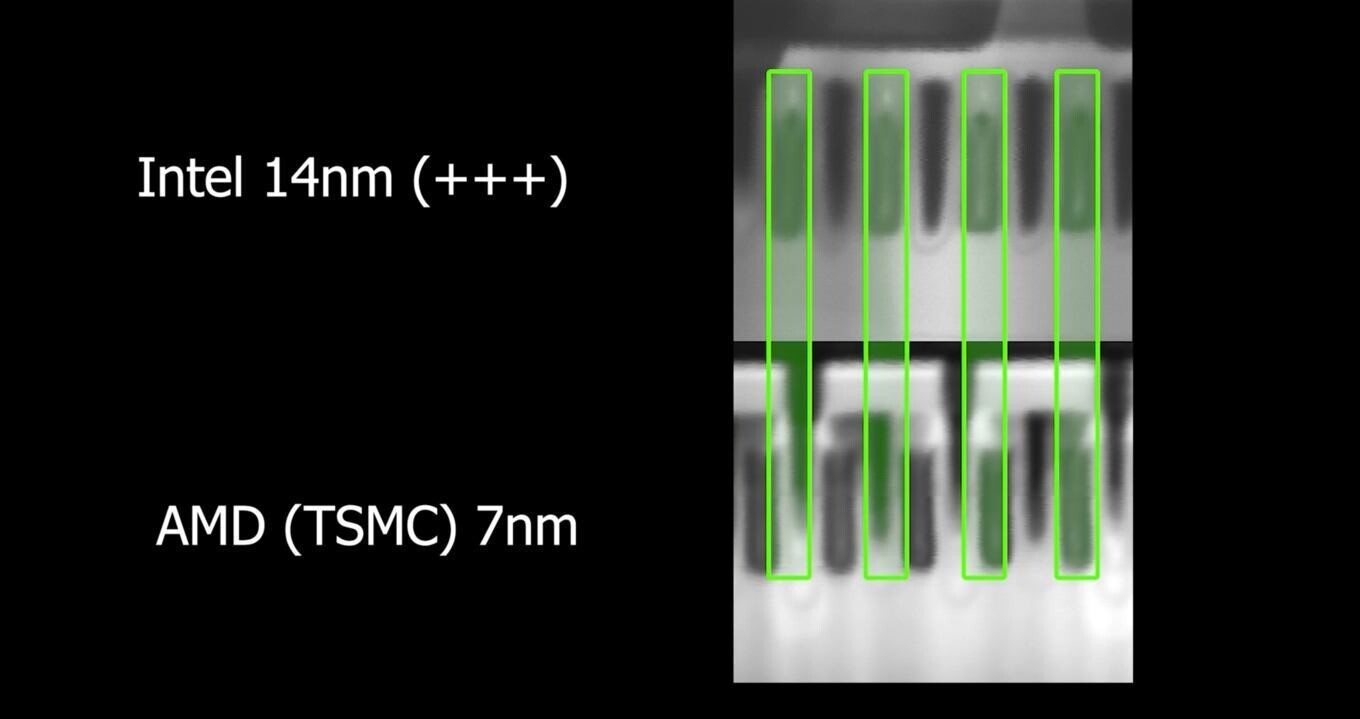
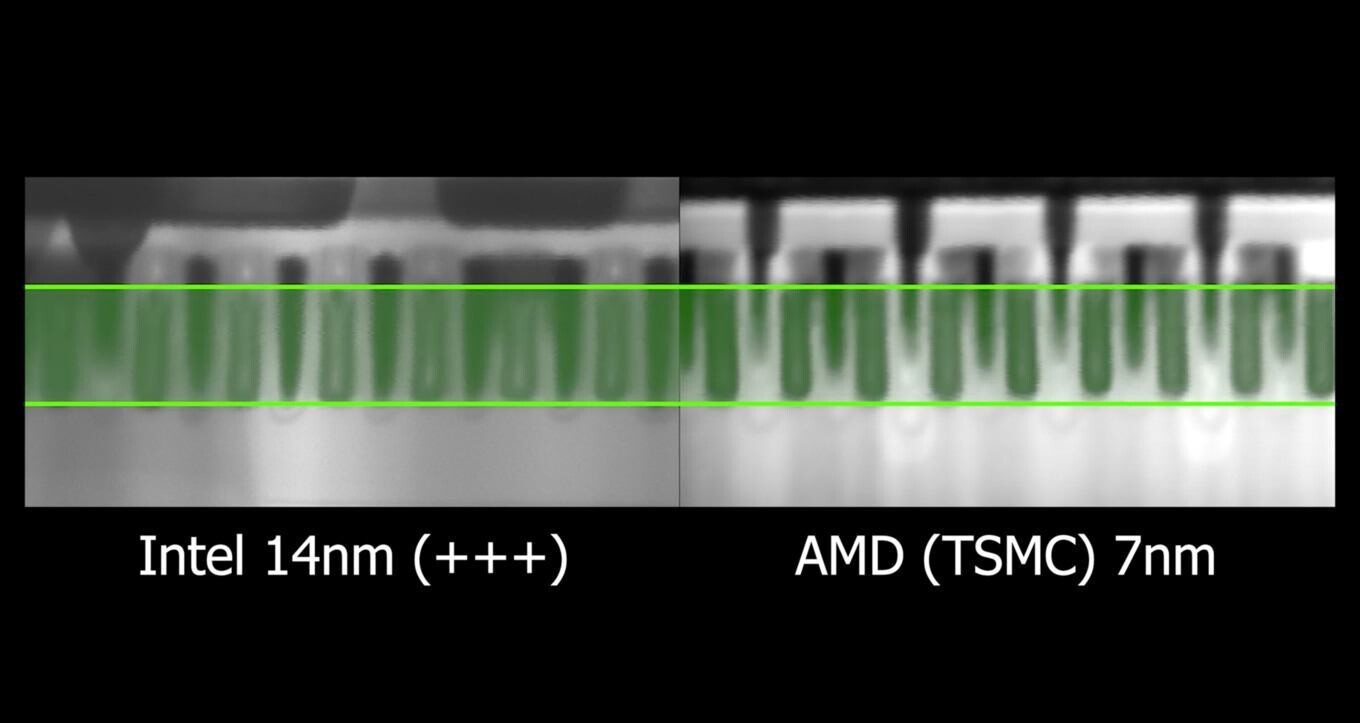
Currently, Intel's best node available to desktop users is 14 nm one, specifically the 14 nm+++ variant, which features several enhancements to the node so it can get to a higher frequency and allower for faster gate switching. Compare that to AMD's best, a Ryzen 3000 series processor based on Zen 2 architecture, which is built on TSMC's 7 nm node, and you would think AMD is in clear advantage there. And it kind of it. German hardware overclocker and hacker, der8auer, has decided to see how production level silicon compares one to another, and he put it to the test. He decided to use Intel's Core i9-10900K processor and compare it to AMD's Ryzen 9 3950X under a scanning electron microscope (SEM).
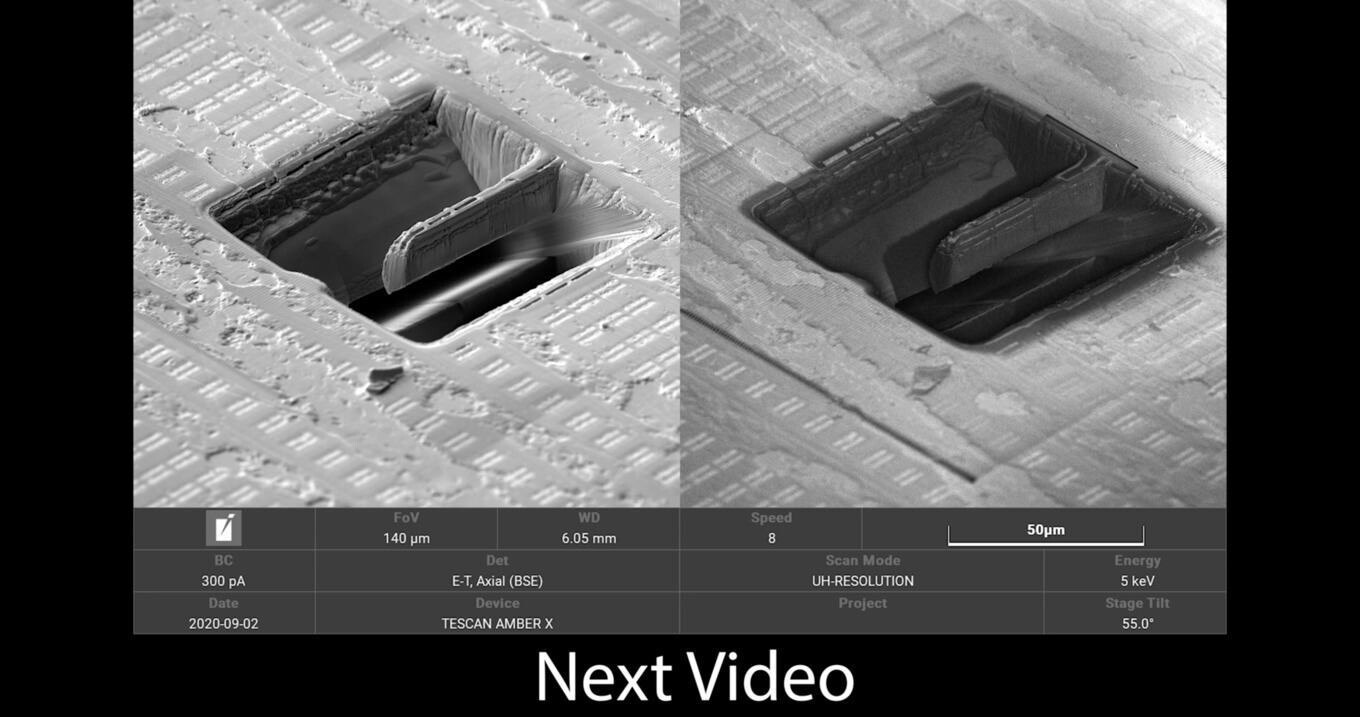
Firstly, der8auer took both chips and detached them from their packages, then he proceeded to grind them as much as possible to SEM could do its job. He glued the chips to a sample holder using an electrically conductive adhesive so it can pass the X-ray beams easily. To get a fair comparison as possible, he used the L2 cache part of both processors as they are always the best representatives of a node. The logic portion of the chip is different for every chip, so it would be difficult to compare two different microarchitectures. That is the reason level two cache is used to get a fair comparison. The results? Well, the Intel chip features transistors with a gate width of 24 nm, while the AMD chip has a gate width of 22 nm. While these two are not much different, TSMC's node is still much denser compared to Intel's. Gate height is also rather similar, however, the TSMC node still gets the benefit of density. Below you can see the X-ray images and comparison made. For more information and details please head over to the source.