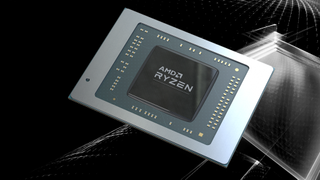
AMD's upcoming codenamed Phoenix accelerated processing units (APUs) are set to feature a so-called hybrid design containing both high-performance Zen 4 cores and energy-efficient Zen 4c cores, according to an AMD's processor programming guide discovered by InstLatX64 .
AMD's processor programming guide clearly points to Performance Cores marked at 01h and Efficiency Cores descripted as 1h, an evident indicator that AMD's upcoming processor will feature two types of general-purpose cores. Given the timing, we believe that we are dealing with AMD's codenamed Phoenix processor featuring Zen 4 and Zen 4 cores, but keep in mind that AMD calls them otherwise.
The document sheds some light on how AMD's hybrid Big.Little-like design will work. Just as earlier AMD's documents pointed out, the company's high-performance and energy-efficient cores feature a different feature set. Therefore, software makers are advised to design their programs accordingly.
"Read-only. Reset: Fixed,Xh. Defines per-core architectural feature differentiation (microarchitectural resources, etc.) that may lead to a different performance, core clock boost, and power characteristic," a statement in the AMD PPR reads.

Of course, a hybrid CPU design will make AMD's offerings more competitive with Intel's Alder Lake and Raptor Lake products in the laptop CPU market. Usage of a hybrid design containing both high-performance and high-efficiency cores will enable AMD to hit performance levels at wattages not attainable today. Meanwhile efficient usage of low-power cores depends on software in general and operating system in particular.
When we reported about AMD's alleged Phoenix 2 processor with a hybrid design a week ago, it left us wondering why would AMD use the same — Phoenix APU — codename for completely distinctive processors. Apparently, these CPUs are not that different as, according to AMD's programing guide, they both feature a Big.Little-like design.
Anyhow, AMD's codenamed Phoenix processors are expected to hit the market this year, so expect independent tests of these units at Tom's Hardware.