Today, Intel announced it had generated its first profit in two quarters, raking in $1.5 billion in net income on $12.9 billion in revenue during the second quarter of 2023. The company also posted a more optimistic outlook than expected, with much of the success coming on the back of a resurgent PC division, sending its stock up 8% in after-hours trading. Intel beat both its own projections and market consensus handily, with its EPS of $0.13 beating consensus estimates of -$0.19.
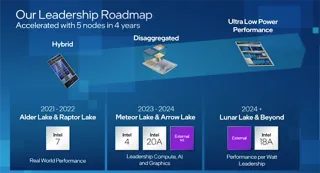
Intel CEO Pat Gelsinger reported that the company remains on track with its audacious goal to deliver five nodes in four years, noting that the company's next-gen Meteor Lake chips, the first to use the 'Intel 4' node, are in production and on schedule for a Q3 launch. These will be the company's first high-volume consumer chips to use a chiplet-based architecture tied together with the 3D Foveros interconnect tech.
Intel's next-next-gen Arrow Lake chips, which will build on that same design methodology, are already progressing through the fab, too. These chips are the company's first to use Intel's 20A node (2nm), which includes new innovations like the PowerVia backside power delivery , which Intel will be first to use, and RibbonFet Gate-All-Around (GAA) technology.
Gelsinger noted that the first stepping of the Arrow Lake chips are moving through the fab, meaning these are the first test chips of the new architecture to be put through their manufacturing paces.
Intel's consumer CPU sales in the quarter remained depressed, with revenue down 12%. Still, Gelsinger said he expects sell-in (the number of CPUs sold into the channel) to nearly match sell-through (the number sold to end users) soon, signaling that the end of the consumer CPU oversupply will occur soon.

Intel expects to sell its millionth fourth-gen Xeon "Sapphire Rapids" processor in the coming days, but things still aren't rosy on the data center side of the business. Intel's Data Center and AI Group (DCAI) saw revenue drop by 15% while operating margins remained negative.
Gelsinger tempered expectations for a big rebound in server CPU sales, reporting that a big portion of the data center and cloud spend for the rest of the year will be devoted to AI buildouts, meaning GPUs will steal from the budget typically reserved for CPUs. That will result in lower sales next quarter for Intel's DCAI as more of the money gets diverted to Nvidia's data center GPUs.
Intel also continues to face fierce competition from AMD's server chips, and the China market has been slow to recover. As such, the data center CPU recovery likely won't occur until the latter part of the year. Intel did note that it has seen strong interest in its Gaudi chips for AI workloads, and it now has its first Gaudi 3 wafers in hand.
Intel has continued to make adjustments to its strategy as it slims down to focus on core competencies and foundry expansions, having now exited nine businesses during Gelsinger's tenure. That has saved the company $1.7 billion this year alone, putting it on track to save $3 billion for the full year.
Intel's revenue fell 15% year-over-year, but its trajectory looks better than analysts expected. Intel's gross margin for the quarter improved to 39.8%, a far cry from the +60% of yesteryear but still better than last quarter's 34%. The company guides for a 43% gross margin in Q3, along with $12.9 to $13.9 billion and $0.20 EPS, all of which outstripped consensus expectations.