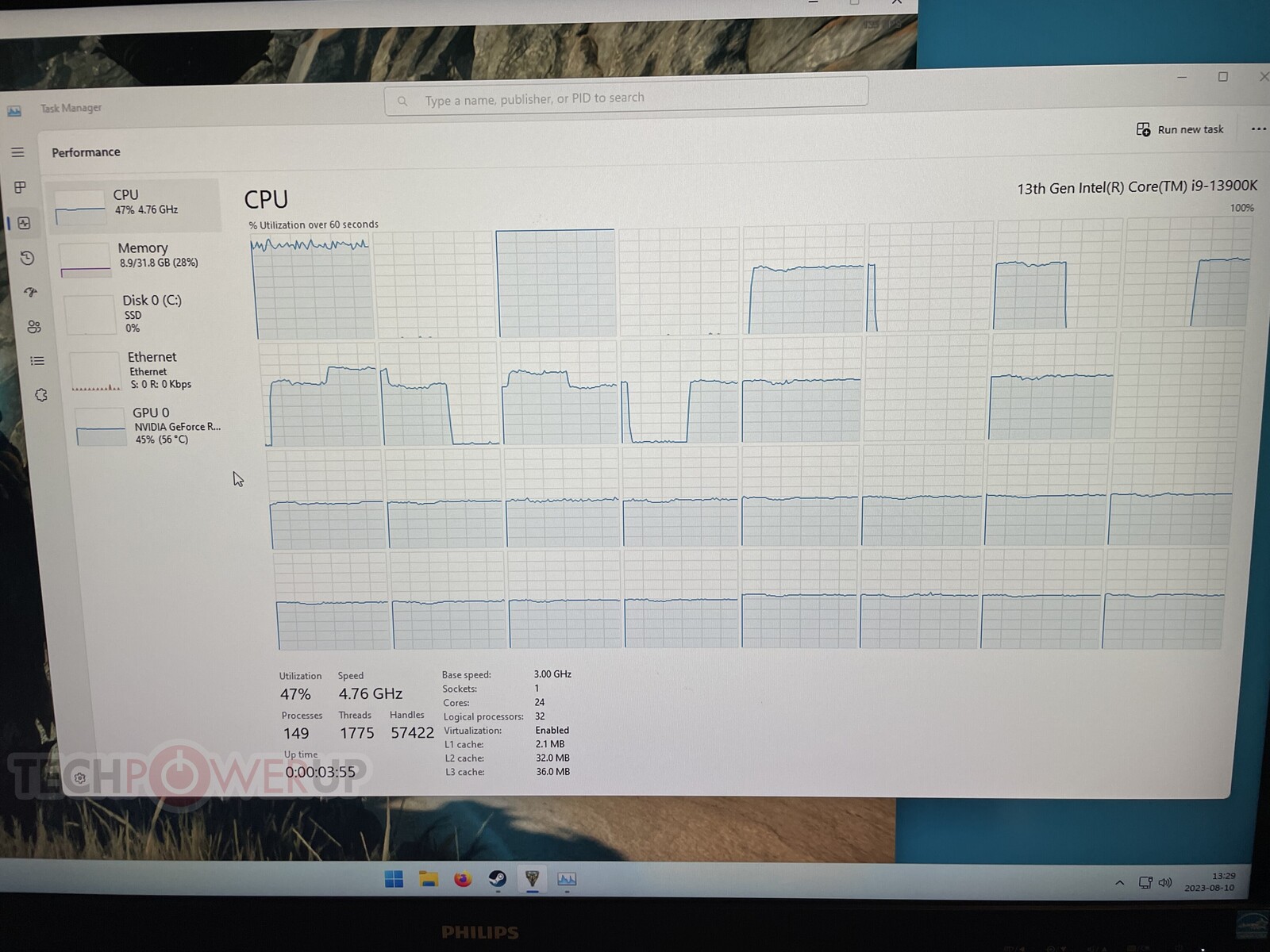
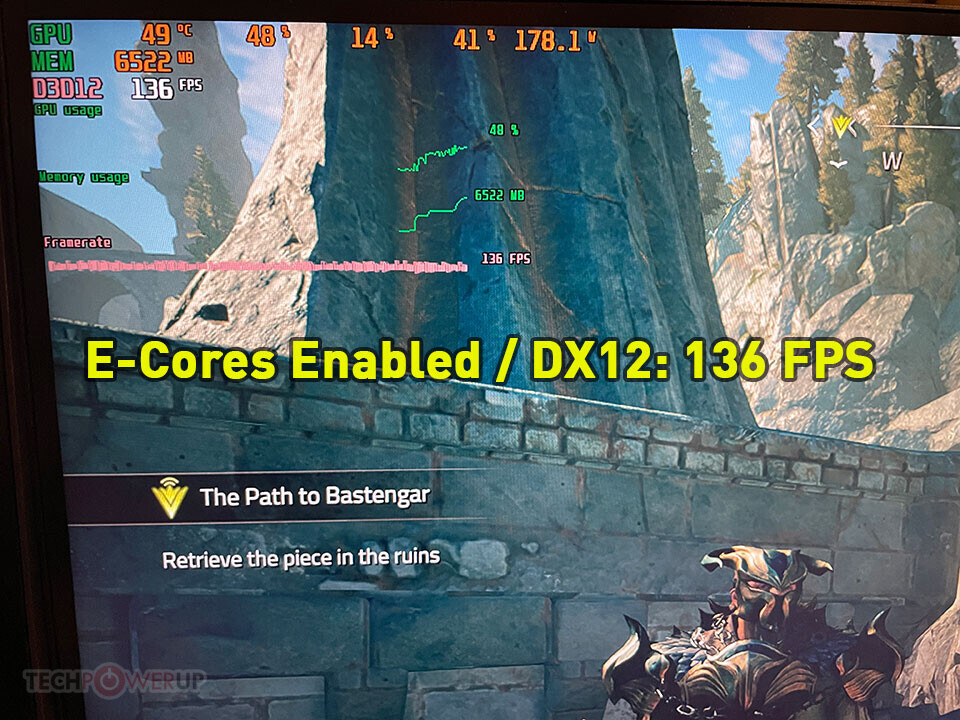
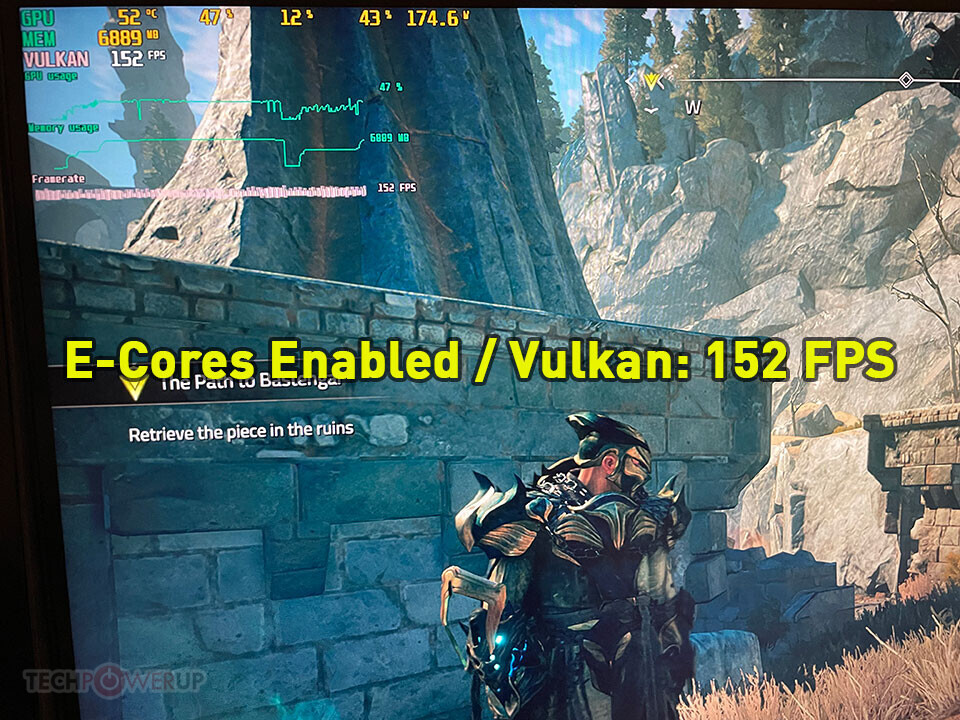
Normally, when a game saturates all of the E-cores, we don't interpret it as the game being "aware" of E-cores, but rather "unaware" of them. An ideal Hybrid-aware game should saturate the P-cores for its main workload, and use the E-cores for errands such as processing the audio stack (DSPs from the game), network stack (the game's unique multiplayer network component), physics, in-flight decompression of assets from the disk, etc., which show up in Task Manager as intermittent, irregular load. "Atlas Fallen" appears to be using the E-cores for its main worker threads, and this is found imposing a performance penalty as we found out by disabling the E-cores. This performance penalty is because the E-cores run slower than P-cores, at lower clock speeds, and have much lower IPC, and are cache-starved. Frame data being processed by the P-cores end up having to wait for those from the E-cores, which causes the overall framerate to come down.