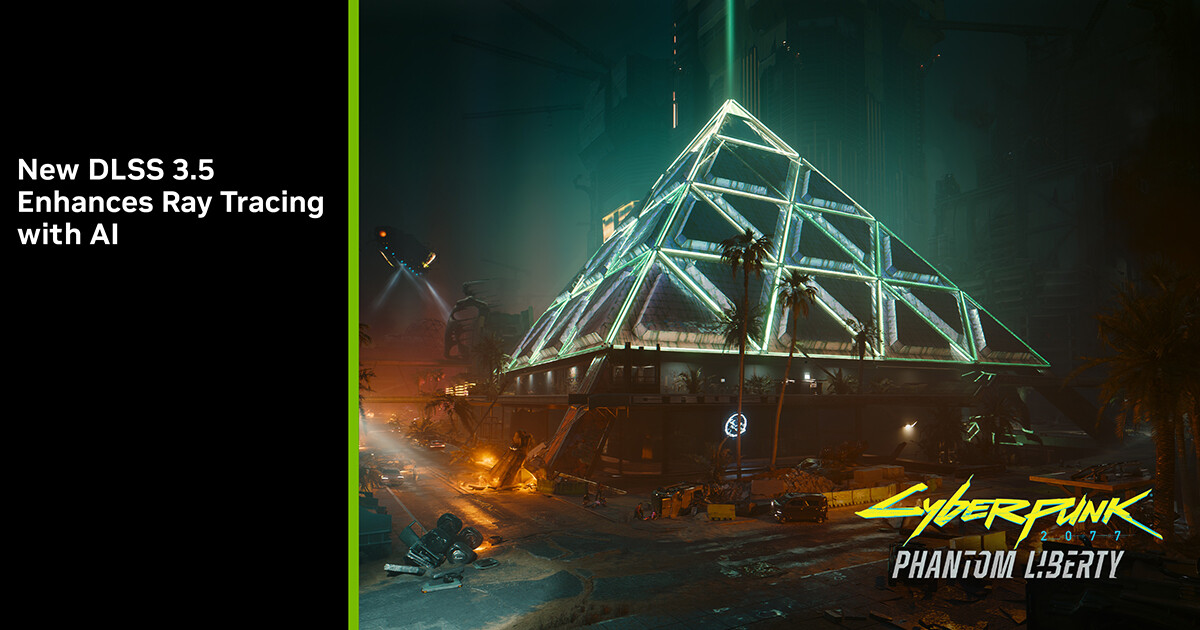
Catanzaro focused on the benefits introduced in Update 2.0 and Phantom Liberty: "I think that DLSS 3.5 actually makes Cyberpunk 2077 even more beautiful than native rendering...that's my belief. The reason being that the AI is able to make smarter decisions about how to render a scene...and I think that's going to continue to develop." He half jokingly states that rasterization is a "bag of fakeness." A combination of DLSS and path tracing is preferred over old hat methods—thus attaining the most realistic visual results. He summarizes with his own slogan: "Native rendering is fake frames." Catanzaro predicts that real-time graphics industries will become increasingly reliant on AI-based image reconstruction and rendering technologies in the future. He hopes that AAA game environments will become cheaper to make in due time—with a shift to neural rendering. DLSS 10 could interface with game engine technology at a higher level, with a possible outcome being the creation of more "immersive and beautiful" experiences.