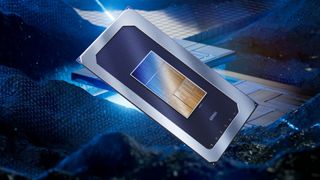
Although Intel's Meteor Lake processors will power desktop computers next year , they will not power desktop PCs with sockets, the company clarified. Since the new CPUs are predominantly designed for laptops, they will come in ball grid array (BGA) packages and be used for compact desktops and all-in-one machines.
"Meteor Lake is a power efficient architecture that will power innovative mobile and desktop designs, including desktop form factors such as All-in-One (AIO)," a statement by Intel published by ComputerBase reads. "We will have more product details to share in the future."
In an interview last week, a high-ranking Intel executive said that Intel's Meteor Lake processors will come to desktops in 2024. While they will, they will not be coming in the company's LGA1851 form factor for gaming, workstations, and traditional desktop machines. As far as it is evident for now, Arrow Lake-S is set to target LGA1851 motherboards, but this won't happen until the second half of 2024.
Using notebook CPUs in AIO desktops and small form-factor PCs like Asus NUC is nothing new, and PC makers have done this for ages. What remains to be seen is what kind of performance levels those high-performance Meteor Lake CPUs for notebooks will demonstrate when compared to existing Raptor Lake processors for desktops and laptops.
Meanwhile, why Intel decided not to release Meteor Lake processors for desktops with sockets remains unclear. The CPU uses a multi-tile design with a compute tile produced on Intel 4 process technology, the company's first production node to use extreme ultraviolet lithography and a graphics tile made with TSMC's fabrication technology. Both production nodes promise to enable silicon with decent performance.
Meanwhile, Intel's proven Intel 7 process technology (aka 10nm Enhanced SuperFin) can enable somewhat higher clocks due to its enhanced power delivery rail originally designed for datacenter grade CPUs, which is possibly why Intel decided to keep its Raptor Lake CPUs afloat for enthusiasts who want maximum frequencies and overclockability.