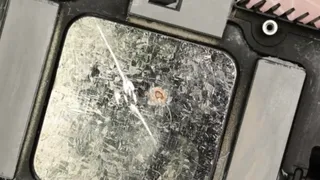
A recent investigation by a Quasarsone forum member revealed significant defects in the vapor chamber heatsinks of Nvidia's GeForce RTX 3080 Founders Edition and RTX A6000 graphics cards (via @harukaze5719 ). Some heatsinks oxidize and leak. It is unclear how widespread the issue is and whether this only happens in specific conditions.
The study identified unusual chemical reactions and physical deformities within the heatsinks, raising concerns about the cooling solution's efficiency and longevity. As it turns out, heatsinks develop copper oxide formations and holes in the vapor chambers over time, leading to failure and overheating of graphics cards.
The exploration began with disassembling an Nvidia GeForce RTX 3080 Founders Edition, still among the best graphics cards after three years. During this process, peculiar red copper exposures surfaced in the vapor chamber heat sinks. Further examination revealed signs of a chemical reaction and copper appearing as if it had melted.
The forum member then observed an Nvidia RTX A6000 graphics card for ProViz and engineering applications that cost about $4,000 despite being a product released in 2020. The board presented similar issues. This repetition of the unusual copper exposure and signs of chemical reaction suggested a more widespread problem, possibly inherent in the vapor chamber cooling solution employed in these graphics cards.

Detailed analysis, including cleaning and magnifying the affected areas, exposed blue substances on the surfaces, presumably copper oxides. This discovery pointed to the possibility of chemical reactions within the chambers, likely involving the copper components. The nature and extent of these reactions seem to suggest a susceptibility to damage and functional impairment due to internal pressures or similar adversities within the vapor chamber heat sinks.
Vapor chambers are functioning through a continuous cycle of evaporation and condensation. A liquid inside the chamber evaporates by absorbing heat from a hot component, like a CPU or GPU, turning into vapor. This vapor then moves to a cooler area, condenses back into a liquid, and releases the absorbed heat and dissipates. Vapor chambers effectively manage high heat loads, ensuring uniform heat distribution and maintaining optimal operating temperatures of chips. Meanwhile, coolants inside vapor chambers are rather tricky substances that can quickly evaporate and condense.
Coolants inside vapor chambers can potentially react with copper, but this is relatively uncommon and typically occurs under specific unfavorable conditions. If there is contamination or impurity in the coolant, or if the integrity of the vapor chamber is compromised (e.g., leaks, cracks, or manufacturing defects), it might facilitate reactions between the coolant and the copper. For instance, copper may oxidize in the presence of oxygen or other reactive substances, forming copper oxides or other compounds on the surface.
It is unclear whether this is a source of the issue and if it is widespread. After all, we have seen only one report on the matter and have no idea about the conditions leading to the development of copper oxide and holes. Yet, we can only recommend checking the cooling system when purchasing used graphics cards.